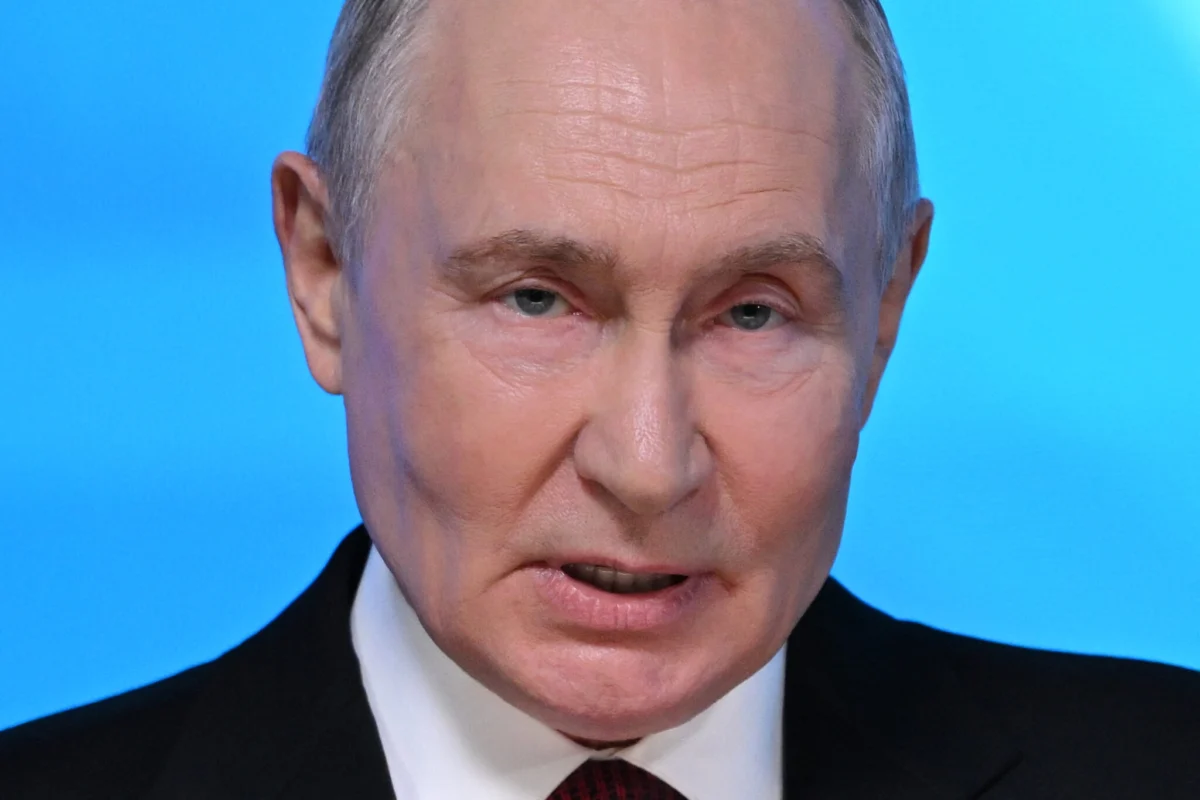
In a significant escalation of diplomatic and military rhetoric, Russian President Vladimir Putin has reaffirmed Moscow’s stance on the inviolability of its borders, specifically centering on the strategic Baltic exclave of Kaliningrad. Speaking at a high-profile foreign policy forum, the Russian leader issued a stark warning to the North Atlantic Treaty Organization (NATO), stating that while Russia has no designs on European territory, any attempt to isolate or attack its sovereign regions would be met with the full might of the Russian military—including its nuclear triad.
This latest volley of threats comes at a time of unprecedented tension in Eastern Europe, as the war in Ukraine enters its fifth year and the Baltic Sea becomes an increasingly crowded arena for military posturing. The focus on Kaliningrad, a heavily militarized Russian outpost wedged between NATO members Poland and Lithuania, highlights a growing fear in Moscow that the alliance is moving toward a "containment" strategy that could evolve into a physical blockade.
Main Facts: The Valdai Declaration and the Kaliningrad ‘Red Line’
During his address at the Valdai Club forum on Thursday, President Vladimir Putin addressed the deteriorating security architecture of Europe. His primary message was twofold: a denial of expansionist intentions toward Western Europe and a fierce assertion of Russia’s right to self-defense.
"There should be no mistake," Putin remarked, responding to questions about whether the world was on the precipice of a direct conflict between Moscow and the West. "Russia would be ready to use all its arsenal, including nuclear weapons, to defend its territory if NATO countries try to isolate the Kaliningrad region from the rest of the country."
The Russian President accused Western leaders of engaging in a "dangerous game" by inflating the threat of a Russian invasion of Europe to justify increased military spending and aggressive naval exercises. He specifically pointed to NATO’s recent activities in the Baltic Sea, which include large-scale drills and the alleged seizure of Russian vessels, as evidence of an escalatory trend.
When pressed on whether his comments were intended to intimidate the West, Putin was blunt: "It’s not intimidation; it’s a response to an attempt to intimidate us." He further suggested that Russia possesses advanced weaponry that "no one else has," implying that the Kremlin would exercise its discretion in selecting which "unique" systems to deploy should a direct attack occur.
Chronology of Escalation: From Embassy Warnings to Forum Rhetoric
The current diplomatic crisis did not emerge in a vacuum. It follows a week of coordinated messaging from Russian diplomatic missions across Europe, signaling a shift in Moscow’s communicative strategy.
- Monday & Tuesday: Several Russian embassies, including the mission in Ireland, issued public statements alleging they had "information" that NATO was preparing an air and naval blockade of the Kaliningrad region. These statements served as the opening salvo, framing NATO’s defensive posture as an offensive siege plan.
- Wednesday: NATO responded to a formal written message from Moscow. NATO spokesperson Allison Hart and Secretary-General Mark Rutte both issued statements denouncing Russia’s "irresponsible nuclear rhetoric." Rutte confirmed that the alliance’s response was "short and concise," rejecting the notion that NATO poses any threat to Russian territory.
- Thursday: President Putin took the stage at the Valdai Club. He explicitly endorsed the warnings issued by his embassies earlier in the week, stating that "everything is written correctly" in those warnings. His speech served as the ultimate political weight behind the diplomatic cables sent days prior.
- The Broader Context: This week’s events are set against the backdrop of the ongoing war in Ukraine and a series of "hybrid" incidents in Europe—including GPS jamming in the Baltics and suspected sabotage of undersea infrastructure—for which Western intelligence agencies have blamed Moscow.
Supporting Data: The Strategic Significance of Kaliningrad
To understand why Kaliningrad has become the focal point of Putin’s nuclear rhetoric, one must look at the geographic and military data that define the region.
The Exclave Fortress
Kaliningrad is a 5,800-square-mile territory that Russia acquired from Germany after World War II. It is geographically separated from mainland Russia, accessible only by sea, air, or a narrow land corridor through Lithuania and Poland known as the Suwalki Gap. For NATO, this gap is a "chokepoint"; for Russia, it is a lifeline.
Military Assets
Moscow has transformed the exclave into a "bastion" of Anti-Access/Area Denial (A2/AD) capabilities. Key assets include:
- The Baltic Fleet: Headquartered in Baltiysk, it is Russia’s primary naval presence in the region.
- Iskander-M Missiles: These nuclear-capable, short-range ballistic missile systems are permanently deployed in Kaliningrad, putting most Northern and Central European capitals within striking distance.
- S-400 Air Defense: High-altitude surface-to-air missile systems that can monitor and contest airspace over half of Poland and the Baltic states.
NATO’s Counter-Measures
In response to Russia’s militarization, NATO has intensified its presence. Operation Baltic Sentry, launched in 2023, focuses on protecting critical undersea communication cables and pipelines. Recent exercises, such as those held on August 18, involved the EA-37B Compass Call, a sophisticated American electronic warfare aircraft designed to disrupt enemy radar and communications. Defense analysts note that the deployment of such high-end electronic "jammers" near Kaliningrad is viewed by the Kremlin as a direct threat to its command-and-control infrastructure.
Official Responses: NATO’s "Short and Concise" Rebuttal
The Western response to Putin’s latest warnings has been characterized by a blend of firm rejection and a refusal to engage in "tit-for-tat" escalation.
Mark Rutte, NATO Secretary-General:
In an interview with Euronews, Rutte emphasized that Russia’s rhetoric is a distraction technique. "Basically what we said is, ‘Hey, listen, we are a defensive alliance, and stop the nuclear threat. This is absolutely not called for and not helpful,’" Rutte said. He urged European leaders to "keep calm and carry on," focusing on the primary objective: supporting Ukraine. Rutte argued that Putin’s goal is to "divide us and lose the focus" on the frontline in the Donbas and Kharkiv.
Allison Hart, NATO Spokesperson:
Hart reinforced the defensive nature of the alliance, stating, "We strongly denounce the threat of force, including any irresponsible nuclear rhetoric. NATO is a defensive alliance and none of our activities or exercises pose a risk to any part of Russia."
Western Intelligence Warnings:
Conversely, intelligence services in Germany, Denmark, and Poland have recently issued reports suggesting that Russia is preparing its military for a potential conflict with NATO within the next three to five years. These reports suggest that if Russia achieves its goals in Ukraine, it may seek to test the "red lines" of NATO’s Article 5 collective defense clause, possibly through a localized incursion in the Baltics or a forced opening of a land bridge to Kaliningrad.
Strategic Implications: A New Era of Brinkmanship
The implications of Putin’s Valdai speech suggest a shift from "hybrid" confrontation to a more overt form of nuclear brinkmanship.
1. The Normalization of Nuclear Threats
By explicitly linking the "isolation" of Kaliningrad to a nuclear response, Putin is attempting to broaden the definition of what constitutes an existential threat to the Russian state. In traditional military doctrine, nuclear weapons are a last resort against an invasion. Putin is now signaling that economic or logistical restrictions—such as those involving transit through Lithuania—could be viewed as a "direct attack."
2. The Suwalki Gap Vulnerability
The rhetoric puts renewed pressure on the Suwalki Gap. Military planners in Brussels are increasingly concerned that Russia might use the pretext of a "blockade" to justify a military seizure of this land corridor, effectively cutting off the Baltic states (Estonia, Latvia, and Lithuania) from their NATO allies in Central Europe.
3. Electronic Warfare and Miscalculation
The use of sophisticated jamming technology by both sides in the Baltic Sea increases the risk of accidental escalation. If Russian radar systems in Kaliningrad are "blinded" by an exercise like the EA-37B Compass Call, Moscow might misinterpret the electronic interference as the precursor to a physical strike, triggering a kinetic response.
4. European Defense Posture
The persistent threats are accelerating the "re-armament" of Europe. Countries like Poland are spending upwards of 4% of their GDP on defense, while the Baltic states are pushing for a permanent, larger-scale NATO troop presence on their soil. Putin’s rhetoric, intended to deter NATO, appears to be having the opposite effect: it is solidifying the alliance’s resolve to fortify its eastern flank.
As the "war of words" continues, the Baltic Sea remains one of the most volatile regions on the planet. While President Putin maintains that Russia has no plans to attack Europe, his insistence that "all weapons" are on the table for Kaliningrad ensures that the shadow of a wider conflict will continue to loom over the continent. For now, the West’s strategy remains one of "strategic patience," but as the exercises in the Baltic grow more frequent and the rhetoric more heated, the margin for error is becoming dangerously thin.