WASHINGTON — In a major development for national telecommunications policy, the U.S. Department of Commerce’s National Telecommunications and Information Administration (NTIA) has announced plans to accept a new round of state proposals under the federal government’s flagship $42 billion broadband expansion initiative.
The move opens the door for states to tap into an estimated $21 billion in remaining funds from the Broadband Equity, Access and Deployment (BEAD) program. The supplemental round aims to target newly identified "unserved" locations across the country that were left out of initial state deployment plans due to map revisions, defaults by telecom providers in other federal grant programs, or changing local conditions.
The decision comes after months of intense pressure from lawmakers on Capitol Hill, who have demanded clarity on how states can utilize billions of dollars in leftover BEAD funds once primary buildout commitments are met.
Main Facts: The Supplemental BEAD Deployment Round
The NTIA’s BEAD Supplemental Deployment Policy Notice establishes a formal framework for states to submit secondary proposals to expand high-speed internet access to hard-to-reach homes, businesses, and community institutions.
Key elements of the announcement include:
- Targeting Unserved Locations: The primary objective is to direct capital toward "newly identified unserved locations"—defined as structures lacking access to reliable broadband offering speeds of at least 25 Megabits per second (Mbps) download and 3 Mbps upload.
- Capitalizing on Remaining Funds: Approximately $21 billion—roughly half of the original $42.45 billion BEAD allocation—remains uncommitted following the initial proposal phase.
- Technology Neutrality and Cost Savings: Federal officials attribute the substantial surplus to recent administrative adjustments that prioritized lower-cost technology options, such as fixed wireless and low-Earth orbit (LEO) satellite networks, over standard fiber-optic infrastructure.
- Addressing Map Deficiencies and Program Defaults: The new funding round explicitly covers locations that became unserved after telecom providers defaulted on commitments under legacy programs—such as the Federal Communications Commission’s (FCC) Rural Digital Opportunity Fund (RDOF)—or where updated FCC national broadband maps revealed coverage gaps.
Chronology: From the 2021 Infrastructure Law to the 2026 Supplemental Round
To understand how the BEAD program reached this juncture, it is necessary to examine the regulatory, legislative, and mapping milestones over the past five years.
+-----------------------------------------------------------------------------------+
| CHRONOLOGY OF THE BEAD PROGRAM                                                    |
+-----------------------------------------------------------------------------------+
| Nov 2021   | Congress passes Bipartisan Infrastructure Law, creating $42B BEAD.   |
| 2022–2023  | FCC updates national broadband maps; states launch challenge rounds. |
| Early 2025 | Federal policy updates pivot toward technology-neutral deployments. |
| March 2026 | Congressional leaders send formal inquiry regarding leftover funds.   |
| Spring 2026| NTIA hosts listening sessions on non-deployment funding options.      |
| June 2026  | NTIA Leadership testifies to Congress; promises summer guidance.     |
| Late 2026  | NTIA approves final state plans; releases Supplemental Notice.        |
+-----------------------------------------------------------------------------------+
1. Program Enactment (November 2021)
President Joe Biden signed the Infrastructure Investment and Jobs Act (IIJA) into law in November 2021. The legislation created the $42.45 billion BEAD program, placing administration of the historic investment under the Commerce Department’s NTIA. The statutory goal was ambitious: eliminate the digital divide across rural and underserved America.
2. Mapping Challenges and Initial Allocations (2022–2024)
State broadband offices spent nearly two years establishing local challenge processes to verify federal coverage maps. During this window, the FCC released multiple iterations of its National Broadband Map to fix historical errors that overstated coverage in rural regions.
3. Policy Shift and Cost Containment (2025–2026)
Following regulatory changes introduced under the Trump administration, the NTIA altered its guidance. Rather than maintaining a strict preference for fiber-optic technology—which features high upfront civil engineering costs—the agency shifted toward a technology-neutral standard. By allowing state broadband offices to consider cheaper alternatives, such as fixed wireless access (FWA) and satellite connections, baseline deployment costs dropped dramatically, leaving roughly $21 billion in unobligated capital.
4. Congressional Pressure and Listening Sessions (Spring 2026)
As initial state plans achieved full coverage metrics below budgeted amounts, lawmakers expressed concern over idle funds. In March 2026, key senators issued formal inquiries regarding the surplus. In response, the NTIA held a series of public listening sessions throughout the spring to solicit feedback on how non-deployment leftover funds should be managed.
5. Final Approval and Supplemental Notice (Late 2026)
By late summer 2026, the NTIA had approved final deployment proposals across almost every state and territory, though state plans in California and Illinois remained under additional technical review by the National Institute of Standards and Technology (NIST). Following this baseline approval, NTIA officially released its Supplemental Deployment Policy Notice to address lingering broadband gaps.
Program Data and Financial Breakdown
The original allocation formula for the BEAD program was based on each state’s proportional share of unserved locations nationwide. However, the shift in procurement guidelines and technological standards generated unexpected budget surpluses across multiple state broadband offices.
Summary of BEAD Financial Landscape
| Metric | Estimated Amount | Source / Context |
|---|---|---|
| Total Congressional Appropriation | $42.45 Billion | 2021 Bipartisan Infrastructure Law |
| Initial Deployment Commitments | ~$21.45 Billion | Approved State Volume II Submissions |
| Remaining Unobligated Capital | ~$21.00 Billion | Surplus from low-cost technology choices |
| Supplemental Deployment Round | TBD (Variable by State) | Targeted at newly unserved & defaulted sites |
| Potential Non-Deployment Capital | Remaining Balance | Digital literacy, precision ag, hardware access |
    ORIGINAL $42.45 BILLION BEAD ALLOCATION
    +-----------------------------------------------+
    | Initial Commitments  | Remaining Capital      |
    | ~$21.45 Billion      | ~$21.00 Billion        |
    | (50.5%)              | (49.5%)                |
    +-----------------------------------------------+

                            +--> Supplemental Deployment Round
                            +--> Non-Deployment Uses (Pending)
Why Unserved Locations Emerged
The need for a supplemental funding round stems primarily from three distinct operational factors:
- FCC Map Revisions: The FCC’s fabric map undergoes continual updates. New residential and commercial construction in rural areas frequently adds unserved locations that did not exist when initial state plans were drafted.
- Program Defaults: Millions of dollars in subsidies previously awarded through legacy programs—such as RDOF or USDA ReConnect grants—were defaulted on by winning bidders who failed to build out network infrastructure. When a provider defaults, those locations officially revert to "unserved" status.
- Terrain and Execution Cost Spikes: In hyper-remote regions—such as interior Alaska, Appalachian valleys, or island communities—initial grant solicitations received zero private bids due to geographic extremes, leaving pockets of unserved citizens unaddressed during Round 1.
Official Responses and Stakeholder Reactions
The NTIA’s announcement generated immediate reactions from federal administrators, state lawmakers, and telecommunications advocates.
Executive Branch Perspective
NTIA Administrator Arielle Roth framed the supplemental round as the decisive step toward fulfilling the mandate established by Congress while upholding fiscal conservatism.
"Congress designed the BEAD program to be the final federal broadband deployment program, ensuring universal broadband availability for America," said NTIA Administrator Arielle Roth. "Through this targeted use of funding, we are ensuring that we close the digital divide once and for all while also protecting taxpayer dollars."
Roth emphasized that administrative directives prioritizing cost efficiency allowed the federal government to stretch taxpayer dollars further than originally anticipated, creating the surplus needed to fund secondary rounds and alternative digital infrastructure priorities.
Congressional Leadership
Lawmakers representing rural and geographically challenging states praised the NTIA for responding to bipartisan inquiries, though many urged quick action on non-deployment uses as well.
Alaska: Addressing Extreme Topography
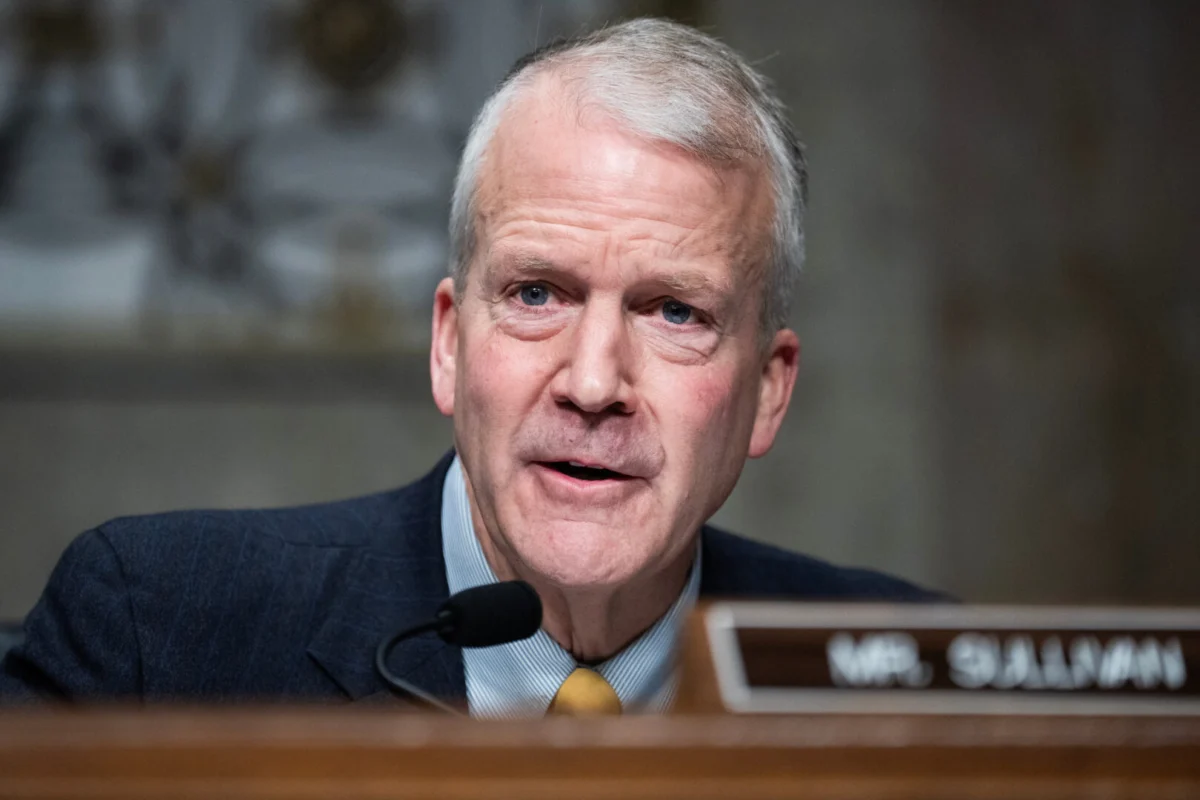
Following a site visit and broadband provider roundtable in Alaska alongside Administrator Roth, Sen. Dan Sullivan (R-Alaska) highlighted the massive impact the decision will have on his state’s rugged interior.
"I fought to ensure that the broadband provisions of the bipartisan infrastructure law focused on truly unserved communities, worked to improve Alaska’s broadband maps, and relentlessly advocated for Alaska with federal officials, including bringing them to our state to see our unique challenges firsthand," said Sen. Dan Sullivan.
Sullivan noted that the newly structured round could make over 5,000 additional locations eligible for critical broadband infrastructure grants across Alaska.
Nebraska & Midwest: Precision Agriculture Focus
In March 2026, Sen. Deb Fischer (R-Neb.), alongside Sens. Jerry Moran (R-Kan.) and Susan Collins (R-Maine), submitted a formal letter to Commerce Department leadership pressing for clarity on unused funds. Responding to the NTIA’s announcement, Fischer welcomed the move while pushing for expanded flexibility for agricultural technology.
"I’m thankful NTIA answered our call to make additional funding available to serve unconnected locations," said Sen. Deb Fischer. "We need to keep these funds working for Nebraskans, and I will be working hard to allow unobligated BEAD funding to be utilized for other critical purposes like precision ag technologies."
                 KEY LEGISLATIVE PRIORITIES
  +-------------------------------------------------------+
  |  Sen. Dan Sullivan (R-AK)   |  Sen. Deb Fischer (R-NE) |
  |  - Remote Terrain Coverage  |  - Precision Agriculture |
  |  - 5,000+ New AK Sites      |  - Unobligated Flexibility|
  +-------------------------------------------------------+
Broader Policy Implications and Next Steps
The authorization of a supplemental deployment round carries structural implications for state broadband offices, internet service providers (ISPs), and rural residents.
1. The Technology Neutrality Debate
The pivot from a "fiber-first" federal policy to a lower-cost, technology-neutral model remains a point of debate within the telecommunications industry.
- Proponents argue that leveraging fixed wireless and LEO satellite constellations allows state agencies to cover 100% of unserved locations years faster and for billions of dollars less than laying physical fiber through difficult terrain.
- Critics contend that non-fiber solutions offer lower bandwidth limits and shorter operational lifespans, potentially requiring future federal bailouts or upgrades when bandwidth demands inevitably rise over the coming decade.
2. Anticipating Guidance on Non-Deployment Funds
While the Supplemental Deployment Policy Notice addresses unserved locations, it leaves unanswered questions regarding how states may spend remaining capital after universal deployment is achieved.
The NTIA confirmed that non-deployment uses will be governed by "subsequent guidance" scheduled for release later this year. Areas under consideration for leftover funds include:
- Precision Agriculture: Expanding high-bandwidth cellular and IoT coverage across farmlands to power autonomous equipment, soil sensors, and livestock tracking.
- Digital Literacy & Workforce Training: Funding community-based programs to teach technical skills, remote work tools, and cybersecurity.
- Device Subsidies: Partnering with educational institutions and local health districts to provide low-cost laptops and tablets to lower-income households.
- Cybersecurity Upgrades: Enhancing municipal and rural utility network security to resist nation-state cyber threats against physical infrastructure.
3. Administrative Hurdles and State Implementation
Despite broad federal approval, operational friction remains:
- NIST Reviews: Large states like California and Illinois are navigating technical compliance clearances from the National Institute of Standards and Technology (NIST) before finalizing primary spending rules.
- Supply Chain and Labor Constraints: State offices must balance new grant rounds against persistent shortages of specialized telecommunications labor and high-voltage electrical equipment required for utility pole attachments.
Summary Outlook
By opening a supplemental deployment window, the NTIA has created a dual path forward for federal broadband policy: ensuring no rural home is missed by initial mapping errors or provider defaults, while setting up a secondary multi-billion-dollar pool of funding for non-deployment digital infrastructure. As states finalize their supplemental proposals, the focus will shift from mapping unserved locations to executing long-term network construction across rural America.