The intersection of civil unrest and digital commerce has reached a volatile flashpoint in France. As the nation faces a multi-faceted crisis involving escalating sovereign debt, deteriorating public infrastructure, and a paralyzed political landscape, the streets of Paris and other major urban centers have transformed into theaters of both political protest and systemic looting. However, unlike the riots of decades past, the lifecycle of stolen property has been compressed into a matter of hours, as e-commerce platforms become the unintended "digital fences" for high-end luxury goods and consumer essentials.
Main Facts: A Nation Under Siege
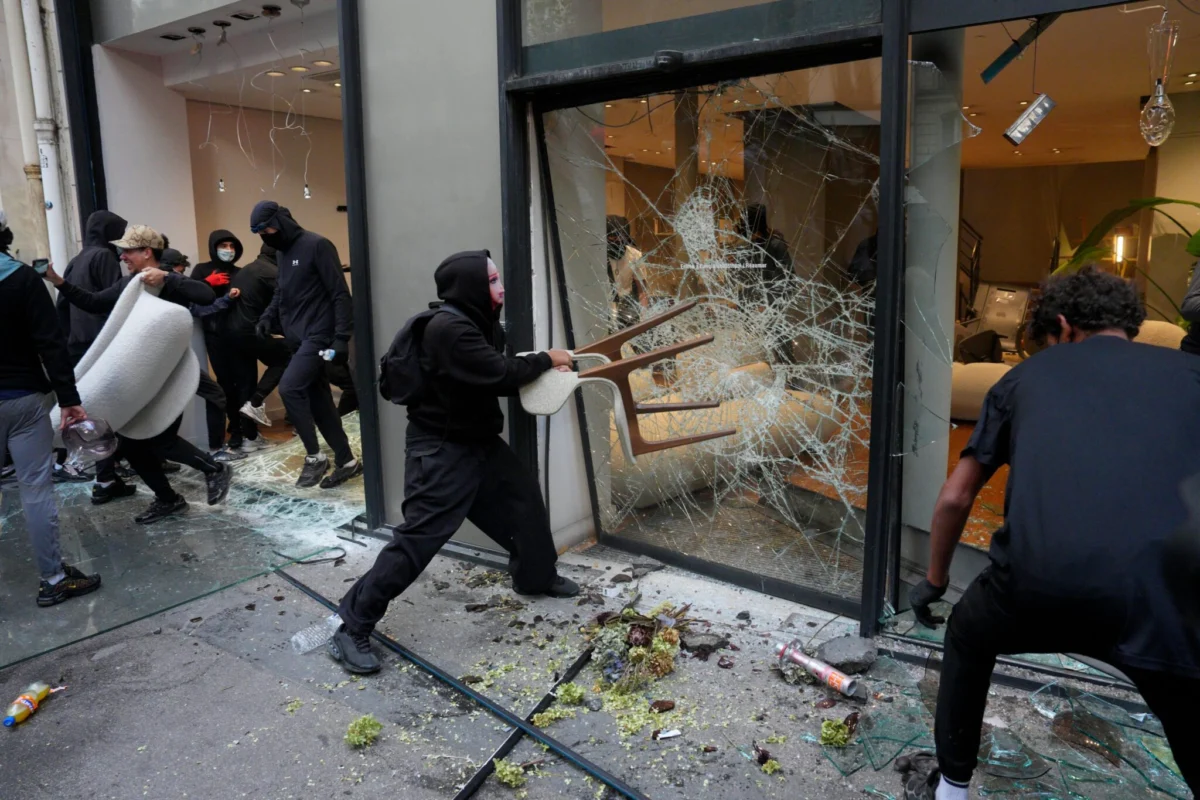
The scale of the damage inflicted during the most recent wave of unrest is staggering. According to French Commerce Minister Serge Papin, more than 3,000 businesses were looted or severely damaged over a single weekend. The geographic focus centered on high-traffic commercial hubs, most notably Paris’s historic Les Halles district, a nexus of luxury and mass-market retail.
Among the brands caught in the crossfire were icons of French prestige, including Louis Vuitton and Hermès, as well as global outdoor giant The North Face. The damage, however, was not limited to the physical destruction of storefronts. Within hours of the first windows being shattered, a secondary crisis emerged in the digital sphere. Cosmetic products, designer skincare, and high-end handbags—all bearing the hallmarks of the very items stripped from boutique shelves—began appearing in unprecedented volumes on peer-to-peer marketplaces.
The economic toll is estimated to be in the billions. Morningstar DBRS, a leading credit rating agency, suggested that insured losses from the unrest could climb to €1.2 billion ($1.3 billion), provided the violence does not escalate further. Meanwhile, the Fédération du commerce et de la distribution (FCD), France’s primary retail federation, has placed the direct damage to inventory and infrastructure at several hundred million euros.
Chronology of the Crisis
The crisis unfolded with a speed that left both law enforcement and corporate security teams struggling to maintain pace.
The Weekend of Unrest (October 17–19, 2026)
Protests sparked by a combination of high inflation, a controversial debt-ceiling debate, and reports of crumbling conditions in public schools boiled over into rioting. By Saturday evening, organized groups began targeting high-end retail sectors. In Les Halles, looters were observed systematically clearing shelves of luxury inventory.
The Digital Surge (Sunday, October 18)
By early Sunday morning, e-commerce monitoring tools and retail analysts noticed a "clear spike" in new listings for luxury items. Platforms like Vinted and Leboncoin saw a surge in "new with tags" products being offered at significantly below-market prices. Many of these listings were uploaded by accounts with little to no sales history, a classic red flag for the resale of stolen goods.
The Government Intervention (Monday, October 19)
Recognizing that the ability to quickly monetize stolen goods was a primary driver for the looting, Commerce Minister Serge Papin and Digital Minister Anne Le Hénanff took emergency action. On Monday evening, they summoned executives from Vinted, Leboncoin, Amazon, eBay, Meta, and TikTok to a high-stakes videoconference. The government’s demand was clear: these platforms must immediately purge suspicious listings and implement more rigorous screening protocols to prevent their services from being used to fund criminal activity.
The Market Fallout (Tuesday, October 20)
As the smoke cleared, the financial consequences became apparent. Carrefour, one of the world’s largest grocery retailers, issued a dramatic profit warning, slashing its fiscal 2026 outlook. The company’s stock plummeted 15%, reflecting investor fears over the long-term impact of the unrest on French retail stability.
Supporting Data: The Economics of Organized Retail Crime
The events in France are a localized explosion of a burgeoning global trend. Organized Retail Crime (ORC) is no longer a matter of petty shoplifting; it is a sophisticated, multi-billion-dollar industry.
Global Trends and Projections
According to the security firm Pinkerton, retail theft has evolved into a global crisis. It was estimated to be a $45 billion problem in 2024 and is projected to balloon to $53 billion by 2027. The National Retail Federation (NRF) notes that ORC groups are increasingly utilizing complex systems that include gift card fraud, phone scams, and supply chain theft to complement direct store looting.
The Digital Pipeline
The British Independent Retailers Association (BIRA) provided a sobering statistic in 2024, estimating that approximately 60% of items stolen from its member companies eventually find their way onto online marketplaces. The appeal for criminals is logical: items like fragrances, cosmetics, and small electronics are high-value, easy to transport, and simple to photograph for quick online sales.
The Carrefour Impact
The financial hit to Carrefour serves as a case study for the broader economic damage. CEO Alexandre Bompard reported that 50 stores were hit on the first day of rioting alone. The company estimated a hit of €80 million to €200 million to its operating income. The subsequent 15% drop in share price resulted in a loss of approximately €1.7 billion ($1.9 billion) in market capitalization, demonstrating how physical retail disruption can trigger massive volatility in the capital markets.
Official Responses and Corporate Pledges
The French government and the tech sector have entered a period of forced cooperation, though the efficacy of these measures remains to be seen.
The Government’s Hard Line
President Emmanuel Macron issued a stern warning to those involved in the violence. "Those who looted will have to pay back, and those who sought to bring down the Republic will be held accountable," he stated. Under current French law, handling stolen goods is a severe offense, punishable by up to five years in prison and a fine of €375,000 ($420,000).
Furthermore, the French Senate is set to debate the "casseurs-payeurs" (rioters pay) bill on October 27. This controversial legislation seeks to hold individuals who participate in a gathering that causes damage collectively liable for the financial costs of that damage, a move intended to deter participation in mass unrest.
The Marketplace Response
During the Monday summit, the major e-commerce platforms committed to several key actions:
- Reporting: Platforms will report suspicious listings directly to investigators.
- Detection: Algorithms will be tuned to flag abnormally low prices, bulk listings of "new" goods, and items that still possess anti-theft tags.
- Education: Platforms will explicitly warn buyers that purchasing stolen property is a criminal offense.
- Transparency: Companies have agreed to publish data on the number of listings removed, with the first reports due within 48 hours of the summit.
Vinted, Europe’s leading secondhand marketplace, emphasized its "zero tolerance" policy. A spokesperson confirmed the company is "actively collaborating with law enforcement" and noted that the hashtag "October 17"—the date of the most intense rioting—had been trending on the platform before being suppressed by moderation teams.
eBay and TikTok have also reinforced their positions. eBay highlighted its use of "advanced technology and data-driven tools" to identify suspicious patterns, while TikTok noted that its "TikTok Shop" feature requires registered businesses to provide proof of legitimate purchase and brand authorization.
Implications: The Future of Retail and Financial Security
The French riots have exposed a critical vulnerability in the modern retail ecosystem: the speed of the "physical-to-digital" criminal pipeline. The implications of this crisis extend far beyond broken windows and lost inventory.
The Financial Crime Connection
Experts warn that the resale of stolen goods is often just the tip of the iceberg. Serpil Hall, a strategic advisor at Datos Insights, points out that the proceeds from these sales frequently flow through fraudulent payment accounts, feeding into larger money laundering schemes. "The resale of stolen goods is often the final step of a payment fraud," Hall noted.
Data from Europol supports this concern. In 2023, the European Money Mule Action identified over 10,000 "money mules"—individuals who transfer illegally obtained money between accounts—highlighting the scale of the financial infrastructure supporting retail crime.
Regulatory Evolution
The crisis is likely to accelerate the implementation of stricter regulations across the European Union. While current EU law already requires marketplaces to conduct random checks and verify trader details, the scale of the French looting may lead to calls for "real-time" verification and even more aggressive liability for platforms that fail to prevent the sale of illicit goods.
The Survival of Physical Retail
For retailers like Carrefour and the luxury houses of Les Halles, the unrest poses an existential question about the viability of physical storefronts in volatile political climates. As insurance premiums rise and the cost of security escalates, the "retail tax" imposed by organized crime and civil unrest may force a further shift toward e-commerce—ironically, the very platform currently being used to liquidate their stolen assets.
As France prepares for the Senate debate on the "casseurs-payeurs" bill, the nation remains on edge. The battle is no longer just on the boulevards of Paris; it is being fought in the algorithms and server farms of the world’s largest tech companies. Whether the government can successfully close the digital fence remains the defining question for the future of French commerce.