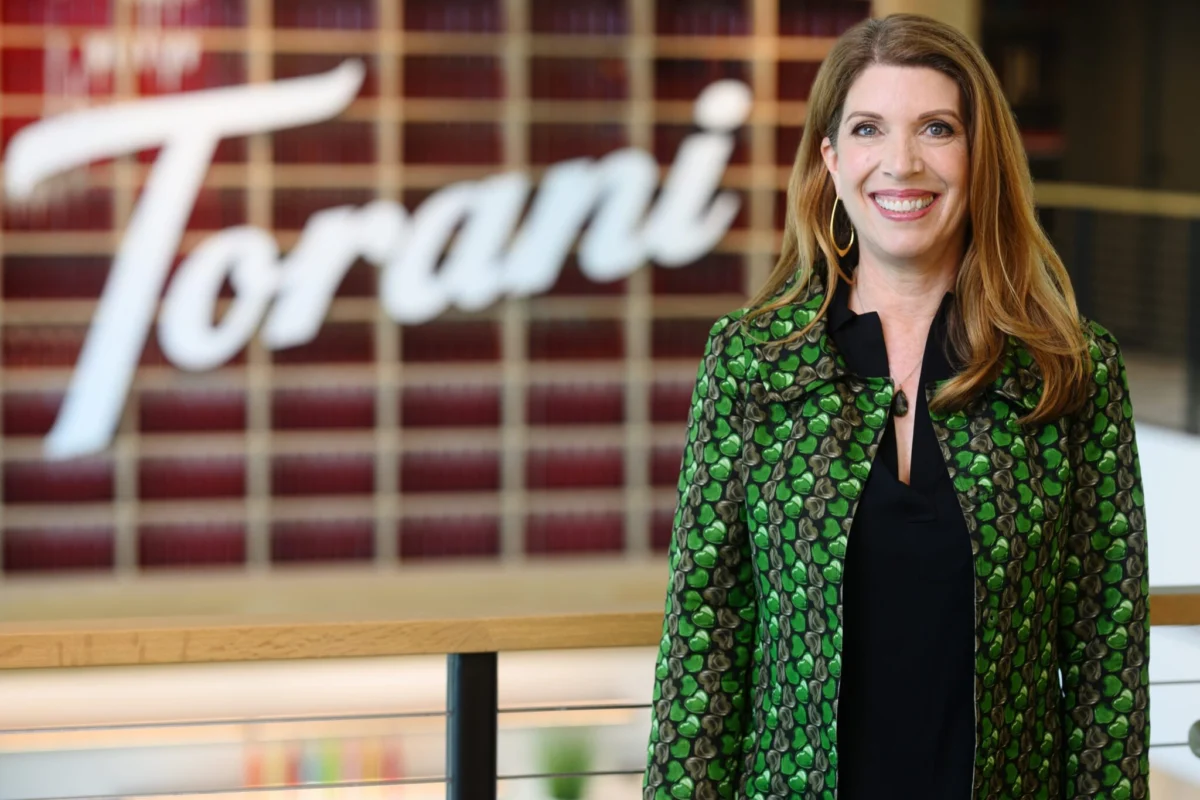
In an era defined by "lean" operations, algorithmic restructuring, and the swift execution of mass layoffs, Melanie Dulbecco, the CEO of the flavored syrup giant Torani, stands as a prominent outlier. While the broader American labor market has weathered a "headcount bloodbath" over the last two years—driven by federal austerity measures and the rapid integration of Artificial Intelligence—Torani has maintained a century-long streak of job security.
For Dulbecco, the decision to downsize is rarely a mathematical necessity; rather, it is a strategic and moral "choice." As U.S. employers navigate a period of intense economic uncertainty, Torani’s refusal to participate in the layoff cycle offers a provocative case study in long-term resilience over short-term financial engineering.
Main Facts: A Tale of Two Realities
The current landscape of the American workforce is one of stark contrasts. On one side is Torani, a 101-year-old family-owned company that has never conducted a layoff in its history. On the other is a national economy that saw 1.2 million job cuts in 2025 alone, a figure reminiscent of the 2008 financial crisis.
The Torani Model
Torani is currently on track to exceed $800 million in revenue this year, maintaining an average annual growth rate of 20% for three and a half decades. According to Dulbecco, this performance is not despite their refusal to lay off workers, but because of it. The company views human capital as a reinforcing priority rather than a competing expense. By prioritizing retention, Torani claims to maintain the "momentum" and "resilience" required to pivot during crises—a feat they famously achieved during the onset of the COVID-19 pandemic.
The National Trend
In contrast, data from Challenger, Gray & Christmas reveals a volatile labor market. While 2026 has seen a slight cooling in the pace of layoffs compared to the previous year, the first nine months of the year still recorded over 573,000 job cuts. The private sector, particularly the tech industry, has been ravaged by "pandemic-era self-correction," while the public sector has faced unprecedented cuts due to aggressive federal cost-cutting initiatives.
Chronology: From the "Flavor Factory" to the AI Revolution
To understand Torani’s current stance, one must look at the pivotal moments that tested the company’s "people-first" philosophy.
March 2020: The Defining Moment
In early 2020, Torani was in the midst of a massive capital investment: building a new, state-of-the-art "Flavor Factory" in San Leandro, California. The timing could not have been worse. As the COVID-19 pandemic shuttered coffee shops and restaurants globally—Torani’s primary revenue stream—the company faced a sudden drop in sales and a mountain of debt from the new construction.
Instead of retreating, Dulbecco and her leadership team doubled down on retention. They had already used ZIP code mapping to ensure the new factory was within a reasonable commute for 100% of their existing staff. When the financial crisis hit, they chose to slash marketing budgets, travel expenses, and non-essential "scrappy" spending rather than reduce headcount. By the end of 2020, this intact team allowed Torani to pivot rapidly to online retail and grocery sales, resulting in a 15% year-over-year revenue spike.
2024–2025: The National Bloodbath
While Torani flourished, the broader economy entered a period of "right-sizing." In 2024, approximately 760,000 layoffs were announced. This surged by 58% in 2025, reaching 1.2 million cuts. The year 2025 was marked by two major drivers:
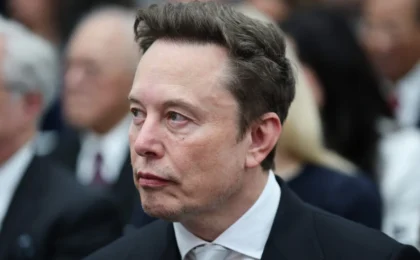
- Federal Austerity: Under the Department of Government Efficiency (DOGE), led by Elon Musk, approximately 308,000 government roles were eliminated, crippling agencies like USAID and the Department of Education.
- The Tech Pivot: The technology sector slashed 154,000 roles in 2025 as companies shifted focus from human-centric operations to AI-driven automation.
2026: The "Wait-and-See" Period
As of late 2026, the market has entered what analysts call a "wait-and-see" period. While layoffs continue, they have slowed as employers weigh high energy costs and geopolitical instability. Torani, meanwhile, continues to leverage its stable workforce to implement AI—not to replace workers, but to "elevate" their roles.
Supporting Data: Analyzing the Numbers
The disparity between Torani’s growth and the national layoff trend is backed by rigorous employment data.
The Tech and Government Toll
According to the Challenger, Gray & Christmas 2025 report:
- AI Impact: AI was directly linked to nearly 55,000 layoff plans in 2025. Since 2023, the technology has been connected to over 71,000 job cut announcements.
- Sector Volatility: The tech industry saw a 15% increase in layoffs between 2024 and 2025, largely due to "self-correcting" after the hiring spree of the early 2020s.
- Public Sector: The 308,000 government jobs cut in 2024 represented the most significant reduction in federal workforce history, impacting the Department of Health and Human Services and other vital infrastructure.
Torani’s Financial Health
In her statement to Fortune, Dulbecco provided metrics that challenge the necessity of the "layoff as a financial exercise":
- Revenue Milestone: Projected $800 million for the current fiscal year.
- Historical Growth: 35 years of 20% average annual growth.
- Retention Goal: 100% retention during major physical relocations.
Official Responses: Perspectives on Corporate Responsibility
The discourse surrounding these layoffs highlights a fundamental divide in management philosophy.
Melanie Dulbecco’s Stance
In her interview with Business Insider, Dulbecco was blunt: "I think layoffs are a choice." She acknowledged that while bankruptcy might necessitate extreme measures, for most healthy companies, layoffs are a short-sighted financial exercise. "You regain momentum because you do that with a team," she noted, emphasizing that the trust built by avoiding layoffs allows employees to embrace new technologies like AI without fear of obsolescence.
Andy Challenger’s Analysis
Andy Challenger, workplace expert and Chief Revenue Officer for Challenger, Gray & Christmas, offers a more cautious view of the broader market. He notes that many employers feel backed into a corner by external pressures. "Employers are facing high energy costs, an uncertain war in Iran, a rate hike that could make hiring more expensive, plus the likelihood of surging healthcare costs," Challenger wrote. This "wait-and-see" attitude suggests that while companies may want to avoid layoffs, they lack the "long-term view" that Dulbecco champions.
Implications: The Future of the Psychological Contract
The contrast between Torani’s 101-year streak and the 1.2 million layoffs of 2025 has profound implications for the future of the American workforce and the "psychological contract" between employer and employee.
1. The AI Integration Strategy
Torani’s approach to AI provides a blueprint for "automation with dignity." By using AI for manual tasks with limited career mobility and high-level forecasting, the company has managed to grow without inflating its headcount unnecessarily, yet without firing those already on the payroll. This creates a culture of trust where employees view technology as a tool for "elevation" rather than a threat to their livelihood.
2. Resilience vs. Efficiency
The 2020 pandemic proved that "lean" organizations are often the most brittle. By maintaining a full staff, Torani had the "boots on the ground" necessary to pivot to new sales channels overnight. Companies that prioritize short-term "efficiency" through layoffs often find themselves unable to "regain momentum" when the market shifts, as they lack the institutional knowledge and morale required for a rapid turnaround.
3. The Social Cost of Federal Cuts
The massive reduction in federal headcount via DOGE has created a vacuum in public service that may take a generation to fill. As agencies like the Department of Education and USAID are "crippled," the long-term economic impact of reduced oversight and reduced social services may outweigh the immediate "cost-cutting" benefits.
4. A New Benchmark for Leadership
Melanie Dulbecco’s success suggests that the "financial exercise" of layoffs may be a failure of imagination. If a century-old manufacturing company can survive a global pandemic, a massive relocation, and the AI revolution without a single layoff while maintaining 20% growth, it calls into question the "necessity" of the layoffs seen in the tech and government sectors.
As 2026 draws to a close, the "Torani Way" remains a challenge to the corporate establishment: Is a company’s primary duty to its short-term balance sheet, or to the team that builds its long-term value? For Dulbecco, the answer is clear—investing in people and delivering performance are not just compatible; they are the same thing.