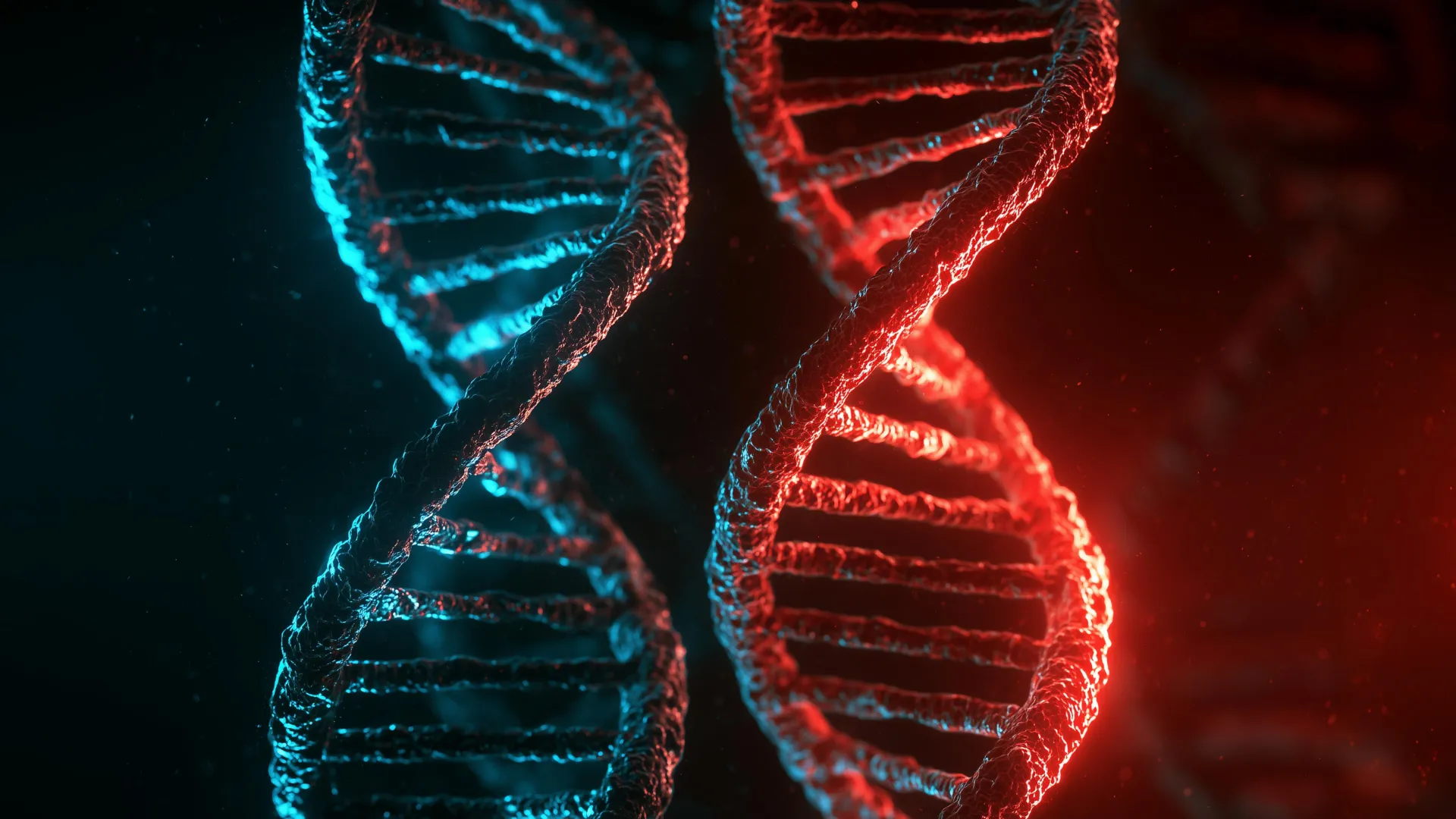
In the quiet, methodical halls of academia, a team of researchers from the University of Strathclyde and Durham University has unveiled a proposal that reads like the premise of a science fiction novel but is rooted in the rigorous discipline of molecular chemistry. They have outlined the first theoretical framework for detecting "mirror life"—an entirely hypothetical form of biological existence built from molecules that are perfect, reversed-image copies of those found in terrestrial organisms.
While the emergence of such life remains firmly in the realm of the theoretical, the scientific community is beginning to treat the possibility with newfound gravity. As advancements in synthetic biology push the boundaries of what is possible in the laboratory, the researchers argue that developing detection methods today is a necessary, if preemptive, act of biosecurity.
The Science of Handedness: Understanding Chirality
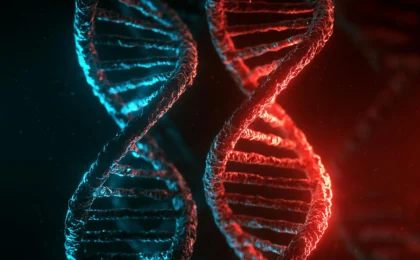
To understand the threat—and the detection method—one must first understand the concept of chirality. In the world of chemistry, chirality is often referred to as "molecular handedness." Just as a person’s left and right hands are mirror images that cannot be perfectly superimposed upon one another, certain molecules exist in two distinct structural forms that contain the same atoms in the same order, yet are spatially reversed.
In the natural world, terrestrial life is "homochiral." Almost all proteins in living organisms are built from L-amino acids (left-handed), and sugars are consistently D-form (right-handed). This uniformity is a fundamental requirement for the intricate, lock-and-key interactions that allow enzymes to function and DNA to replicate.
If an organism were constructed using the mirror-image versions of these building blocks, it would theoretically possess the same structural integrity as conventional life. However, its interactions with our ecosystem would be catastrophic. Because our natural defenses, digestive enzymes, and immune systems are "tuned" to interact with conventional L-amino acids, they would likely be completely ineffective against a mirror-image pathogen. A mirror-image virus or bacterium could potentially bypass our biological "locks" entirely, posing a unique and uncontrollable threat.
The Chronology of a Preemptive Defense
The impetus for this research did not arise from an immediate discovery, but from a growing climate of caution within the global scientific community.
2020–2023: The Rise of Synthetic Biology Concerns
As techniques for "mirror-image" synthesis progressed—specifically the ability to create mirrored versions of essential enzymes—international regulatory bodies, including the UK Government Office for Science and the UN Secretary-General’s Scientific Advisory Board, began to signal that mirror-image biology might eventually pose a, albeit distant, biosecurity risk. The fear is not that mirror life will spontaneously evolve, but that it could be intentionally or accidentally synthesized in a high-security lab.
2023: The Collaboration
Dr. Lewis MacKenzie of the University of Strathclyde’s Department of Pure and Applied Chemistry and Professor Robert Pal of Durham University began their collaboration. Both were already experts in Circularly Polarized Luminescence (CPL)—a technique that measures how molecules interact with light based on their handedness. They realized that their work on optical probes could be repurposed to identify the "molecular fingerprint" of mirror-image biology.
2024: The Publication
The team published their findings in Royal Society Open Science under the title, "Circularly Polarized Luminescence (CPL) as a Contingency Assay for ‘Mirror Life’ Bio-Hazards." The paper serves as the first foundational text for a detection protocol, proposing a way to screen for these hypothetical organisms before they ever become a reality.
The Mechanism: How Light Reveals the Mirror
The researchers’ proposed detection method relies on Circularly Polarized Luminescence (CPL). In standard optics, light oscillates in a plane. However, circularly polarized light involves a wave that rotates in either a clockwise or counter-clockwise direction as it travels.
When a fluorescent molecule is exposed to this light, it emits its own light, which also possesses a specific handedness. Because a mirror-image molecule will interact with light in the exact opposite way to a conventional molecule, the CPL signature acts as a "molecular fingerprint."
From 3D Cinema to Biology
The principle is remarkably similar to the technology behind modern 3D movie glasses. These glasses use polarized lenses to filter light differently for the left and right eye, creating the illusion of depth. Dr. MacKenzie and Professor Pal are effectively proposing to use the same physical principles to "see" the depth and orientation of molecules within a biological sample.
The Fluorescent Probe Strategy
To make this work in a practical setting, the researchers suggest the use of specialized, chiral fluorescent probes. These are molecules designed to bind specifically to cellular components. Once attached, these probes "report" the chirality of their environment through the CPL signals they emit.
Crucially, the team proposes a "multi-probe" approach. Relying on a single probe could lead to false positives, as complex biological environments are inherently noisy. By using a cocktail of probes that target different cellular structures simultaneously, researchers can build a more comprehensive, reliable profile of the organism’s handedness, drastically reducing the margin for error.
Official Responses and Global Implications
The proposal has drawn significant interest precisely because it addresses a risk that is currently "un-detectable." If mirror life were introduced into a laboratory setting today, standard diagnostics—such as PCR tests or protein sequencing—would likely return "null" results, as the instruments are calibrated only for conventional molecules.
Regulatory and Ethical Hurdles
The scientific community is currently debating whether research into mirror-image life should be strictly restricted. While the potential for medical breakthroughs—such as mirror-image drugs that could treat diseases without being broken down by the body’s natural enzymes—is immense, the "dual-use" nature of the research is undeniable.
The UK Government Office for Science has noted that the creation of organisms capable of reproducing using mirror-image biological molecules is a "high-consequence" area of study. The research by MacKenzie and Pal provides a way for regulators to potentially allow continued study while maintaining a "safety net" for detection.
The "Contingency Assay" Philosophy
Dr. MacKenzie is careful to maintain a measured tone: "We don’t expect mirror life to appear tomorrow, but if it did arise, the consequences could be severe, and it makes sense to develop detection methods before they are needed."
This philosophy of "pre-emptive defense" is becoming a standard in emerging fields like synthetic biology and AI, where the pace of innovation can quickly outstrip the pace of safety regulations.
Supporting Data and Experimental Feasibility
A major advantage of the CPL detection method is its scalability. Professor Pal has already demonstrated that the hardware required—microscopes, high-resolution cameras, and biological plate readers—is already available in many advanced laboratories.
The team envisions the technology being integrated into existing systems in three phases:
- Microscopic Screening: Using specialized cameras to analyze individual cells for mirror-chiral signatures.
- Automated Plate Readers: Incorporating CPL sensors into machines that can analyze thousands of samples at once, allowing for rapid screening of large volumes of biological material.
- Field Portability: Eventually miniaturizing the sensors into portable devices that could be used at borders or in research facilities to verify the origin of synthetic biological samples.
The researchers emphasize that the technology can be refined using ordinary terrestrial samples. By using "control" samples (standard life) and testing whether their equipment can correctly identify the chirality of these known substances, they can calibrate their machines to be hypersensitive to any deviation from the norm.
Conclusion: Preparing for the Unseen
The proposal to detect mirror life is a testament to the foresight of modern chemistry. While the odds of encountering mirror life in nature are astronomically low, the possibility that human ingenuity might one day create it is no longer zero.
By grounding their detection method in the fundamental laws of physics and optics, Dr. MacKenzie and Professor Pal have provided a blueprint for a future where humanity can explore the frontiers of synthetic biology without losing its footing. As the scientific community continues to debate the ethics of "mirror-image" research, this detection technology stands as a necessary bridge—a way to ensure that if we ever choose to look into the mirror, we have the tools to understand what we see.