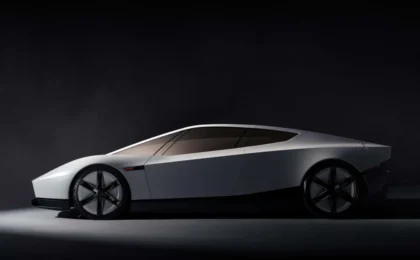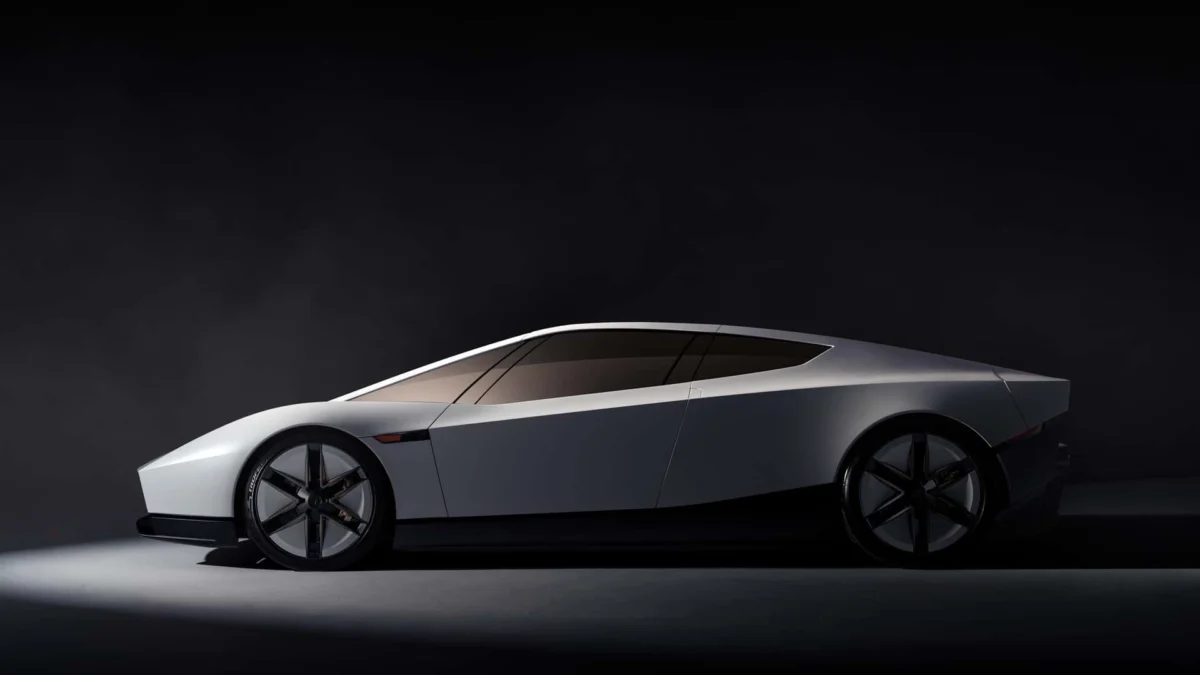
In the high-stakes world of automotive manufacturing, praise between industry titans is as rare as a flawless, hand-painted finish on a vintage supercar. Yet, in an unexpected cross-pollination of admiration, Ferrari CEO Benedetto Vigna has broken ranks with traditional industry decorum. During a recent appearance at the prestigious Quattroruote automotive conference, the executive offered a glowing, perfect 10-out-of-10 rating for Tesla’s redesigned Roadster—a score he applied to both the vehicle’s cutting-edge technology and its theatrical market presentation.
For an executive helming the most storied brand in Italian performance history to offer such unreserved praise for an American electric vehicle (EV) startup is more than a mere compliment; it is a signal of shifting tides within the automotive sector.
The Spectacle in Texas: A Masterclass in Marketing
Tesla’s unveiling of the next-generation Roadster at SpaceX’s rocket test facility in McGregor, Texas, was designed to be impossible to ignore. The demonstration served as a vivid reminder of Tesla’s penchant for fusing high-concept engineering with "wow-factor" spectacle.
The presentation was characterized by a series of high-risk, high-reward stunts. The prototype displayed its aerodynamic and structural prowess by driving up a vertical ramp, maintaining adhesion while inverted through the use of an advanced suction fan system. The climax of the event featured the vehicle launching off a ramp, performing a controlled maneuver in mid-air, and executing a landing aided by compressed-gas thrusters—a clear application of aerospace technology adapted for the road.
While the automotive press has been quick to note that the 2028 target date for the production model is a "goal" rather than a guaranteed timeline—a common refrain given Tesla’s history of ambitious, often delayed, release schedules—Vigna remained indifferent to the logistical cynicism. His appraisal was focused purely on the audacity of the display.
Chronology of an Electric Evolution
The journey to this moment of mutual respect has been long and fraught with industry skepticism. Tesla’s original Roadster, first teased years ago, has undergone multiple iterations as the company balanced its core mission of mass-market electrification with its desire to push the boundaries of hyper-performance.
- 2017: The initial concept of the next-generation Roadster is revealed, promising astronomical performance figures and a 0–60 mph time that stunned the industry.
- 2020–2024: Tesla pivots toward scaling the Model 3 and Model Y, leaving the Roadster in a state of extended gestation.
- 2026 (May): Ferrari debuts its first fully electric model, the Luce. The market reaction is initially cold, with company stock dipping as investors grapple with the brand’s transition away from the internal combustion engine.
- 2027 (Recent weeks): Tesla hosts the SpaceX facility demonstration, shifting the public perception of the Roadster from a "vaporware" project to a genuine technological testbed.
- 2028 (Projected): The target date for the official production launch of the new Tesla Roadster.
Vigna’s Philosophy: The Power of External Perspective
Perhaps the most insightful portion of Vigna’s commentary was his reflection on the necessity of outside collaboration. When discussing the Roadster’s design and engineering, Vigna noted that Tesla’s decision to leverage external studios allowed them to achieve a level of innovation that might have been impossible within a siloed corporate environment.
"If we had worked on our own, we would not have done what we did," Vigna remarked, drawing a direct parallel to Ferrari’s internal processes. The Ferrari CEO has been a vocal proponent of seeking outside expertise, most notably in his collaboration with Jony Ive’s design studio, LoveFrom. This partnership was instrumental in the development of the Luce, Ferrari’s first foray into the battery-electric vehicle (BEV) space.
By inviting outside observers—designers and engineers not steeped in the "Ferrari way"—the company was forced to confront uncomfortable questions and rethink foundational assumptions. Vigna views the Tesla Roadster not just as a fast car, but as a byproduct of this same willingness to embrace radical, external input.
Supporting Data and the Shift to Electric
The automotive industry is currently in the midst of its most significant transformation since the invention of the assembly line. Ferrari, a company whose identity is inextricably linked to the roar of the V12 engine, is navigating this transition with a multi-pronged strategy.
While the Luce represents the vanguard of their electric efforts, Ferrari has simultaneously doubled down on high-performance hybrid systems and a renewed investment in carbon-neutral biofuels. This dual-path strategy allows the brand to satisfy the regulatory demands of the future while maintaining the visceral experience expected by its loyal, purist clientele.
Tesla, by contrast, continues to operate as a singular, disruptive force. Its ability to command the global conversation—even years ahead of a product’s actual release—remains unmatched. Vigna’s validation of the Roadster suggests that Ferrari is no longer looking at Tesla as a rival to be defeated, but as a peer in the difficult task of redefining what a "dream car" looks like in a post-combustion world.
The Implications for Industry Risk-Taking
"It certainly shows that also in the automotive world there is still a lot to be done," Vigna stated. "We have to keep dreaming."
This sentiment is the core takeaway of his endorsement. In an era where many legacy automakers are playing it safe, focusing on incremental improvements to existing platforms, Tesla’s willingness to stake its reputation on a, quite literal, flying car is a gamble that Vigna clearly admires.
For the automotive sector, the implications are profound:
- Innovation over Iteration: The industry is moving away from the "annual model year" update cycle toward a model of constant, disruptive iteration.
- The Rise of the "Stunt" Economy: Marketing is no longer just about television spots; it is about engineering demonstrations that generate organic, global interest.
- Collaborative Ecosystems: The era of the "all-in-house" manufacturer is waning. The best innovation will likely emerge from partnerships between traditional luxury houses and agile, tech-focused design firms.
Conclusion: A New Standard for Collaboration
Benedetto Vigna’s perfect score for the Tesla Roadster is more than a headline-grabbing soundbite. It is an acknowledgement that the "old world" of automotive manufacturing can no longer afford to be insular. By praising Tesla’s courage to "dare," Vigna is signaling to his own engineers, his investors, and his customers that the future of Ferrari is not in protecting the past, but in the same radical risk-taking that brought the Roadster to a rocket launch pad in Texas.
As the industry looks toward 2028 and beyond, the line between a software company like Tesla and a performance marque like Ferrari will continue to blur. If the CEO of the world’s most iconic supercar brand is willing to look to Silicon Valley for inspiration, it is safe to say that the era of electric performance is only just beginning to show its true potential.
We want your opinion! What would you like to see on Motor1.com? Take our 3-minute survey to help us shape the future of our coverage. — The Motor1.com Team