In the quiet, climate-controlled halls of London’s Natural History Museum, history is rarely static. While museum collections are often viewed as final resting places for the remains of antiquity, they are frequently sites of profound scientific renaissance. A recent breakthrough by an international research team, led by the University of Bristol, has demonstrated that the most significant discoveries are sometimes not made in the field, but through the patient, methodical re-examination of specimens that have sat in archives for over half a century.
The discovery of a new prehistoric species, Dinodontosaurus isiyavamanda, dating back approximately 240 million years to the Triassic period, is doing more than merely adding a name to a taxonomic list. It is effectively recalibrating our understanding of the timeline of dinosaur evolution and forcing paleontologists to rethink the geography of the ancient world.
The Main Facts: A Taxonomic Breakthrough
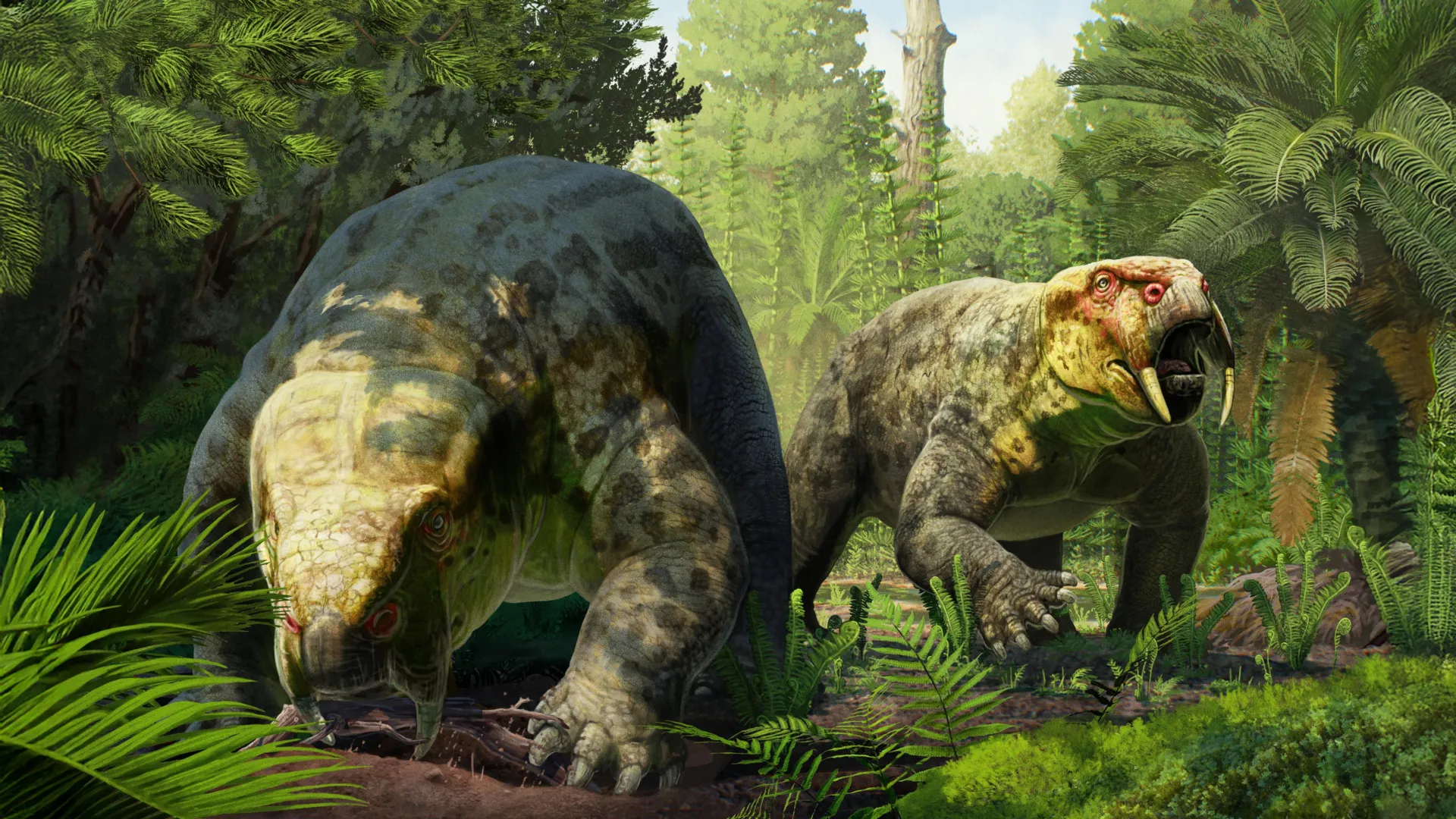
The newly identified species, Dinodontosaurus isiyavamanda, belongs to the dicynodonts—a group of robust, plant-eating synapsids. Synapsids are the lineage that eventually led to modern mammals, distinct from the diapsid lineage that gave rise to dinosaurs, crocodiles, and birds. During the Triassic, long before dinosaurs achieved ecological hegemony, these creatures were the dominant herbivores, thriving across the supercontinent of Pangea.
Prior to this study, published on September 15 in the Journal of Vertebrate Palaeontology, the genus Dinodontosaurus was considered exclusive to South America. The identification of D. isiyavamanda in Tanzania represents the first confirmed record of this genus outside of South America. By linking these two geographically distant regions, researchers have established a vital "biostratigraphic bridge," allowing them to correlate the age of fossil-bearing rocks in East Africa with those in South America with unprecedented precision.
A Chronology of Discovery: From 1963 to the Present
The story of Dinodontosaurus isiyavamanda is a testament to the long game of scientific inquiry, spanning three generations of researchers.
The 1963 Expedition
The saga began in 1963, during a British expedition to what is now Tanzania. Researchers unearthed a wealth of synapsid fossils, which were subsequently transported to the Natural History Museum in London. At the time, the sheer volume of material meant that while some specimens were cataloged and studied, many others remained partially prepared or left in storage, their secrets locked away in plaster and matrix.
The 1994 Thesis
The journey toward identification hit a significant milestone in 1994. Nigel Larkin, then an MSc student at University College London and now a Visiting Research Fellow at the University of Reading, conducted a detailed study of the dicynodont skeleton as part of his thesis. Even then, decades ago, Larkin recognized that the anatomy of the specimen did not align with known species. He suspected it was new to science, yet the infrastructure for global collaboration and the technology for advanced anatomical imaging were not yet at the level required to definitively prove his hypothesis.
The Modern Synthesis
It would take nearly another 30 years for the pieces to fall into place. Under the leadership of PhD student Hady George from the University of Bristol, the team assembled the necessary expertise and utilized cutting-edge technology—such as micro-CT scanning—to revisit the specimen. This modern approach allowed the team to perform a granular anatomical analysis, confirming that the Tanzanian fossils were indeed a distinct species within the Dinodontosaurus genus. The name isiyavamanda was chosen to honor the land of the Wamanda people, acknowledging the cultural and historical significance of the region where the fossils were first unearthed.
Supporting Data: The Science of Correlation
The primary significance of D. isiyavamanda lies in the geological clues it provides. For years, scientists struggled to date the Triassic rock formations in Tanzania accurately. These deposits had long been associated with similar rocks in South Africa based on shared fossil types, leading to the assumption that they belonged to the same Middle Triassic period.
However, the identification of Dinodontosaurus in both Tanzania and South America has disrupted this model. By comparing these deposits, researchers have found that the Tanzanian rock sequences are likely much younger than previously thought. Radiometric dating of South American rock layers, which contain the same genus, suggests that these sequences are approximately 10 million years younger than their South African counterparts.
This correlation acts as a biological "clock." Because the presence of the same animal across two continents suggests they lived at the same time, the age of the South American deposits provides a reliable proxy for the Tanzanian site. This finding effectively detaches the Tanzanian fossils from the older South African timeline, shifting the geological context of the entire region.
Official Responses: A New Era of Collaboration
The research team emphasizes that this discovery is as much about the process of science as it is about the fossil itself.
Hady George, the lead author, highlighted the global implications: "Our discovery marks the first confirmed record of the genus Dinodontosaurus outside South America. The finding links the Tanzanian and South American fossil-bearing rocks, showing they are of equivalent age. This helps confirm that the oldest dinosaur candidates from Tanzania are probably no older than those from South America, refining the timeline of dinosaur origins."
Nigel Larkin, reflecting on his 30-year journey with the specimen, noted the evolution of paleontological methods. "Techniques have improved vastly over the last 30 years… we can do so much more with micro-CT scanning than we ever could have imagined in the 1990s. International collaboration is so much easier. And what’s 30 years? It’s the blink of an eye compared to the age of this prehistoric specimen."
Dr. Mike Day, Curator of Non-Mammalian Tetrapods at the Natural History Museum in London, echoed the sentiment regarding the value of museum archives. "This fossil specimen from Tanzania has been in our care for over 60 years, and it’s wonderful that its identity has now been brought to light. It goes to show how revisiting museum collections can change our understanding of the past just as much as finding new fossils in the field."
Implications: Rewriting the Timeline of Evolution
The identification of D. isiyavamanda carries profound implications for the narrative of early dinosaur evolution. By demonstrating that the Tanzanian deposits are younger than previously believed, the findings undermine the hypothesis that these specific sites hold the record for the "earliest" dinosaurs.
Shifting the Geography of Origins
If the Tanzanian rocks are indeed 10 million years younger than thought, the fossils found within them—once considered primary candidates for the "first" dinosaurs—are effectively moved down the evolutionary timeline. This suggests that the emergence and diversification of dinosaurs may not have occurred in the exact sequence or geographic locations that scientists previously hypothesized. It forces a recalibration of the "Dinosaur Origin" model, requiring a more nuanced look at how these animals migrated and diversified across the Pangean landscape.
Future Directions
The work is far from complete. The team has only just begun to scratch the surface of the material in their care. A substantial portion of the Tanzanian Dinodontosaurus remains, particularly the postcranial skeleton (the bones below the skull), has yet to be fully prepared and analyzed.
Future research projects will focus on:
- Biomechanical Analysis: Understanding how these dicynodonts moved and interacted with their environment.
- Ecological Niche Modeling: Investigating how several species of large plant-eaters managed to coexist within the same ecosystems, potentially providing clues as to why they remained successful even as early dinosaurs began to emerge.
- Global Comparisons: Using the Dinodontosaurus link to further synchronize the geological records of Africa, South America, and beyond, building a more accurate, global map of Triassic life.
Ultimately, Dinodontosaurus isiyavamanda serves as a poignant reminder that the history of life on Earth is a living, breathing subject. Through the persistence of dedicated researchers and the preservation of museum collections, we are still discovering how the world looked 240 million years ago—and in the process, we are refining the very story of how our own mammalian lineage and the iconic dinosaurs eventually came to share, and later dominate, the planet. The fossil may have been hidden in a drawer for sixty years, but its impact on science will be felt for decades to come.