Deep within the lush, verdant canopy of Yunnan’s temperate and tropical forests, a botanical mystery has been unfolding beneath the roots of the Chinese cork oak. Scientists from the Kunming Institute of Botany have unveiled the existence of Dianjunus rex—a gargantuan fungus that stands as a behemoth in the world of Ascomycota. With reproductive structures reaching half a meter in height and weighing over two kilograms, this newfound titan is challenging everything mycologists thought they knew about the limitations of fungal growth.
Main Facts: A Giant Among Microbes
The discovery of Dianjunus rex, affectionately dubbed "D-Rex" by its discoverers, marks a watershed moment in mycology. Ascomycota is the largest phylum in the fungal kingdom, encompassing more than 64,000 recognized species, including everything from common yeasts to complex truffles. However, the vast majority of these organisms are microscopic or relatively diminutive.
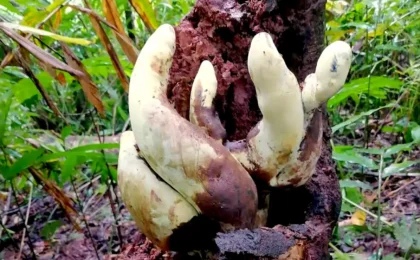
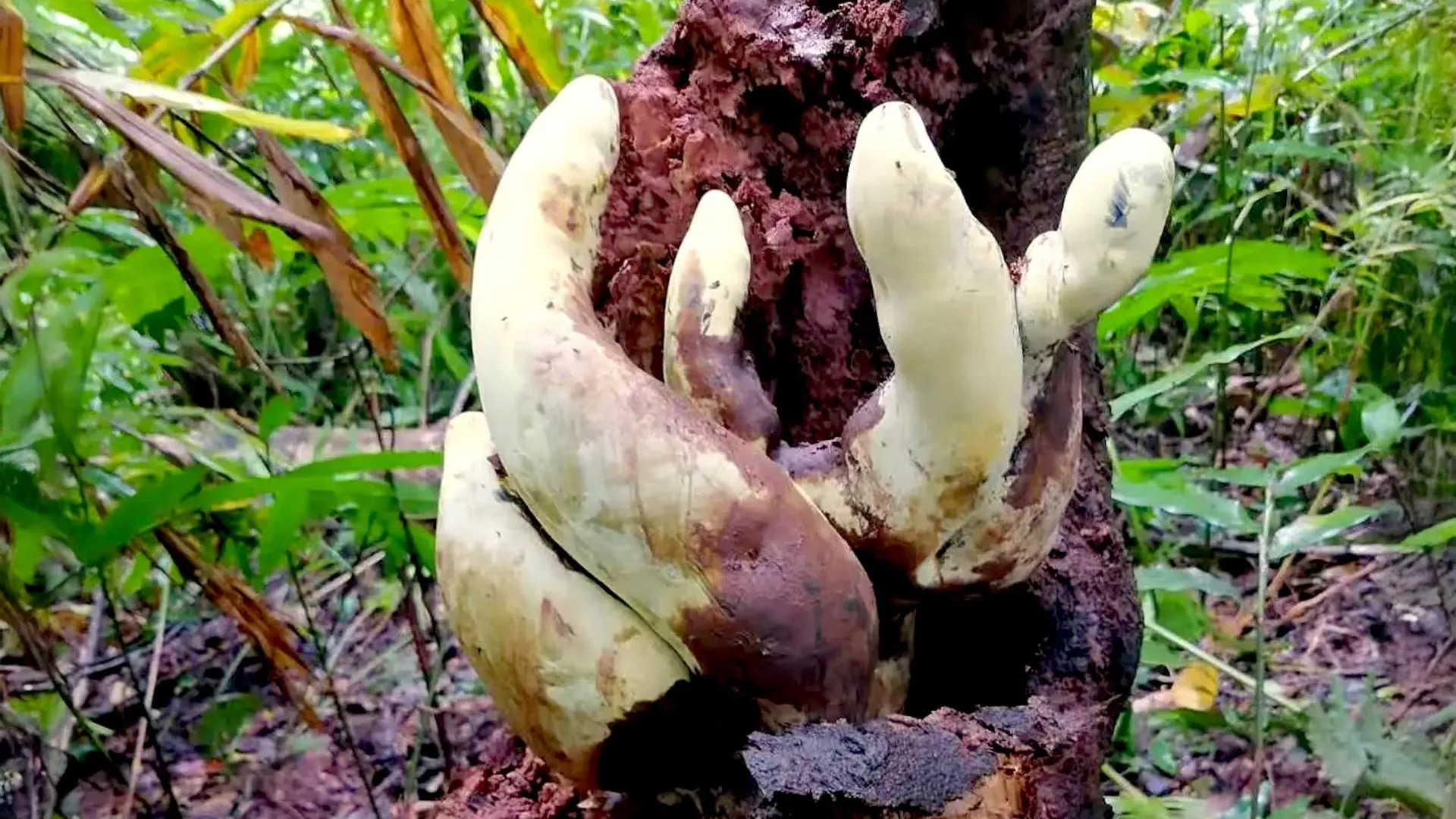
D-Rex defies these norms. Its reproductive structures—known as stromata—emerge from the rhizosphere of woody roots, thrusting upwards to reach heights of 50 cm (20 inches). Weighing in at an impressive 2.2 kg (4.9 pounds), these structures represent the largest known fruiting bodies within the entire Ascomycota phylum. Unlike the typical gilled mushrooms familiar to the public, D-Rex utilizes sac-like structures to house its spores, a hallmark of its classification.
The scale of the discovery is significant enough that researchers have had to establish an entirely new taxonomic family, Dianjunaceae, to accommodate it. This classification places D-Rex within the order Xylariales, a group historically noted for its ability to decompose complex organic matter through specialized enzymes.
A Chronology of Discovery
The journey to identifying D-Rex began with systematic surveys conducted by researchers from the Kunming Institute of Botany across the diverse ecological gradients of Yunnan Province.
Fieldwork and Initial Observation
The team traversed several distinct forest environments, ranging from the temperate coniferous forests near Damaidi and Yipinglang to the dense tropical rainforests of Nanbang. It was in these varied settings that they first encountered the "whitish" reproductive structures protruding from the woody roots of Chinese cork oaks. Recognizing that these structures did not align with known ascomycete species, the researchers collected reference specimens for intensive laboratory analysis.
Laboratory Cultivation and Genomic Sequencing
Upon returning to the Kunming Institute of Botany, the team initiated a two-pronged study. First, they attempted to cultivate the spores under controlled laboratory conditions to observe the fungus’s physical growth patterns. Simultaneously, they undertook the complex task of genomic sequencing. By analyzing the protein-coding genes of the samples, they were able to construct a clear picture of the fungus’s evolutionary trajectory, confirming that it was genetically distinct from its closest relative, Graphostroma platystoma.
Taxonomy and Naming
The final stage of the discovery process involved the formal description of the species. Named Dianjunus rex—a nod to the ancient Dian kingdom of Yunnan and its "king-like" stature—the organism was officially introduced to the scientific community in the journal Frontiers in Fungal Biology.
Supporting Data: The Evolutionary Clock
To place D-Rex in its proper context, the research team employed a "molecular clock" analysis. By comparing the DNA of the newly identified Dianjunaceae family against hundreds of other fungi with well-documented evolutionary histories, the scientists were able to estimate the lineage’s point of origin.
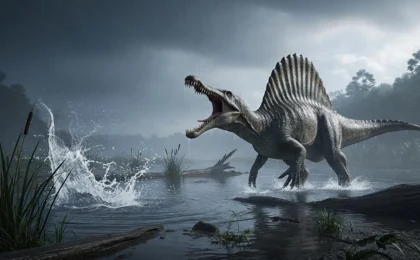
The data points to a birth date approximately 65 million years ago. This timeline is striking: it places the origin of the Dianjunaceae family precisely one million years after the Cretaceous-Paleogene (K-Pg) mass extinction event—the cataclysmic episode that wiped out non-avian dinosaurs and fundamentally reorganized life on Earth.
This timing suggests that D-Rex’s ancestors may have been "ecological opportunists." As the global climate shifted and massive amounts of woody biomass became available due to widespread forest die-offs and ecological reorganization, these fungi likely evolved to exploit the influx of dead plant material. The ability to break down lignin and cellulose—a trait common in the order Xylariales—would have been a significant evolutionary advantage in the post-extinction landscape.
Official Responses and Expert Commentary
Dr. Indunil C. Senanayake, an associate professor at the Germplasm Bank of Wild Species at the Kunming Institute of Botany and the corresponding author of the study, believes that D-Rex is merely the tip of the iceberg.
"This remarkable species represents a new fungal family, Dianjunaceae, and provides a rare window into the evolution of extreme fungal body forms," Dr. Senanayake stated. Regarding the environmental context of the fungus’s evolution, he added, "After the mass extinction, forests experienced dramatic changes, including the sudden availability of large amounts of dead plant material. For wood-associated decomposing fungi, such environmental disruption may have created new ecological opportunities."
Dr. Senanayake also addressed the logistical hurdles of the discovery, noting that the "cryptic" nature of many fungi often leads to underreporting. "This discovery illustrates how much fungus biodiversity remains to be discovered in East Asian forests," he remarked. "The region combines exceptional habitat heterogeneity, climatic stability, and complex biotic interactions that promote fungal diversification. Historically, however, fungal diversity in these ecosystems has been underestimated due to logistical difficulties in field sampling."
Implications: The Science of Size
The sheer physical size of Dianjunus rex raises a fundamental biological question: Why grow so large?
In the evolutionary arms race for survival, size usually correlates to a specific advantage. For D-Rex, the hypothesis centers on spore dispersal. In the dense, humid environment of the Yunnan forests, wind dispersal can be inhibited by thick undergrowth. By elevating its reproductive structures 50 cm above the forest floor, D-Rex gains a significant mechanical advantage, allowing its spores to be carried further by air currents that would be obstructed lower down.
However, this strategy is not without its costs. Constructing a 2.2 kg structure requires an enormous investment of energy and nutrients. The fact that D-Rex has evolved this strategy implies that the reproductive success gained through superior spore dispersal is high enough to offset the metabolic cost of building such a massive "tower."
The Future of Fungal Research in China
The implications of the D-Rex discovery extend far beyond the species itself. It serves as a reminder that the world’s biodiversity hotspots, particularly in the subtropical forests of Asia, remain largely unexplored.
For decades, mycological research has skewed heavily toward species with obvious commercial value—such as edible mushrooms or fungi with medicinal properties. By focusing on the "invisible" or "cryptic" fungi that perform critical ecological roles, such as the decomposition of dead wood, scientists like those at the Kunming Institute of Botany are uncovering a hidden history of our planet.
The researchers believe that as they continue to refine their sampling methods and penetrate deeper into the remote, challenging terrains of Yunnan, the discovery of other unusual forms is almost inevitable. The "D-Rex" stands as a testament to the fact that even in the 21st century, the Earth still holds giants waiting to be found.
As we continue to map the genomic and physical diversity of the fungal kingdom, we gain not only a better understanding of the present-day ecosystem but also a deeper appreciation for the ancient, resilience-driven adaptations that allowed life to flourish in the wake of planetary catastrophe. Dianjunus rex is not just a biological curiosity; it is a living chronicle of 65 million years of forest evolution, and its story is only just beginning.