In the quiet, methodical halls of ancient Chinese imperial courts, astronomers once stood as the gatekeepers of the heavens. They watched the sky not merely out of curiosity, but out of a profound belief that the celestial dance dictated the fate of dynasties. Today, those ancient observations—meticulously recorded on bamboo strips and silk—have become the bedrock for a groundbreaking modern scientific inquiry.
An international research team has successfully revisited one of the oldest precisely dated records of a total solar eclipse, an event that occurred in 709 BCE. By bridging the gap between ancient geography and cutting-edge astrophysics, the researchers have not only corrected a persistent error in the historical record but have also gained unprecedented insights into the Earth’s rotational history and the erratic behavior of our Sun nearly three millennia ago.
The 709 BCE Eclipse: A Historical Anchor
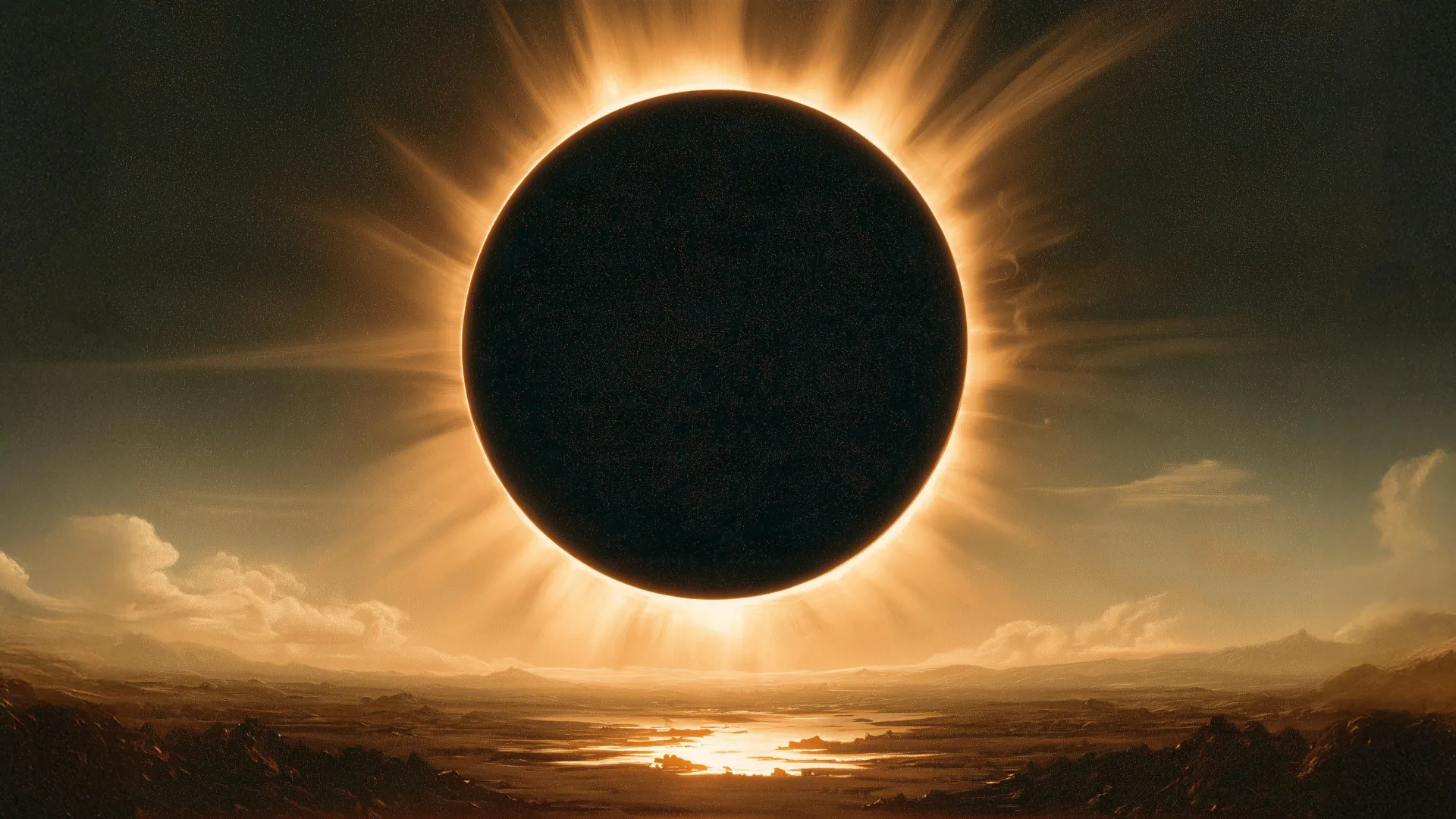
On July 17, 709 BCE, the court of the Lu Duchy—located in what is now modern-day China—witnessed a celestial phenomenon that would be etched into the "Spring and Autumn Annals." The chronicle, compiled centuries after the event, noted with characteristic brevity: "The Sun was totally eclipsed."
For modern scientists, this record is a "Rosetta Stone" of sorts. While many ancient civilizations documented eclipses, the Lu record is one of the earliest to be precisely dated. However, when researchers initially attempted to model the path of the 709 BCE eclipse using established astronomical software, they encountered a stubborn discrepancy: the math suggested the total eclipse should not have been visible from the ancient capital of Qufu.
The breakthrough came when the team, led by Assistant Professor Hisashi Hayakawa of Nagoya University, scrutinized the geographic coordinates of the ancient Lu capital. By synthesizing archaeological excavation reports with historical geography, the team discovered that previous models had placed Qufu roughly eight kilometers away from its true, historical location. This minor, yet critical, geographical correction brought the models into perfect alignment with the ancient records, allowing the researchers to "see" the eclipse exactly as the observers in the Lu court did 2,700 years ago.
Chronology of a Celestial Investigation
The investigation was not a simple matter of checking dates; it was an interdisciplinary marathon. The process unfolded in several distinct phases:
- Geographical Calibration: The researchers first reconciled the discrepancy between modern mapping and the archaeological remains of the Lu Duchy, establishing the precise vantage point of the court observers.
- Rotational Modeling: With the location fixed, the team calculated the "delta T" (ΔT)—the difference between Terrestrial Time and Universal Time. This allowed them to measure how much the Earth’s rotation has slowed over the last 2,700 years due to tidal friction and other geodynamic forces.
- Solar Corona Reconstruction: The team analyzed a later addendum found in the "Hanshu" (Book of Han), written seven centuries after the event. This text described the Sun as "completely yellow above and below" during the darkness of the eclipse. The team posited that this was a description of the solar corona—the Sun’s faint, outer atmosphere.
- Verification: By comparing the reconstructed coronal shape with modern models of solar activity, the team tested whether the Sun was indeed emerging from a period of inactivity known as a "grand minimum."
Supporting Data: Earth’s Changing Pace
The Earth does not rotate with the steady tick of a quartz watch. Over millennia, the planet’s rotation is subject to deceleration caused by the gravitational interplay between the Earth, the Moon, and the ocean tides. As the Moon pulls on our oceans, it acts as a cosmic brake, slowly lengthening our days.
By using the 709 BCE eclipse as a fixed data point, the research team was able to provide a much tighter constraint on Earth’s rotational speed during the 8th to 6th centuries BCE. The findings place the delta T between 20,264 and 21,204 seconds.
"This new dataset fixes coordinate errors in previous Earth rotation studies," says co-author Mitsuru Sōma of the National Astronomical Observatory of Japan. "It doesn’t just refine our understanding of this specific eclipse; it improves the precision with which we can date and reconstruct other historical astronomical events across the ancient world."
Insights into Solar Activity
Perhaps the most intriguing aspect of the study is the potential evidence of the Sun’s "awakening." The 709 BCE eclipse occurred shortly after the conclusion of the "Homer Grand Minimum" (808–717 BCE), a period characterized by exceptionally low solar activity and a near-total absence of sunspots.
The "Hanshu" account, which describes the appearance of the Sun during the eclipse, provides a rare, direct observation that can be checked against indirect proxy data, such as radiocarbon levels found in tree rings. Radiocarbon is produced in the upper atmosphere by cosmic rays; when the Sun is active, its magnetic field deflects these rays, resulting in lower radiocarbon concentrations in tree growth rings.
The researchers argue that the coronal description—suggesting a vibrant, structured appearance—aligns with the transition of the Sun from the quiet of the Homer Grand Minimum into a more active phase. While the researchers caution that the "Hanshu" description is a historical text written long after the fact, the alignment between this account and independent radiocarbon data provides a compelling case that the Sun was, indeed, re-entering a period of high magnetic activity.
Official Responses and Scientific Implications
The study, published in the Astrophysical Journal Letters, has garnered significant attention for its methodological rigor. By combining the expertise of solar physicists and oriental historians, the team has set a new standard for how historical documents should be treated as scientific data.
"What makes this record special isn’t just its age, but also the potential that we are looking at one of the earliest surviving written descriptions of the solar corona," notes Dr. Hayakawa. "When we combine the careful records of our ancestors with modern computational methods and historical evidence, we can potentially find new information about our planet and our star from thousands of years ago."
The implications of this research are twofold:
- For Geophysics: It offers a more precise calibration for the Earth’s long-term rotational history, which is essential for understanding deep-time geological and tidal processes.
- For Heliophysics: It provides a "spot check" for solar models. By verifying that the Sun was indeed active following a grand minimum, scientists can better calibrate their predictions for how the Sun behaves over long-term cycles, which has direct relevance to understanding space weather and its potential impact on modern satellite technology.
Conclusion: The Endurance of Ancient Science
The fact that a 2,700-year-old observation can still drive innovation in modern physics is a testament to the sophistication of ancient scholars. In the Lu Duchy, court astronomers were not merely recording omens; they were capturing the fundamental state of the universe.
"Some of our ancestors were very skilled observers," says co-author Dr. Meng Jin of the Lockheed Martin Solar and Astrophysics Laboratory. The collaboration between the historians who decipher the texts and the physicists who simulate the light of the corona serves as a bridge across time.
As we look toward the future, with advanced solar telescopes and satellite-based observations, this study reminds us that the history of science is not a linear progression from "superstition" to "fact." Rather, it is an ongoing dialogue with the past. The 709 BCE eclipse remains a glowing example of how, with the right tools and a deep respect for historical inquiry, we can continue to uncover the secrets of the cosmos, one ancient record at a time.