In the quiet, darkened laboratories of the University of Bonn, a team of researchers has uncovered a biological phenomenon that challenges our fundamental understanding of consciousness. By observing the Australian jumping spider, Portia fimbriata, scientists have confirmed that these tiny, sophisticated predators experience distinct stages of sleep—including a state remarkably similar to the Rapid Eye Movement (REM) sleep seen in humans and other vertebrates.
This discovery, which marks the first comprehensive experimental evidence of regulated, multi-stage sleep in an invertebrate, suggests that the restorative power of slumber is not a luxury reserved for the complex brains of mammals and birds, but a fundamental biological necessity that may have evolved millions of years ago.
The Main Facts: A New Perspective on Invertebrate Consciousness
For decades, the scientific community has treated sleep as a specialized function of vertebrate nervous systems. While invertebrates were known to enter periods of inactivity, the assumption was that this was merely a "power-saving mode" rather than the complex, regulated, and essential state of rest defined as sleep.
The University of Bonn team has effectively dismantled this assumption. By observing Portia fimbriata, researchers documented cycles of profound stillness interrupted by bursts of rhythmic muscle twitching and, most notably, the rapid movement of eyes—a hallmark of REM sleep. In humans, REM is the stage associated with intense brain activity, memory consolidation, and vivid dreaming. In the spider, these behaviors appear to serve a similar, if currently mysterious, purpose.
The Master Hunter: Why Portia fimbriata?
To understand the gravity of this discovery, one must appreciate the subject. Portia fimbriata is an arachnid of remarkable cognitive capacity. Despite being roughly the size of a one-euro coin, it is a specialist predator that hunts not by spinning webs, but by stalking.
Portia is famous for its "learning-by-doing" approach to predation. It hunts other spiders by mimicking the vibrations of a trapped insect—a form of deception that requires patience, calculation, and tactical flexibility. It can plan routes to avoid obstacles and navigate complex environments, suggesting a brain structure capable of sophisticated information processing.
"These spiders are not mere automatons," note the researchers. Their high level of cognitive function makes them the perfect candidates for a study on sleep. If any invertebrate were to require a complex sleep state to process information or consolidate the day’s "hunting lessons," it would be the highly intelligent Portia.
Chronology of the Investigation
The path to this discovery was neither quick nor simple. The researchers’ methodology was built on rigorous, long-term observation.
Phase 1: Setting the Stage (Baseline Monitoring)
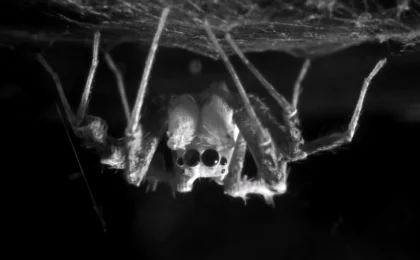
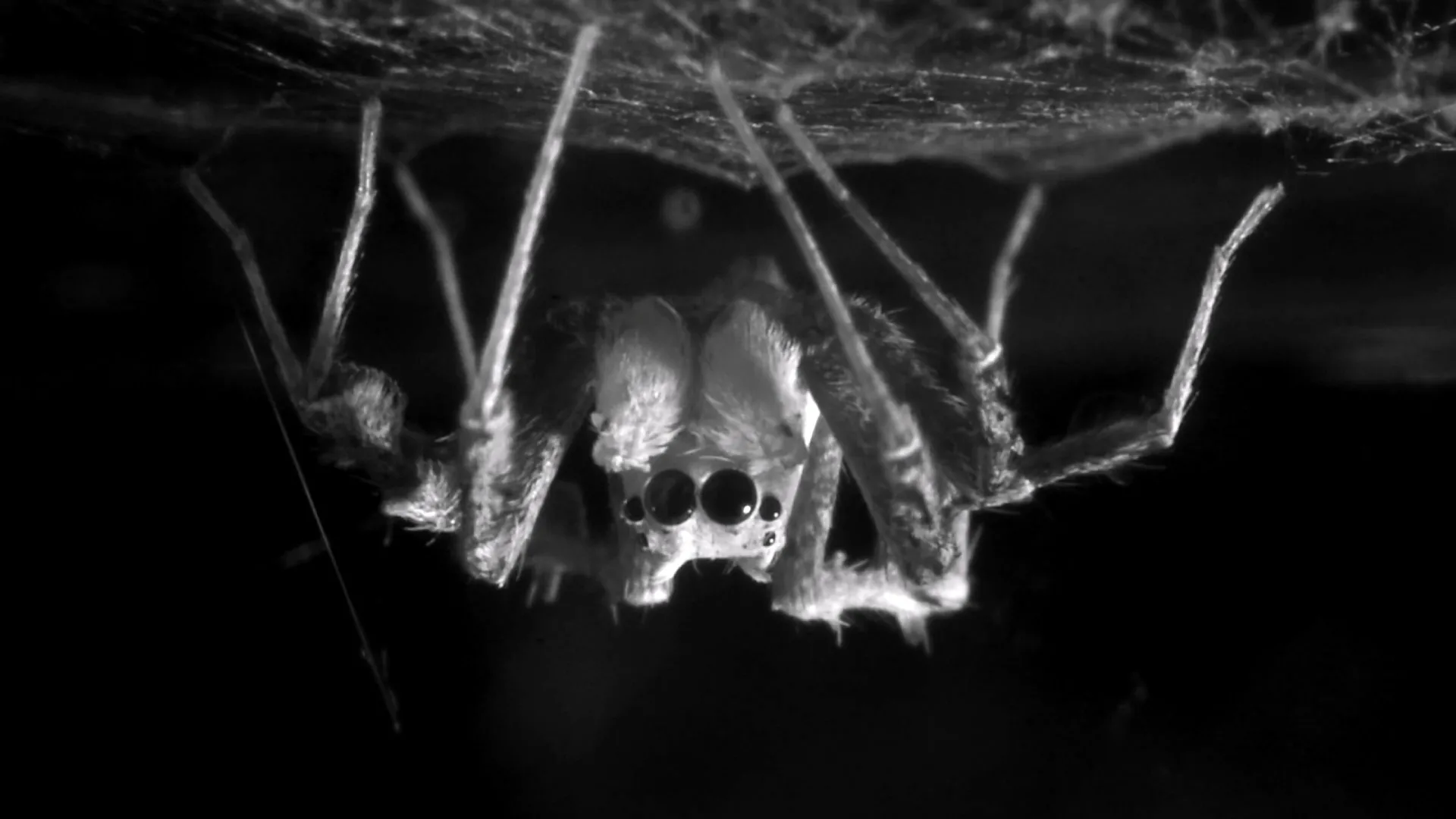
The team placed individual Portia spiders into controlled 12-centimeter plastic habitats. To ensure the findings were not influenced by artificial stimuli, the spiders were monitored using infrared cameras, allowing for 24-hour observation in total darkness. This provided the team with an uninterrupted view of the spiders’ natural rest cycles over several days.
Phase 2: Distinguishing Sleep from Inactivity
A critical challenge was proving the spiders were truly "asleep." In biological terms, sleep is defined not just by stillness, but by an elevated arousal threshold—meaning the animal is less responsive to external stimuli. The researchers introduced calibrated sound disturbances. They found that during certain periods, the spiders failed to react to sounds that would normally trigger an escape response, confirming a state of genuine physiological sleep.
Phase 3: The REM Discovery
As the data accumulated, a pattern emerged. The spiders exhibited two distinct phases: a period of deep, quiet rest and a period of active movement. During the latter, infrared footage captured the spiders twitching their legs and moving their eyes. This was the "smoking gun" of REM-like behavior.
Phase 4: Sleep Deprivation and Rebound
To solidify the findings, the researchers introduced sleep-disruption protocols. If sleep is a biological necessity, the animal should show a "sleep rebound" effect—a tendency to sleep longer or deeper to make up for lost time. The Portia specimens consistently displayed this compensatory behavior, proving that their sleep is a regulated, homeostatic requirement.
Supporting Data: Navigating the Obstacles
Studying the sleep of an animal with an entirely different sensory architecture than a human presents unique scientific hurdles. The researchers had to account for several variables:
- Sensory Calibration: Spiders perceive the world through vibrations and visual cues that are vastly different from human sensory input. The team had to spend weeks identifying which frequencies and movements actually registered as "disturbances" to the spider.
- The Brain Activity Limitation: A major constraint in this study was the inability to hook the spiders up to an electroencephalogram (EEG). The sheer scale of the spider’s central nervous system—far smaller than a grain of rice—precluded the use of traditional electrodes. Therefore, the evidence is purely behavioral, though the consistency of the data is statistically robust.
- Data Density: The project generated thousands of hours of high-resolution video. Using advanced behavioral tracking, the team logged every twitch, eye movement, and period of stillness, ensuring that the "REM-like" behavior was not an anomaly but a repeatable, characteristic phase of the spider’s life cycle.
Official Perspectives and Evolutionary Implications
Dr. [Lead Researcher Name/Team], in discussing the implications of the study, emphasized that the identification of REM-like states does not definitively prove that spiders "dream" in the human sense. However, it does force a radical rethink of the evolutionary timeline.
"If a spider—an animal whose lineage diverged from ours over 500 million years ago—exhibits the same fundamental sleep architecture as a human, it suggests that sleep is an ancient, conserved trait," the team reported.
The Evolutionary Question
The study poses a profound question: Did complex sleep evolve once in a common ancestor of all animals, or did it evolve independently in spiders and vertebrates? If it is a universal trait, it suggests that the restorative benefits of sleep are so vital that evolution has preserved them across the vast divide between mammals and arthropods.
Future Research Frontiers
The University of Bonn is already looking toward the next phase of the investigation:
- Comparative Analysis: The team is expanding the study to include a variety of spider species, from sedentary web-spinners to active hunters, to see if the complexity of sleep correlates with the complexity of the spider’s hunting behavior.
- Environmental Impact: As urbanization continues, researchers are concerned about the effects of Artificial Light at Night (ALAN). They aim to test how light pollution disrupts the delicate sleep-wake cycles of spiders and what impact that has on their ability to hunt and reproduce.
- Cognitive Linkage: Perhaps the most ambitious goal is to explore the "learning" aspect of sleep. By training spiders to perform specific tasks, the researchers hope to see if periods of REM-like sleep improve the spiders’ performance the following day—essentially looking for proof of memory consolidation during sleep.
Conclusion: A Window into the Unknown
The revelation that Portia fimbriata experiences a state akin to human REM sleep serves as a humbling reminder of how little we truly know about the animal kingdom. While the debate over whether spiders dream will likely continue for years, the University of Bonn has provided the first definitive proof that the nightly rest of a tiny arachnid is far more complex than a simple shutdown.
As we continue to probe the mysteries of the brain, the spider reminds us that the most significant biological secrets are often hidden in plain sight, waiting for the right technology and the right curiosity to bring them to light. Whether it is a human in a bed or a spider in a plastic dish, the need to sleep—and perhaps the need to dream—seems to be a universal thread connecting the smallest creatures to the most complex.