By Global News Desk
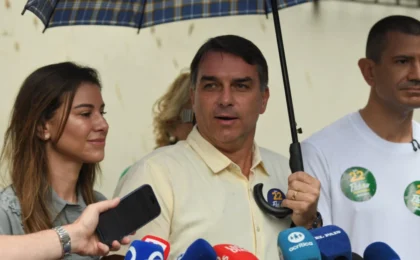
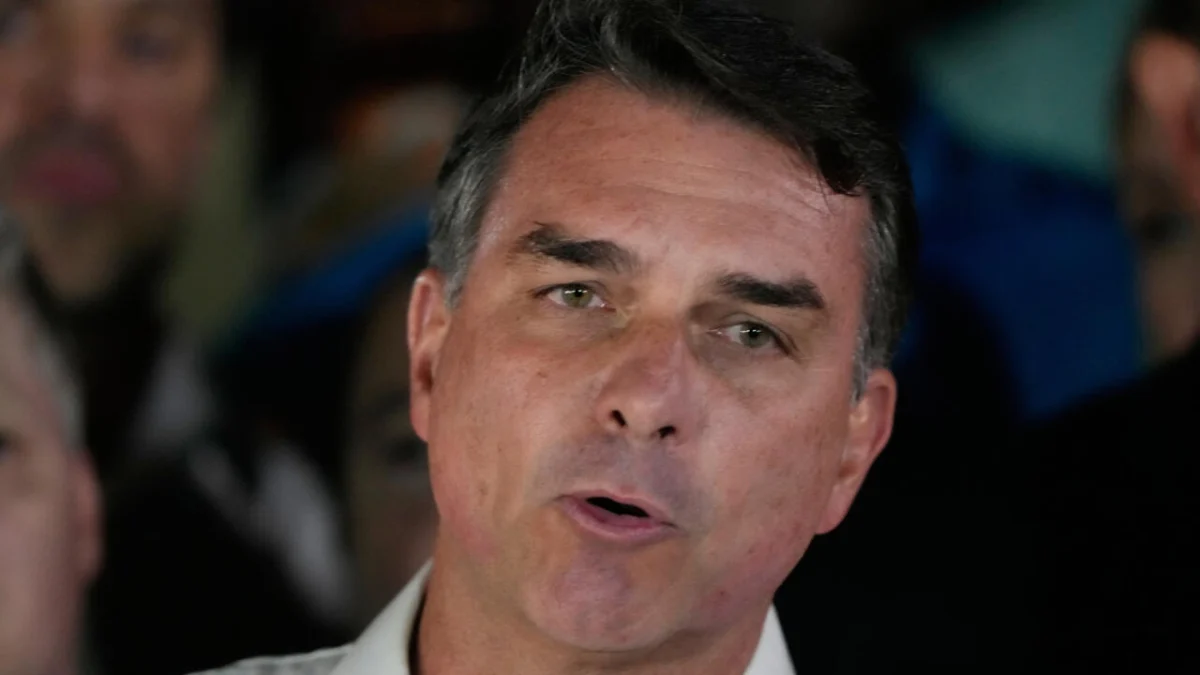
The political landscape of Brazil has been plunged into fresh uncertainty following the shocking electoral defeat of Senator Flávio Bolsonaro and his subsequent disappearance from the public eye. On Tuesday, Brazilian authorities moved to cancel the senator’s passports after he failed to comply with a Supreme Court-mandated deadline to surrender his travel documents. The move comes as federal police scramble to locate the former presidential candidate, who remains at the center of a high-stakes money-laundering investigation.
The vanishing act of the prominent right-wing politician has ignited widespread speculation, with many drawing uncomfortable parallels to the self-imposed exile of his father, former President Jair Bolsonaro. As the legal net tightens, the question of whether Flávio Bolsonaro has successfully fled the country—or remains in hiding within its borders—has become the defining mystery of Brazil’s post-election transition.
The Chronology of a Disappearing Candidate
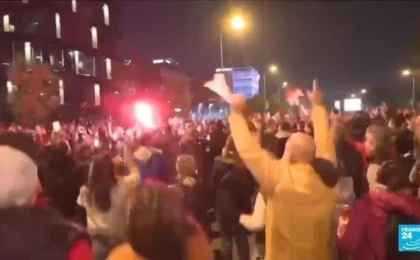
The sequence of events leading to this diplomatic and legal standoff began with the highly anticipated presidential runoff on Sunday, October 26, 2026. Heading into the vote, polling suggested a tight race, with Flávio Bolsonaro widely considered a frontrunner capable of securing a mandate for the right-wing Liberal Party. However, the results delivered a decisive, if unexpected, victory for the incumbent, Luiz Inácio Lula da Silva.
The Timeline of the Crisis:
- October 23, 2026: Eduardo Bolsonaro, the senator’s brother, publicly suggests in a podcast interview that a loss for his brother should necessitate an immediate departure from the country, fueling rumors of a planned exit strategy.
- October 26, 2026: Election day results confirm a victory for Lula da Silva. Flávio Bolsonaro refuses to formally concede, instead signaling his intent to challenge the election results in court, citing alleged "voter irregularities."
- October 27, 2026: The Brazilian Supreme Court imposes a strict travel ban on the senator, ordering him to surrender his passports within 24 hours as part of an ongoing money-laundering probe.
- October 28, 2026: The 24-hour deadline expires. Federal police confirm the senator has failed to comply with the order.
- October 29, 2026: Brazilian authorities formally cancel all of Flávio Bolsonaro’s passports. Reports surface of an unidentified private plane at the Iguazu International Airport, sparking an international investigation.
The Legal and Political Stakes: A Family Legacy
The legal pressure on Flávio Bolsonaro is not a new development, but it has gained newfound urgency following his electoral loss. He remains the subject of a long-standing money-laundering investigation, which he consistently characterizes as politically motivated persecution. However, the failure to hand over his passport suggests a strategic shift from courtroom defense to evasion.
The specter of his father, Jair Bolsonaro, looms large over these proceedings. Following his own loss to Lula in 2022, the former president famously departed for the United States, delaying his inevitable return to a country that would eventually sentence him to 27 years in prison for his role in plotting a coup. For the Brazilian judiciary, the prospect of another member of the Bolsonaro dynasty slipping through their fingers is a humiliation they are determined to avoid.
"The patterns are unmistakable," says Dr. Helena Rossi, a political analyst based in Brasília. "The rhetoric of ‘voter fraud’ mirrors the 2022 playbook, and the evasiveness regarding travel mirrors the father’s exodus. The judiciary is clearly moving to prevent a repeat of that history."
The Mystery of the Missing Senator
As of Wednesday, the whereabouts of Flávio Bolsonaro remain officially unknown. Despite his status as a sitting senator, his aides have claimed they are unable to reach him. When contacted, those within his inner circle either refused to comment or professed total ignorance regarding his location.
The investigation has focused heavily on the Argentina-Brazil border. Media reports regarding a private aircraft at the Iguazu International Airport prompted a swift reaction from the Argentine government. In an official statement, Argentine authorities confirmed they had inspected the aircraft and its crew, finding no flight plan or manifest linking the Bolsonaro family to the flight.
Crucially, the border between Brazil and Argentina is highly porous for citizens of both nations. Because Brazilians can enter Argentina using only a national ID card—rendering a passport unnecessary—the cancellation of the senator’s travel documents does not necessarily prevent him from physically crossing into the neighboring country.
The silence from the office of Argentine President Javier Milei has only added to the intrigue. Milei, an ideological ally of the Bolsonaro family, has yet to extend a congratulatory message to Lula da Silva. When asked if the senator had requested asylum in Argentina, a spokesperson for Milei’s administration provided a curt response: "There is no asylum request," while pointedly refusing to elaborate on whether the senator had entered the country through other means.
Official Responses and Media Silence
The vacuum left by the senator has been filled by a cacophony of speculation and tactical silence. Paulo Figueiredo, a high-profile influencer and unofficial spokesperson for the Bolsonaro family, signaled that the family is in no mood for transparency.
"After months of intense work that has been unfairly thwarted, I am not in the mood to speak to the press," Figueiredo messaged reporters when questioned about the senator’s location. "If I have any comments to make on any matter, I will get in touch."
The lack of coordination within the Liberal Party is equally telling. While the party leadership formally acknowledged Lula’s victory on Monday, distancing themselves from the senator’s claims of electoral fraud, they have remained conspicuously quiet regarding his disappearance. Attempts to reach the senator by his own associates have proved futile. One unnamed source close to the campaign recounted, "I tried to talk to Flávio this morning by phone. It rang and it rang, but he didn’t pick up."
Implications for Brazilian Democracy
The disappearance of a sitting senator, coupled with his refusal to concede a democratic election, poses a significant challenge to the stability of the Lula administration. The judiciary’s decision to cancel his passports is a clear signal that the Brazilian state is no longer willing to tolerate the defiance that characterized the previous administration’s exit.
Potential Consequences:
- International Warrants: If the federal police confirm that the senator has left the country illegally, an Interpol "Red Notice" could be issued, transforming the domestic investigation into a global search.
- Increased Polarization: The senator’s supporters continue to view these legal actions as an overreach. His flight—if confirmed—could be framed by his base as an act of political resistance rather than an admission of guilt.
- Diplomatic Friction: The relationship between Brazil and Argentina stands on thin ice. Should it be proven that the senator is hiding in Argentina, the diplomatic fallout between Lula and Milei could be severe, potentially affecting regional trade and security cooperation.
As the dust settles on the 2026 election, the case of Flávio Bolsonaro serves as a stark reminder of the fragile state of Brazilian institutional integrity. The government’s ability to locate the senator and bring him before the court will be the first true test of the Lula administration’s power to enforce the rule of law against the remnants of the previous regime.
For now, the senator remains a ghost in the machine of Brazilian politics—a man who challenged the system at the ballot box and, having failed, now appears to be testing the boundaries of the state’s reach beyond it. Whether he is found in a secure location within Brazil or eventually surfaces in a foreign capital remains the central, unfolding question of the week.