Main Facts
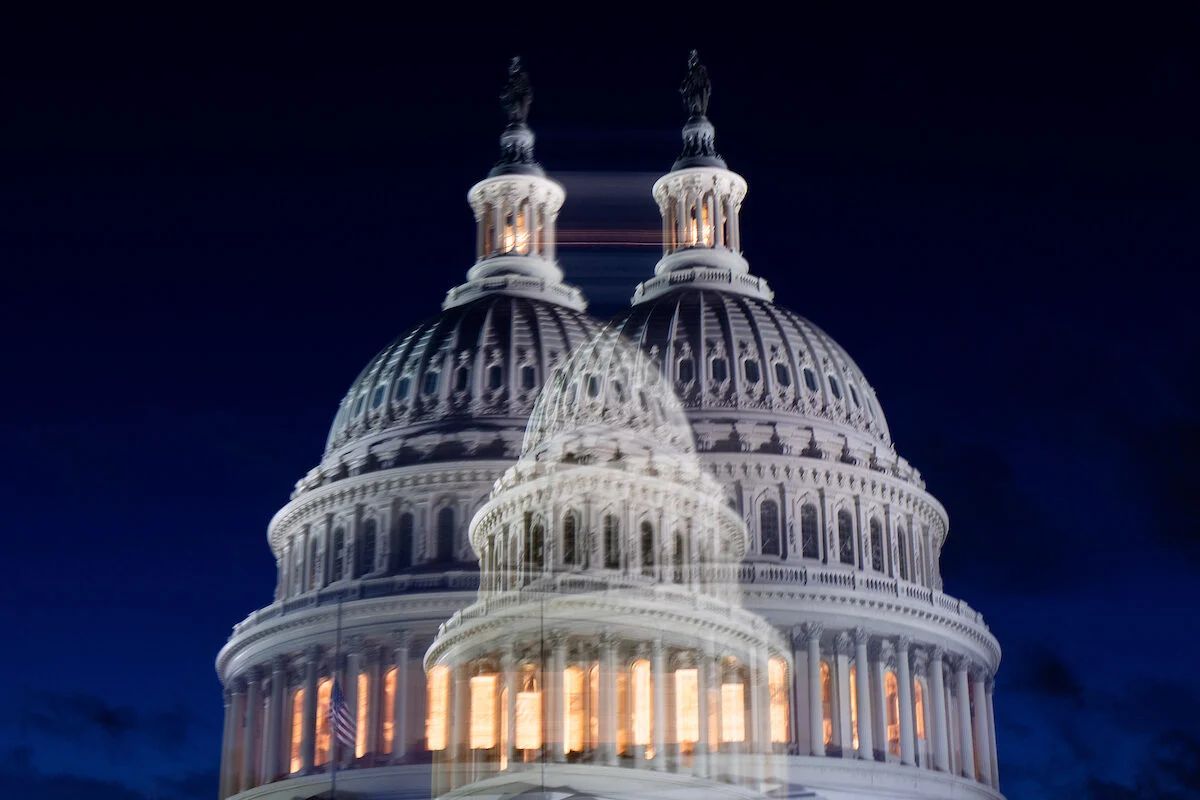
As the autumn air signals the peak of the college football season, Capitol Hill faces a stark contrast between an expansive list of critical policy challenges and an extremely abbreviated legislative calendar. Lawmakers returning to Washington face pressing national concerns: establishing a regulatory framework for cryptocurrency, regulating Name, Image, and Likeness (NIL) standards for intercollegiate athletics, reauthorizing lapsed intelligence surveillance powers following the 25th anniversary of the September 11 attacks, and passing long-sought energy permitting reform.
However, political realities ahead of the November 3 midterm elections suggest that Congress will accomplish very little of this ambitious agenda before breaking to campaign.
With President Donald Trump having already signed into law a continuing resolution (CR) that funds the federal government through December 11, the immediate risk of a government shutdown has been removed. This fiscal breathing room has cleared the way for an early departure from the nation’s capital. The House of Representatives is expected to remain in session for merely one week before adjourning. This brief schedule puts the chamber on track to potentially break the modern record for the earliest pre-election departure in a midterm year—a mark previously set on September 18, 2014.
Even traditional bipartisan Capitol Hill events reflect this truncated schedule. The annual Congressional Women’s Softball Game—which pits female lawmakers against women from the Washington press corps—remains scheduled for September 23. However, for the first time in recent memory, the game will take place while the House is already in recess.
For the brief duration that both chambers remain in Washington, floor activity is expected to be dominated by political maneuvering. Senate Republicans plan to stage test votes designed to put vulnerable Democrats on the record, while Democratic caucuses aim to block conservative priorities ahead of a midterms battle that could shift the balance of power in both the House and the Senate.
       CONGRESSIONAL FALL LEGISLATIVE TIMELINE

  July 11       Aug Recess      Sept 9-10     Sept 18 Target    Sept 23        Nov 3        Dec 11
    |---------------|--------------|----------------|--------------|-------------|------------|
   Sen.          Senate         Treasury &       Potential      Congressional Midterm      CR Expiration
  Graham         Passes         Thune Signal     House Early    Women's       Elections    & Spending
  Passes        Sanctions       Crypto Vote      Departure      Softball                   Deadline
                 (86-11)        Shortfall        Record         Game
Chronology of the Fall Legislative Push
The path toward this pre-election stalemate has been shaped by a series of sudden events, stalled committee negotiations, and procedural maneuvering over the summer:
- July 11: The Senate is shaken by the unexpected death of veteran South Carolina Republican Sen. Lindsey Graham, who suffered a fatal aortic tear. Prior to his passing, Graham had been driving a bipartisan initiative to impose sweeping new economic sanctions on Russia and Iran.
- August: Before departing Washington for the annual August recess, the Senate overwhelmingly passes the bipartisan Graham Russia Sanctions Act by a vote of 86-11, sending the measure to the House.
- August Recess: Bipartisan negotiations over digital asset regulation and energy permitting reform continue behind closed doors, though lawmakers fail to finalize legislative text before returning to their states and districts.
- September 9: Treasury Secretary Scott Bessent issues a public warning via social media, urging Senate leaders not to abandon negotiations on digital asset market structure and emphasizing the national security risks of legislative inaction.
- September 10: Speaking from the Republican midterm convention in Dallas on Scott Jennings’ radio program, Senate Majority Leader John Thune (R-S.D.) publicly acknowledges that the party lacks the 60 votes required to overcome a Democratic filibuster on the cryptocurrency market structure bill.
- Mid-September: Senate Republicans release a modified substitute amendment to the cryptocurrency bill featuring heightened ethics constraints in a last-ditch effort to peel off Democratic votes ahead of a crucial procedural motion to proceed. Meanwhile, the House Rules Committee schedules a rule governing floor consideration of the Graham sanctions bill.
- September 18 (Target Window): The House approaches a potential historic early adjournment date, freeing members to return to their home districts full-time for midterm campaigning.
- September 23: The Congressional Women’s Softball Game takes place in Washington during the House recess.
- November 3: The midterm elections take place nationwide, determining control of the 120th Congress.
- December 11: Expiration of the current continuing resolution, forcing Congress to address fiscal 2027 appropriations during the post-election lame-duck session.
Key Legislative Priorities and Supporting Data
+-----------------------------------------------------------------------------------+
|                        FALL LEGISLATIVE AGENDA DASHBOARD                          |
+------------------------------------+----------------------------------------------+
| LEGISLATION ISSUE                  | CURRENT STATUS & KEY PROVISIONS              |
+------------------------------------+----------------------------------------------+
| Cryptocurrency Market Structure    | Senate test vote pending; ethics compromised |
|                                    | added; short of 60-vote threshold.           |
+------------------------------------+----------------------------------------------+
| Lindsey Graham Russia/Iran         | Passed Senate 86-11; House Rules Committee   |
| Sanctions Act                      | taking up rule; 5-year sanctions extension.  |
+------------------------------------+----------------------------------------------+
| Name, Image, Likeness (NIL)        | Drafted by Cruz/Cantwell; second on Senate   |
| Sports Reform                      | priority list behind crypto measure.         |
+------------------------------------+----------------------------------------------+
| Energy & Economic Permitting       | Bipartisan negotiations stalled; risk of     |
| Reform                             | abandonment if majority flips in November.   |
+------------------------------------+----------------------------------------------+
| Fiscal 2027 Appropriations & Farm  | Stalled in committee; zero bills reported    |
| Bill Reauthorization               | out due to one-vote margin & absences.       |
+------------------------------------+----------------------------------------------+
1. Digital Asset Regulation and Ethics Compromises
The top item on the Senate’s immediate calendar is a test vote on a market structure bill aimed at establishing a clear regulatory framework for digital assets. The legislation, heavily backed by financial technology advocates and executive branch officials, seeks to divide regulatory jurisdiction between the Commodity Futures Trading Commission (CFTC) and the Securities and Exchange Commission (SEC).
To overcome an anticipated filibuster, Senate Republicans led by Sen. Cynthia Lummis (R-Wyo.) unveiled a substitute amendment introducing strict ethics provisions. The additions impose financial disclosure and holding restrictions on federally elected officials, federal judges, and their spouses—a concession designed to address Democratic criticisms regarding potential conflicts of interest.
2. The Lindsey Graham Sanctions Package
In the House, the primary policy focus centers on honoring the legacy of the late Sen. Lindsey Graham through landmark national security legislation. Attached as an amendment to a House-passed childhood education bill, the measure would:
- Impose punitive economic sanctions on the Kremlin and foreign financial institutions conducting business with Russian state-owned entities for a mandatory five-year period.
- Extend existing statutory sanctions against Iran for five additional years.
- Grant the White House specific waiver authorities under tight congressional review mechanisms.
Although the bill passed the Senate in August with a veto-proof 86-11 majority, House Democrats remain divided. Conservative opponents question spending provisions within the underlying education bill, while some progressive Democrats argue the bill delegates excess discretionary authority to the executive branch over foreign policy sanctions.
3. College Athletics and Permitting Reform
Two additional policy initiatives remain frozen on the Senate docket:
- NIL Legislation: Bipartisan negotiations led by Commerce, Science, and Transportation Committee Chairman Ted Cruz (R-Texas) and ranking member Maria Cantwell (D-Wash.) aim to create a single national standard for college athlete compensation, preempting a chaotic patchwork of state-level statutes.
- Permitting Reform: Comprehensive energy permitting legislation—intended to accelerate environmental reviews for both fossil fuel infrastructure and renewable energy grid expansion—remains a top goal for industry groups. However, years of negotiations have stalled, raising fears that a shift in congressional control following the midterms could derail the effort entirely.
4. Committee Bottlenecks and Absentee Dynamics
The Senate’s legislative slowdown is compounded by slim committee margins and high-profile absences.
Senate Appropriations Committee Chair Susan Collins (R-Maine) has been unable to report any of the 12 regular fiscal 2027 spending bills out of committee. Operating with a narrow one-vote majority, the committee’s work ground to a halt during the three-month medical absence of Sen. Mitch McConnell (R-Ky.), who was recovering from a fall and subsequent pneumonia. McConnell’s absence similarly prevented the Senate Agriculture, Nutrition, and Forestry Committee from advancing a bipartisan Farm Bill before the August recess.
SENATE APPROPRIATIONS COMMITTEE DYNAMICS
+-----------------------------------------------------------------------+
|  Total Committee Seats: 29                                            |
|  Republican Majority: 15 | Democratic Minority: 14                    |
|  Margin of Error: 1 Vote                                              |
|                                                                       |
|  CRITICAL IMPACT: The 3-month medical absence of Sen. Mitch McConnell  |
|  (R-Ky.) erased the Republican operational majority, halting the      |
|  advancement of all 12 regular Fiscal 2027 spending bills.             |
+-----------------------------------------------------------------------+
Meanwhile, Collins faces her own distinct political balancing act. Ranked as one of the most electoral-vulnerable Republicans on the November ballot, she faces immense pressure to campaign heavily at home in Maine.
However, Collins is restrained from missing floor votes by her historic voting record. In June, she surpassed 10,000 consecutive votes—maintaining the longest active consecutive voting streak from the start of a Senate career in American history. As a result, while other lawmakers abandon Washington to campaign, Collins must remain present for every procedural roll call.
Official Responses and Key Quotes
The political stalemate has drawn strong reactions from political figures across the ideological spectrum, highlighting deep partisan divides over the legislative calendar.
Addressing the Democratic opposition to the administration’s legislative package, Senate Majority Leader John Thune expressed frustration during an interview on Scott Jennings’ radio program:
"One of the things that we’ve encountered, and this has been unlike any kind of thing I’ve seen in my time in public life, is this just constant, constant blockade of Senate Democrats against anything that President Trump wants. I think if we can pass [the NIL bill] and send it to the House, we’ve got a chance at making law with it.
And the other thing I’d like to get a vote on in this time we have before everybody breaks to go campaign for the fall elections is permitting reform. I think that’s enormously important, not just as an energy policy issue, but an economic policy issue for our country."
— Sen. John Thune (R-S.D.), Senate Majority Leader
Defending the ethics provisions added to the cryptocurrency bill, Sen. Cynthia Lummis emphasized the sweeping nature of the new compromises:
"President Trump voluntarily agreed to unprecedented ethics restrictions, holding every federally elected official, judge, and their spouses to some of the toughest ethics restrictions in U.S. history."
— Sen. Cynthia Lummis (R-Wyo.)
From the executive branch, Treasury Secretary Scott Bessent warned that congressional gridlock on digital asset oversight poses national security risks:
"When the Senate returns from August recess, I strongly urge everyone to remain at the negotiating table, agree to the motion to proceed, and continue the legislative process. Failing to do so would send a troubling signal to our allies and adversaries alike that America is unwilling to lead on the future of digital assets and willing to forgo enhanced national security tools to combat their misuse."
— Scott Bessent, U.S. Treasury Secretary
Addressing concerns over executive power within the pending Russia sanctions bill, Sen. Richard Blumenthal defended the bipartisan compromise forged prior to Sen. Graham’s death:
"The product was the result of painstaking, sometimes painful, negotiations involving the Trump administration… It strikes the necessary balance to hold foreign aggressors accountable while maintaining executive flexibility."
— Sen. Richard Blumenthal (D-Conn.)
Political Implications and the Looming Lame-Duck Session
The political landscape on Capitol Hill after November 3 will be dictated entirely by the outcome of the midterm elections. The results will determine how aggressively leadership approaches the post-election "lame-duck" legislative session:
                  MIDTERM ELECTION SCENARIOS & LAME-DUCK OUTLOOK
                                 (Nov 3 Elections)
                                         |
            +----------------------------+----------------------------+
            |                                                         |
    [REPUBLICANS RETAIN CONTROL]                             [DEMOCRATS SWEEP CONTROL]
            |                                                         |
  • Rapid confirmation push for presidential                • Delay full fiscal 2027 funding
    nominees before Jan 2027.                                 decisions into early 2027 calendar.
  • Finalize long-term spending bills under                 • Use leverage to rewrite permitting
    existing party margins.                                   and digital asset regulatory text.
  • Attempt swift passage of stalled NIL and                • Force floor votes targeting administration
    permitting reform measures.                               foreign policy maneuvers (Iran, Venezuela).
Scenario A: Democratic Sweep
If Democrats succeed in winning back the House, the Senate, or both, party leaders plan to push major fiscal decisions into early 2027. Under this strategy, Democrats would refuse to settle long-term spending caps during the lame-duck session, opting instead for another temporary CR that leaves final fiscal 2027 appropriations to the incoming 120th Congress. Furthermore, complex statutory measures like energy permitting and digital asset regulation would likely be reworked to align with Democratic committee priorities.
Scenario B: Republican Retention
If Republicans maintain their majorities, Majority Leader Thune will face intense pressure from the White House to extend the post-election session through late December. The goal would be to confirm as many executive and judicial nominees as possible before the new Congress is sworn in. Republicans would also seek to finalize regular fiscal 2027 funding bills, preventing spending battles from clouding the legislative agenda early next year.
Foreign Policy Showdowns and Committee Strategy
Regardless of the election outcome, Senate Democrats plan to use procedural mechanisms during the lame-duck period to force debate on executive foreign policy decisions. These include resolutions of disapproval addressing military operations in Venezuela and enforcement actions regarding the ongoing Iran conflict.
Additionally, the expected return of Sen. McConnell to Washington could shift committee dynamics. As chairman of the Defense Appropriations Subcommittee, McConnell’s return restores the Republican voting majority on the panel. This could allow Chairwoman Susan Collins to advance remaining defense spending measures before the December 11 deadline.
With time running out before lawmakers return to the campaign trail, Washington remains locked in a familiar pattern: high-stakes policy proposals remain stalled by narrow margins, tactical maneuvers, and the impending judgment of voters at the ballot box.