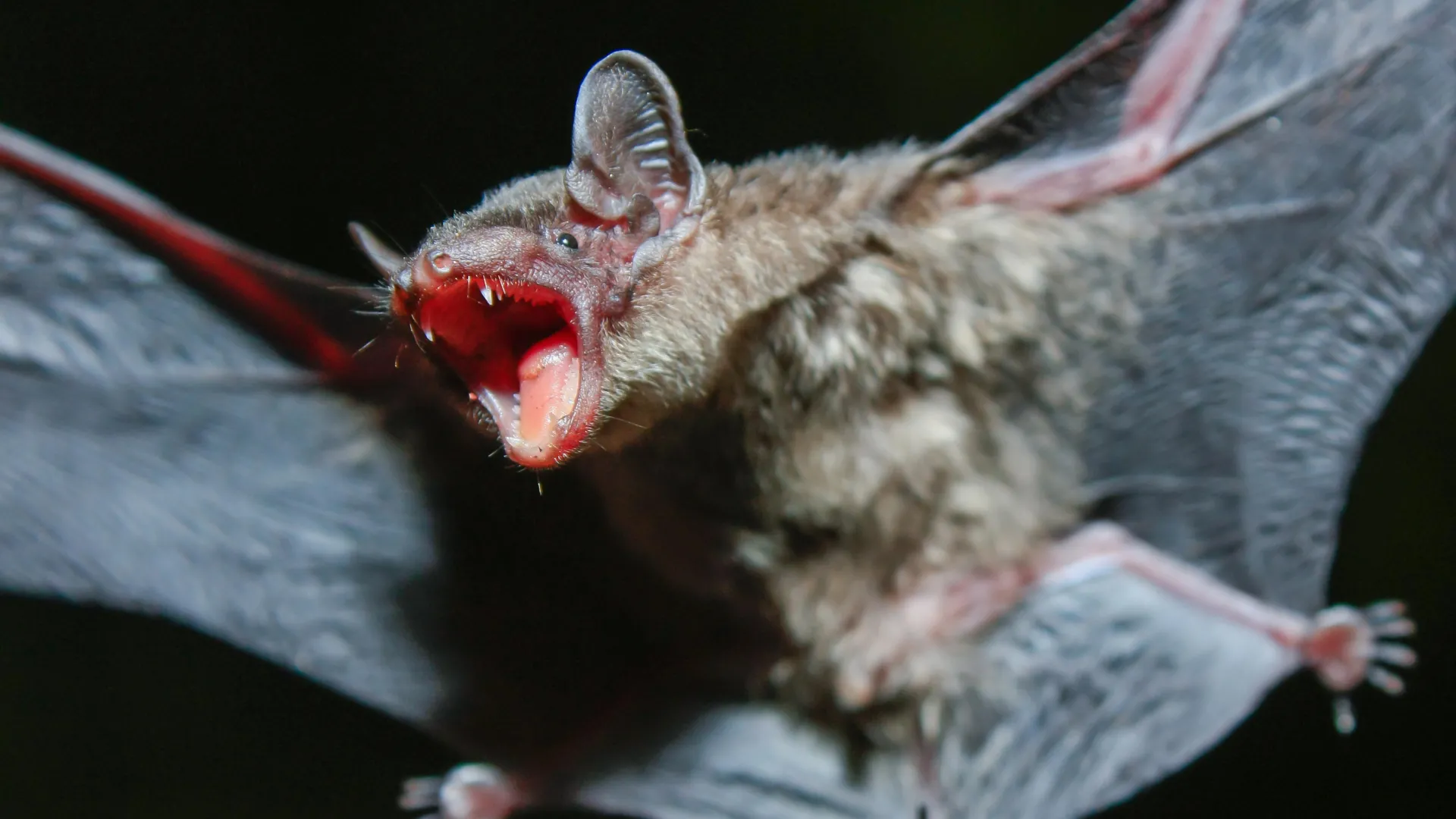
For millions of years, bats have defied the biological rules that govern the rest of the mammalian kingdom. While a mouse of similar size might expect a lifespan measured in mere months, certain species of bats thrive for decades, maintaining robust health well into their twilight years. This anomaly has long been a subject of scientific curiosity, but only recently has the veil been lifted on the genetic mechanisms that grant these winged mammals their extraordinary longevity.
A groundbreaking study published in the journal Nature has identified that the secrets to a long, disease-free life may be hidden within the complex genomic architecture of the Myotis genus. By decoding the DNA of these creatures, researchers are beginning to understand how a high-octane immune system and a ruthless cellular "self-destruct" mechanism act as a bulwark against the ravages of age and infection.
A Quest for Genetic Clues
The journey to this discovery began in the hallowed halls of the University of Chicago, where Juan Manuel Vazquez, then a graduate student, first became fascinated by the longevity of bats. At the time, the scientific community lacked the genomic data necessary to map the relationship between bat biology and extended life.
After transitioning to a postdoctoral fellowship at UC Berkeley in 2020, Vazquez launched an ambitious field project. With a team of intrepid undergraduates, he traveled throughout the Western United States, setting up mist nets over ponds, streams, and rivers under the cloak of night. The goal was to collect tissue biopsies from various bat species, specifically focusing on the Myotis genus, which contains some of the longest-lived mammals on the planet. The team’s work was highlighted by the legendary Brandt’s myotis (Myotis brandtii), a species that has been documented living up to 50 years—a lifespan that, relative to body size, is virtually unheard of in the mammalian world.
The Genomic Connection: Longevity and Immunity
The resulting study marks the first comprehensive analysis of eight Myotis genomes. The researchers found a startling correlation: longevity is inextricably linked to immune function. Specifically, long-lived bats possess an elevated expression of genes associated with cancer suppression.
This finding suggests that the secret to a long life may not be the avoidance of illness, but rather the maintenance of a hyper-vigilant immune system that effectively identifies and neutralizes both pathogens and cancerous cells. There is a profound overlap between the genes responsible for aging and those governing disease defense, indicating that these two biological processes are far more integrated than previously believed.
"Bats evolved to live for a long time without getting diseases," Vazquez explains. "This suggests that we don’t necessarily need to look at diseases of aging and diseases of infection as completely separate fields. We can look at these bats and try to understand how, in the same way you can improve your immune system to fight off viruses, maybe you can improve your immune system so it doesn’t decline in old age."
The "Scuttle" Strategy: Cellular Self-Destruction
One of the most counterintuitive findings of the research occurred in the laboratory. Vazquez and his team grew cells from bat wing biopsies—a collection that now spans 259 individuals across 32 species—and exposed them to toxic chemicals to simulate severe cellular damage.
The expected response would be an activation of DNA repair proteins. Instead, the longest-lived bat in the sample, the little brown bat (Myotis lucifugus), displayed a drastic survival tactic: it prioritized the immediate destruction of damaged cells.
"We found the literal opposite of what we expected," Vazquez noted. "The longest-lived bat in North America decides, ‘I can’t save this ship,’ and immediately switches gears to prioritize killing off the cells that are damaged." This strategy, which mirrors that of the elephant—another notoriously cancer-resistant species—suggests that evolution has gifted long-lived animals with a "burn the bridge" mechanism to prevent damaged, potentially oncogenic cells from proliferating.
Evolutionary Success and the Ultramarathoner’s Metabolism
To understand why this is possible, one must look at the bat’s history. Appearing roughly 60 million years ago, bats have colonized every continent except Antarctica and now represent 20% of all mammal species. Their success is rooted in an extraordinary metabolic capacity.
Vazquez compares the nightly hunting habits of bats to a human running several ultramarathons every single day. This intense physical exertion requires a high-functioning immune system capable of controlling inflammation while simultaneously managing a constant load of viral infections.
This leads to a fascinating trade-off. Because their immune systems are perpetually "on high alert," bats can host an array of viruses—including those related to COVID-19—without suffering the debilitating effects seen in other mammals. This capability, while beneficial to the bat, creates a unique evolutionary mismatch when these viruses spill over into human populations.
Genomic Overlap: Fighting Viruses and Aging
A pivotal discovery in the study was the significant overlap between genes associated with lifespan and those involved in viral interactions. Collaborator Elise Lauterbur identified that the same genes the researchers linked to longevity were frequently the ones interacting with viruses.
Myotis bats possess a disproportionately large number of genes that produce proteins to combat DNA viruses, such as herpes. These proteins serve a dual purpose: they can either facilitate viral entry or, in the case of protected animals, trigger the production of interferon—an antiviral signaling protein that coordinates immune defense.
This contrasts sharply with humans and other primates, who have evolved to be more responsive to RNA viruses. This evolutionary divergence suggests that our immune systems are fundamentally wired differently, a reality that explains why zoonotic diseases originating in bats can be particularly virulent in humans. "Humans and bats are badly suited to each other," says Vazquez. "That is one of the reasons why we have to be careful working with bats—it’s a two-way street for zoonoses."
Implications for Human Health
The implications of this research are profound. As we navigate an era of rising cancer rates and emerging viral threats, the lessons learned from the Myotis genus offer a roadmap for new medical interventions.
Peter Sudmant, an associate professor of integrative biology at UC Berkeley, emphasizes that nature has already solved many of the problems humans currently face. "By looking across the diversity of life and the remarkable longevities of different species, we hope we can better understand the interplay between DNA damage and the immune system to enable us to have full and healthy life spans," Sudmant says.
The research is currently shifting toward the "trade-off" mechanism: how bats protect their own genomes while simultaneously attacking the genomes of invading viruses. By studying this delicate balance, researchers hope to identify ways to bolster human immunity without causing the systemic inflammation that often characterizes chronic disease and aging.
Looking Ahead
The research team, which includes contributors from the École Normale Supérieure in France and the University of Arizona, continues to push the boundaries of comparative genomics. While Vazquez continues his work on longevity mechanisms at Pennsylvania State University, Sudmant is expanding his focus to include primate cell cultures, aiming to bridge the gap between human biology and the extraordinary resilience of our mammalian cousins.
The study, funded by the National Institutes of Health and the National Science Foundation, stands as a testament to the power of cross-species research. By peering into the wings of a bat, we are not just learning about a fascinating nocturnal predator; we are catching a glimpse of a potential future where the diseases of aging are no longer inevitable, but manageable.
Ultimately, the lesson of the bat is one of resilience. It reminds us that our immune systems, if properly understood and harnessed, are capable of far more than we ever imagined—provided, of course, we are willing to learn the lessons written in our own DNA.