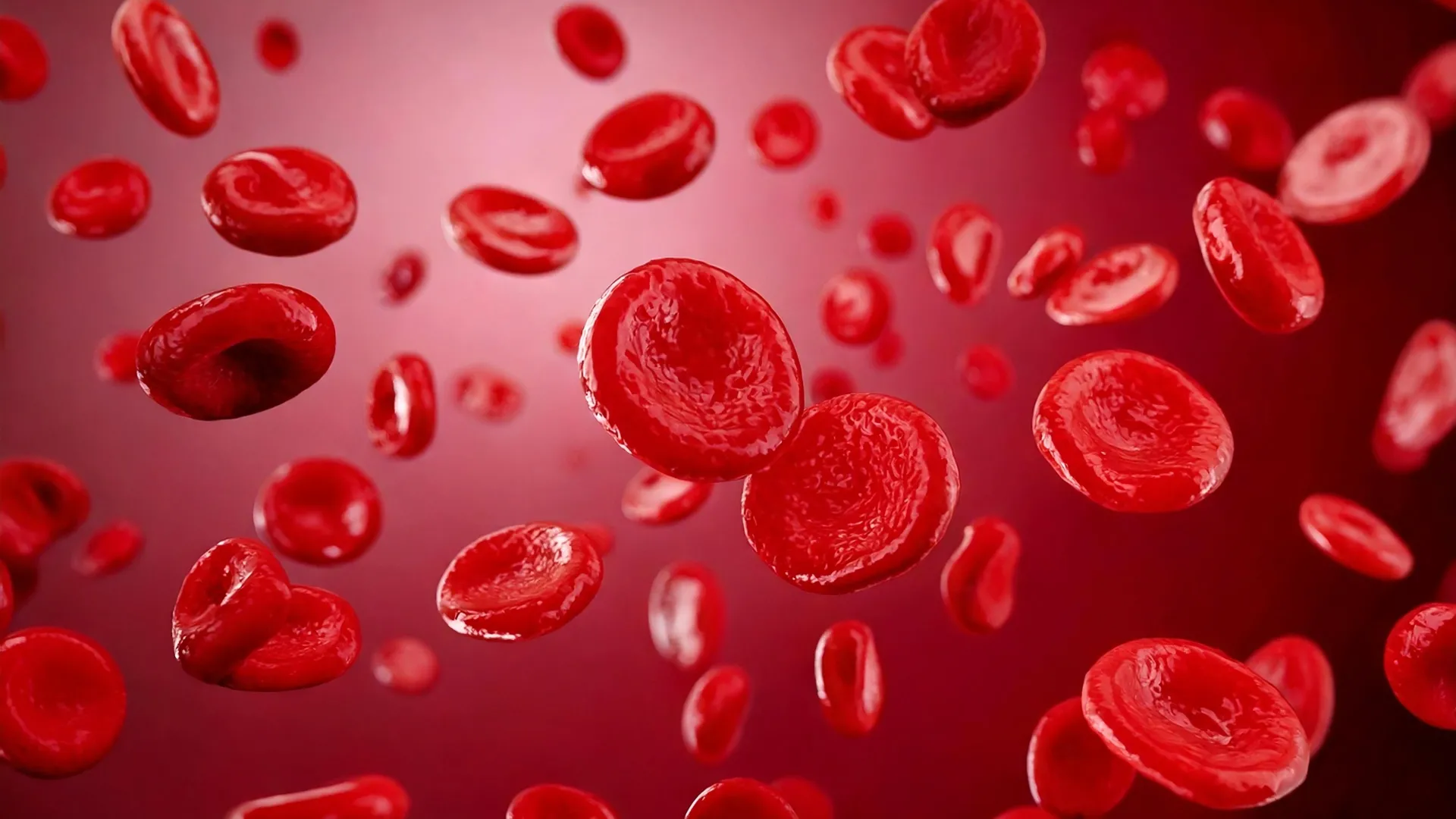
For decades, the discourse surrounding climate change has been dominated by visible, often catastrophic phenomena: melting ice sheets, intensifying wildfires, and the rising tide of sea-level encroachment. However, a groundbreaking new study suggests that the footprint of anthropogenic carbon dioxide (CO2) is not merely external; it is infiltrating our very physiology.
New research, published in the journal Air Quality, Atmosphere and Health, has identified a persistent, long-term shift in human blood chemistry that tracks precisely with the rise in atmospheric CO2. This discovery suggests that the human body—an organism evolved over millennia to thrive in a specific, stable atmosphere—may be forced into a state of chronic biological compensation, raising urgent questions about our long-term health and the hidden costs of a carbon-saturated world.
The Silent Evolution: Main Facts of the Study
The study, a collaborative effort by researchers from The Kids Research Institute Australia, Curtin University, and The Australian National University (ANU), analyzed two decades of data from the U.S. National Health and Nutrition Examination Survey (NHANES). By examining blood test results from approximately 7,000 individuals across two-year intervals from 1999 to 2020, scientists identified a significant trend: as atmospheric CO2 concentrations climbed, so too did the average serum bicarbonate levels in the human population.
Bicarbonate is a vital chemical buffer in the blood, responsible for maintaining the body’s delicate acid-base (pH) balance. When CO2 levels in the air rise, the body must adjust to ensure that blood pH remains within the narrow, life-sustaining range required for organ function. The researchers found that average serum bicarbonate levels have increased by approximately 7 percent since 1999. Conversely, levels of calcium and phosphorus—minerals essential for bone health and cellular function—have seen a corresponding decline.
These findings suggest that we are witnessing the human body’s quiet, continuous attempt to adapt to an atmosphere that is becoming increasingly incompatible with the biological baseline established during our evolutionary history.
A Chronology of Environmental and Biological Change
To understand the magnitude of this shift, one must look at the timeline of atmospheric composition. Humans evolved during an era when atmospheric CO2 concentrations ranged between 280 and 300 parts per million (ppm). For the vast majority of human history, this concentration remained relatively stable.
- The Pre-Industrial Baseline: Until the mid-19th century, atmospheric CO2 remained within that 280–300 ppm window.
- The Turning Point (2000): By the start of the 21st century, atmospheric CO2 had climbed to approximately 369 ppm.
- The Modern Era (2020–2024): Current levels have surged past 420 ppm, with 2024 alone seeing a dramatic increase of 3.5 ppm—an acceleration that far outstrips the historical average of roughly 2.6 ppm per year observed over the last decade.
The NHANES data utilized by the research team covers this critical window of acceleration. The study demonstrates that as the global CO2 concentration climbed steadily from 369 ppm to 420 ppm, the biological markers in the blood of 7,000 Americans tracked this climb with startling precision. This is not a sudden physiological crisis, but a slow, decades-long "recalibration" of human internal chemistry.
Supporting Data: Decoding the Blood Markers
The biological mechanisms at play are centered on the body’s homeostatic systems. Bicarbonate acts as a buffer to counteract the acidic effect of dissolved CO2. As CO2 levels in the bloodstream rise, the kidneys retain more bicarbonate to prevent the blood from becoming too acidic (a condition known as acidosis).
The research team, led by Associate Professor Alexander Larcombe, points out that while this retention helps stabilize pH, it comes at a physiological cost. "What we’re seeing is a gradual shift in blood chemistry that mirrors the rise in atmospheric carbon dioxide," A/Prof Larcombe noted.
The decline in calcium and phosphorus is equally concerning. These minerals are often utilized by the body to maintain ionic balance. When the body prioritizes the regulation of acid-base balance via bicarbonate, the shift in other electrolytes is an expected, if unintended, consequence. Modeling based on current trends suggests that if CO2 levels continue to climb at the current rate, average bicarbonate levels could reach the upper limit of the "healthy" clinical range within the next 50 years, with calcium and phosphorus potentially hitting the lower bounds of their healthy ranges shortly thereafter.
Official Perspectives and Expert Analysis
The researchers are careful to emphasize that this study does not claim a direct, singular cause-and-effect relationship between atmospheric CO2 and individual disease states. Instead, they frame it as a population-level trend that warrants significant scientific attention.
Dr. Phil Bierwirth, a retired environmental geoscientist and co-author of the study, offers a sobering interpretation. "I actually think that what we are seeing is because our bodies are not adapting," Dr. Bierwirth stated. "It appears we are adapted to a range of CO2 in the air that may now have been surpassed."
According to Dr. Bierwirth, the "normal" range of human physiology maintains a delicate balance between air composition, blood pH, and respiratory rate. Because current atmospheric CO2 is higher than any level experienced by humans throughout our evolutionary development, our bodies appear to be struggling to keep pace. "Maybe we can never adapt such that it is vitally important to limit atmospheric levels of CO2," he added.
Associate Professor Larcombe reinforces this by suggesting that we must reframe our understanding of climate risk. "We’re not saying people are suddenly going to become unwell when we cross a certain threshold," he explained. "But this suggests there may be gradual physiological changes occurring at a population level, and that’s something we should be monitoring as part of future climate change policy."
Implications for Future Generations
Perhaps the most poignant aspect of these findings concerns the youngest members of society. Children and teenagers, whose bodies are currently in critical phases of development, will experience the highest lifetime exposure to these elevated atmospheric CO2 levels.
If the body is consistently forced to maintain a compensatory state—retaining bicarbonate and shifting electrolyte balances—the cumulative impact on long-term health remains an open, yet urgent, question. Could these subtle shifts in blood chemistry be precursors to chronic metabolic or respiratory conditions that have yet to be identified as "climate-related"?
A New Dimension of Public Health Policy
The implications of this study extend far beyond the laboratory. For decades, climate policy has focused on the environmental consequences of a warming planet: extreme heatwaves, rising sea levels, and biodiversity loss. This research suggests that CO2 itself—the primary driver of these environmental shifts—is an immediate, internal physiological factor.
The research team advocates for a new approach to public health monitoring:
- Integrated Data Tracking: Environmental scientists and public health officials must begin to track atmospheric composition alongside biological markers.
- Long-term Health Modeling: Future policy discussions regarding carbon emissions should incorporate potential physiological costs, not just ecological ones.
- Preventative Policy: The study suggests that aggressive emission reductions may serve a dual purpose: mitigating the external environmental crisis while simultaneously preventing a permanent shift in the human internal biological baseline.
As we look toward the latter half of the 21st century, the message from the blood chemistry data is clear: the environment and the body are not separate entities. They are inextricably linked. By ignoring the subtle, systemic changes occurring within our own veins, we risk failing to address a fundamental dimension of the climate crisis. The task now is to monitor these trends with precision and, perhaps, to recognize that protecting the planet is ultimately about protecting the very chemistry that makes us human.