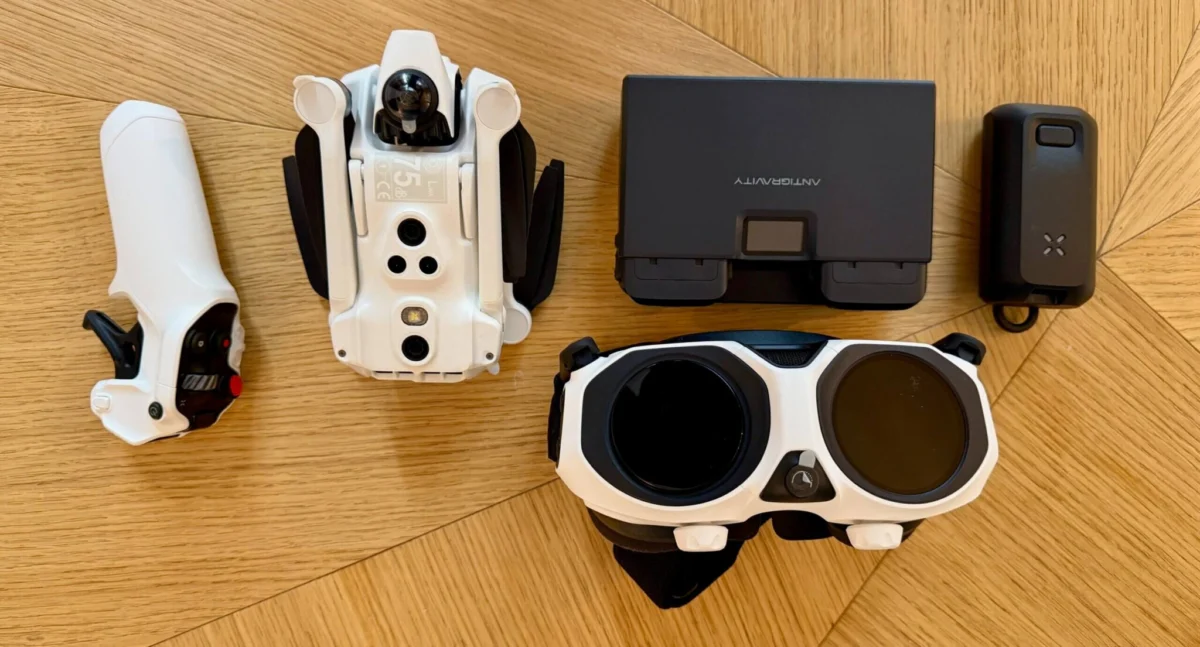
The landscape of travel photography has undergone a seismic shift over the last decade. Once the exclusive domain of professional film crews with heavy equipment and deep pockets, the sky has become the new playground for the solo adventurer. While drones have become ubiquitous in the travel space, they have largely remained tethered to the constraints of traditional gimbal-stabilized, single-lens systems. Enter the Antigravity A1, a device that isn’t just another drone—it is a fundamental rethinking of how we capture our world from above.
Main Facts: Redefining the Drone Paradigm
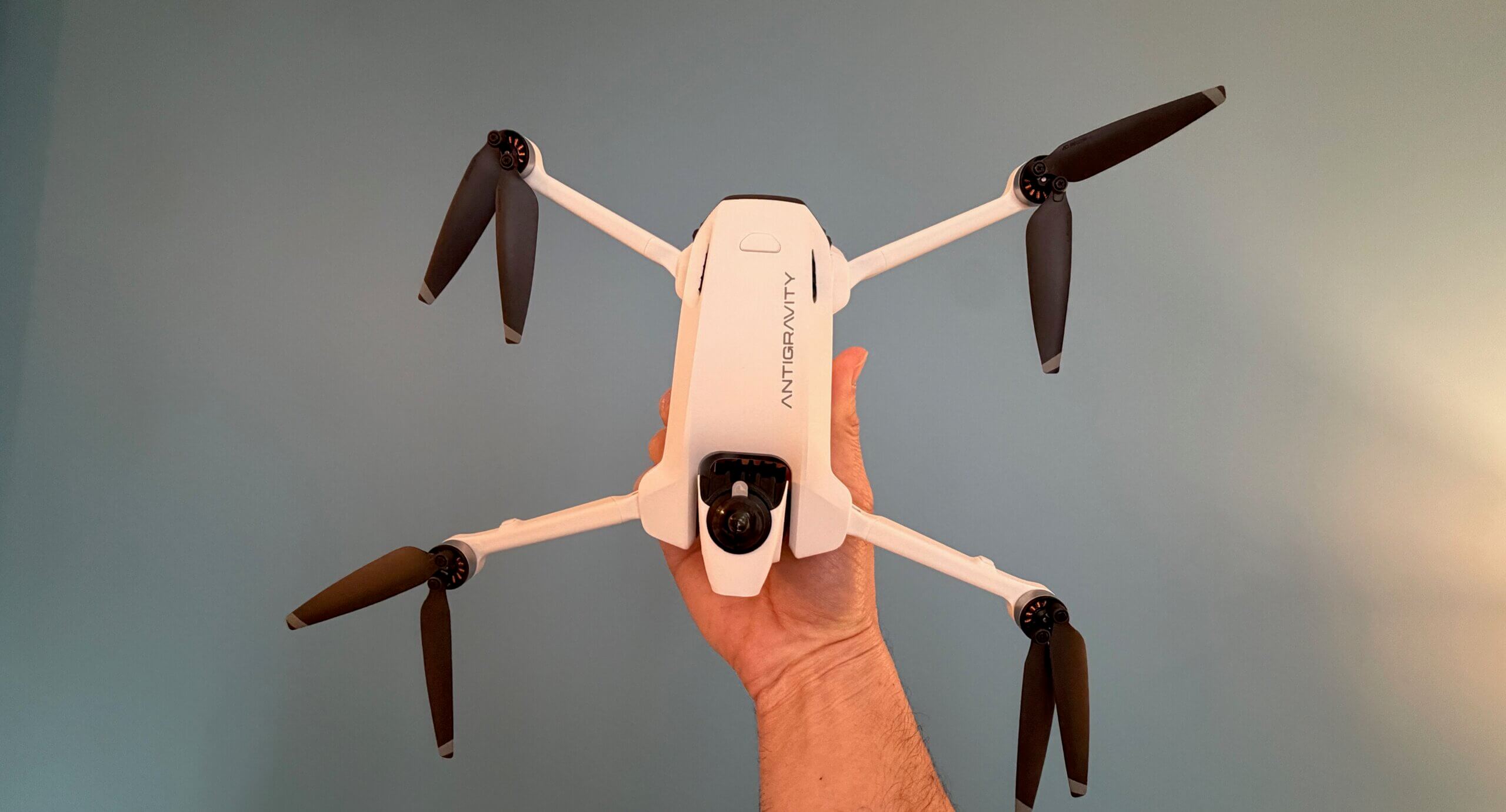
Released in late 2025, the Antigravity A1 represents the most significant departure from traditional drone design in years. At its core, the A1 replaces the standard mechanical gimbal—a common point of failure and weight—with a revolutionary dual-lens 360-degree capture system.
By utilizing two ultra-wide-angle lenses positioned on the top and bottom of the fuselage, the A1 records a complete, seamless sphere of the environment. This design shift introduces the concept of “fly now, frame later.” Instead of agonizing over camera orientation, tilt, or composition while mid-air, a pilot can simply focus on the flight path, knowing that the entire 360-degree bubble is being recorded in high resolution. Upon editing, the creator becomes a virtual director, panning, tilting, and zooming through the footage as if they were operating a camera in a post-production studio.
Chronology: The Path to the A1
The development of the A1 was not an overnight success but the culmination of years of iterative drone technology:
- 2020–2022: The rise of “Cinewhoops” and FPV (First-Person View) flight gains massive traction among creators, emphasizing agility over stability.
- 2023: Advances in image stitching software allow 360-degree cameras to become more accessible to consumers, though they remain cumbersome to mount on aerial platforms.
- Early 2025: Antigravity begins beta-testing the A1 prototype, focusing on reducing the "nadir" (the blind spot) caused by the drone’s own body.
- Late 2025: The Antigravity A1 officially hits the market, touted as the first consumer-grade drone that makes the aircraft itself "invisible" in final footage.
- Q1 2026: The software suite, Antigravity Studio, receives a major update, integrating AI-driven subject tracking, effectively automating the "directing" process for solo travelers.
Supporting Data: Specifications and Performance Metrics
The A1 is built to balance technical power with regulatory convenience. Weighing in at exactly 249 grams with its standard battery, it strategically avoids the "commercial drone" registration requirements in many jurisdictions, including the United States, Canada, and much of the EU.
Technical Breakdown:
- Sensors: Dual 1/1.28-inch CMOS sensors. While slightly smaller than some "Pro" 1-inch sensors, these units excel in dynamic range, specifically designed to handle the harsh, high-contrast lighting of midday travel photography.
- Resolution: 8K 360-degree capture. It is important to note that when "reframed" into a traditional 16:9 cinematic video, this results in a high-quality, professional-grade crop.
- Flight Time: 24 minutes (standard battery); 39 minutes (Pro battery).
- Structural Integrity: Carbon-fiber-reinforced polymer. This choice of material allows for a superior strength-to-weight ratio compared to the ABS plastics used in entry-level drones, ensuring the drone can withstand the occasional bump in the field.
- Connectivity: Wireless transfer speeds of up to 80MB/s via the Antigravity Studio app.
Official Perspectives: The User Experience
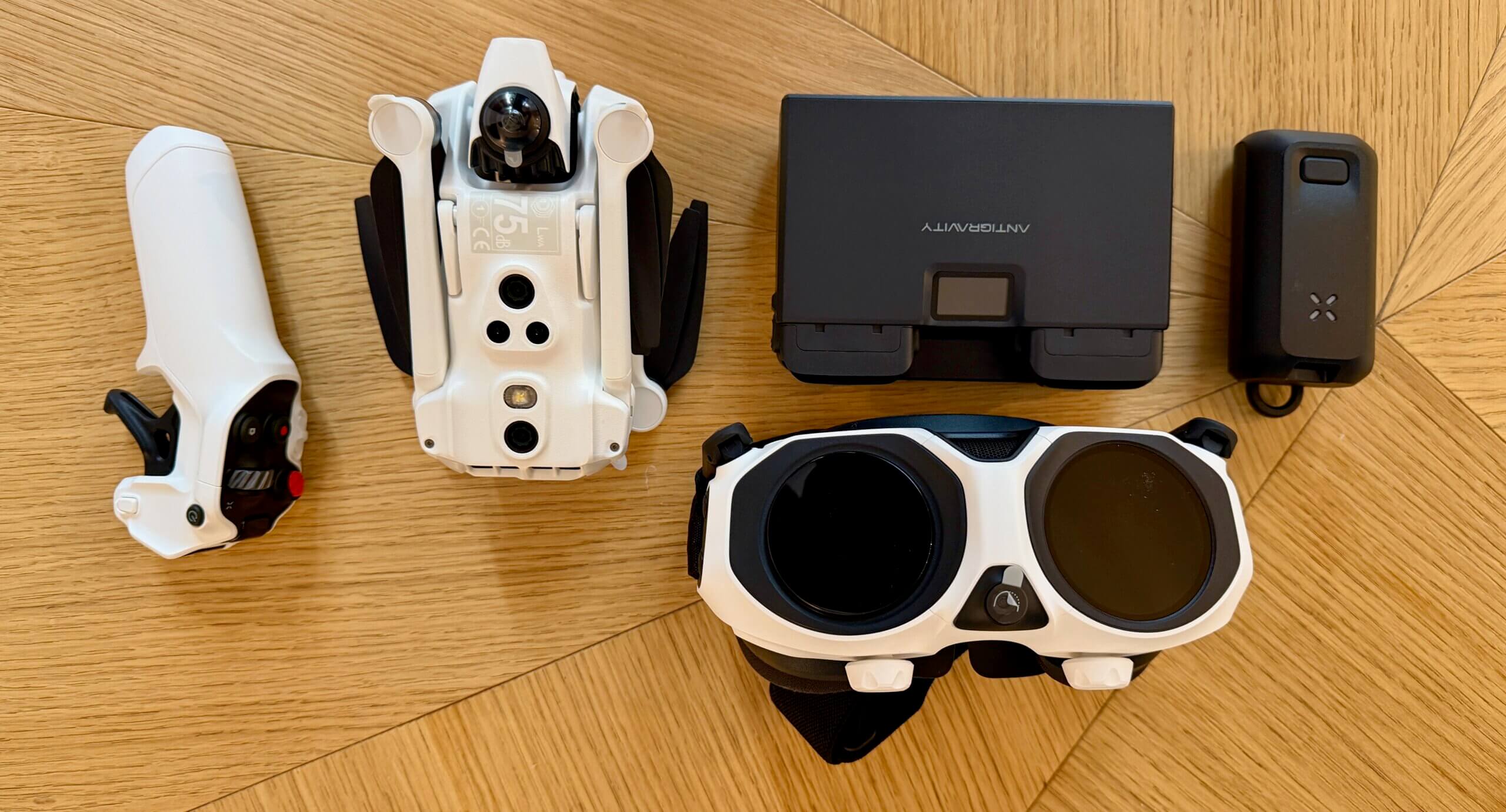
In testing the A1, the most striking element is the pilot’s experience. The use of "Vision Goggles"—which boast dual 4K micro-OLED displays with a 120Hz refresh rate—creates an immersion level that feels more like flying than filming. Because the drone is capturing 360 degrees, the pilot is not tethered to a fixed forward-facing camera. If the pilot turns their head, the view in the goggles pans in real-time.
According to early user reports and professional reviews, this has transformed the way travelers capture content. "You aren’t just flying; you’re exploring," says one early adopter. "You don’t need to know where the camera is pointing to capture the perfect sunset. You just fly, and the camera captures the entire atmosphere."
The flight dynamics are described as "predictable and stable." While it is not a racing drone capable of 80mph maneuvers, its top speed of 36mph is more than sufficient for tracking subjects like cyclists, cars, or hikers. The "Turtle Mode"—which allows the drone to flip itself over if it lands upside down after a crash—has been hailed as a "life-saver" for solo travelers operating in remote or difficult-to-reach locations.
Implications for the Industry
The release of the Antigravity A1 has profound implications for the content creation industry.
The Death of the "Drone Shot"
For years, the "drone shot" has been characterized by smooth, gimbal-stabilized, forward-facing pans. The A1 renders this aesthetic a choice rather than a limitation. By allowing creators to reframe footage in post-production, the drone opens up possibilities for "impossible" camera movements—such as rapid pans from the ground to the sky, or tracking a subject while the camera spins in a 360-degree orbit—without the need for complex, risky flight maneuvers.
The Rise of AI-Assisted Directing
The "Antigravity Studio" app is perhaps as important as the hardware itself. The AI-driven "Auto-Frame" feature identifies subjects and maintains them in the center of the frame, even if the pilot was focused entirely on navigating obstacles. For the solo traveler, this is effectively a virtual cameraman. It allows a single person to produce cinematic, professional-grade footage that would previously have required a multi-person crew.
Regulatory and Ethical Considerations
While the 249-gram threshold provides convenience for the user, it also highlights the ongoing friction between technology and regulation. As drones become more capable and "invisible," the conversation around privacy and noise pollution will likely intensify. The A1’s ability to capture 360-degree footage increases the responsibility of the pilot to ensure they are not inadvertently recording private spaces.
Conclusion: A New Era for the Solo Traveler
The Antigravity A1 is more than a gadget; it is a creative liberation tool. By removing the technical anxiety associated with gimbal operation and precise framing, it allows the creator to return to the essence of storytelling: capturing the moment as it happens.
While no device is perfect—the lenses are admittedly delicate and require careful handling, and the 8K resolution, when cropped, doesn’t quite match the raw fidelity of a dedicated cinematic camera—the A1’s advantages far outweigh these trade-offs for the modern traveler. It bridges the gap between the immersive world of Virtual Reality and the professional standards of traditional cinematography.
For those looking to push the boundaries of their travel content, the A1 is not merely an option; it is becoming an essential piece of the modern toolkit. Whether you are documenting a trek through the Himalayas or a ride through the streets of Rome, the Antigravity A1 ensures that you never miss the shot—because you are, quite literally, capturing everything.
Travel Resources for Your Next Expedition
As you prepare to take your photography to the next level, remember that the best gear is only one part of the equation. Planning and preparation remain the cornerstones of a successful journey.
- Planning Your Trip: For those looking to master the logistics of long-term travel, How to Travel the World on $75 a Day remains the industry standard for budget-conscious explorers.
- Logistics: Utilize platforms like Skyscanner for flight discovery and Booking.com or Hostelworld for accommodation to ensure your budget goes further.
- Protection: Never underestimate the importance of travel insurance. Whether it’s equipment damage or personal injury, having a safety net is non-negotiable for serious travelers.
- Experiences: Use GetYourGuide to find unique, local experiences that can serve as the perfect subjects for your new aerial gear.
The world is changing, and the way we document it is evolving with it. The Antigravity A1 is just the latest step in that evolution—a reminder that when we remove the barriers to creativity, the possibilities for storytelling become limitless.