The history of the French sports car industry is punctuated by iconic names, but few carry the weight of Alpine. For decades, the A110 has served as the benchmark for lightweight agility and minimalist performance. However, as the automotive industry pivots toward electrification, the storied Dieppe assembly line has reached a bittersweet milestone. With the completion of the 28,701st second-generation A110, the curtain has officially fallen on the gasoline-powered era of this modern classic.
As Alpine transitions toward a high-voltage future, the brand is preparing to redefine its identity. While the combustion engine is being retired, the engineering spirit that made the A110 a global favorite remains at the heart of the "A110 Future," a prototype that signals a radical, electrified shift for the brand.
A Legacy in Numbers: The Chronology of the A110
Since the original A110 debuted in 1969, the model has occupied a unique space in the hearts of driving enthusiasts. The car’s philosophy was simple: replace displacement with lightness. When the second-generation model launched in 2017, it successfully recaptured that ethos, proving that a vehicle didn’t need hundreds of horsepower to be considered a world-class sports car.
Over its seven-year production run, the second-generation A110 cemented itself as a masterclass in chassis tuning. The final unit rolled off the assembly line in Dieppe just a few days ago, bringing the cumulative total of A110s built since 1969 to 35,450. This moment is not merely a change in production; it is a definitive end to an era. The departure of the 1.8-liter turbocharged four-cylinder engine—a powerplant derived from the high-performance Renault Megane RS—marks the final chapter of internal combustion for the iconic nameplate.
Engineering the Future: The A110 EV Prototype
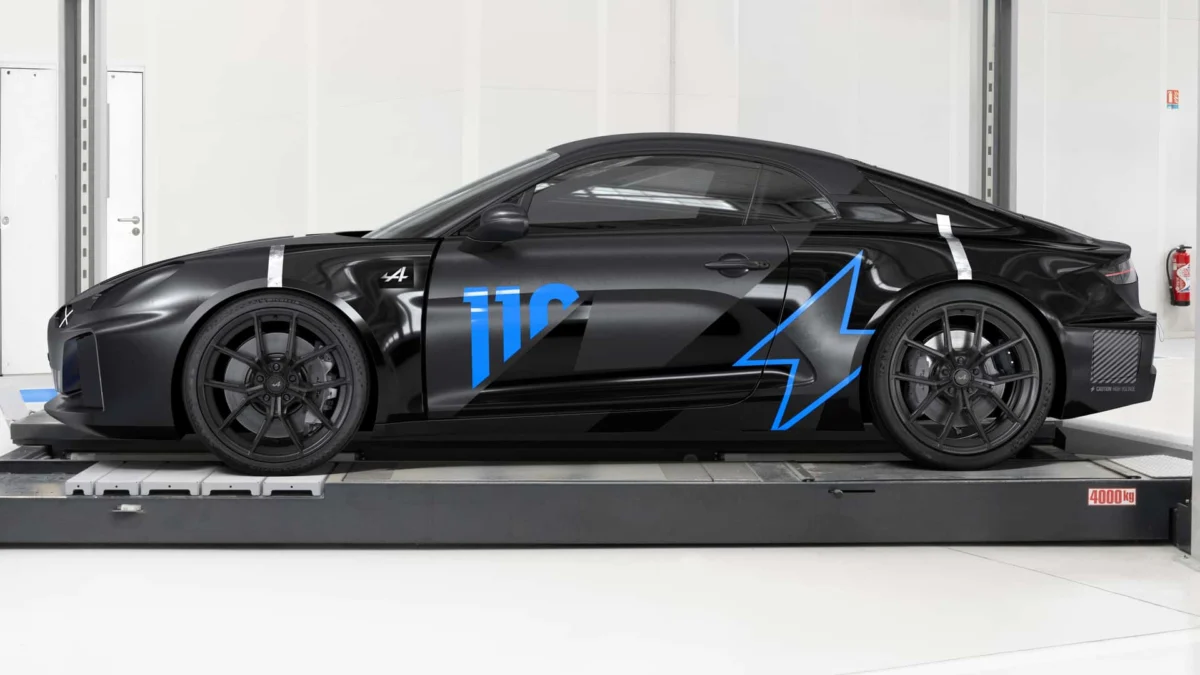
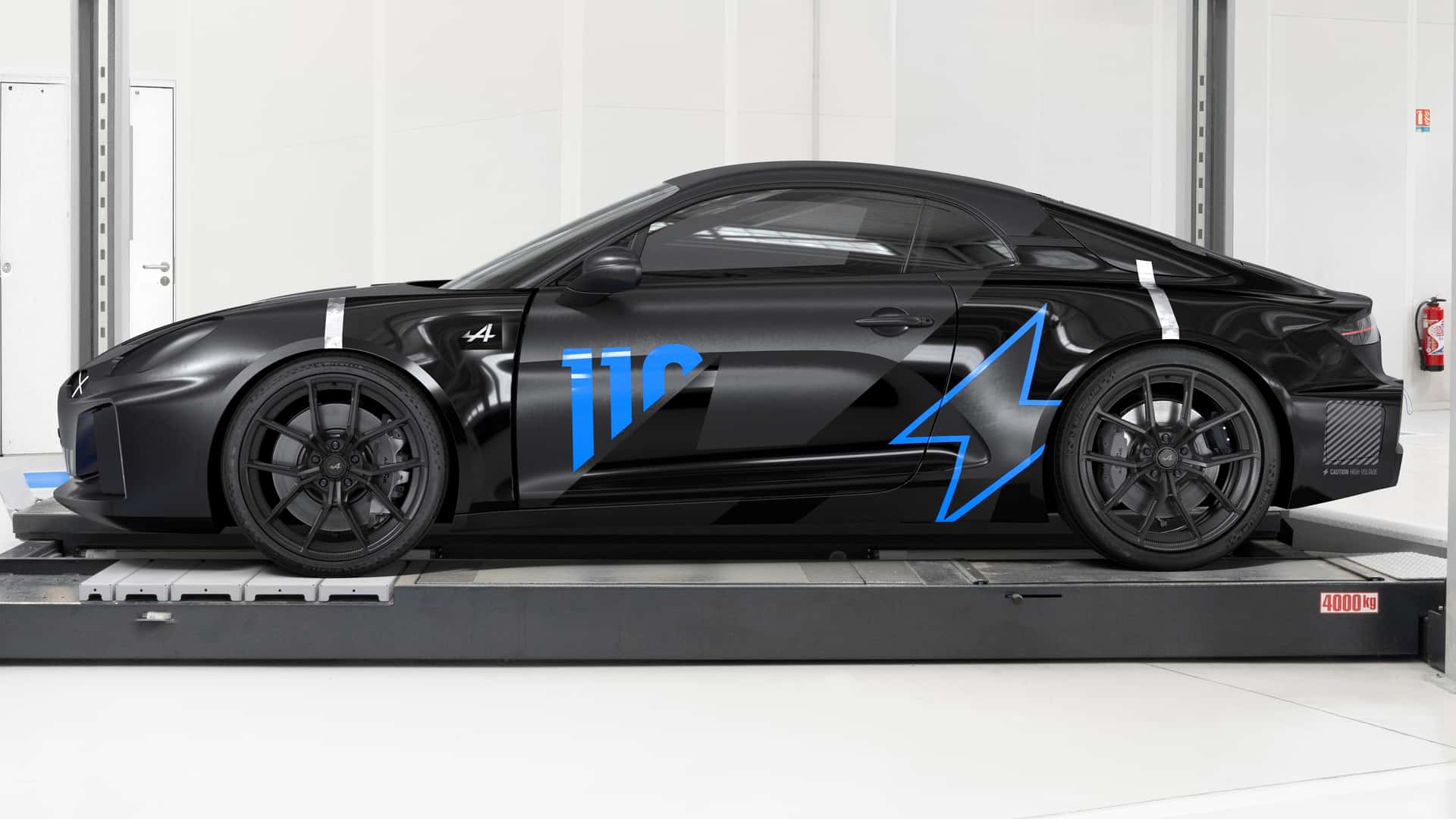
The replacement for this legacy is currently codenamed the "A110 Future." Alpine has made it clear that this is not a retrofitted electric conversion of the previous model, but rather a clean-sheet design built upon the brand’s new, bespoke Alpine Performance Platform (APP).
The prototype currently undergoing testing is a visual and mechanical hybrid. While it retains the unmistakable silhouette of the outgoing car, sharp-eyed observers will note significantly wider wheel arches, hinting at a broader track and more substantial front and rear axles. Beneath the composite bodywork lies a sophisticated battery architecture. Eschewing the conventional "skateboard" platform found in many mass-market EVs, Alpine has opted for a split-battery layout—two packs mounted at the rear—to achieve an optimal 40:60 weight distribution.
This design choice is crucial for maintaining the handling characteristics that defined the A110. By centering the mass and ensuring a balanced weight distribution, engineers aim to preserve the nimble, point-and-shoot nature of the previous generation.
Advanced Technical Specifications
Alpine’s transition to electric power is supported by cutting-edge hardware. The company has confirmed the following technical pillars for its next-generation sports car:
- Aluminum-Intensive Architecture: To combat the inherent weight of batteries, the chassis and suspension systems utilize extensive aluminum components, minimizing unsprung mass.
- Cell-to-Pack Integration: The battery utilizes a high-energy-density design where cells are integrated directly into a single, compact housing, reducing structural weight and increasing rigidity.
- Silicon Carbide (SiC) Inverters: By adopting SiC technology, Alpine increases the efficiency of the powertrain, allowing for higher power density and better thermal management within a smaller footprint.
- 800-Volt Architecture: This high-voltage system is a necessity for modern performance EVs, enabling ultra-fast charging times and reducing the weight of the electrical cabling required throughout the vehicle.
While the exact curb weight remains a closely guarded secret, Alpine is acutely aware of the "elephant in the room." The original A110 was a featherweight at 1,102 kilograms (2,430 pounds). Achieving a similar figure with a battery pack is a monumental challenge, yet the brand’s engineers remain optimistic that the performance gains will offset the mass.
The Promise: Outperforming the Best
Alpine is making bold, arguably provocative, claims regarding the new A110. Marketing rhetoric from the brand promises that this vehicle will be the "world’s first true EV sports car," capable of "outperforming the best of today’s combustion sports cars."
This confidence stems from the instant, high-torque delivery of the dual-motor electric drivetrain. Unlike the outgoing 1.8-liter engine, which required the driver to manage turbo lag and gear shifts, the electric powertrain promises a level of responsiveness that is traditionally unattainable for internal combustion engines. By keeping the car strictly rear-wheel drive, Alpine aims to ensure that the "fun factor"—the ability to rotate the car through corners—is preserved.
Strategic Expansion: Beyond the A110
The A110 Future is just the tip of the spear. Alpine has confirmed that the brand will expand its portfolio to include a 2+2 model, which will revive the historic A310 nameplate. Last seen in 1984, the A310 was a grand tourer that offered more practicality without sacrificing the brand’s sporting DNA. By positioning the A110 as a dedicated two-seater and the A310 as a more versatile 2+2, Alpine aims to capture a wider audience of performance buyers while maintaining its reputation for driving purity.
The public will get their first official look at the progress of the A110’s transformation at the Goodwood Festival of Speed, with a full commercial launch slated for 2027.
Implications for the Sports Car Market
The transition of the Alpine A110 raises fundamental questions about the future of the segment. Enthusiasts often equate "sports car" with the tactile engagement of a gasoline engine—the vibration, the noise, and the mechanical feedback of a manual gearbox.
Alpine’s move is part of a larger, industry-wide trend. Porsche is currently deep in the development of its 718 Boxster and Cayman electric successors, and independent manufacturers like Caterham are experimenting with ultra-lightweight EV concepts like the Project V, which targets a weight of just 1,190 kilograms.
The "Motor1" perspective remains skeptical yet intrigued. While the technical capabilities of electric motors are undeniable, the loss of the internal combustion engine changes the emotional core of the sports car experience. A faster car is not always a better car; the "drama" provided by a high-revving engine is an intangible quality that electric motors have yet to replicate. However, if any brand has the engineering pedigree to prove that an electric sports car can be as engaging as its gasoline-powered ancestors, it is Alpine.
Conclusion
The end of the second-generation A110 production is a milestone that marks the conclusion of a highly successful chapter. The 28,701 units produced in Dieppe leave behind a legacy of automotive excellence. As we look toward 2027, the automotive world waits with bated breath. Will the A110 Future be a mere computer-controlled appliance, or will it successfully translate the Alpine spirit into the new age of electricity?
The shift to 800-volt architectures, aluminum-intensive platforms, and high-energy-density cells suggests that Alpine is taking the challenge seriously. For now, the brand has provided a glimpse into the future, and while the roar of the 1.8-liter engine will be missed, the promise of "exceptional torque and performance" suggests that the spirit of the Alpine A110 is not disappearing—it is simply evolving into a new, electrifying form.