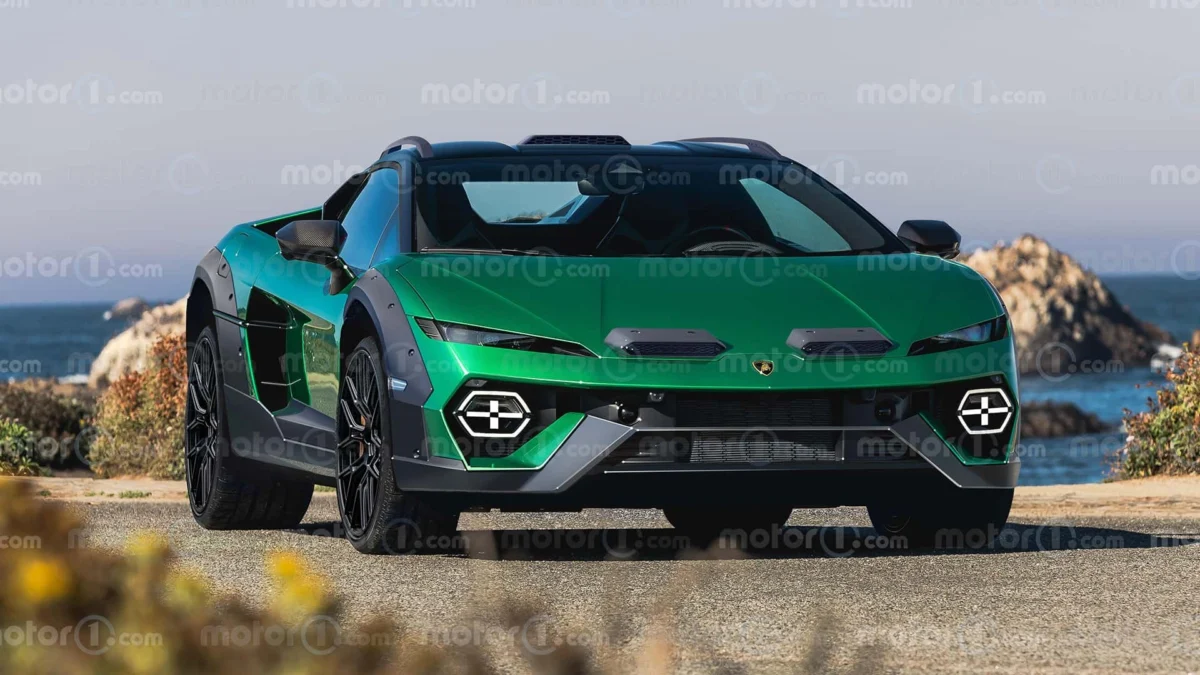
The automotive world was caught off guard when Lamborghini unveiled the Huracán Sterrato. In an industry obsessed with track-focused aerodynamics, lap times, and Nürburgring records, the idea of a supercar designed to kick up gravel seemed like an eccentric departure. Yet, the ruggedized, all-terrain monster became an instant sensation among the Lamborghini faithful, offering a visceral, "go-anywhere" capability that few had ever dared to pair with a mid-engine V10 platform.
While the production of the Huracán Sterrato has officially concluded, marking the end of a brief but highly influential chapter, the whispers of a successor have not been silenced. As Lamborghini pivots toward the electrification era with its new flagship, the Temerario, the question remains: is there room for a high-riding, rally-inspired version of the brand’s new V8 hybrid supercar? According to key figures within Sant’Agata Bolognese, the door to a “Temerario Sterrato” is not only unlocked—it is being actively discussed.
The Case for the Off-Road Supercar
The Huracán Sterrato succeeded because it tapped into a unique psychological niche: the desire for supercar performance without the anxiety of low-clearance lips and pristine tarmac. It was a vehicle that invited owners to drive through mud, snow, and loose gravel with the same ferocity they would bring to a paved canyon road.
Now, with the Temerario replacing the long-lived Huracán, the architecture of Lamborghini’s entry-level supercar has changed fundamentally. The new model features a sophisticated twin-turbocharged 4.0-liter V8 engine paired with three electric motors. This plug-in hybrid powertrain delivers a staggering 920 horsepower, promising 0-to-62-mph acceleration in just 2.7 seconds and a top speed of 213 mph. The prospect of applying this high-torque, all-wheel-drive hybrid system to an off-road-oriented chassis is an engineering narrative that has captured the imagination of enthusiasts and automotive journalists alike.
A Chronology of the Sterrato Concept
The journey of the Sterrato nameplate is one of unexpected success. Initially conceived as a daring experiment, the concept was greenlit for limited production, and the response was overwhelming.
- The Concept (2019): Lamborghini revealed the original Huracán Sterrato concept, featuring a 47mm increase in ground clearance, widened tracks, and beefy all-terrain tires. It was the "what if" project that the market didn’t know it needed.
- Production Launch (2022-2023): After years of testing, the production version arrived. It was limited to just 1,499 units, selling out almost immediately as collectors rushed to secure a piece of what many considered the most fun Lamborghini in years.
- The Post-Production Era (2024): With the Huracán line ending to make way for the Temerario, fans feared the "Sterrato" philosophy would die with it.
- The Recent Teases (2024-Present): In recent months, high-ranking Lamborghini executives have dropped breadcrumbs suggesting that the Sterrato wasn’t a one-off gimmick, but perhaps the beginning of a sub-brand identity for the Italian marque.
Official Voices: Leaving the Door Ajar
Lamborghini has been remarkably candid about the future of the Sterrato concept. During the most recent Goodwood Festival of Speed, Federico Foschini, the company’s Chief Marketing and Sales Officer, noted that while the brand must prioritize its primary production lines, the Sterrato "opportunity" is something they continue to evaluate.
Echoing this sentiment, Paolo Racchetti, the Lamborghini Product Line Director, recently provided a more direct update in an interview with CarExpert. When asked about the possibility of a Sterrato-style version of the Temerario, Racchetti stated: "Definitely, there could be a car such as the Sterrato… I’m not saying we are planning to do that, but I’m not excluding that it could happen again."
These comments are significant. In the corporate language of high-end supercar manufacturers, "not excluding the possibility" is often the polite equivalent of an active R&D investigation. It suggests that while no official board approval has been granted, the engineering feasibility and market demand studies are likely underway.
Engineering the "Temerario Sterrato"
If Lamborghini were to proceed with a Temerario-based all-terrain vehicle, the blueprint exists. The Urus SE, Lamborghini’s plug-in hybrid super-SUV, serves as an excellent case study. Foschini noted that there is not a massive delta between what the company has achieved with the Urus and what could be done to a sports car platform.
To transform the Temerario into a "Sterrato," the engineering team would likely focus on three pillars:
1. Suspension and Ground Clearance
The original Sterrato raised the Huracán by 44mm. A Temerario version would require a bespoke suspension setup, likely utilizing active magnetic dampers tuned for off-road compliance. The goal would be to absorb high-frequency impacts from dirt and gravel while maintaining the necessary stiffness for cornering on tarmac.
2. The Hybrid Advantage
The Temerario’s hybrid system could actually be an advantage for off-road performance. Electric motors provide instant torque, which is invaluable when navigating loose surfaces or climbing steep, unpaved inclines. The ability to switch between pure EV mode for silent off-road cruising and a full-power "Rally" mode for spirited driving would differentiate it from the previous, internal-combustion-only Sterrato.
3. Bodywork and Protection
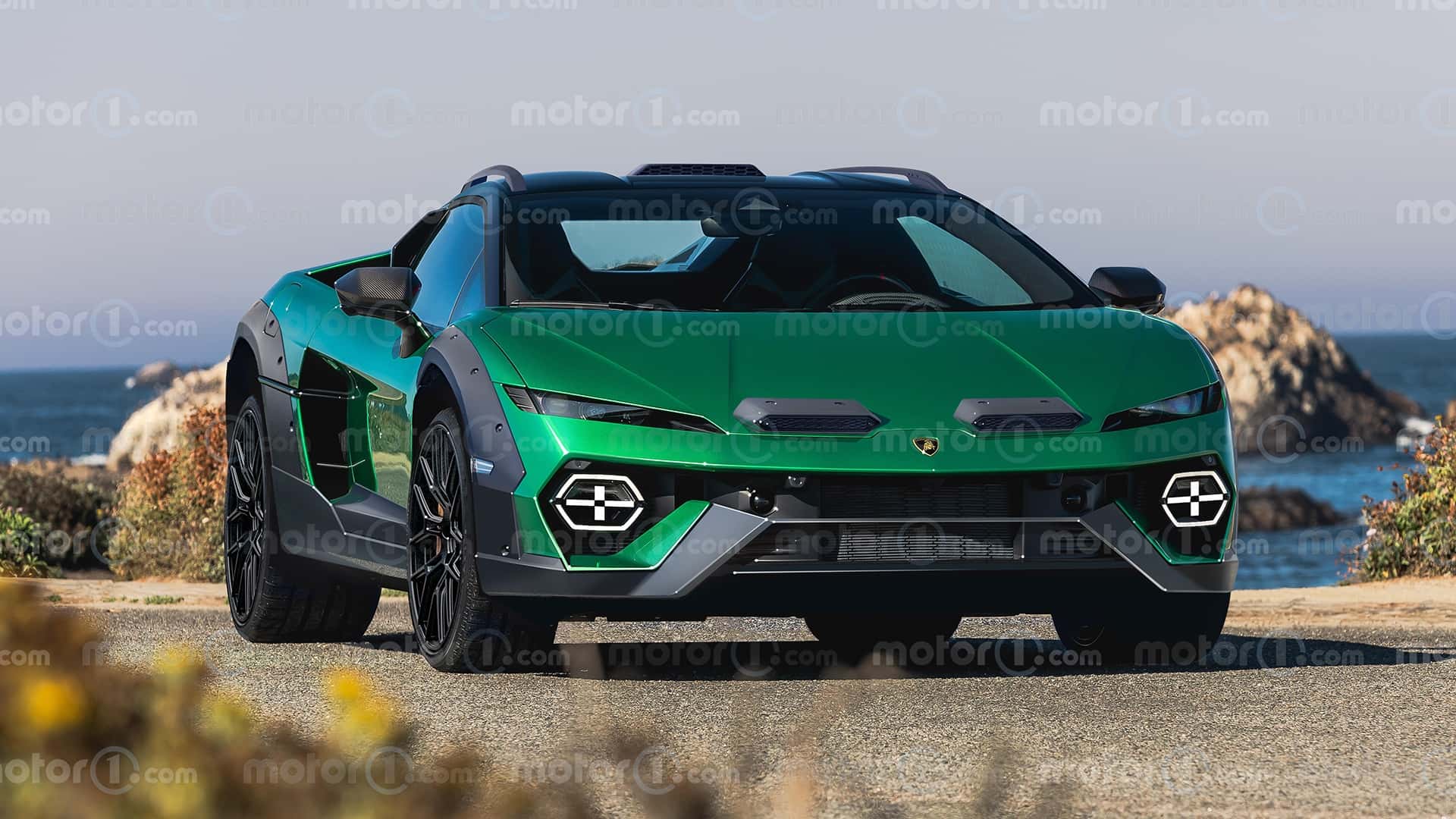
Beyond just the ride height, a Sterrato variant requires a visual and functional transformation. We can expect flared wheel arches, underbody aluminum shielding to protect the hybrid battery pack and transmission, and auxiliary rally lighting—a staple of the original’s aesthetic.
The Market Implication: A Shift in Supercar Culture
Why would a brand known for 200-mph track weaponry care about dirt roads? The answer lies in the changing demographics of supercar ownership. The traditional "garage queen" approach to supercar ownership is fading. Modern owners, particularly those in markets like North America and the Middle East, are increasingly seeking "experiential" vehicles—cars that can handle varied environments, from high-end urban valet stands to remote mountain passes.
By maintaining a Sterrato-style vehicle in its lineup, Lamborghini achieves two strategic goals:
- Brand Differentiation: It creates a unique selling proposition that competitors like Ferrari or McLaren have yet to fully embrace with the same level of commitment.
- Usage Diversification: It encourages owners to put more miles on their cars. A car that can handle a gravel road is a car that gets driven, and a car that gets driven builds a stronger emotional connection between the brand and the owner.
Challenges to Implementation
Despite the enthusiasm, there are valid reasons why a Temerario Sterrato is not an immediate guarantee.
- Platform Complexity: The Temerario is a complex machine with a sophisticated hybrid architecture. Ensuring that off-road vibrations and debris do not compromise the integrity of the battery cells and electrical components is a massive engineering hurdle.
- Production Capacity: Lamborghini is currently undergoing a massive transformation with the Revuelto and Temerario, alongside the electrification of the Urus. Adding a niche, low-volume derivative like a Sterrato requires significant manufacturing bandwidth.
- The "Dilution" Risk: There is always the risk that a "rugged" supercar could be perceived as a gimmick if not executed with the same mechanical precision as the core model. Lamborghini has avoided this trap once with the Huracán; doing it a second time requires careful execution.
Conclusion: A Wait-and-See Approach
As it stands, the "Temerario Sterrato" remains in the realm of the possible rather than the definitive. However, the consistent messaging from leadership suggests that the concept is not being shelved. Lamborghini has proven that it is willing to break the rules of the supercar segment, and the success of the Huracán Sterrato provided the company with a massive amount of data and customer feedback that it would be foolish to ignore.
For now, enthusiasts will have to rely on digital renderings and the occasional hint from executives. But if history is any indication, Lamborghini is rarely content with the status quo. In a world of increasingly sanitized, autonomous-leaning transport, a 920-horsepower, all-wheel-drive, hybrid supercar designed to eat dirt isn’t just a fun idea—it is the kind of bold statement that keeps the brand at the forefront of the automotive world. Whether or not it reaches production, the fact that we are even discussing a "Temerario Sterrato" proves that the spirit of the original off-road bull is very much alive in Sant’Agata.