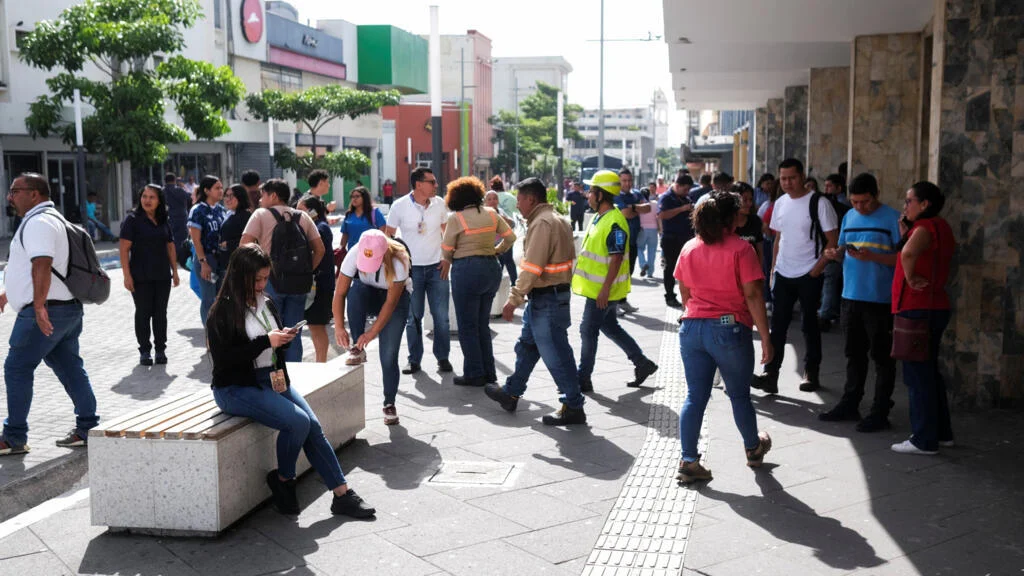
A high-magnitude seismic event has rattled Central America, renewing trauma and triggering emergency protocols across Mexico, Guatemala, and El Salvador. While initial reports suggest a miraculous lack of major structural damage, the region remains on high alert.
Main Facts: A Seismic Awakening
In the early hours of Friday, the coastal waters off Mexico’s southernmost state of Chiapas were rocked by a powerful magnitude 7.3 earthquake. The tremor, which originated at a depth of 15.2 kilometers (approximately 9.44 miles), sent shockwaves rippling across international borders, causing buildings to sway as far away as Guatemala City and San Salvador.
The United States Geological Survey (USGS), which initially assessed the quake at a magnitude of 7.4 at a shallower depth of 10 kilometers, later recalibrated the data. Despite the intensity of the shaking, preliminary assessments from government agencies in the affected nations have provided a tentative sigh of relief: there are no immediate reports of mass casualties or catastrophic structural collapse.
However, the event serves as a stark reminder of the region’s volatile geological position. Situated atop the intersection of several tectonic plates, including the Cocos and Caribbean plates, the Pacific coast of Central America is a known seismic hotspot. The latest tremor has forced hundreds of thousands of residents to confront their vulnerabilities once again, particularly in the wake of recent, devastating seismic activity elsewhere in Latin America.
Chronology: A Day of Terror and Evacuation
The events of Friday unfolded with terrifying speed.
08:00 Local Time: The initial rupture occurred off the Chiapas coast. The energy release was instantaneous, with the USGS detecting the seismic waves almost immediately.
08:15 Local Time: As the primary waves traveled inland, residents in the Chiapas region and across the border in Guatemala experienced intense, prolonged shaking. In Guatemala City, the atmosphere shifted from morning routine to absolute panic. Witnesses reported that the tremors lasted for nearly a full minute, causing high-rise buildings to groan and office equipment to tumble.
08:30 Local Time: Emergency sirens began to blare across Guatemala and El Salvador. In Guatemala City, staff in government buildings initiated pre-planned evacuation protocols, flooding the streets as they sought open ground away from potential falling debris.
09:00 Local Time: The U.S. Tsunami Warning System issued a formal bulletin. They cautioned that hazardous waves were possible within a 300-kilometer radius of the epicenter. The prospect of an incoming tsunami added a secondary layer of dread to an already traumatized population.
10:30 Local Time: Throughout the remainder of the morning, a series of aftershocks—some registering between magnitudes 5.0 and 6.0—continued to jar the region. These secondary tremors, while smaller than the main event, served to keep the populace in a state of high anxiety, preventing any return to normalcy.
Supporting Data: The Science of the Surge
Seismologists have emphasized that the depth of 15.2 kilometers is significant. While shallow enough to produce intense surface shaking, the nature of the tectonic slip beneath the ocean floor was not deemed severe enough to trigger a massive, trans-oceanic tsunami.
The U.S. Tsunami Warning System projected that waves could reach heights of 0.3 to 1 meter above the standard tide level along specific stretches of the Mexican and Guatemalan coastlines. These measurements are considered moderate in the context of tsunami intensity, yet they remain dangerous for small vessels and coastal infrastructure.
Furthermore, the geological data suggests that this event was a "subduction zone" quake. When one tectonic plate forces its way under another, the resulting "stick-slip" motion releases colossal amounts of energy. The aftershock sequence is a standard, albeit frightening, response to this energy release, as the Earth’s crust continues to settle into a new equilibrium following the primary rupture.
Official Responses: Cautious Optimism
Government officials across the region have been quick to manage public expectations while maintaining a posture of extreme caution.
Mexico’s Secretary of the Navy, Raymundo Morales, addressed the nation during a government press conference. He sought to dispel rumors of an impending catastrophe, stating, "There is no problem, no serious maritime impact. We only expect some beaches to see a rise in water level of up to half a meter due to the tsunami effect from the earthquake."
Despite this relative downplaying of the maritime risk, Morales and his counterparts in neighboring nations strongly advised citizens to remain away from the shoreline. In Guatemala, the National Coordinator for Disaster Reduction (CONRED) activated its emergency operations center, deploying assessment teams to the departments of San Marcos and Quetzaltenango, which are closest to the Mexican border and historically the most vulnerable to such quakes.
In El Salvador, the Civil Protection agency issued similar warnings, urging residents to monitor official channels and remain vigilant for further aftershocks. The coordination between the three nations has been notably efficient, a result of decades of experience in managing shared regional seismic threats.
Implications: Echoes of Past Trauma
The psychological impact of Friday’s earthquake cannot be overstated. For many residents in Guatemala, the shaking did not merely bring physical danger; it brought back the harrowing memories of the twin earthquakes that devastated Venezuela just weeks ago.
On June 24, Venezuela was struck by a magnitude 7.2 and 7.5 quake within less than a minute of each other. The carnage in Caracas and the coastal areas left the international community horrified and left many in Latin America in a state of heightened PTSD.
"I got really scared and it reminded me of the recent earthquake in Venezuela," said 29-year-old accountant Alexander Valdez, who fled his eighth-floor apartment in Guatemala City. "The shaking wouldn’t stop."
This sentiment was echoed by Adolfo Zacarias, 43, who took shelter under a structural column as his building swayed. For Zacarias and many others, the "fear factor" is now compounded by the recent history of the region. The Venezuelan disaster, which resulted in significant loss of life and a protracted, difficult search-and-rescue effort, has set a benchmark for public fear.
Infrastructure and Urban Resilience
The resilience of the building codes in the region is now under intense scrutiny. While the lack of immediate reports of collapse is positive, structural engineers are expected to spend the coming weeks surveying older buildings in rural Chiapas and mountainous regions of Guatemala. These areas often feature adobe or unreinforced masonry construction, which are notoriously susceptible to seismic forces.
The Regional Outlook
The implications of this earthquake extend beyond the immediate disaster relief. It highlights the desperate need for continued investment in early-warning systems and public education. As climate change and seismic instability continue to challenge the infrastructure of Central and South American nations, the ability of governments to communicate effectively—and the ability of citizens to respond with calm, practiced efficiency—will be the primary factor in determining the death tolls of future events.
For now, the people of Mexico, Guatemala, and El Salvador remain in a state of watchful waiting. The ground has ceased its violent heaving, but the memory of the shaking, coupled with the persistent fear of the next aftershock, means that life will not return to "business as usual" for some time. As the regional authorities continue to assess the aftermath, the focus shifts from emergency response to long-term recovery, ensuring that the lessons of this near-miss are integrated into the fabric of regional safety policy.
In the words of the emergency responders on the ground: "Stay away from the beaches, remain alert, and trust the protocols." It is a mantra that has likely saved lives today, and one that the people of this seismic-prone region will continue to live by for the foreseeable future.