In the world of personal finance, the focus is almost exclusively on the numbers: interest rates, asset allocation, portfolio volatility, and the relentless pursuit of compounding returns. We treat wealth as a destination, a final sum on a balance sheet that will eventually secure our freedom. But what if our fixation on the "how" of making money has blinded us to the "why" of living?
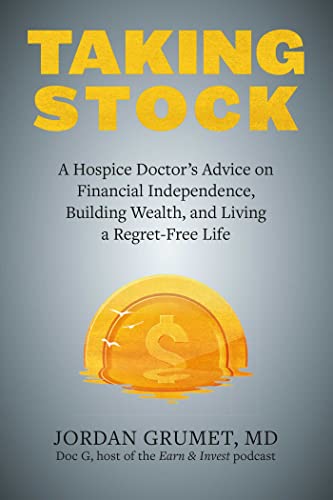
Jordan Grumet, a hospice physician and author of Taking Stock, offers a perspective that challenges the conventional wisdom of the financial sector. Having spent his career in the shadow of mortality, Grumet argues that the most important investment portfolio any of us will ever manage has very little to do with the stock market. Through his years of attending to the dying, he has gathered insights that transcend currency, suggesting that true wealth is measured not by what we accumulate, but by how we invest our limited time, energy, and relationships.
The Undertaker’s Wisdom: A Unique Perspective on Mortality
The genesis of Grumet’s philosophy stems from a recurring conversation he held with a patient who worked as an undertaker. In the quiet, somber moments of a hospice room, where the distractions of modern life fall away, the truth of a human life becomes starkly visible. Grumet frequently reminds his readers: "When the undertaker speaks, you should really listen."
Working in close proximity to the end of life provides a vantage point few investment advisers ever see. While most financial professionals spend their time assisting the wealthy in navigating tax brackets and retirement accounts, a hospice doctor watches as those same individuals reconcile their life’s work with their final moments. What Grumet discovered is that the regrets of the dying rarely concern market fluctuations or lost stock opportunities. Instead, they center on the intangible—the self-forgiveness that never came, the connections that were neglected, and the purpose that remained unfulfilled.
Chronology of a Life Review: From Regret to Reconciliation
The process of "taking stock" is not merely a financial exercise; it is a profound psychological audit. Grumet highlights the case of a patient named Gerald, whose journey illustrates the devastating cost of emotional stagnation.
Gerald’s life was marred by a series of cascading failures: a job loss that triggered a spiral into alcoholism, a fractured marriage, and an estrangement from his daughter. By the time Gerald reached the end of his life, his financial status was secondary to the emotional wreckage he felt. Through the hospice process, Gerald was forced to confront his past. The irony, as Grumet notes, is that if Gerald had invested in self-forgiveness years earlier, he might have been able to break his cycle of addiction before it claimed his physical health.
This chronology of regret serves as a warning. We often wait until we are forced to look back at our lives before we address the emotional baggage that holds us back. The lesson is clear: self-forgiveness and personal development are not luxuries—they are the foundational investments upon which all other success is built.
Supporting Data: The Non-Monetary Portfolio
While modern society emphasizes "Net Worth," Grumet advocates for an expansion of this definition to include "Non-Financial Wealth." To illustrate this, consider the following categories of investment that compound just as effectively as interest in a brokerage account:
1. Investing in Yourself
Personal growth is the ultimate high-yield account. This includes:
- Self-Forgiveness: Letting go of the "what-ifs" to clear the path for future progress.
- Slowing Down: Recognizing that incremental, turtle-paced progress often outperforms the erratic, high-risk sprints we take when we are desperate for immediate results.
- Experience: Just as money compounds, so does lived experience. Each challenge overcome and each skill learned creates a "knowledge base" that serves as an emergency fund for the soul.
2. The Power of Education
Knowledge is the shield that protects your happiness when all other resources are exhausted. Grumet suggests that people are often intimidated by the prospect of learning, particularly regarding finance, yet the barrier to entry is remarkably low. A few hours of reading each month can lead to total financial competence. Beyond finance, an inquisitive mind is a trait that lasts until the very end; even the dying benefit from a sense of wonder and a desire to learn.
3. Investing in People
If you want to measure the success of a life, look at the room of the dying. Are there pictures, letters, and friends? Is there a sense of community? Investing in relationships yields the highest dividends. When you invest in people, you are building an emotional legacy that survives long after your financial assets have been distributed.
4. Investing in the Next Generation
The ripple effect of our lives is best seen in our children. By investing time, love, and virtuous examples into our progeny, we ensure that our influence persists through the generations. As Grumet notes, he is often called by his father’s name in the hospital, a testament to the enduring legacy of a parent who invested properly in their child.
Official Responses and Professional Insights
Financial experts often debate the merits of "lifestyle design" versus "aggressive accumulation." Grumet bridges this gap by arguing that the two are not mutually exclusive. His book, Taking Stock, provides the tactical, practical knowledge needed to secure one’s financial future—but it does so with a caveat.
He maintains that understanding financial basics (low-cost index funds, tax-advantaged accounts, and consistent saving) is "necessary but not sufficient." The professional consensus is shifting toward the idea that financial independence is not an end goal, but a tool to facilitate the deeper work of human connection and personal growth. Without this broader perspective, the attainment of wealth often leads to a hollow sense of achievement.
The Implications: A Call to Action
The implications of Grumet’s philosophy are profound. If we accept that our time on earth is finite and that the end of our journey will eventually require an audit of our life’s "investments," we must change our behavior today.
The "Non-Monetary Investment Inventory" exercise is a critical first step:
- Set aside time: Dedicate three sessions of one hour each, away from all electronic distractions.
- Audit your life: Divide a page into three columns. List your top ten non-monetary assets, your top ten sources of regret/stagnation, and your top ten goals for personal fulfillment.
- Evaluate: Add these to your financial net worth. Does your current trajectory allow you to pursue your true identity and purpose?
If the answer is no, the time to pivot is now. The burden of building a life of meaning—filled with education, deep relationships, and mental and physical health—is high. It requires a commitment to growth that is often taxing and uncomfortable. However, as Grumet asserts, it is the only path that ensures one is as prepared for life as they are for death.
Conclusion
The ultimate goal of investing is to create a foundation that allows you to weather the unexpected and live with intention. Whether you are in your twenties, fifties, or approaching your final days, the lesson remains the same: stop waiting for the "right time" to invest in your character, your relationships, and your physical well-being.
Your financial portfolio may fluctuate, but the dividends you earn from a life well-lived—a life marked by curiosity, love, and resilience—are the only assets that truly carry over. Take stock of your life today, because the compounding effect of your choices begins the moment you decide to invest in what actually matters.