
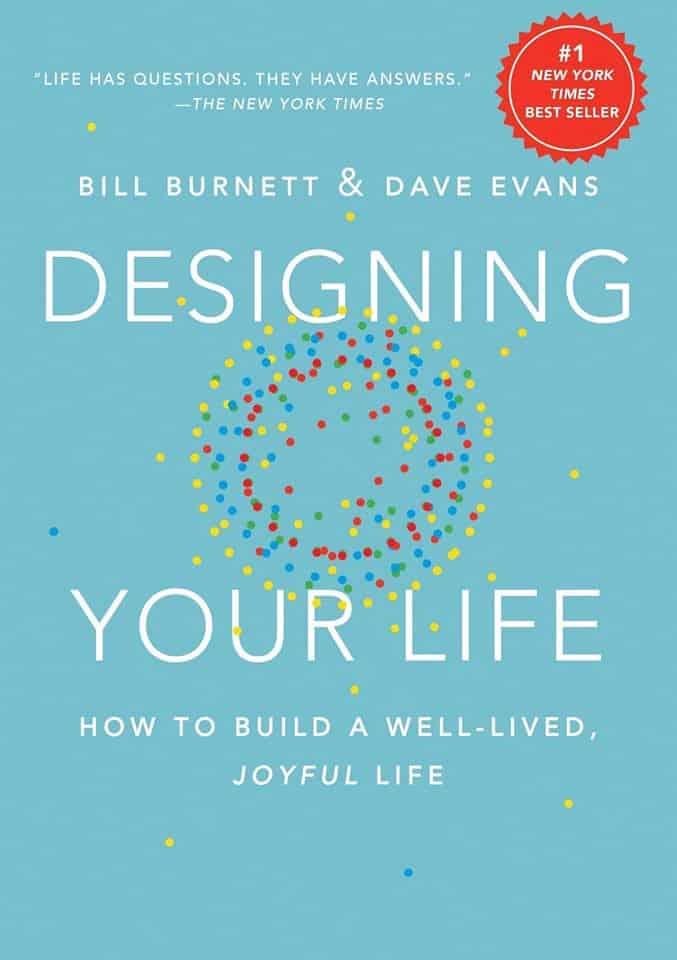
In the pursuit of professional success and financial stability, many individuals often neglect the fundamental "why" behind their daily grind. Recently, a growing movement toward intentional living has found a new manifesto in Designing Your Life by Stanford University professors Bill Burnett and Dave Evans. By applying the iterative, user-centric principles of design thinking to the human experience, Burnett and Evans provide a framework for individuals to navigate career pivots, life transitions, and the elusive search for purpose.
For many, the transition from "what do I want to do" to "who do I want to be" remains a daunting chasm. This article explores how a cohort of friends—including the author, his partner Kim, and long-time friend Craig—are testing these methodologies in real-time, moving beyond theoretical reading into actionable life design.
The Foundation: Starting Where You Are
The first tenet of Designing Your Life is deceptively simple: "Start where you are." Much like a financial audit, where one must accurately calculate net worth before projecting future growth, life design requires a radical, honest assessment of one’s current state. Burnett and Evans ask readers to evaluate four pillars: health, love, play, and work.
This assessment is not intended to be a critique, but rather a diagnostic "snapshot" in time. It provides the GPS coordinates necessary to plot a future course. Without acknowledging one’s current location on the metaphorical map of life, any attempt at transformation is likely to be misaligned with reality. This exercise serves as a grounding mechanism, stripping away the idealized versions of the self to confront the immediate, tangible needs of the present.
Building a Moral and Vocational Compass
Once the diagnostic phase is complete, the authors introduce the concept of the "Compass"—a combination of a "Workview" and a "Lifeview." These two short essays act as a foundational statement of purpose, designed to guide decision-making during future periods of uncertainty or transition.
The Workview: Beyond the Paycheck
The Workview is an exploration of what an individual believes work is for, why they do it, and what constitutes "good" work. During a recent collaborative discussion, the stark commonality between friends revealed a deep-seated desire for "right livelihood."
Craig, a participant in this study, articulated a view of work that transcends simple compensation. "I work for money happily for a while," Craig notes, "but experience, learning, and growth are essential if I am to remain happy for long." His philosophy emphasizes tangible outputs—fostering abundance through food or tools—and prioritizes the restoration of natural systems over mere status or corporate competition.
Conversely, the author’s Workview focuses on the concept of ikigai—the Japanese intersection of passion, mission, vocation, and profession. By aligning the output of his professional platform with the goal of helping others master their finances, he seeks a "win-win" outcome where personal fulfillment and societal contribution overlap.
The Lifeview: Defining Personal Philosophy
The Lifeview expands the scope to the broader question of existence. It asks: What is the meaning of life? What is my role in the universe?
Craig’s perspective is one of grounded humility, viewing the human experience as a temporary but meaningful blip in the cosmos. He advocates for a life centered on doing no harm and finding solace in the cyclical nature of the natural world. "In the end, laughter is the only reasonable response to life’s vicissitudes," he observes.

The author’s Lifeview, while similarly humanist, emphasizes the active creation of meaning. "I believe that life has no inherent meaning," he posits. "I choose instead to see it as an opportunity to create my own meaning." This philosophy centers on morality as a reflection of how one treats others, particularly those with whom they disagree or those experiencing a power imbalance. By practicing "rational self-centeredness," he aims to build a strong personal base that allows him to support his community and, ultimately, leave the world better than he found it.
The Role of Shared Values and Social Capital
A striking revelation during these exercises was the degree of overlap in the participants’ worldviews, despite having developed them independently. This alignment is not necessarily coincidental; it points to the enduring influence of shared formative environments.
The participants, all of whom attended Willamette University, appear to have been deeply shaped by the school’s motto: Non nobis solum nati sumus ("Not unto ourselves alone are we born"). This principle serves as an ethical tether, reinforcing the idea that individual success is intrinsically linked to the health of the community.
The discussion also touched upon the decline of "social capital"—a concept popularized by Robert Putnam in Bowling Alone. The participants expressed concern that the atomization caused by modern technology and digital discourse has hindered the ability to form deep, productive bonds with people from diverse backgrounds. Consequently, their life design goals now include the intentional fostering of social capital, prioritizing human connection over digital distraction.
Implications for Future Growth
The methodology proposed by Burnett and Evans is clearly more than just a self-help exercise; it is an attempt to introduce professional-grade strategy into the personal sphere. By documenting these reflections, the participants have established a baseline against which they can measure their future evolution.

The implications for the reader are significant:
- Decision Making: When faced with a career change or a major life event, these "compass" essays provide a filter for decision-making, ensuring that choices remain congruent with core values.
- Accountability: Working through these exercises with a partner or peer group significantly increases the likelihood of follow-through. It turns an internal monologue into a shared, external dialogue.
- Resilience: By defining what matters most—whether it is "right livelihood" or the restoration of social capital—individuals can better weather the inevitable disruptions of the modern economy.
The Road Ahead: The Good Time Journal
As the participants move into the next phase of the Designing Your Life curriculum, they are transitioning from reflective essays to observational data collection. The upcoming "Good Time Journal" exercise requires the logging of daily activities, specifically tracking which tasks generate high energy and engagement versus those that drain resources.
By applying mind-mapping techniques to this data, the participants aim to identify hidden patterns in their productivity and satisfaction. This shift from philosophical inquiry to empirical data collection represents the essence of design thinking: the willingness to iterate based on evidence rather than assumption.
As the study continues, the focus will remain on whether these insights can truly lead to a more purposeful existence or if they are merely tools for better self-understanding. However, if the initial results are any indication, the process of documenting one’s values and energy levels is, at the very least, an effective antidote to the aimlessness that often accompanies mid-career transitions. The journey of designing one’s life is, perhaps, the most important work one can undertake.