For centuries, the sea turtle has been the quintessential nomad of the marine world. Driven by an innate, biological compass that utilizes Earth’s magnetic field, solar orientation, and the rhythmic flow of ocean currents, these ancient mariners traverse thousands of miles of open water. Their life cycles are famously cyclical: hatching on remote beaches, spending years navigating the high seas to forage, and eventually undertaking monumental migrations to return to their natal shores to reproduce.
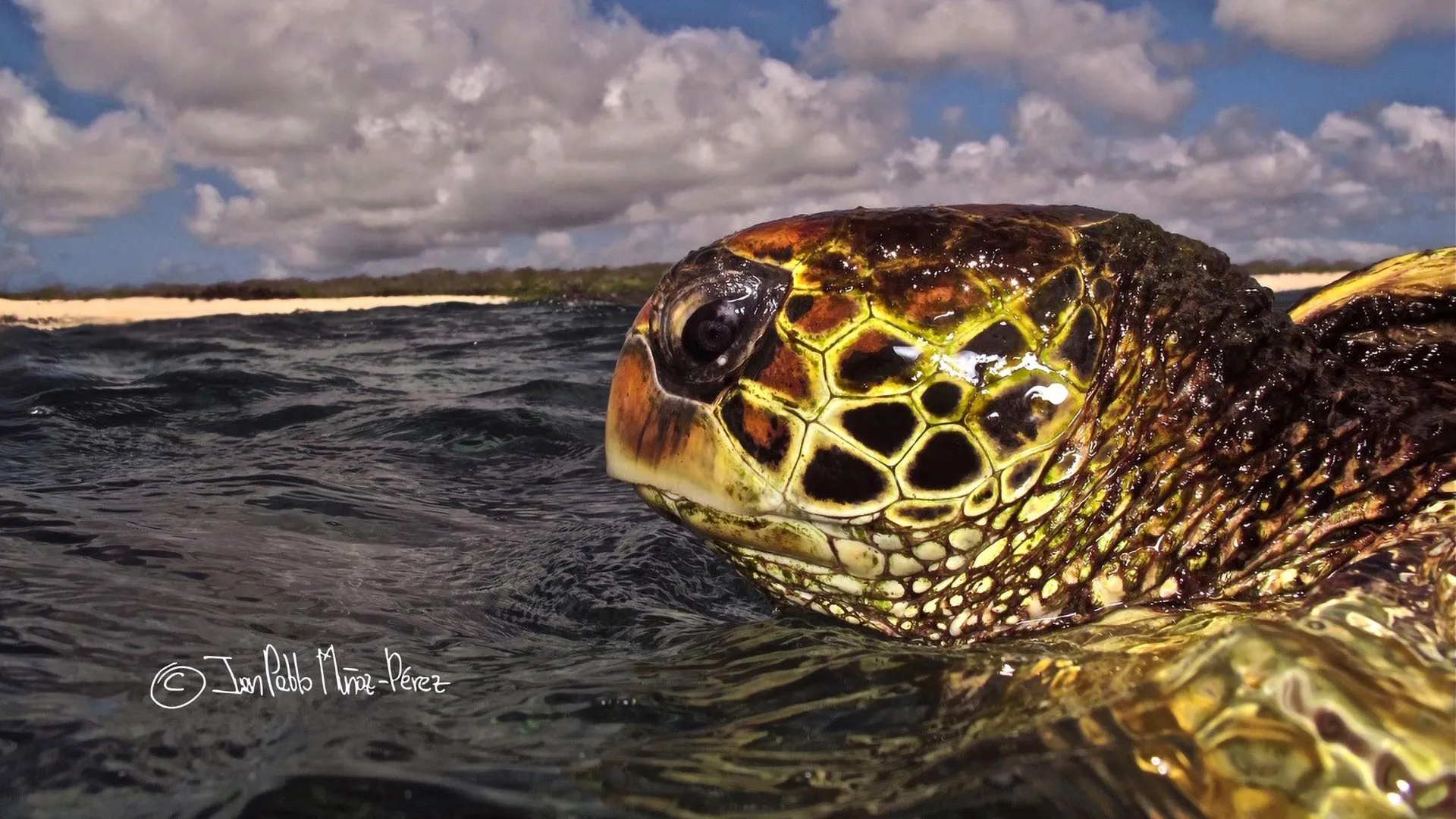
However, a groundbreaking study published in Frontiers in Amphibian and Reptile Science is forcing marine biologists to reconsider the rigidity of this narrative. Research conducted within the Galápagos Marine Reserve has revealed that a specific population of "yellow-morph" green sea turtles (Chelonia mydas) are defying expectations. Rather than serving as oceanic globetrotters, these individuals are exhibiting a surprising, sedentary lifestyle, remaining anchored to the archipelago for years at a time.
The Dual Identity of the Green Sea Turtle
To understand the gravity of this discovery, one must first distinguish between the two genetically distinct forms of green sea turtles that inhabit the Pacific. While the species is defined by its transition from an omnivorous youth to a strictly herbivorous adulthood—grazing on seagrasses and algae—the geographical distribution of their morphs is a subject of ongoing scientific fascination.
The "yellow morph" is typically associated with the tropical and subtropical reaches of the western Pacific. In contrast, the "black morph" dominates the eastern Pacific, ranging from the waters off Southern California down to the coastlines of the Americas. The Galápagos Islands represent a unique, anomalous "melting pot"—the only known location on Earth where these two distinct forms coexist. In these nutrient-rich volcanic waters, yellow and black morphs mingle, share foraging grounds, and graze on identical marine vegetation.
Despite these similarities, their physiological differences are profound. Observations suggest that young yellow morphs exhibit faster growth rates than their black-morph counterparts, hinting at underlying genetic or metabolic variances that remain largely unmapped. It is this biological divergence, coupled with their unexpected residency patterns, that has placed the yellow morphs at the center of a new conservation debate.
Chronology of a Three-Year Tracking Odyssey
The impetus for the study was a fundamental question: How do these elusive yellow-morph turtles utilize the vast, 198,000-square-kilometer expanse of the Galápagos Marine Reserve? Led by Dr. John W. Rowe of Alma College and co-author Dr. Juan Pablo Muñoz Pérez of the Universidad San Francisco de Quito, the research team set out to map the movements of these animals in real-time.
The 2015 Deployment
In 2015, the team embarked on a delicate mission to capture nine adult green sea turtles in the shallow, turquoise waters surrounding four specific islands. The cohort—seven males and two females—were fitted with state-of-the-art electronic transmitters. These tags were engineered to beam location data via the Argos satellite network, a low-orbit system capable of tracking animals across vast distances.
The Tracking Period
Over a period spanning up to 418 days, the researchers monitored the "home-range" behavior of these individuals. While the tracking duration was ultimately dictated by the lifespan of the battery or the detachment of the tag, the data harvested during this window provided an unprecedented look at the turtles’ daily lives. The results were immediate and startling: the subjects showed no inclination to depart the Galápagos. Despite the expectation that they would eventually strike out for the western Pacific, the tagged turtles remained firmly within the archipelago’s protective embrace.
Supporting Data: Mapping the Home Range
The data collected by the satellite tags painted a portrait of a species that is far more "homebound" than previously theorized. While the turtles were capable of venturing as far as 25 kilometers from shore, the overwhelming majority of their time was spent in shallow coastal habitats, hugging the coastlines of the archipelago.
Individual Patterns and Territoriality
The movement patterns of the nine turtles varied significantly:
- The Sedentary Five: Over half of the cohort spent the duration of the study tethered to the immediate vicinity of a single island.
- The Archipelago Travelers: Three turtles—Bernardo, Sara, and Leandro—demonstrated a more dynamic range, moving fluidly between the islands of Isabela, San Cristóbal, and Española.
- The Adventurer: The standout of the study was "Ainoa." Tagged near San Cristóbal, she embarked on a significant trek, traversing to Santa Cruz before ultimately settling near Isabela.
Seasonal Fluctuations
The researchers observed a subtle but distinct rhythm to these movements. The turtles appeared to increase their inter-island travel during the cooler months, specifically from April through October. This seasonal shift may be tied to fluctuations in water temperature or the availability of specific types of marine vegetation, suggesting that these turtles are finely tuned to the micro-climates of the archipelago. On average, the home range of an individual turtle covered approximately 1,498 square kilometers, a territory size that varied wildly depending on the individual’s foraging needs.
Official Responses and Theoretical Interpretations
Dr. John W. Rowe, the corresponding author of the study, expressed his surprise at the findings during a recent press briefing. "We expected them to migrate to distant beaches in the western Pacific to reproduce," Rowe noted. "Yet, interestingly, none of our satellite-tagged turtles even left the Galápagos Marine Reserve over the three years of our study."
However, the research team remains cautious, acknowledging the limitations of their scope. Three years is a mere heartbeat in the lifespan of a green sea turtle. Dr. Juan Pablo Muñoz Pérez offered a nuanced perspective, particularly regarding the sex-based differences in behavior.
"Since female yellow-morph green sea turtles are not known to lay eggs on the beaches of the Galápagos, we believe that they will eventually leave the area to return to their natal beaches in the western Pacific," Muñoz Pérez explained. "In contrast, some female black-morph green turtles do nest in the Galápagos. Depending on the individual, those may be year-round residents in the archipelago, travel to other nearby oceanic islands, or even to feeding grounds off Central and South America."
This distinction suggests that the "homebody" behavior observed might be a temporary life-stage strategy rather than a permanent lifestyle, highlighting the complexity of migratory behavior in sea turtles.
Implications for Conservation and Policy
The discovery that yellow-morph turtles treat the Galápagos as a permanent home rather than a temporary waypoint has seismic implications for conservation strategy. Traditionally, marine protected areas have been designed with the "migratory highway" concept in mind—focusing on narrow corridors or specific nesting sites.
A Networked Approach
The findings suggest that protecting a single feeding ground is insufficient. Because individuals regularly move between islands, they depend on a "network" of habitats. If one island’s ecosystem degrades, it could have a cascading effect on the entire population’s health, as they rely on the connectivity of the archipelago to fulfill their nutritional needs.
"Since individual turtles may rely on waters around multiple islands, the quality of habitat that is available for foraging should be maintained intact across all islands, and not allowed to degrade anywhere," said Dr. Rowe.
The Need for Ecosystem-Wide Protection
The study reinforces the necessity of maintaining the ecological integrity of the entire Galápagos Marine Reserve. As climate change threatens to shift ocean currents and alter the distribution of seagrasses, the "homebody" turtles may find their range restricted. Ensuring that the routes between islands remain free of industrial interference, plastic pollution, and overfishing is paramount.
Ultimately, the study serves as a humbling reminder that nature often defies our categorical definitions. The yellow-morph green sea turtles of the Galápagos have reminded the scientific community that while the ocean is vast and open, for some, the most important journey is the one that stays close to home. Protecting these marine pathways is not just about safeguarding a species; it is about preserving the intricate, hidden maps that these animals have followed for millennia.