Introduction
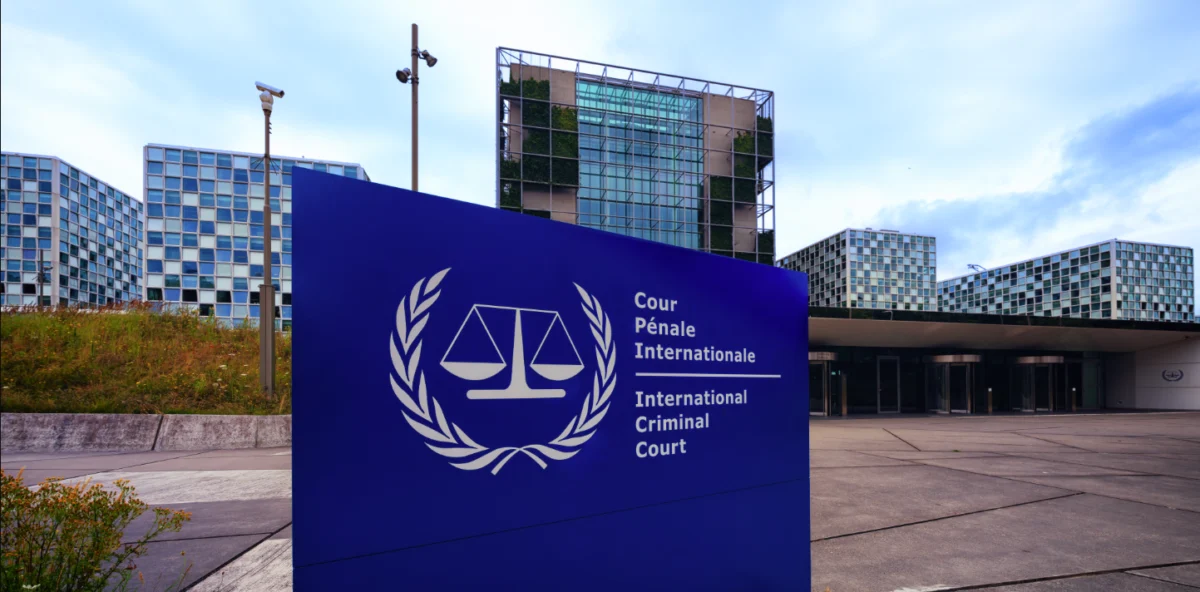
The international legal order is currently facing one of its most profound tests since the Nuremberg Trials. In a move that has sent shockwaves through diplomatic corridors in The Hague and Brussels, the administration of U.S. President Donald Trump has initiated a sweeping campaign of sanctions against the International Criminal Court (ICC). This confrontation, characterized by the White House as an act of national sovereignty, is being viewed by European allies and human rights organizations as an existential threat to the rule of law.
As German Foreign Minister Johann Wadephul arrived in The Hague this past Monday, the message was clear: the European Union is prepared to move beyond rhetoric and utilize its legislative arsenal—specifically the EU Blocking Statute—to insulate international justice from American political pressure.
The Core Conflict: Sovereignty vs. Accountability
The current friction stems from a fundamental disagreement regarding the reach of international law. The Trump administration, bolstered by Secretary of State Marco Rubio, contends that the ICC is a "rogue institution" that has overstepped its mandate by asserting jurisdiction over nationals of countries that are not parties to the Rome Statute, the treaty that established the Court.
President Trump’s address to the United Nations General Assembly last week underscored this hostility. He explicitly urged member nations to "officially resign from this rogue institution immediately," framing the ICC’s investigative reach as a direct violation of American constitutional autonomy. Conversely, the ICC and its proponents argue that the Court serves as a court of last resort, designed to prosecute the most heinous crimes—genocide, war crimes, and crimes against humanity—when national jurisdictions are unable or unwilling to do so.
Chronology: A History of Tensions
The path to the current sanctions regime is marked by years of escalating rhetoric and specific flashpoints:
- The Afghanistan Probe: The seeds of the current crisis were sown when the ICC launched investigations into alleged war crimes committed by various actors in Afghanistan, including U.S. personnel. This led to the Trump administration’s initial visa restrictions against then-Chief Prosecutor Fatou Bensouda.
- The Biden Interlude: Following the 2020 election, the Biden administration moved to lift these restrictions, signaling a return to a more cooperative, albeit cautious, engagement with international institutions.
- The Gaza Investigations: The current crisis intensified significantly with the ICC’s probe into alleged war crimes committed by Israeli forces in Gaza. This move drew intense ire from Washington, leading to the latest, more aggressive wave of financial sanctions.
- September 2026: The Trump administration officially imposes sanctions on 13 senior ICC judges and personnel, effectively freezing their U.S.-based assets and prohibiting American citizens and companies from engaging in business with them.
The EU’s Legislative Counter-Measure: The Blocking Statute
In response to the U.S. sanctions, German Foreign Minister Johann Wadephul and Dutch Foreign Minister Tom Berendsen have begun coordinating a unified European response. The focal point of this strategy is the European Union Blocking Statute.
What is the Blocking Statute?
Originally designed to protect European companies from the extraterritorial effects of U.S. sanctions on Iran and Cuba, the statute nullifies the effects of foreign judicial or administrative rulings based on those sanctions within the EU.
Expanding the Scope
Rights organizations, including the Union of European Federalists (UEF), are now lobbying the European Commission to formally amend the Blocking Statute to include the ICC within its protections. The argument is that the U.S. sanctions represent a "violation of the Union’s autonomy." By insulating the ICC, the EU hopes to protect the Court’s personnel from being effectively barred from the global financial system simply for performing their judicial duties.
However, the path forward is far from certain. Lize de Kruijf of the Atlantic Council has warned that the Blocking Statute is not a "magic bullet." Because the global financial system is deeply intertwined with the U.S. dollar, companies and third-party countries with operations in both the EU and the U.S. may still feel compelled to comply with American sanctions to avoid being locked out of the lucrative U.S. market.
Official Responses and Diplomatic Fallout
The international community remains deeply divided.
The German and Dutch Stance
Foreign Minister Wadephul’s visit to The Hague was a symbolic and tactical maneuver. "International rules are only as strong as our commitment to enforcing them," Wadephul stated during a press briefing. "Particularly in a day and age when international institutions are increasingly being called into question, we must clearly endorse these rules, together with our partners across the globe."
Dutch Foreign Minister Tom Berendsen echoed these sentiments, affirming that the current rules of the ICC provide a necessary framework for global stability and accountability.
The Irish Perspective
Tánaiste (Deputy Prime Minister) Simon Harris has been one of the most vocal advocates for a swift EU-wide response. Harris has called on the European Commission to expedite the implementation of the Blocking Statute, characterizing the U.S. sanctions as an unacceptable interference with the judicial process.
The U.S. Position
The U.S. Department of State, under Secretary Marco Rubio, maintains that the sanctions are a necessary tool to defend U.S. nationals from what they describe as "judicial overreach." The administration argues that the ICC is being weaponized as a political tool against the United States and its allies, and that the Court’s pursuit of non-party nationals is a fundamental breach of international law.
Implications: The Future of Global Justice
The consequences of this standoff extend far beyond the individuals currently sanctioned.
Stifling Advocacy and Access to Justice
Thirty-eight civil society organizations recently filed an amicus curiae brief in the U.S. District Court for the Southern District of New York. The brief argues that the sanctions are not merely administrative hurdles; they are, in practice, a "chilling" mechanism that prevents victims of crimes against humanity from accessing the Court. When judges fear personal financial ruin or travel restrictions, the efficacy of the Court’s investigative work is significantly diminished.
The Erosion of Multilateralism
If the ICC is effectively neutralized by the world’s leading superpower, it sends a dangerous signal to other regimes that may commit atrocities with impunity. The weakening of the Rome Statute could lead to a broader degradation of the international legal framework that has been in place since the end of the Second World War.
The "Uphill Task" of Compliance
The legal battle is expected to be lengthy. Even if the EU moves forward with the Blocking Statute, the practical reality of financial interconnectedness means that ICC personnel may still face significant difficulties. Banks and financial institutions, fearing secondary sanctions from the U.S. Treasury, may preemptively de-risk by cutting ties with the Court, regardless of European laws intended to protect them.
Conclusion
The confrontation between the Trump administration and the International Criminal Court represents a watershed moment for the global order. As the European Union considers invoking its Blocking Statute, the world watches to see if the mechanisms of international law can withstand the pressure of national interests.
The defense of the ICC is not just about the individuals who serve on the bench; it is about the principle that no nation—regardless of its military or economic might—is above the law. As Minister Wadephul noted, the strength of these institutions depends entirely on the collective resolve of those who claim to believe in them. Whether the EU’s resolve will be enough to shield the Court from American sanctions remains the central, unresolved question of the coming year.