For automotive enthusiasts, the Porsche crest is synonymous with a specific kind of engineering perfection. While the 911 remains the undisputed icon of the brand, a quiet revolution is taking place behind the closed doors of the Zuffenhausen and Weissach facilities. The Sonderwunsch division—Porsche’s exclusive program for individualization and one-off builds—is evolving. While the division has historically been the playground for 911 purists, recent signals from Porsche leadership confirm that the scope of this "factory-custom" capability is expanding significantly, embracing everything from heritage restorations to bespoke four-door projects.
The Sonderwunsch Philosophy: A Blank Canvas for the Faithful
At its core, the Sonderwunsch (German for "special wish") division is designed to bridge the gap between a mass-produced luxury sports car and a coach-built work of art. It is a service reserved for the most dedicated patrons of the brand, those who view their vehicles not merely as transportation, but as blank canvases for personal expression.
Speaking with Motor1 at the prestigious Monterey Car Week, Alexander Fabig, Porsche’s vice president of individualization and classic, shed light on the shifting priorities of the program. "Sonderwunsch is currently working on bespoke four-door projects," Fabig revealed. While he was careful to manage expectations—noting that specific one-off commissions for the Cayenne or Macan platforms are not yet on the public ledger—the admission confirms a pivot in the division’s mandate. The demand is no longer confined to the rear-engine coupes that defined the brand’s history.
Chronology of a Dream: From Concept to Reality
The process of commissioning a Sonderwunsch vehicle is an exercise in extreme patience and collaborative effort. Unlike a typical dealership order, where a customer selects from a pre-determined list of options, a Sonderwunsch project is a multi-year development cycle.
According to Fabig, the standard timeline for a one-of-one build is roughly three years. This duration is divided into two distinct phases:
The Concept Phase (Year 1)
This is the "blueprinting" stage. During this year, Porsche engineers and designers work alongside the client to assess technical and financial feasibility. It is here that the wilder ideas are tempered by the harsh realities of physics, safety regulations, and manufacturing constraints.
The Realization Phase (Years 2 and 3)
Once the design is locked, the real work begins. This involves the creation of bespoke tooling, rigorous final testing, and the physical assembly of the vehicle. For complex projects, such as the recent "Slantnose" (Flachbau) tribute build, the timeline can stretch even further. The Flachbau project, for example, took approximately 3.5 years to complete due to the intricate homologation requirements needed to ensure the car met road-legal safety standards.
The "Porsche Scientist" Factor
One of the most intriguing aspects of the Sonderwunsch process is the role of the client. These individuals are rarely casual buyers; they are described by Fabig as "Porsche scientists." These customers possess a deep, granular understanding of the brand’s history, mechanical heritage, and design language.
"They are not just customers; they are people with busy schedules who are effectively part of the development team," says Fabig. "Sometimes, the delays we encounter aren’t engineering-related. They are simply due to the availability of our ‘project manager’—the customer. Because they are the boss, there can be no significant decisions made without them."
This collaborative dynamic ensures that every modification—whether it is a specialized paint-to-sample color or a complete powertrain reconfiguration—feels authentic to the Porsche DNA.
Supporting Data: The 2009 Cayenne GTS Re-Commission
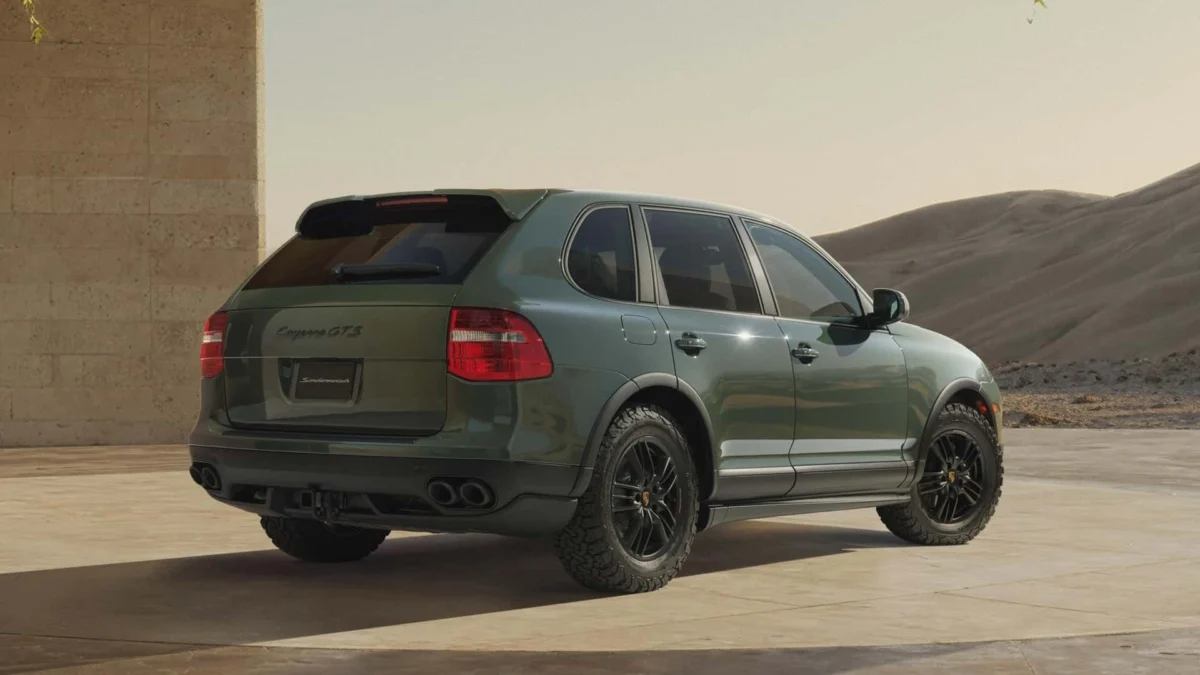
The potential for four-door customization isn’t just theoretical; it has already been demonstrated through the division’s "Factory Re-Commission" program. Last year, the Sonderwunsch team took a 2009 Cayenne GTS and treated it to a ground-up restoration that blurred the lines between classic and modern.
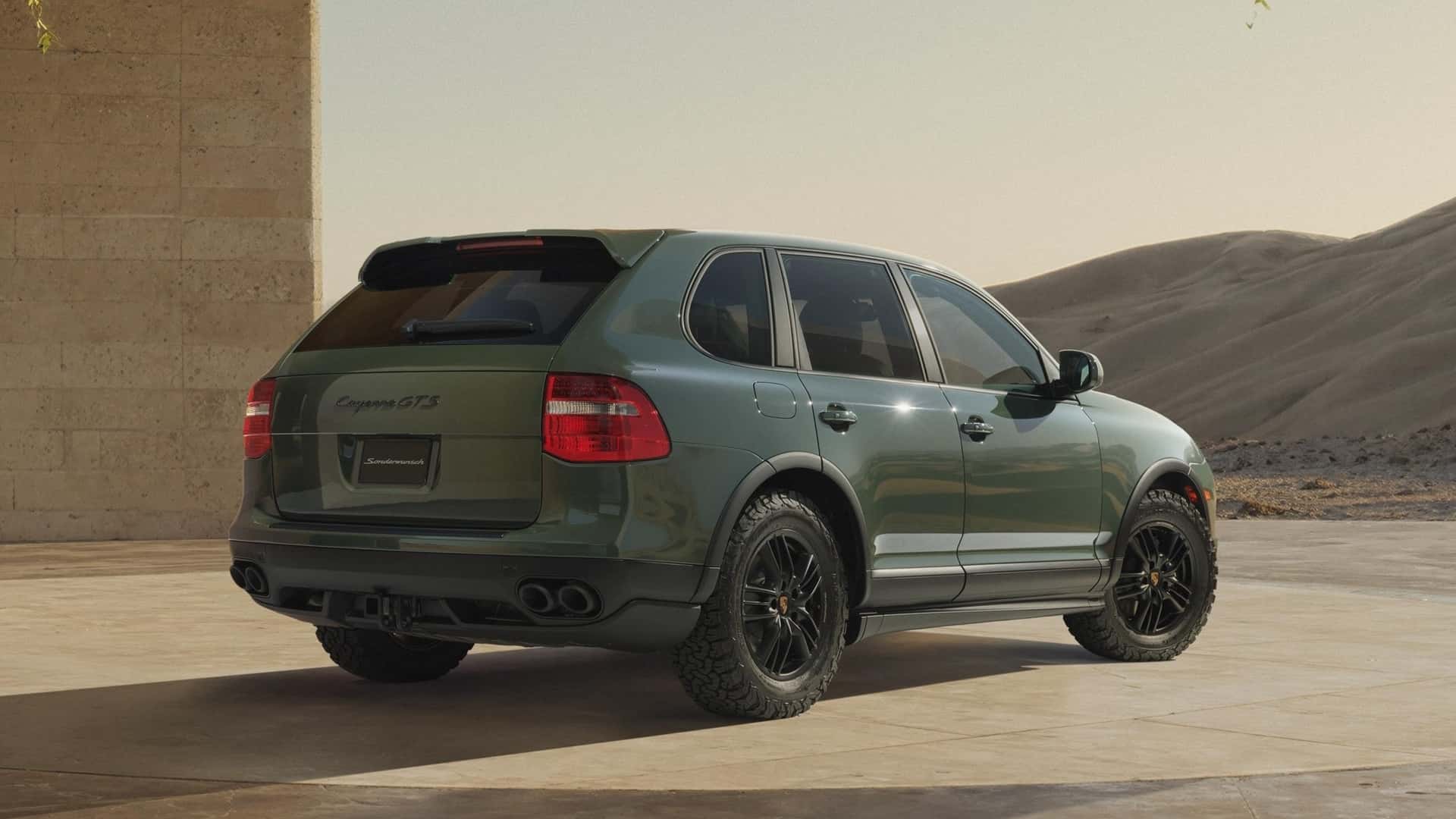
The project featured a sophisticated Blackolive exterior finish paired with an interior draped in English Green leather. Beyond the aesthetics, the team performed mechanical surgery, fitting the SUV with a six-speed manual transmission. This project served as a proof-of-concept for what happens when the division applies its high-touch, artisanal approach to the brand’s larger utility vehicles. It proved that the spirit of a driver-focused, engaging machine can be injected into the Cayenne platform, provided the client has the vision—and the budget—to make it happen.
The Boundaries of the Brand DNA
With such an open-ended program, one might wonder: where does Porsche draw the line? Fabig notes that, surprisingly, the company has never had to reject a request. This is largely due to the self-selecting nature of the clientele.
"For these customers, it is important to stay very close in line with the brand DNA," Fabig explains. "They respect the design philosophy of Zuffenhausen and Weissach too much to ask for something that feels out of place."
In fact, the relationship often functions in reverse. Occasionally, it is the Porsche team pushing the client to be more daring. Because these customers are so well-versed in the brand’s history, they often seek a "factory-correct" feel, ensuring that any one-off project looks as if it could have rolled off the assembly line at the height of a specific design era.
The Implications of an Expanding Portfolio
The move toward four-door Sonderwunsch projects signals a significant shift in how luxury automotive manufacturers view their customer base. As the brand continues to expand into high-performance SUVs and potentially electric four-door platforms, the "one-off" segment is likely to grow in lockstep.
1. The Customization Market
As ultra-high-net-worth individuals increasingly seek assets that are truly unique, the value of factory-sanctioned, one-of-one vehicles will continue to skyrocket. By formalizing this division, Porsche is not just selling cars; they are providing a platform for the preservation and re-imagination of automotive history.
2. Engineering Challenges
The transition to four-door platforms presents a different set of challenges compared to the 911. Modern Cayennes, Macans, and Panameras are laden with complex electronics, safety suites, and active aerodynamics. Integrating bespoke components into these systems without compromising the vehicle’s integrity or performance is a monumental task that requires the full weight of the factory’s R&D capabilities.
3. The Future of Ownership
This program redefines the concept of ownership. For a standard vehicle, ownership ends at the point of sale. For a Sonderwunsch client, ownership begins with a collaborative partnership that spans years. It transforms the customer into a co-creator, a status that strengthens brand loyalty to an almost unbreakable degree.
Conclusion: A Universe of Possibilities
For the aspiring Porsche collector, the message from Alexander Fabig is clear: the Sonderwunsch division is open for business, regardless of the chassis. Whether it’s a track-focused 911 or a heavily modified, manual-transmission-equipped SUV, the factory has the capability to realize almost any vision.
The barrier to entry is not necessarily money, but rather the alignment of the idea with the "Porsche universe." If your vision respects the brand’s heritage, if you possess the patience to endure a multi-year development cycle, and if you are willing to act as an active participant in the engineering process, the door is open.
As the automotive industry pivots toward electrification and automated driving, the Sonderwunsch division stands as a bastion of mechanical artistry. It serves as a reminder that for all the efficiency of modern manufacturing, there will always be a place for the hand-crafted, the bespoke, and the deeply personal—even if that vehicle has four doors and room for the whole family.