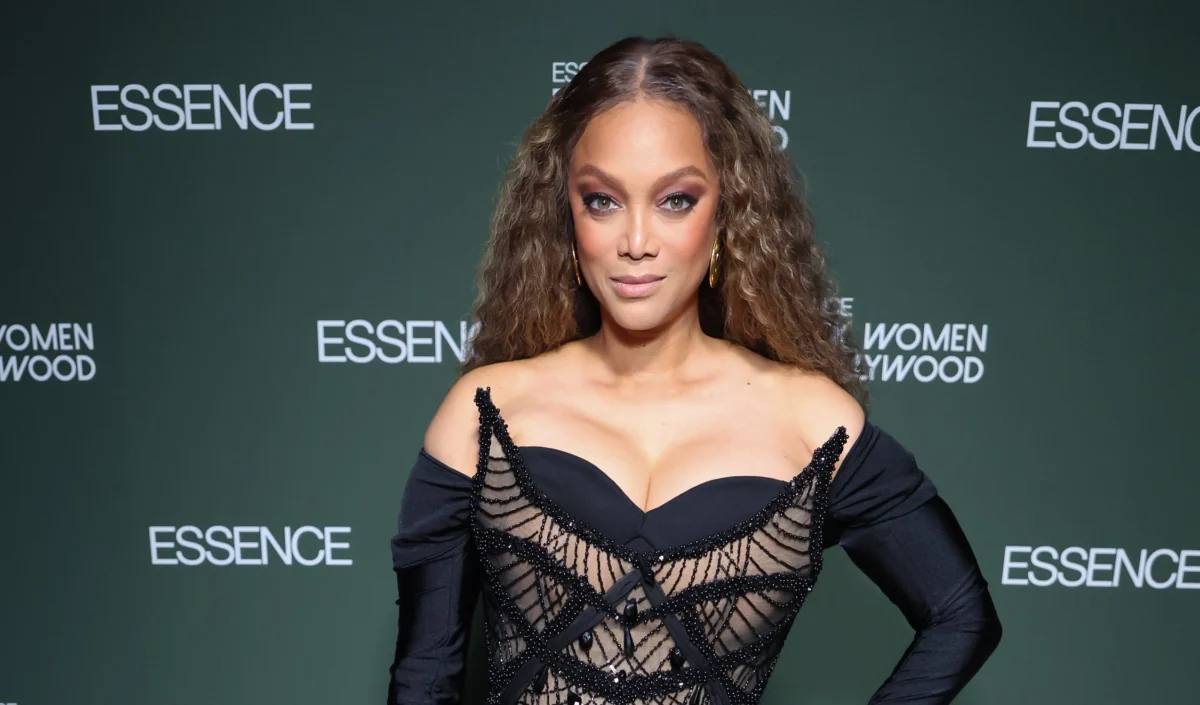
In a high-stakes legal confrontation that pits one of reality television’s most recognizable icons against a global streaming titan, supermodel and media mogul Tyra Banks has filed a sweeping lawsuit against Netflix. The legal action, initiated on Saturday, centers on the controversial docuseries Reality Check: Inside America’s Next Top Model. Banks alleges that the production team engaged in a calculated campaign of “surgical manipulation,” utilizing selective editing to construct a defamatory narrative that she claims has irreparably damaged her reputation.
The lawsuit, which names Netflix, 89 Blocks Holdings, EverWonder Studio, Netflix Music, and co-directors Mor Loushy and Daniel Sivan, alleges counts of defamation by implication, false light, breach of contract, and false endorsement. Banks, who served as the face of America’s Next Top Model (ANTM) for 22 cycles, contends that her contribution to the project was weaponized against her, transforming a three-and-a-half-hour interview into a 16-minute segment designed to paint her as indifferent to the suffering of her contestants.
The Core Allegations: Fabrication and Malice
At the heart of the litigation is the claim that the producers of Reality Check intentionally misled viewers regarding Banks’ level of accountability. According to the court documents, Banks participated in the documentary under the impression that it would be a balanced retrospective of the show’s cultural impact and its shortcomings. Instead, she alleges that the final product was reassembled to present her as a cold, callous overseer who knowingly enabled the sexual assault of a contestant and exploited that trauma for the sake of television ratings.
The lawsuit asserts that the editing process was not merely a matter of creative license but a deliberate effort to deceive. "The false narrative the producers constructed—through selective editing, deliberate omission, and surgical manipulation of continuous footage—included that Ms. Banks knowingly allowed a contestant to be sexually assaulted on her show, exploited that contestant’s trauma for ratings, and then could not even remember it when asked," the filing states. Banks’ legal team maintains that the version of events presented to millions of Netflix subscribers is a “complete fabrication.”
A Chronology of the Conflict
The tension between Banks and the production team appears to stem from the drastic disparity between the raw interview footage and the final broadcast.
- The Interview Phase: Tyra Banks sat for an extensive, three-and-a-half-hour interview with the filmmakers. During this session, she claims she provided thoughtful, nuanced answers regarding the show’s legacy, including taking personal accountability for specific production failures.
- The Post-Production Phase: The suit alleges that the producers systematically excised any footage where Banks expressed remorse or took ownership of production errors. This “cutting room floor” material, according to the suit, was vital to presenting a fair picture of her involvement.
- The Broadcast: When Reality Check was released on Netflix, it condensed those hours of testimony into roughly 16 minutes of selective soundbites.
- The Legal Filing: Following the release and the subsequent public outcry regarding her portrayal, Banks’ legal team initiated the lawsuit on Saturday, seeking a jury trial and unspecified punitive damages.
The Case of Shandi Sullivan: An “Egregious” Manipulation
The most damaging element of the documentary, according to the lawsuit, centers on the portrayal of cycle two contestant Shandi Sullivan. The docuseries revisited a well-known incident from the show’s history: an evening in Milan where an intoxicated Sullivan had a sexual encounter with a man, subsequently confessing the infidelity to her boyfriend.
In the Netflix series, the incident is reframed through the lens of modern sensibilities, with Sullivan describing the event as an assault. The lawsuit alleges that the filmmakers withheld this specific re-characterization of the event from Banks during their interview. When director Mor Loushy asked, "You remember the story with Shandi?", the show depicts Banks glancing upward and saying, "Um," followed by a jarring cut to black.
The intended implication, as articulated in the complaint, is clear: the documentary suggests that Banks, the show’s creator and host, was so detached from her own production that she could not recall an instance of sexual assault occurring on her watch. Banks’ lawyers refute this entirely, pointing to the unedited source footage, which allegedly shows Banks nodding clearly and saying, "I do remember her story." The lawsuit characterizes this edit as a "devastating and deliberate" lie.
The Role of Media Ethics in Reality Television
The lawsuit raises significant questions regarding the ethical boundaries of documentary filmmaking, particularly in the genre of "re-evaluative" media. As shows like Framing Britney Spears and Quiet on Set have shifted the public consciousness toward the potential abuses within the entertainment industry, producers have faced increasing pressure to provide "accountability" narratives.
However, the Banks case highlights the fine line between investigative journalism and the creation of a "predetermined" outcome. By potentially omitting exculpatory evidence—or evidence that complicates a simple "villain" narrative—producers risk violating the trust of their subjects. Legal experts note that "defamation by implication" is a complex charge, as it does not require that a statement be factually false in a literal sense, but rather that the overall impression created by the juxtaposition of images and sounds is false and damaging.
Official Responses and Industry Silence
As of this report, representatives for Netflix have not provided a formal comment regarding the litigation. The streamer, which has faced similar scrutiny in the past over its documentary projects, generally maintains that its creative partners operate with editorial independence. However, given the high-profile nature of the plaintiff and the specific allegations of "surgical manipulation," the industry is watching closely to see if Netflix will move to dismiss the suit under Anti-SLAPP (Strategic Lawsuit Against Public Participation) statutes, which are often invoked in California to protect creators from lawsuits meant to stifle free speech.
Implications for the Future of “ANTM” and Reality Media
The repercussions of this lawsuit could be far-reaching for both Tyra Banks and the reality television industry at large.
- For Banks: A victory in court would serve as a public exoneration, potentially softening the negative reputation she has accrued in recent years as social media has picked apart the more controversial moments of ANTM. A loss, however, could solidify the narrative that she was indeed a negligent architect of an exploitative environment.
- For Netflix and Production Companies: This lawsuit may force a change in how production companies approach interviewees. If courts find that selective editing constitutes defamation, it could lead to stricter contractual requirements regarding "editorial control" or "final review" rights for participants, potentially chilling the production of hard-hitting documentaries.
- The Jury’s Role: By requesting a jury trial, Banks is gambling on the public’s perception of her. She is asking a group of her peers to look past the "character" she played on television for nearly two decades and recognize the human being behind the screen.
As the legal proceedings unfold, the entertainment world is left to grapple with the blurred lines between reality, memory, and the power of the edit. Whether the court determines that the producers were engaged in necessary social commentary or a malicious hatchet job will be the central question of a trial that promises to be as dramatic as any episode of the show itself. For now, the case stands as a stark warning: in the era of streaming, the way a story is cut is just as important as the story itself.