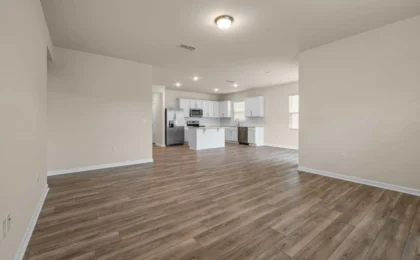
As the autumn leaves begin to fall, the U.S. housing market finds itself in a state of suspended animation. Traditionally, this season marks the transition from the frantic summer rush to a more tempered, cooling period. However, in 2026, the narrative is markedly different. The market never truly ignited this year, continuing a streak of sluggish performance characterized by thin inventory, paralyzed sales volumes, and monthly costs that hover near record-breaking highs.
For potential homebuyers, the central question—"Should I buy now or wait?"—has never been more complex. While the broader economic indicators suggest caution, the reality on the ground is nuanced, varying drastically by region, income bracket, and individual financial stability.
Main Facts: The Anatomy of a Sluggish Market
The current housing landscape is defined by a "push-pull" dynamic that has left both buyers and sellers in a stalemate. We are witnessing a market where the high cost of borrowing has collided with persistent, albeit slowing, price growth.
As of late September 2026, the median U.S. home sale price sits at $398,596. While this represents a modest 2.2% increase year-over-year, it is important to contextualize this against the five-year trend: home prices have surged nearly 20% since 2021. This rapid appreciation, coupled with interest rates that have climbed to their highest levels in three years, has effectively priced out a significant portion of the entry-level buyer demographic.
Furthermore, the market is grappling with a phenomenon of "wait-and-see" inventory. Sellers, many of whom are locked into historically low mortgage rates from years past, are reluctant to list their homes unless absolutely necessary. Meanwhile, buyers are holding out for a price correction that remains elusive. The result is a total inventory of approximately 1.5 million homes—a figure that, while the highest since the pandemic, remains historically low and insufficient to meet demand in many urban corridors.
A Chronology of Economic Volatility
To understand why the housing market is struggling, one must look at the macro-economic forces that have converged over the last twelve months.
- Early 2026 (The Stagnation Begins): The year kicked off with the hangover from a slow 2025. Hopes for a spring surge were largely dashed as mortgage rates remained stubbornly above the 6% threshold.
- March 2026 (The Conflict Escalation): A critical pivot point occurred in the spring. Escalating conflicts in the Middle East began to disrupt global energy markets. As oil prices climbed, inflationary fears were reignited, placing immediate upward pressure on bond yields and, consequently, mortgage rates.
- Summer 2026 (The Policy Crunch): Throughout the summer, the Federal Reserve faced the dilemma of a surprisingly resilient labor market. With the economy refusing to cool, speculation grew regarding further interest rate hikes. By August, the prospect of an additional 50-basis-point hike became the baseline expectation for many analysts, further discouraging buyers.
- September 2026 (Current State): The 30-year fixed mortgage rate reached 7.58% by September 29th, the highest level since October 2023. Coupled with global economic instability, fears surrounding the role of AI in the workforce, and uncertainty regarding new trade tariffs, the psychological barrier for potential homeowners has reached a breaking point.
Supporting Data: Why Rates and Costs Matter
The correlation between interest rates and monthly affordability is the most critical metric for the average household. A move from a 6% interest rate to a 7.5% rate is not merely a mathematical adjustment; it is a fundamental shift in the cost of shelter.
According to data from the Redfin mortgage calculator, this increase translates to hundreds of dollars in additional monthly payments for the same purchase price. Over the life of a 30-year loan, these interest costs compound, resulting in tens of thousands of dollars in extra expenditure.

Inventory and Regional Disparities
While national inventory is climbing, the "buyer’s market" label is a misnomer when applied broadly.
- The Sun Belt: Areas like Austin, Texas, have seen a surplus of new construction, leading to a significant increase in inventory and providing buyers with newfound leverage. Austin currently ranks as one of the slowest major housing markets in the country.
- The Northeast and Midwest: Conversely, markets such as Rochester and Buffalo, New York, remain fiercely competitive. Demand for affordable housing in these regions continues to outstrip supply, keeping sellers in the driver’s seat.
Official Responses: The Expert Perspective
Daryl Fairweather, Chief Economist at Redfin, offers a pragmatic take on the current environment. "Now is a good time to buy a home, if you can afford it," Fairweather asserts. She notes that because many buyers have been pushed to the sidelines, those who remain in the market have more leverage to negotiate for concessions or lower asking prices.
However, this leverage is tempered by the macroeconomic environment. Chen Zhao, Head of Economics Research at Redfin, points to the energy-mortgage link as the primary culprit for current instability. "Mortgage rates have skyrocketed since March almost entirely because of the conflict in the Middle East and its effects on global energy prices," Zhao explains. "As oil prices have shot up and inflation fears have grown, interest rates and investor skittishness have risen in tandem."
The Implications: Is It Time to Buy?
The decision to purchase a home in late 2026 is no longer a purely market-driven calculation; it has become an exercise in personal financial stress-testing.
Financial and Personal Prerequisites
Before entering the fray, prospective buyers must evaluate several non-market factors:
- Emergency Liquidity: In an era of high interest rates and volatile economic outlooks, maintaining an emergency fund covering 3 to 6 months of expenses is non-negotiable.
- Job Security: With the shadow of AI-driven workforce changes and potential tariff-related economic shifts, stability of future income is more critical than ever.
- Climate and Insurance Risks: As insurance companies continue to pull out of high-risk zones (particularly in coastal regions), the cost of homeowners’ insurance has become a "hidden" monthly expense that can make or break a mortgage payment plan.
- Long-Term Horizon: Buying a home is a long-term commitment. In a market where price appreciation is slowing (growing at roughly 1.5% compared to the 7% rates of the 2012–2020 era), the primary value of homeownership should be the stability of a fixed-cost mortgage, rather than short-term equity gains.
The Strategy for Success
For those who decide the time is right, preparation is the only hedge against uncertainty.
- Get Preapproved: In a market where transactions are falling through, sellers prioritize buyers who have a solidified financial position.
- Engage Local Expertise: Because the market is highly fragmented, a local agent is essential to identify which neighborhoods are currently favoring buyers versus those where competitive bidding remains the norm.
- Negotiate Concessions: With inventory sitting on the market for nearly two months on average, buyers should not be afraid to request seller concessions, such as help with closing costs or repairs, which were non-starters just a few years ago.
Conclusion
The 2026 housing market is a landscape of contradictions: high prices meet high rates, while climbing inventory meets plummeting demand. Waiting for the "perfect" time—a moment when rates are low, prices are flat, and the economy is certain—is a strategy likely to result in indefinite renting.
The reality remains that for those with the financial capacity, the best time to buy is when one is personally ready. By focusing on personal financial health, prioritizing long-term stability, and navigating the market with an expert, prospective buyers can find opportunities even in the most challenging economic climates. The market will continue to fluctuate, but the fundamental need for stable, secure housing remains the anchor for any long-term financial plan.