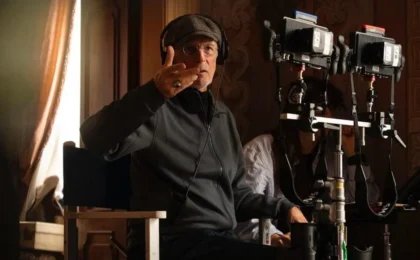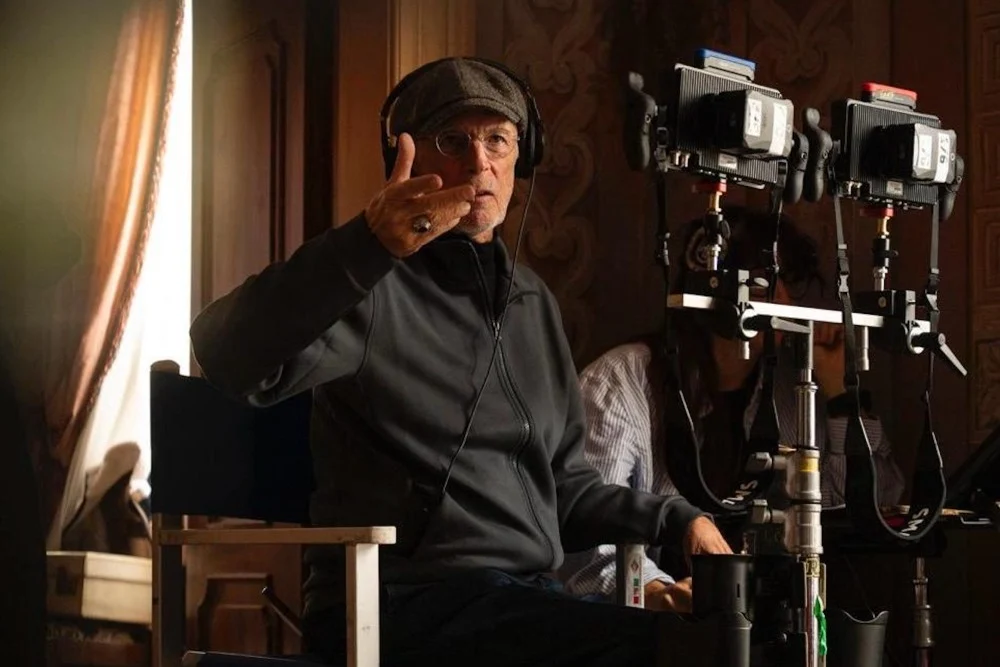
In a cinematic landscape often dominated by grand spectacles and high-octane action, Oscar-winning Italian director Gabriele Salvatores is turning his lens toward the intimate, cerebral, and lethal world of professional chess. Principal photography has officially commenced in the coastal city of Trieste for The Lüneburg Variation, a noir-thriller adapted from the globally acclaimed novel by the late Italian author Paolo Maurensig.
The production, which marks a significant collaboration between European heavyweights, brings together a powerhouse cast headlined by Sebastian Koch, the German star of the Academy Award-winning The Lives of Others, and Toni Servillo, the acclaimed protagonist of Paolo Sorrentino’s Oscar-winning masterpiece The Great Beauty. As cameras roll, the film is already being positioned as a prestige project, promising to explore the darker, esoteric undercurrents of a game that has historically proven difficult to translate to the screen.
The Narrative Foundation: A Forty-Year Duel
At its core, The Lüneburg Variation is a meditation on obsession and the cold, calculated nature of vengeance. The plot, faithful to Maurensig’s seminal work—which has been translated into 25 languages—begins with a chilling catalyst: the suicide of Dieter Frisch, a wealthy and influential Munich businessman, found dead near Vienna.
This initial act of desperation serves as a gateway into a labyrinthine flashback structure. The narrative unravels a story of a duel that spans more than four decades, pitting two relentless adversaries against one another. The battlefield is not one of gunpowder or steel, but the sixty-four squares of a chessboard. The film explores the psychological toll of a grudge that transcends time, forcing characters to confront the "violent, magical, and esoteric" dimensions of the game.
For Salvatores, the challenge lies in capturing the internal intensity of the sport. "It is the story of a duel that lasts more than 40 years, fought by two adversaries on the battlefield of a chessboard," the director noted in a recent statement. "Chess! The most violent sport in existence and, perhaps, the least cinematic. It’s a great challenge, and one I was happy to take on."
A Chronology of Production and Development
The journey to bring The Lüneburg Variation to the screen has been one of careful curation. The project has been in development for several years, navigating the complexities of European co-production financing and casting.
- Pre-Production and Adaptation: The adaptation of Maurensig’s novel required a delicate balance between the source material’s literary gravity and the visual language of film noir. Salvatores and his team spent months refining the script to ensure the tension of the chess matches remained palpable to the audience.
- Casting Announcements: The selection of Koch and Servillo was a watershed moment for the production, signaling to the international market the high caliber of the project. Subsequent casting, including Damian Hardung (Maxton Hall), Thomas Prenn (A Hidden Life), and Eduardo Scarpetta (My Brilliant Friend), rounded out an ensemble cast capable of carrying the film’s heavy dramatic weight.
- Principal Photography: The production is currently scheduled for nine weeks of intensive shooting. The filming schedule moves between the austere, windswept streets of Trieste and the historical backdrop of Rome. The choice of Trieste—a city known for its atmospheric architecture—is expected to enhance the "half-light" aesthetic that Salvatores intends to cultivate.
- Post-Production (Upcoming): Once shooting concludes, the project will transition into a lengthy post-production phase, where the rhythmic tension of the edit will be vital in pacing the chess matches, accompanied by an original score by Federico De Robertis.
The Technical and Creative Architecture
Salvatores has assembled a formidable technical team to realize his vision of a world of "darkness and fire." The film’s aesthetic is being shaped by a core creative group:
- Cinematography: Diego Indraccolo is tasked with capturing the film’s noir sensibilities. The lighting design is expected to be a character in itself, emphasizing the stark contrasts between the brilliance of the intellect and the shadows of the past.
- Production Design: Rita Rabassini is leading the effort to recreate the mid-to-late 20th-century settings that underpin the narrative’s flashbacks.
- Costume Design: Patrizia Chericoni is overseeing the period-accurate attire, which will serve to ground the characters in their respective eras of the forty-year duel.
The production is led by Raffaella Leone and Andrea Leone through their Lotus Production (a Leone Film Group company), in a major collaboration with RAI Cinema. The project is further bolstered by associations with Vice Pictures, Indiana, and MDE, with additional support from the Friuli Venezia Giulia Film Commission.

Official Responses and Industry Sentiment
The excitement surrounding the project is palpable among the producers. Raffaella Leone expressed deep admiration for the director’s unique ability to captivate audiences. "We are very happy to be working with Gabriele Salvatores, a filmmaker and director we have always loved for the mastery with which he takes you by the hand and transports you into his world, making you fall in love with cinema all over again—real cinema, great cinema with a capital C," she said.
Salvatores himself remains focused on the "cruel" nature of the story. "Maurensig envisioned a film of half-light; darkness and fire. Compelling and cruel. I hope I can deliver just that," he added. The sentiment among the production team is that this film represents a return to a specific type of European auteur cinema—one that demands the audience’s full intellectual participation.
Implications for European Cinema
The Lüneburg Variation is more than just another thriller; it represents a significant investment in European intellectual property. By leveraging the star power of Koch and Servillo, the producers are aiming for a film that bridges the gap between high-brow festival fare and commercial international appeal.
1. The Global Distribution Strategy
RAI Cinema is handling the domestic distribution through 01 Distribution, while RAI Cinema International Distribution is managing the global rollout. The high-profile nature of the cast and the prestige of the director suggest a strategic push toward major film festivals—such as Venice or Berlin—before a wider theatrical release. This "prestige-first" approach is a classic blueprint for European films looking to secure global recognition and critical acclaim.
2. Revitalizing the "Chess Movie" Genre
Chess movies have historically struggled to convey the stakes of the game to non-players. From Searching for Bobby Fischer to The Queen’s Gambit, success is usually found by focusing on the characters rather than the moves. Salvatores is taking a different, more esoteric route, suggesting he will lean into the "magical" and "esoteric" elements of the game. If successful, he could redefine how the intellectual sport is portrayed in cinema, moving away from purely tactical explanations toward a more psychological, almost supernatural, depiction of competition.
3. The Literary Adaptation Trend
The success of this film will likely impact the appetite for European literary adaptations. By selecting a novel with established international reach (25 languages), the producers are mitigating the risks inherent in original scripts. Should The Lüneburg Variation resonate with audiences, it could lead to increased interest in the vast catalog of Italian and European noir literature currently untapped by the film industry.
Final Reflections
As production continues in the heart of Trieste, The Lüneburg Variation stands as a testament to the enduring power of the "great cinema" that Raffaella Leone describes. It is a project defined by its contradictions: a game that is static yet violent, a story that is forty years long yet claustrophobic, and a production that is deeply rooted in Italian heritage yet international in its scope and ambition.
The film is not merely an adaptation; it is an exploration of the human capacity for grudge-holding and the way our past games—whether on a chessboard or in life—continue to dictate our future moves. When the film finally hits screens, audiences will be invited to witness a match where, as Salvatores hints, the board itself might be the most dangerous opponent of all. For now, the world of cinema waits, watching the first pieces of this dark, intricate puzzle being moved into place.