Jeremy Clarkson, the man who once famously navigated the jungles of Bolivia and the frozen wastes of the Arctic, has found his next great automotive challenge in the most unlikely of places: the muddy, fertile soil of his own backyard. In a move that blends the rustic charm of Clarkson’s Farm with the high-octane engineering spirit of his Top Gear legacy, Prime Video has officially greenlit a standalone special titled Jeremy Grows a Car: A Clarkson’s Farm Special.
The project, slated for a 2027 release, promises to be more than just a television stunt; it is an ambitious attempt to rethink the very materials that constitute a modern sports car. By marrying the raw, agricultural output of Diddly Squat Farm with the precision engineering of a Jaguar F-Type V6S, Clarkson is setting the stage for one of the most eccentric automotive builds of the decade.
The Core Concept: Engineering from the Earth Up
The premise of the special is as straightforward as it is bizarre. Clarkson, having spent the last several years mastering the complexities of sheep farming, bee-keeping, and local planning committees, has decided to pivot back to his first love: internal combustion. However, this is not a restoration project in the traditional sense.
The base vehicle for the experiment is a Jaguar F-Type V6S, a car already renowned for its sharp lines and aggressive character. Clarkson’s objective is to transform this machine by integrating "farm-grown" components. The scope of the project is immense, moving well beyond simple aesthetic tweaks to include:
- Interior Upholstery: Utilizing leather sourced directly from the livestock at Diddly Squat Farm, tanned and finished to automotive standards.
- Textile Integration: Replacing traditional synthetic carpets with bespoke wool weaves sourced from the farm’s own sheep flock.
- Structural Innovation: The most ambitious element of the build is the use of flax-composite paneling. Clarkson plans to harvest flax fiber from the farm and process it into a structural material intended to serve as a sustainable, biodegradable alternative to traditional carbon fiber.
If successful, this would represent a massive departure from standard automotive manufacturing, where materials are typically sourced from global supply chains rather than local topsoil.
A Chronology of the Build
The project did not materialize overnight. It is the culmination of a multi-year evolution in Clarkson’s career, transitioning from a global television nomad to a localized agricultural entrepreneur.
The Tease
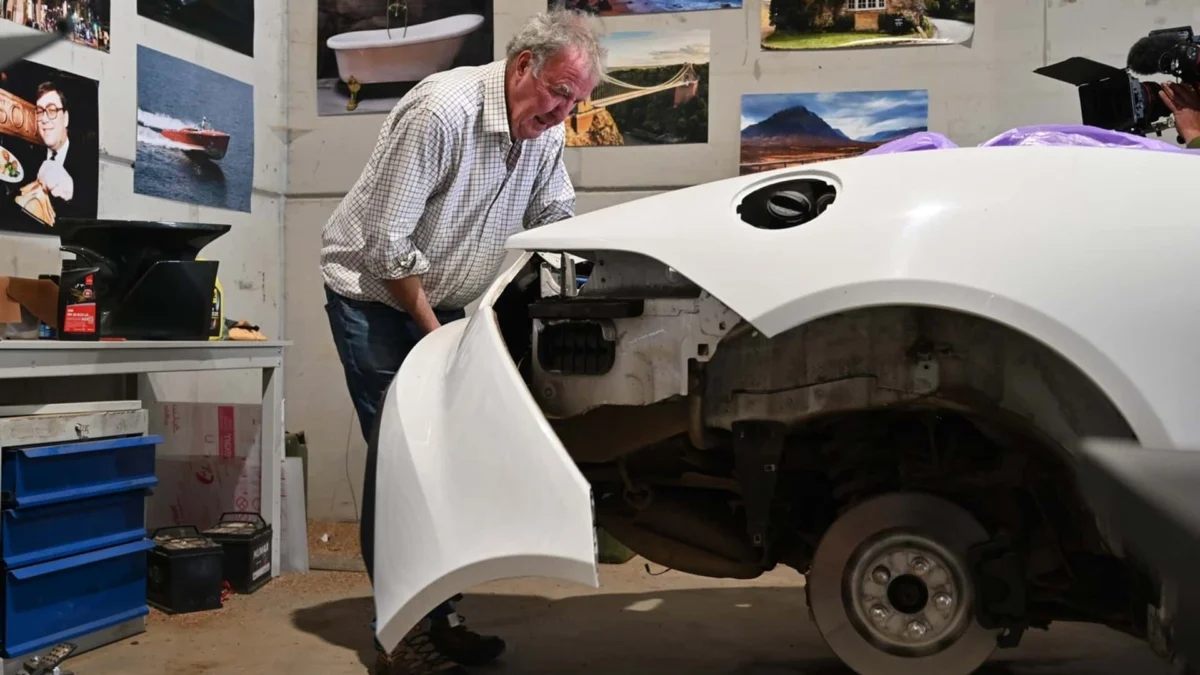
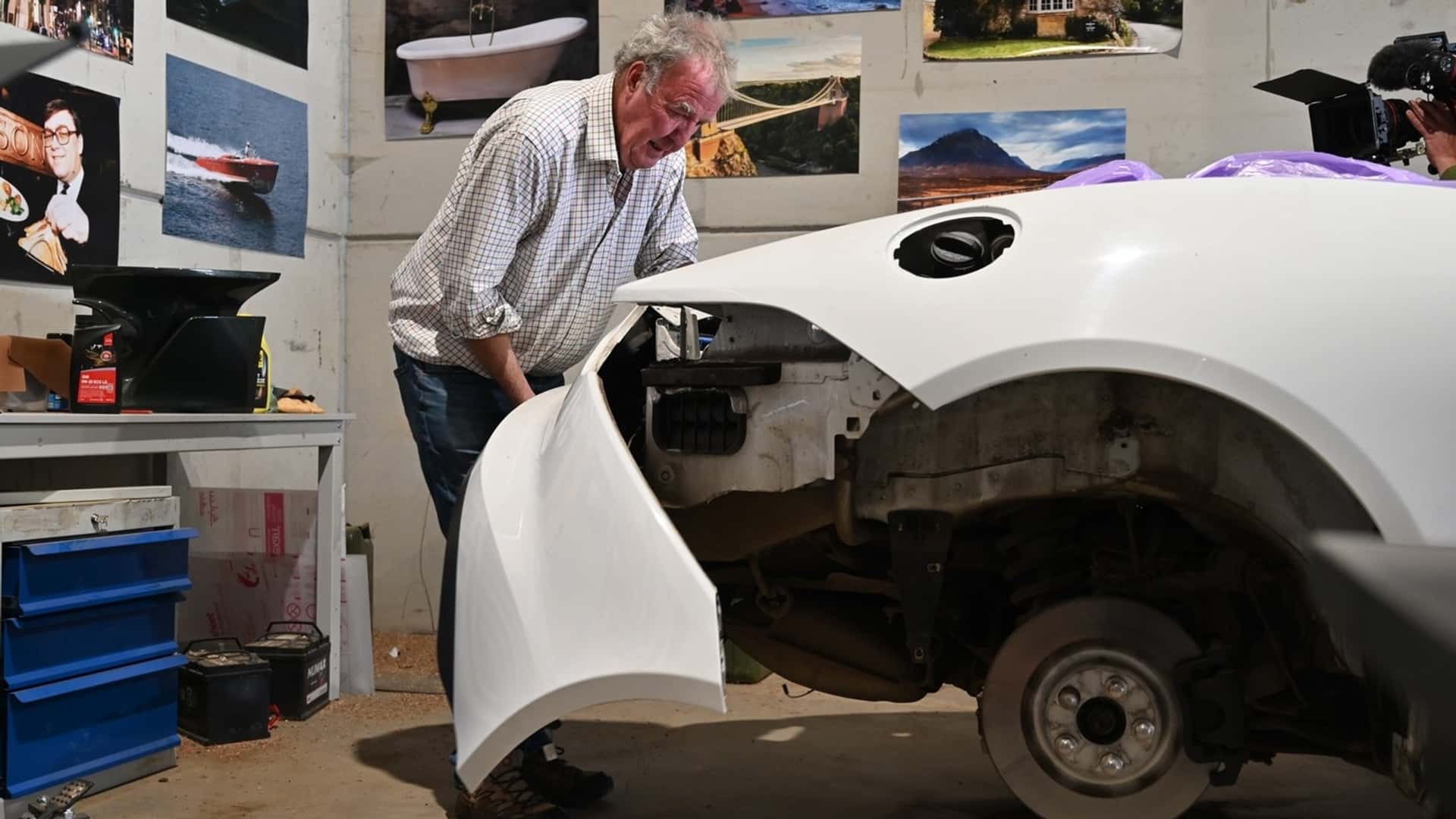
Long before the official greenlight, Clarkson began dropping subtle hints on social media and within the latest seasons of Clarkson’s Farm. He expressed a desire to address the limitations of the F-Type’s design, specifically noting his frustration with the stock bodywork. "I wanted to fit a wider body kit on my F-Type convertible," he remarked, a comment that seemed innocuous at the time but hinted at the fabrication work to come.
The Partnership
Perhaps the most significant milestone in the project’s development was the recruitment of Ian Callum. A titan in the automotive design world, Callum is the visionary behind the original F-Type, the Jaguar XK, and iconic Aston Martin models like the DB7 and the Vanquish. His involvement lends an undeniable layer of legitimacy to what could otherwise be dismissed as a reality-television gimmick. Callum’s expertise in balancing aesthetic beauty with structural integrity will be the "secret sauce" in determining whether the flax-composite panels hold up to the rigors of road use.
The Formal Announcement
Prime Video’s confirmation of the project in early 2025 served to formalize the rumors. By setting the release window for 2027, the production team has signaled that this is not a project that can be rushed. The growth cycles of flax, the processing of raw leather, and the intricate design work required to integrate these materials into a high-performance chassis require a long-term commitment that differentiates this special from the rapid-fire production schedules of the Top Gear era.
Supporting Data: The Science of Flax Composite
While the concept sounds rustic, the science behind flax-based composites is a legitimate area of research within the automotive industry. Flax fibers are gaining traction as a sustainable alternative to glass and carbon fibers due to their high specific stiffness and vibration-damping properties.
When processed correctly, flax fibers can be woven into a fabric that, when infused with a bio-resin, creates a lightweight, durable material. For the F-Type, which already utilizes a lightweight aluminum architecture, the transition to flax body panels could theoretically offer a unique weight-saving opportunity. However, the engineering hurdle remains the "moisture-wicking" nature of natural fibers and their structural fatigue over time—a challenge Clarkson and his team will undoubtedly have to tackle on camera.
Official Responses and Industry Outlook
The announcement has sent ripples through both the farming and automotive sectors. While environmentalists are cautiously optimistic about the focus on sustainable, bio-based materials, traditionalists in the car community are watching with a mix of skepticism and excitement.
"The inclusion of someone of Ian Callum’s caliber suggests that this is a serious inquiry into material science, even if the delivery is packaged with the trademark Clarkson humor," says automotive analyst David Sterling. "It highlights a growing tension in the industry: how do we maintain the passion of internal combustion and performance vehicles while reducing our reliance on petrochemical-heavy manufacturing?"
Prime Video has remained tight-lipped regarding further details, keeping the exact "recipe" for the flax composite under wraps. The streamer’s marketing strategy focuses heavily on the visual contrast between the manicured, high-tech world of Jaguar engineering and the rugged, unpredictable reality of Diddly Squat Farm.
Implications: The Legacy of the "Grand Tour" Split
Jeremy Grows a Car marks a significant pivot in Clarkson’s post-Grand Tour career. Following the 2024 dissolution of his long-standing partnership with James May and Richard Hammond—a partnership that spanned over two decades—Clarkson is now operating in a solo capacity.
This project signals a clear intent: Clarkson is moving away from the global "road trip" format and toward a more introspective, localized style of programming. By bringing the car-building element to the farm, he is effectively merging his two television identities into one.
Comparisons to the legendary "Hammerhead Eagle i-Thrust," the famously disastrous hybrid car built during Top Gear Season 14, are inevitable. That project was a masterclass in chaotic engineering, a satirical jab at the automotive establishment. In contrast, Jeremy Grows a Car feels like a more mature, albeit still eccentric, endeavor. The question at the heart of the show is whether the "farm-grown" ethos can actually produce something that is not only drivable but genuinely impressive.
The Road to 2027
As fans look toward 2027, the anticipation centers on the outcome of the build. Will the flax panels shatter under the pressure of the F-Type’s V6 engine? Will the leather interior survive a rainy afternoon in the Cotswolds?
Beyond the technical questions, the special serves as a cultural artifact of the modern era of streaming television. It represents a shift toward "passion projects" that allow creators to explore niche interests in depth, rather than adhering to the rigid, formulaic structures of legacy broadcast television.
Whether the project is a resounding success or a spectacular failure, it guarantees one thing: Jeremy Clarkson will be doing it on his own terms. For an audience that has followed him through mud, snow, and sand for twenty-five years, that is exactly what they expect.
As the production team continues to capture the progress at Diddly Squat, the industry will be watching. If the flax composite proves to be a viable material for performance car bodies, Clarkson might just find that his greatest contribution to the automotive world wasn’t a witty review or a high-speed stunt, but a new way to think about what a car is made of. Until then, the world waits for the harvest.