
The landscape of modern performance motoring is shifting beneath our feet. As emissions regulations tighten and electrification dominates the conversation, Toyota’s Gazoo Racing (GR) division is taking a defiant, unconventional route. At the recent round of Japan’s Super Taikyu endurance racing series, held at the historic Okayama International Circuit, Toyota pulled the covers off more than just a potential successor to the MR2. They unveiled an experimental prototype that could fundamentally change the DNA of their most beloved affordable sports car: the GR86.
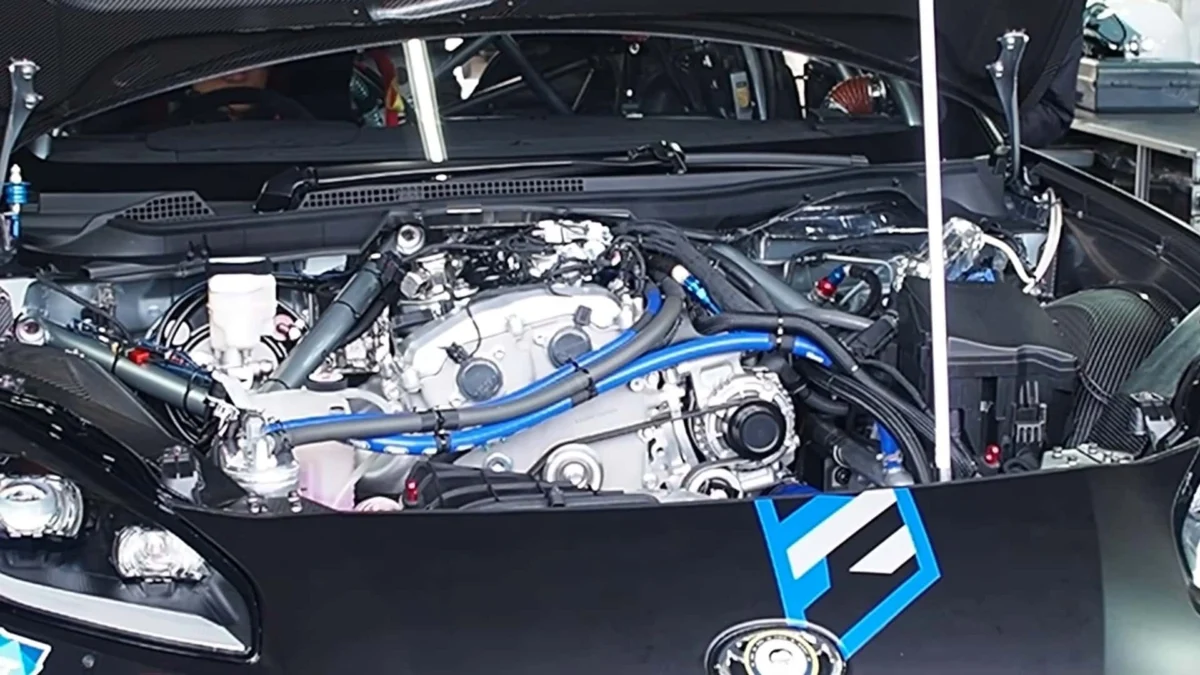
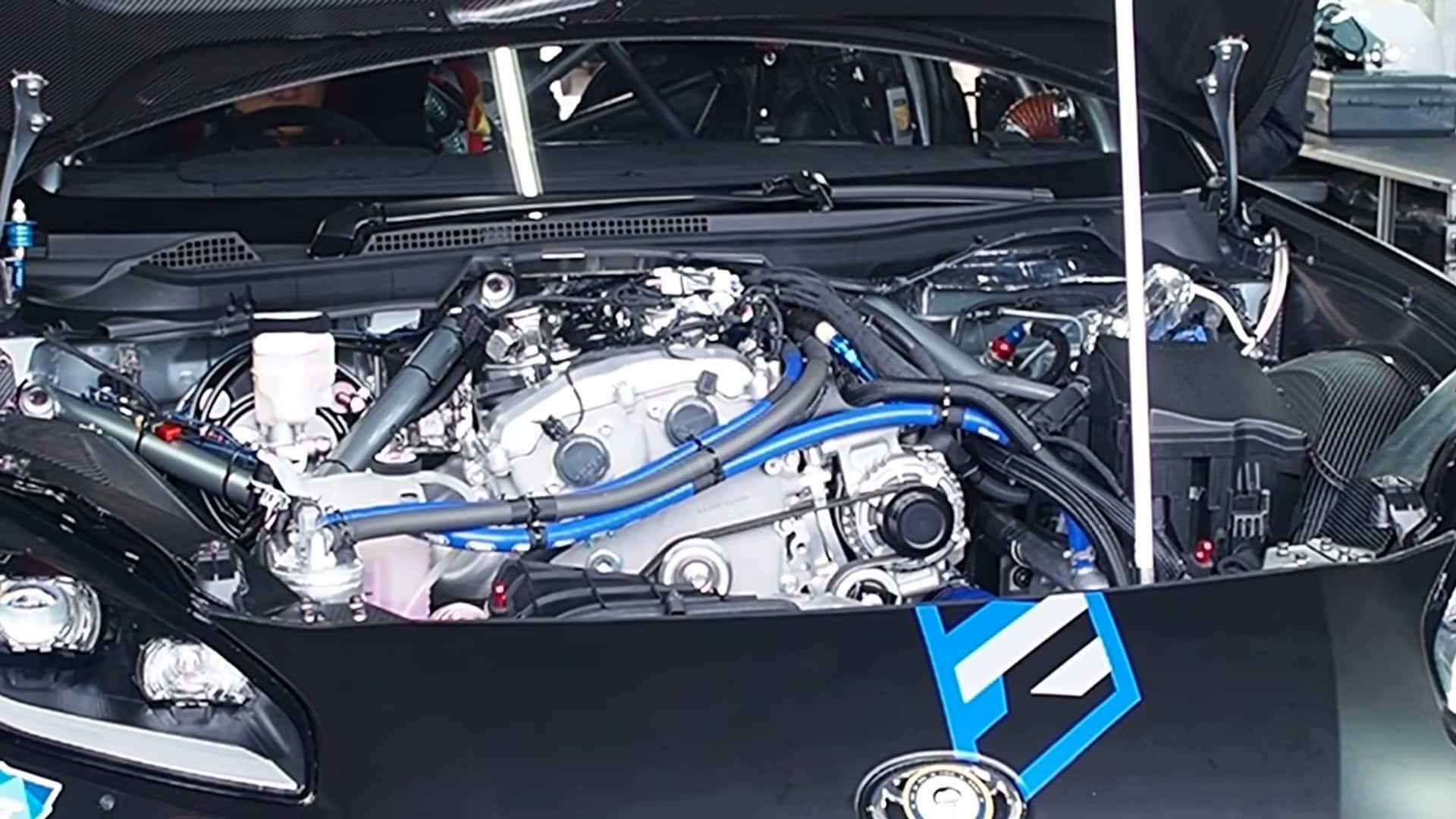
The star of the show was the "GR86 Future FR Concept," a laboratory on wheels that has abandoned the traditional Subaru-sourced boxer engine architecture in favor of a naturally aspirated 2.0-liter inline-four. While the automotive world has long associated the 86 platform with the low-slung, horizontally opposed configuration, this latest test mule suggests that Toyota is ready to chart its own path, potentially severing its long-standing engine-sharing reliance on Subaru to embrace a new, in-house modular powertrain strategy.
The Chronology of Change: From Boxer Roots to G20E Ambition
To understand the magnitude of this shift, one must look at the recent history of the GR86. Since its inception, the Toyota 86 (and its Subaru BRZ twin) has been defined by the Subaru boxer engine. This engine was critical to the car’s handling, as its flat design allowed for an exceptionally low center of gravity.
However, in the world of endurance racing, Gazoo Racing has experimented heavily with the platform. A few years ago, the team modified a competition-spec GR86 to house the 1.6-liter turbocharged three-cylinder engine found in the GR Yaris and GR Corolla. This engine, designated the G16E-GTS, produced a formidable 300 horsepower. Toyota’s goal was twofold: testing high-performance capabilities and pushing the boundaries of synthetic, carbon-neutral fuels.
The current "Future FR" experiment marks the next logical step in this evolution. The 1.6-liter turbo has been removed, replaced by the newly developed 2.0-liter inline-four, codenamed G20E. This engine is part of a broader, modular family of smaller, lighter four-cylinder units that Toyota has been teasing for several months. By testing this engine in the GR86 chassis, Toyota is not merely trying to replace a powerplant; it is validating a new mechanical ecosystem designed to serve everything from performance coupes to mid-engined sports cars.
Technical Analysis: Why Ditch the Turbo?
The transition from a turbocharged 1.6-liter to a naturally aspirated 2.0-liter might seem like a step backward to the casual observer, especially in a performance context. However, the engineering logic behind the G20E is compelling.
Weight Distribution and Front-End Agility
The removal of the turbocharger assembly—including the heavy intercooler, piping, and wastegate hardware—significantly reduces mass over the front axle. A lighter nose translates to sharper turn-in and a more neutral balance during high-speed cornering. Gazoo Racing driver Kazuya Oshima, who has been piloting the prototype, noted in an interview with Car Watch that the engine’s character is entirely different from the forced-induction units the team has previously campaigned.
Throttle Response and Predictability
Turbocharged engines, no matter how refined, are subject to the laws of physics regarding lag. In a technical endurance race, especially when exiting a corner, instant, linear throttle response is the holy grail. The naturally aspirated G20E provides exactly that. Oshima remarked that the engine revs higher and more freely than the development team initially anticipated, creating a linear power delivery that allows drivers to modulate their speed with greater precision.
Advanced Chassis Dynamics
Beyond the engine swap, the Future FR Concept features a significant overhaul of the suspension geometry. The car is equipped with a double-wishbone setup at both ends, a configuration that promises to elevate the GR86’s mechanical grip far beyond the capabilities of the current road-going model. Internal reports from Japan suggest the car is nicknamed "Levin," a nod to the legendary AE86 Corolla lineage, signaling that Toyota views this project as a spiritual successor to their most iconic lightweight drift machines.
Implications for the Partnership: The End of "Toyobaru"?
The most burning question for enthusiasts is what this means for the relationship between Toyota and Subaru. For nearly two decades, the two companies have shared the development costs and engineering expertise to keep the "Toyobaru" twins alive. It has been a symbiotic relationship, allowing both brands to offer sports cars that would otherwise be financially unfeasible to develop in isolation.
However, the G20E engine represents a move toward independence for Toyota. If the next-generation GR86 arrives with a Toyota-designed inline-four, it would mark a massive departure from the current formula.
There are two primary ways to interpret this shift:
- The Independent Pivot: Toyota may be signaling that it has reached a point of technical maturity where it no longer requires a partner for engine development, allowing it to dictate the character and maintenance cycles of its performance vehicles entirely in-house.
- The New Division of Labor: Alternatively, the collaboration may simply be evolving. It is possible that for the next generation, Toyota will provide the powertrain (the heart of the vehicle), while Subaru continues to contribute its expertise in chassis structural rigidity or AWD systems, should a future variant demand it.
Regardless of the specific contractual arrangement, the move suggests that Toyota is prioritizing the development of a highly modular, versatile internal combustion engine that can be scaled for multiple applications—from the GR Yaris M Concept to the rumored MR2 successor, and now, the GR86.
Official Stance and Future Roadmaps
Toyota has been careful not to confirm that the G20E will find its way into a production GR86. The company’s official stance remains that these are "experimental prototypes." Developing a new engine is an astronomically expensive endeavor, and ensuring it meets global emissions standards while maintaining the "fun-to-drive" soul of a sports car is a complex balancing act.
Toyota’s Chief Technology Officer and the Gazoo Racing team have frequently hinted that they are committed to keeping the internal combustion engine alive as long as possible, provided it can be paired with synthetic fuels or hybrid assistance. The G20E is clearly designed with these future-proof technologies in mind.
In previous tests at Fuji Speedway, engineers fitted a similar 2.0-liter development engine into a Lexus IS. The goal there was to showcase how a more compact engine block could be positioned further back in the chassis, effectively improving the polar moment of inertia—the physical manifestation of a "balanced" car. By testing this engine in both front-engined (GR86/Lexus IS) and mid-engined (GR Yaris M) platforms, Toyota is proving that the G20E is the "Swiss Army Knife" of their future lineup.
The "Affordable Sports Car" Philosophy
In an era where the average new vehicle price continues to climb and the industry rushes toward heavy, battery-laden electric vehicles, the survival of the GR86 is a beacon of hope for purists. Toyota has successfully carved out a niche where performance is not measured in 0-60 times or massive horsepower figures, but in the engagement, the sound, and the connection between driver and machine.
The GR86 is currently a rare breed: an affordable, rear-wheel-drive coupe. By iterating on this platform with a 2.0-liter naturally aspirated engine, Toyota is essentially stating that they are not ready to give up on the fundamentals of automotive joy.
Looking Ahead: What to Expect?
The development of the G20E engine is still in its infancy. Even if the project is fast-tracked, it is unlikely we will see a production version of a "Toyota-powered" GR86 for at least another two to three years. There is still a significant amount of fine-tuning required to ensure that the production version can handle the rigors of daily driving—not just the specialized demands of an endurance race track.
Furthermore, the integration of this engine into a consumer vehicle will necessitate a complete re-homologation of the platform. Toyota must ensure that the new engine meets the latest Euro 7 emissions standards and the increasingly stringent CAFE (Corporate Average Fuel Economy) requirements.
However, the excitement surrounding the Future FR Concept is palpable. It demonstrates that Toyota is not just sitting on its laurels; it is actively prototyping, racing, and refining new mechanical solutions. For the enthusiast, this is the most encouraging news possible: the era of the internal combustion sports car is not ending—it is simply being reimagined.
As the industry pivots toward the uncertain future of electrification, Toyota’s commitment to the G20E serves as a promise. It is a promise that there will still be a place for the gear-shifter, the naturally aspirated redline, and the thrill of a rear-wheel-drive chassis balancing on the edge of grip. The next chapter of the GR86 may be written in a different language than the last, but it appears the story is far from over.