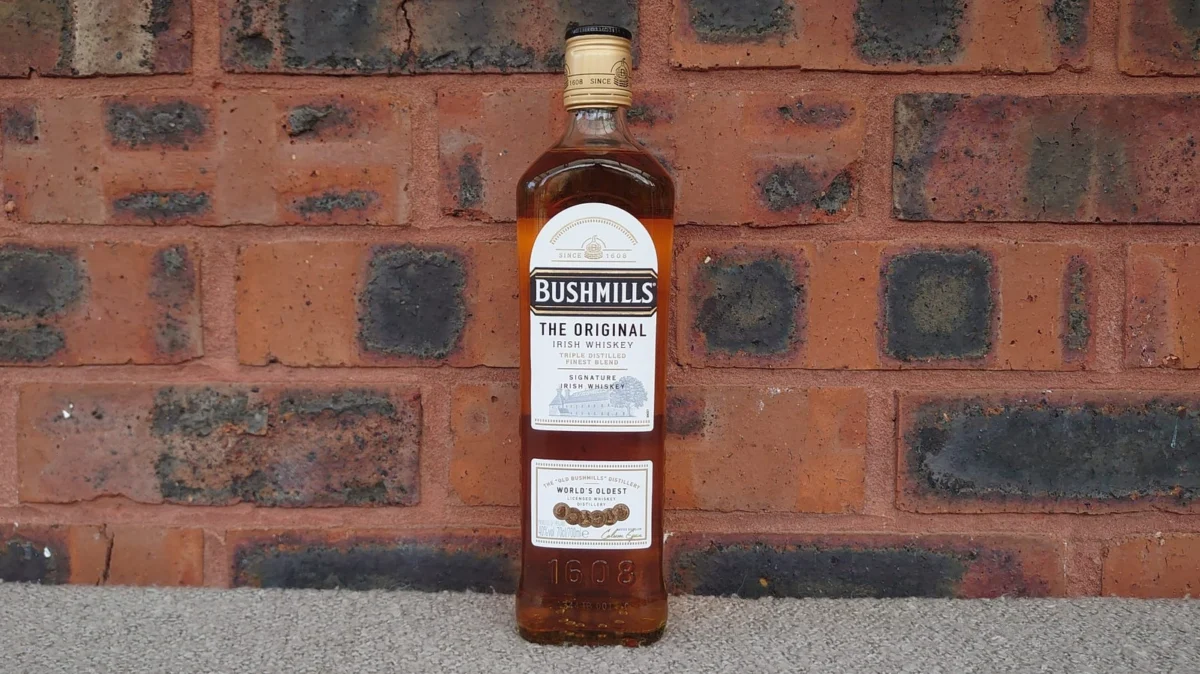
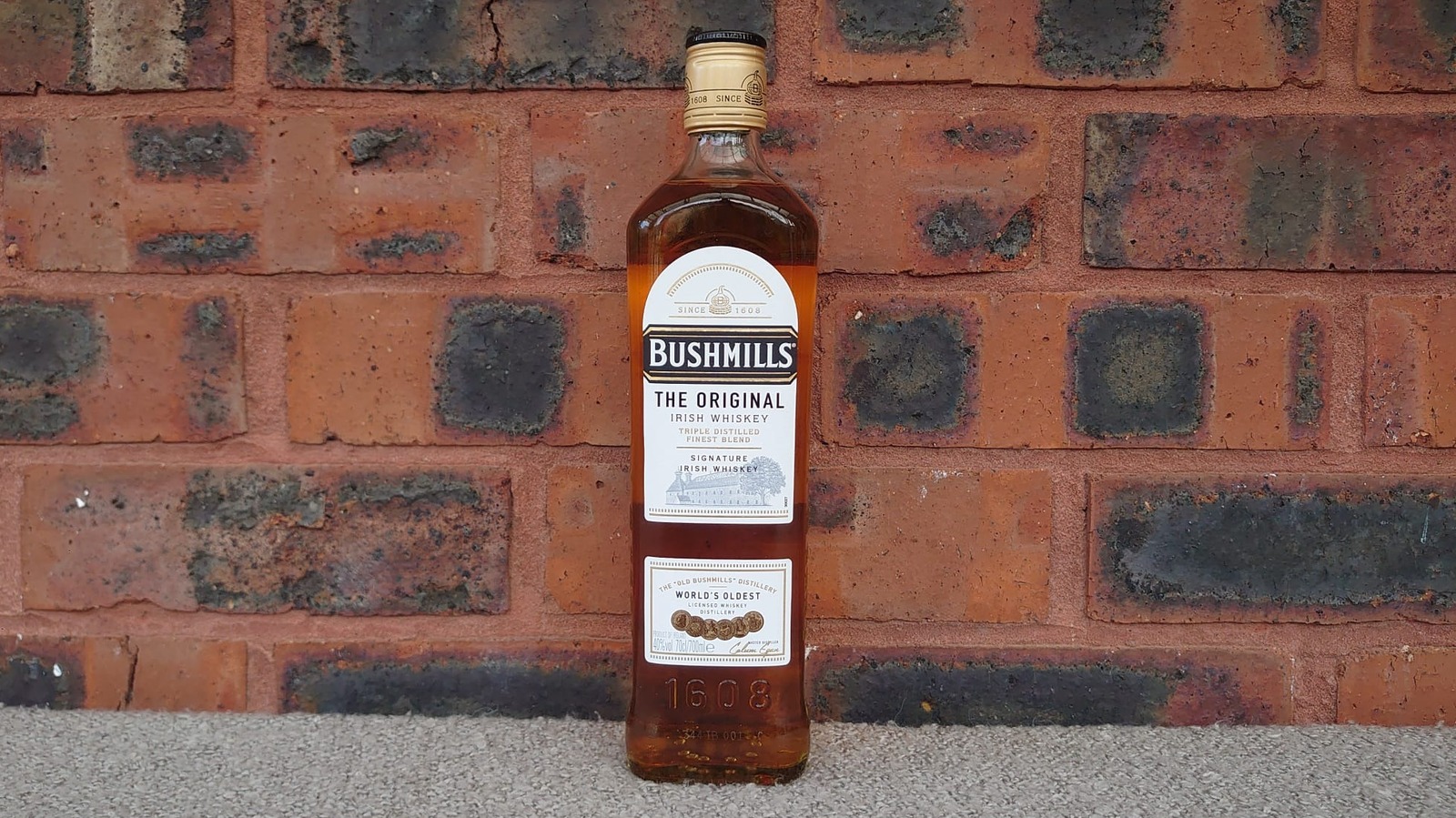
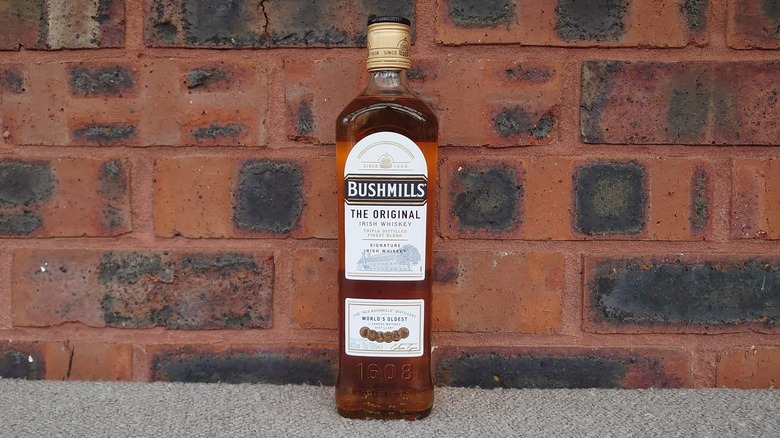
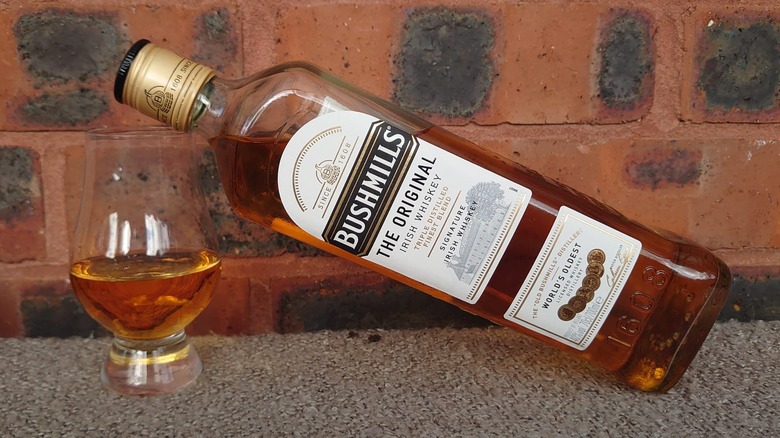
For centuries, the name "Bushmills" has stood as a beacon of consistency on the back bars of pubs, high-end cocktail lounges, and quiet home liquor cabinets across the globe. Produced at the iconic Old Bushmills Distillery in County Antrim, Northern Ireland, Bushmills Original is more than just a standard-entry whiskey; it is a liquid chronicle of Irish distilling history.
In an era where "craft" and "small-batch" are the industry’s most frequent buzzwords, Bushmills Original remains a defiant, accessible standard-bearer for the triple-distilled Irish tradition. This guide dives deep into the character of the spirit, the tumultuous history of the distillery, and why, despite a revolving door of corporate ownership, this blend remains a fundamental staple for both novices and seasoned enthusiasts.
The Core Identity: What Makes Bushmills Original?
At its heart, Bushmills Original is a blend—a marriage of triple-distilled single malt whiskey and lighter grain whiskey. While the distillery is world-renowned for its prowess in pure single malt production, the Original serves as the perfect entry point into the brand’s specific flavor architecture.
The Sensory Experience
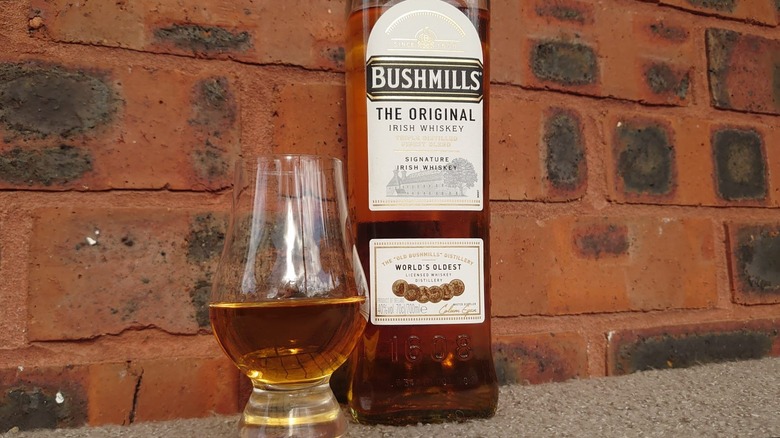
Upon pouring a glass, one is greeted by a light, golden hue. The nose is distinctly approachable, led by bright, crisp notes of green apple, a touch of toasted oak, and the gentle sweetness of vanilla. On the palate, the experience is remarkably smooth. Because the spirit is triple-distilled, much of the "heavy" congeners—which can sometimes lead to a harsh burn—are stripped away, leaving a spirit that flows cleanly. You will find a sweetness reminiscent of malted barley, hints of caramel, and a fleeting freshness that is hard to categorize but easy to enjoy. The finish is short and warm, characterized by a lingering vanilla note that never overstays its welcome.
Production Methodology
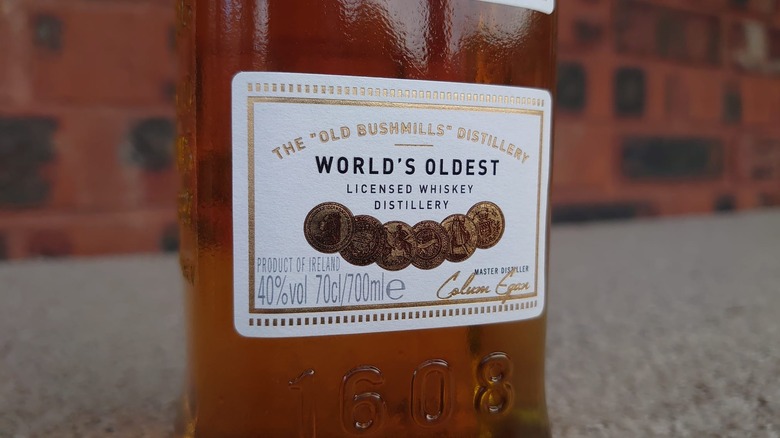
The consistency of Bushmills Original is no accident. The distillery utilizes a combination of bourbon and sherry casks for maturation. The bourbon casks impart that quintessential vanilla and honeyed sweetness, while the sherry casks provide a subtle, fruit-forward depth. Bottled at 80 proof (40% ABV), it hits the "sweet spot" for versatility, making it a reliable base for everything from an Irish Coffee to a classic Old Fashioned.
A Chronological Odyssey: From 1608 to the Modern Era
The story of Bushmills is a tapestry of resilience, defined by survival in the face of fire, war, global prohibition, and shifting economic tides.
The Early Foundations (1608–1880)
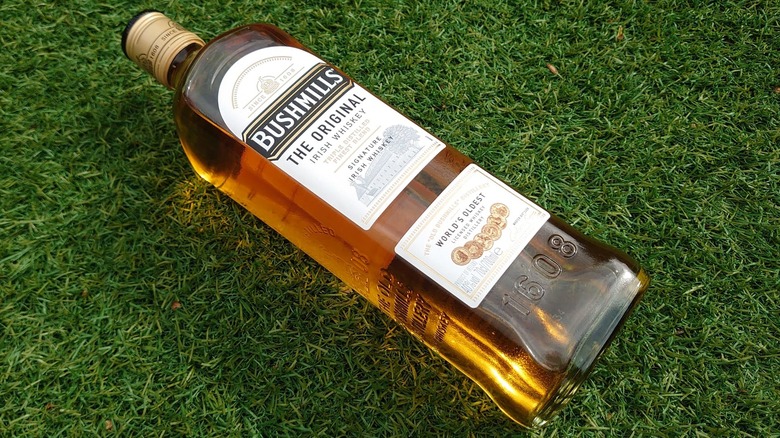
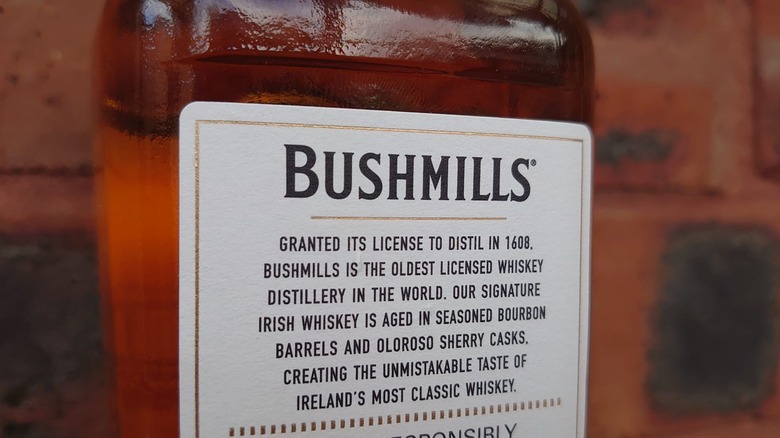
The brand famously claims to be the "oldest licensed distillery in the world," citing a royal license granted by King James I in 1608 to Sir Thomas Philipps to distill spirits in the area. While the modern Old Bushmills Distillery was officially established in 1784, the 1608 date serves as a historical touchstone for the region’s long-standing relationship with distillation. The site truly gained international prominence in the 1830s under the stewardship of James McKibbin, who successfully introduced the spirit to the markets of England and America.
The Age of Resilience (1885–1945)
The late 19th and early 20th centuries were periods of immense trial. A catastrophic fire in 1885 threatened to wipe the company off the map, yet the owners rebuilt with remarkable speed. By 1889, they were already winning gold medals at the Paris Exposition.
The early 20th century brought the dual hammer-blows of the Irish War of Independence and American Prohibition. Many distilleries shuttered during this time, but Bushmills was kept alive by the foresight of merchants like Samuel Wilson Boyd, who famously stockpiled inventory during the Prohibition era. When the Volstead Act was repealed in 1933, Bushmills was one of the few brands ready to ship large quantities to a thirsty American market. Even World War II presented a challenge; the company’s head office was bombed, and significant stocks were lost, yet the distillery pushed forward.
Corporate Consolidation (1946–Present)
Post-war, the distillery underwent a series of high-profile ownership changes:
- 1946: Sold to Sir Isaac Wolfson.
- 1964: Acquired by Harrington United Breweries.
- 1972: Brought under the umbrella of Irish Distillers (with Seagram involvement).
- 1988–2014: A period of global giants, including Pernod Ricard and Diageo.
- 2014–Present: Currently held by Proximo Spirits.
Despite this dizzying array of corporate parents, the production process has remained localized in the town of Bushmills, ensuring that the liquid profile remains remarkably stable.
Comparative Analysis: Standing Against the Competition
To truly understand the value of Bushmills Original, one must compare it to its peers.
Bushmills vs. Jameson
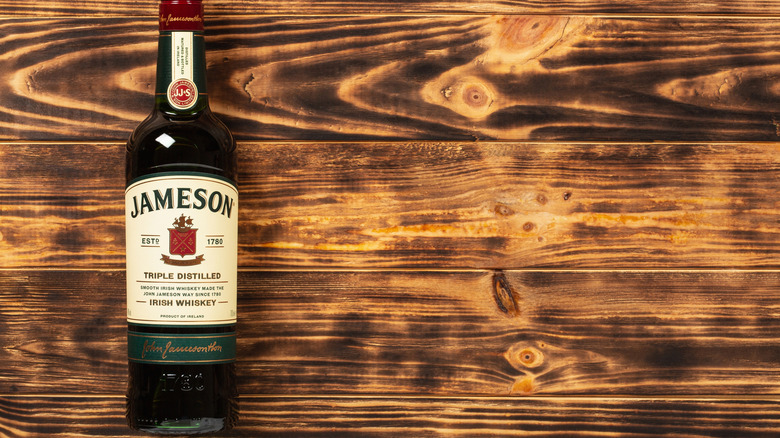
Jameson is the undisputed volume leader in the Irish whiskey category. Both are triple-distilled, 80-proof blends. However, the flavor profiles differ significantly. Jameson, which incorporates single pot still whiskey in its blend, tends to have a "rounder," spicier body. Bushmills Original, by comparison, leans into the malted barley, resulting in a lighter, sweeter, and more "fresh" character. For cocktails requiring a spicy kick, Jameson is often the preferred choice; for those seeking a smooth, clean, and malt-forward base, Bushmills is the superior candidate.
The Step-Up: Original vs. 10-Year Single Malt
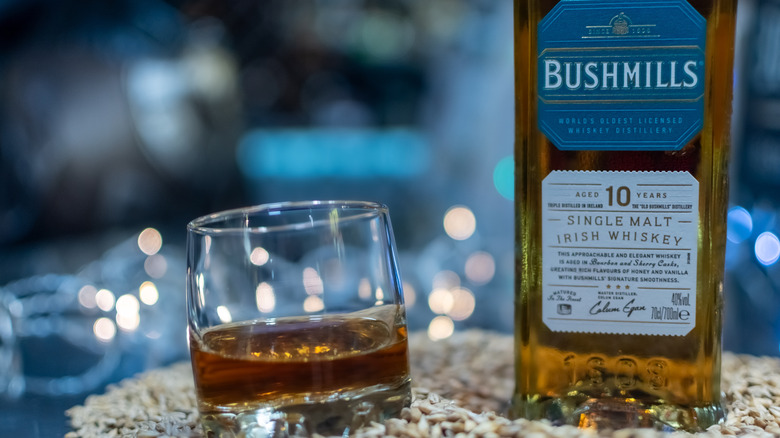
If the Original is the "everyday" choice, the 10-Year Single Malt is the "contemplative" choice. The 10-Year is a 100% single malt expression. It carries the same DNA as the Original but with significantly more depth. The extra years in the cask allow the vanilla and orchard fruit notes to mature into rich, creamy milk chocolate and toasted oak profiles. It is the logical next step for a drinker who has mastered the Original and wishes to explore the nuance of aged Irish whiskey.
Supporting Data: Why It Remains a Market Leader
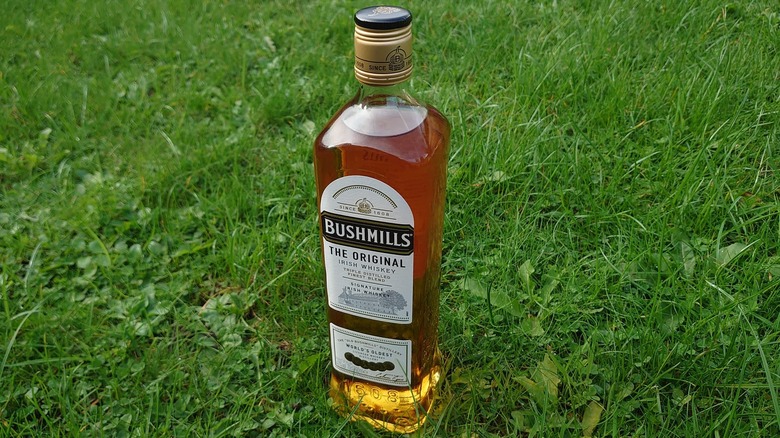
Why does a whiskey with a 400-year-old story still dominate the shelf? The answer lies in its price-to-quality ratio.
At an average price point of $25, Bushmills occupies a space above the "bottom-shelf" budget whiskeys but below the "premium" luxury tier. Market data suggests that the brand thrives because it is "bulletproof" for consumers:
- Versatility: It does not disappear when mixed into an Irish Coffee or a Negroni.
- Approachability: It serves as the bridge for vodka or white-spirit drinkers looking to enter the brown-spirit category.
- Consistency: Unlike smaller craft distillers where batch-to-batch variation can be extreme, Bushmills’ massive scale ensures that the bottle you buy in Tokyo tastes identical to the one you buy in New York.
Official Perspectives and Historical Nuance
When speaking about the "oldest licensed" claim, the distillery acknowledges the historical complexity. The 1608 license was granted to a landowner, not the current company. However, the distillery maintains that the spirit of the license—the authorization to create whiskey in that specific geographic region—is the true foundation of their legacy.
The name itself, "Bushmills," is a nod to the local geography. It is a portmanteau of the "River Bush" and the "mills" that once powered the local industry. The distillery still draws water from the nearby Saint Columb’s Rill, which flows over the same basalt rock formations as the famed Giant’s Causeway. This connection to the land is a point of immense pride for the master distillers, who argue that the water profile contributes to the signature softness of their whiskey.
Implications: Is It Worth Your Cabinet Space?
After an exhaustive review, the verdict on Bushmills Original is clear: it is a masterpiece of consistency.
If you are a beginner: There is arguably no better starting point in the world of Irish whiskey. It is forgiving, smooth, and introduces you to the classic malt-forward style of the region without the intimidating price tag or complexity of an older single malt.
If you are a collector: While you might reach for the 10-year or 16-year expressions for your nightly pour, the Original remains essential for the guest who wants a high-quality, unpretentious dram, or for creating the perfect, authentic Irish coffee.
The history of the Bushmills distillery is a testament to the fact that quality, when backed by tradition, can survive almost any crisis. From the steamships of the 1890s that carried the brand to Philadelphia, Singapore, and Yokohama, to the modern-day distribution networks of Proximo Spirits, the message remains the same: Bushmills is not trying to be the most complex whiskey in the world. It is simply trying to be the most reliable. In a market crowded with noise, that is a mission worth celebrating.