For millions of households, the "wholesale club" experience has become a cornerstone of domestic logistics. By consolidating monthly grocery runs into a single, high-volume excursion, shoppers trade upfront membership fees for significant long-term savings on bulk staples. However, as the retail landscape grows increasingly competitive, the question for the modern consumer is no longer just if they should join a club, but which one offers the most value.
While Sam’s Club and BJ’s Wholesale Club offer compelling arguments for their respective memberships, market data and consumer sentiment consistently position Costco as the industry leader. From the engineering of its private-label goods to the strategic placement of its fueling stations, Costco has cultivated a unique ecosystem that keeps customers coming back.
The Evolution of the Membership Model
The rise of the warehouse club began in the late 20th century, fundamentally altering how Americans buy household goods. Costco, the successor to the Price Club model, effectively scaled this concept globally.
- 1976: Sol Price opens the first Price Club in San Diego, California.
- 1983: Jim Sinegal and Jeffrey Brotman open the first Costco in Seattle, Washington.
- 1993: Costco merges with Price Club to create a retail powerhouse.
- 2000s–Present: Costco accelerates global expansion, focusing on a high-turnover inventory model that keeps prices low and foot traffic high.
While Sam’s Club (owned by Walmart) and BJ’s Wholesale Club (focused heavily on the U.S. East Coast) have attempted to mirror this success, they often find themselves playing catch-up to the operational efficiency and "treasure hunt" atmosphere that Costco has perfected over four decades.
Kirkland Signature: The Gold Standard of Private Labels
One of the most significant pillars of Costco’s dominance is its private-label brand, Kirkland Signature. Unlike many retailer brands that are viewed as "budget" alternatives to national labels, Kirkland Signature has achieved a reputation for premium quality.
Industry analysts often point to the "good-better-best" strategy Costco employs. By working with top-tier manufacturers—often the same companies that produce the name-brand goods sitting on the shelf next to them—Costco ensures its store brand meets or exceeds the quality of its competitors.
- Consumer Loyalty: Surveys frequently indicate that the quality of Kirkland Signature products is a primary driver for membership renewals.
- Competitive Comparison: While Sam’s Club’s Member’s Mark and BJ’s Berkley & Jensen brands have improved in recent years, they have yet to achieve the cult-like following or the high-performance reputation of the Kirkland label. From organic extra virgin olive oil to high-end spirits and premium electronics, Kirkland Signature provides a value proposition that is difficult for rivals to replicate.
The "Top Tier" Advantage: Why Fueling at Costco Matters
A frequently overlooked aspect of warehouse membership is the gas station. For many, the ability to save several cents per gallon on a weekly basis is enough to pay for the annual membership fee on its own.
However, Costco’s edge is not just in the price per gallon; it is in the chemical composition of the fuel. Costco gas is certified as "Top Tier," meaning it contains a higher concentration of detergent additives than the minimum requirements set by the Environmental Protection Agency (EPA). These additives are critical for preventing carbon deposits on fuel injectors and intake valves, effectively extending the lifespan of a vehicle’s engine.
While competitors offer competitive pricing, the absence of Top Tier certification at many competing stations forces a trade-off between immediate cost savings and long-term vehicle maintenance costs. For the value-conscious consumer, Costco eliminates this compromise.
Culinary Excellence at the Food Court
The food court has become an iconic, albeit informal, symbol of the warehouse club experience. It serves as a loss-leader—a strategic way to keep customers on-site longer and ensure they leave the store feeling satisfied.
In head-to-head comparisons, Costco’s food court—famed for its $1.50 hot dog and soda combo—consistently outperforms its rivals. The simplicity of the menu, combined with a focus on consistent execution, has created a standard that Sam’s Club and BJ’s struggle to match.
- Quality Control: Reviews of pizza, chicken bakes, and soft-serve ice cream often highlight that Costco’s offerings use higher-quality ingredients and result in a more enjoyable dining experience.
- Accessibility: Unlike BJ’s, which has inconsistent food court availability across its locations, Costco maintains a standard menu and high-volume throughput across nearly every warehouse, ensuring that a shopper in California has the same experience as a shopper in New York.
Meat Quality and Butchery Services
Buying meat in bulk is a high-stakes endeavor; if the quality is poor, the consumer is stuck with a large, unusable quantity of protein. Costco has built a reputation for high-quality meat sourcing that often rivals specialty butcher shops.
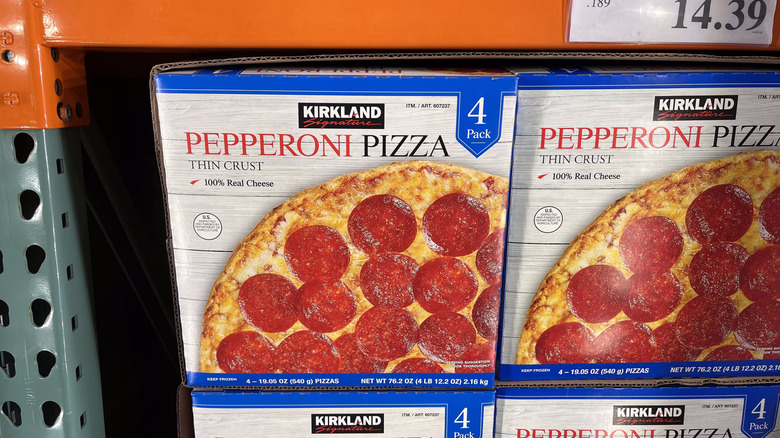
The chain’s commitment to quality is evident in its rigorous auditing processes. Furthermore, the ability to find high-grade cuts—such as Prime-grade beef—is a differentiator. Costco’s meat department is frequently cited by professional chefs as one of the best places to source bulk proteins, particularly for those who have the freezer space to break down large primal cuts into smaller portions.
Strategic Footprint and Global Reach
With over 800 locations worldwide, Costco’s physical footprint is not just a testament to its size, but a strategic advantage for its members.
- The "Traveler" Benefit: For members who move, travel, or maintain multiple residences, the ubiquity of Costco warehouses provides a level of consistency that smaller regional chains like BJ’s cannot offer.
- Market Penetration: While Sam’s Club maintains a strong presence, Costco’s steady, calculated expansion has allowed it to dominate key suburban markets, creating a network effect where membership becomes a logical, integrated part of a household’s lifestyle.
The Implications for Consumers
Choosing a wholesale club is ultimately a decision based on personal lifestyle, but the data suggests that Costco’s model—focused on high-quality private labels, premium fuel standards, and consistent, high-value food services—offers the most comprehensive benefits package.
For the average household, the decision to opt for a Costco membership is rarely about a single item; it is about the reliability of the entire ecosystem. Whether it is the confidence in the Kirkland Signature label, the peace of mind offered by Top Tier gasoline, or the sheer consistency of the shopping experience, Costco continues to set the bar for the warehouse industry.
As retail competition continues to evolve, the challenge for Sam’s Club and BJ’s will be to address these specific areas of differentiation. Until then, Costco remains the undisputed champion for the bulk-buying consumer, proving that when it comes to the warehouse wars, quality and consistency are the ultimate currency.