WASHINGTON — A friction point between the executive branch and Capitol Hill over the constitutional "power of the purse" has erupted into open conflict. In a late-Friday announcement delivered just days before the close of the fiscal year, the Trump administration notified lawmakers of its intent to cancel $810 million in congressionally appropriated funding for federal health, education, and social service initiatives.
The maneuver, executed via a controversial mechanism known as a "pocket rescission," effectively claws back money already signed into law by withholding the funds until their legal authorization expires on September 30. Because the House of Representatives has already adjourned ahead of the upcoming November midterm elections and the Senate is in recess, lawmakers are left with virtually no legislative recourse to block the cuts before the fiscal year calendar runs out.
The decision has drawn swift, severe condemnation from senior lawmakers across the aisle, including key leaders on the congressional appropriations committees who accuse the administration of circumventing statutory law and executing an illegal impoundment of funds.
Main Facts: The $810 Million Funding Clawback
The White House Office of Management and Budget (OMB) transmitted the rescission package to Capitol Hill late Friday evening, September 25, targeting unexpended balances across several federal agencies.
The primary target of the reduction is the Department of Health and Human Services (HHS), specifically its Office of Refugee Resettlement (ORR). The administration proposes to eliminate $567 million from accounts dedicated to transitional assistance, legal support, and health services for foreign nationals and refugees arriving in the United States.
The administration defended the reduction by asserting that declining numbers of illegal border crossings have rendered the funds redundant, characterizing the move as a long-overdue effort to strip waste from the federal ledger.
The remaining $243 million in proposed cuts targets a array of programs distributed across health, education, and community assistance accounts. These include discretionary grant programs managed by HHS, departmental management budgets, and supplementary educational support initiatives funded under earlier bipartisan compromises.
Because the funds in question are single-year appropriations tied to Fiscal Year 2026, any money remaining unobligated by midnight on September 30 automatically lapses and returns to the Treasury. By issuing the rescission request fewer than five days before the deadline, the White House effectively prevents Congress from exercising its statutory right to review or reject the spending cancellations.
Chronology: The Road to the FY2026 Rescission Controversy
The roots of the current standoff stretch back to the passage of the FY2026 full-year appropriations package, which was negotiated on a bipartisan basis and signed into law after months of fiscal debate.
- October 1, 2025: Fiscal Year 2026 begins, establishing legal spending limits and program funding levels for all federal departments.
- Late Spring / Summer 2026: Key congressional committees begin receiving reports that OMB is administrative delaying the apportionment of discretionary funds intended for refugee assistance, public health grants, and educational support. Lawmakers send formal inquiries to OMB questioning why allocated capital remains frozen.
- August 2026: Tensions escalate as congressional appropriators accuse the administration of executing illegal "impoundments"—informally withholding money that Congress mandated to be spent.
- Mid-September 2026: The House of Representatives votes to pass a continuing resolution to fund the government into FY2027 before adjourning its session, allowing members to return to their home districts for the midterm campaign trail.
- September 25, 2026 (Friday Night): OMB formally submits its $810 million rescission request to Congress, leveraging the "pocket" mechanism to ensure the money lapses before lawmakers can reconvene.
- September 26–28, 2026: Appropriations leadership from both parties issue statements condemning the move, threatening legal challenges and procedural retribution in upcoming budget negotiations.
This incident follows a similar legal skirmish late last year, when the administration utilized a comparable late-year maneuver to cancel roughly $4 billion in foreign assistance funds. Although that effort was met with strong bipartisan pushback and formal legal challenges from the Government Accountability Office (GAO), subsequent judicial proceedings concluded that the administration acted within executive prerogatives under existing statutory ambiguities, setting a precedent that OMB appears to be exploiting once again.
Supporting Data and Legal Mechanics: How a ‘Pocket Rescission’ Works
To understand the controversy, one must examine the legal mechanics established by the Congressional Budget and Impoundment Control Act of 1974 (ICA).
Under normal procedures outlined in Section 1012 of the ICA, when a President seeks to cancel spending previously enacted by Congress, the White House must submit a formal rescission message detailing the targeted programs.
[President Submits Rescission Message]
                   │
                   ▼
     [45-Day Statutory Clock Begins]
                   │
   ┌───────────────┴───────────────┐
   ▼                               ▼
[Congress Approves]      [Congress Fails to Act / Rejects]
   │                               │
   ▼                               ▼
[Funds Cancelled]        [Administration MUST Release Funds]
However, a structural loophole emerges when a rescission request is submitted within 45 days of the end of the fiscal year:
[Late-Year Rescission Message (e.g., Sept 25)]
                   │
                   ▼
[45-Day Clock Extends into Next Fiscal Year (Nov 9)]
                   │
                   ▼
  *CRITICAL INTERRUPT: Sept 30 Fiscal Year-End*
                   │
                   ▼
[Funds Lapse Automatically Before 45-Day Clock Expires]
                   │
                   ▼
       ["Pocket Rescission" Achieved]
Breakdown of the $810 Million FY2026 Rescission Package
| Target Program / Agency | Allocated Amount Targeted | Administration Rationale | Congressional Counter-Argument |
|---|---|---|---|
| HHS: Office of Refugee Resettlement | $567 Million | Decreased migrant arrivals; operational surplus | Funds were legally obligated by statute for community integration and state reimbursement |
| HHS & Education Discretionary Grants | $145 Million | Non-essential programs, administrative overhead | Disrupts active local programs and funding formulas set by bipartisan consensus |
| Community & Health Support Services | $98 Million | Low prioritization, slow execution of funds | Slowness of execution was caused by intentional administrative withholding (impoundment) |
| Total Rescission Amount | $810 Million | Elimination of waste and unneeded spending | Executive overreach and violation of the Impoundment Control Act |
Appropriations experts note that by holding funds until the final days of the fiscal year, the administration systematically strips Congress of its power to force the spending of those appropriations, converting a discretionary congressional power into an executive cancellation privilege.
Official Responses: Bipartisan Denunciation Meets Executive Defense
The late-night rescission announcement generated swift backlash from both Democratic and Republican stewards of the congressional budget process.
Congressional Appropriations Leadership
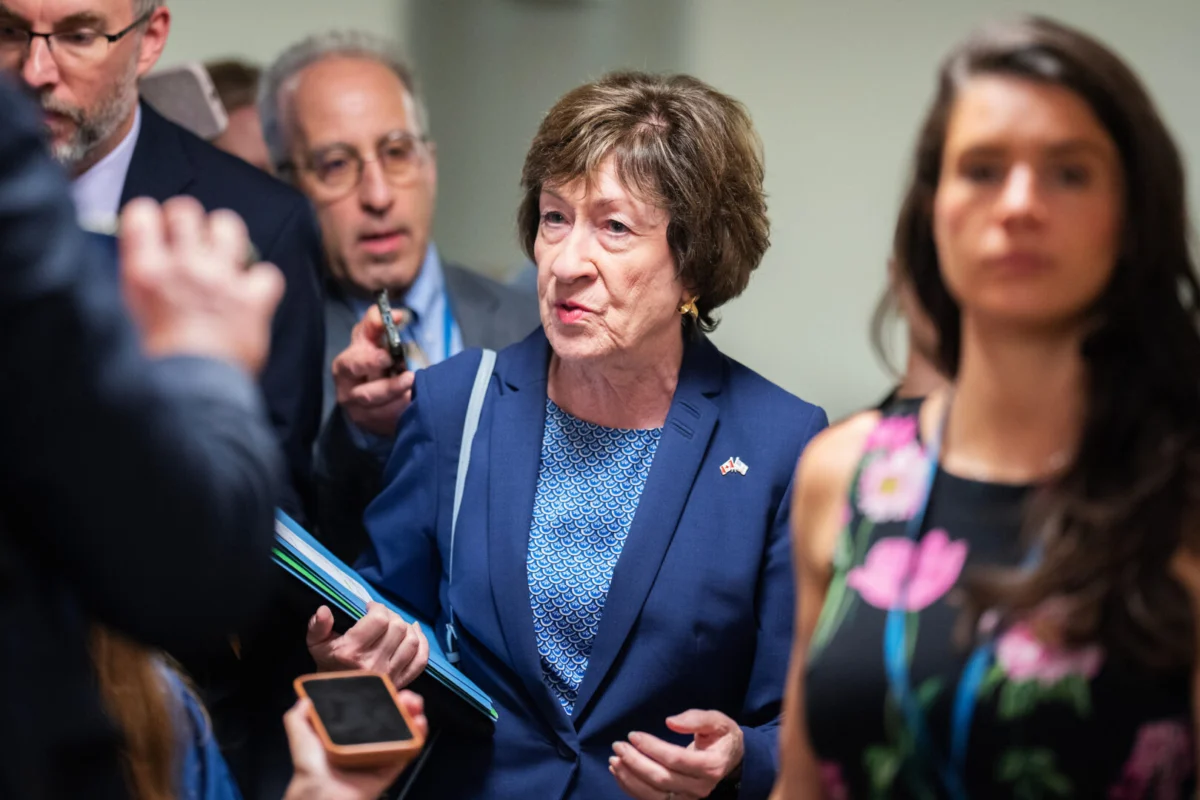
Senate Appropriations Committee Chair Susan Collins (R-Maine) issued a blunt rebuke of the White House’s tactics, asserting that OMB deliberately withheld the capital over the summer specifically to set up the late-year lapse.
"The White House budget office intentionally withheld these funds for months to execute this unlawful cancellation of appropriations that were approved on a bipartisan basis and signed into law. I will work with my colleagues to address these illegal actions."
— Sen. Susan Collins (R-Maine), Chair of the Senate Appropriations Committee
On the House side, Representative Rosa DeLauro (D-Conn.), the Ranking Member of the House Appropriations Committee, echoed Collins’ legal assessments and pointed toward systemic non-compliance with statutory budgeting laws.
"Not only is freezing the money in this proposal illegal, but the administration has also clearly been unlawfully impounding funds all year just to get to this point. This is an egregious power grab designed to undermine Congress’s constitutional authority."
— Rep. Rosa DeLauro (D-Conn.), Ranking Member of the House Appropriations Committee
White House Justification
In response to the criticism, officials from the Office of Management and Budget framed the cuts as responsible stewardship of taxpayer dollars, pointing out that federal agencies should not spend money simply because it remains in an account at year’s end.
In an official public statement accompanying the release, the administration hailed the cancellation as:
"Historic action to eliminate wasteful and harmful spending. The American people expect their government to adapt to real-world conditions. When funds are no longer required due to successful policy execution—such as restored order at our southern border—the executive branch has a duty to protect the treasury."
OMB officials maintained that the reduction in border crossings drastically reduced the operational cash requirement of the Office of Refugee Resettlement, making the release of $567 million unnecessary and inefficient.
Institutional and Political Implications
The decision to execute an $810 million pocket rescission carries significant institutional, legislative, and political consequences that will reverberate long after the current fiscal year expires on September 30.
┌────────────────────────────────────────────────────────────────────────┐
│                        DOMINO EFFECT OF RESCISSION                     │
└────────────────────────────────────────────────────────────────────────┘
                                    │
                                    ▼
       ┌────────────────────────────────────────────────────────┐
       │ Institutional Friction: Erosion of Article I Power      │
       └────────────────────────────────────────────────────────┘
                                    │
                                    ▼
       ┌────────────────────────────────────────────────────────┐
       │ Political Fallout: Midterm Campaign Trail Flashpoint    │
       └────────────────────────────────────────────────────────┘
                                    │
                                    ▼
       ┌────────────────────────────────────────────────────────┐
       │ Fiscal Deadline: High-Stakes FY2027 Dec. 11 Showdown   │
       └────────────────────────────────────────────────────────┘
1. The Fiscal 2027 Funding Showdown (December 11 Deadline)
The immediate casualty of this move is trust between White House budget negotiators and Capitol Hill appropriators. Congress currently operates under a temporary continuing resolution (CR) that funds the federal government through December 11, 2026.
To avoid a partial government shutdown in mid-December, both chambers must agree on comprehensive spending bills or extend the CR. Appropriators are likely to respond to the pocket rescission by inserting restrictive legislative language—often referred to as "poison pill" legislative riders—into FY2027 spending legislation to mandate the rapid release of funds and prevent OMB from withholding capital in future fiscal cycles.
2. Erosion of Congressional Spending Authority
The constitutional balance defined under Article I, Section 9 establishes that "No Money shall be drawn from the Treasury, but in Consequence of Appropriations made by Law."
By exploiting the timeline gap of the Impoundment Control Act, the executive branch has demonstrated a repeatable mechanism to bypass congressional intent. If administrations can routinely sit on funds for 10 months and then declare them lapsed via late-September rescissions, Congress’s capability to set binding domestic priorities through appropriations bills is curtailed.
3. Midterm Election Dynamics
Coming weeks before the nationwide November midterms, the funding cuts provide immediate rhetoric for both major parties:
- Administration Allies plan to point to the $810 million clawback as evidence of fiscal discipline and shrinking government inefficiency.
- Congressional Defenders and Democrats intend to highlight the cuts to public health, education, and community resources as evidence of executive overreach and disregard for enacted law.
4. Future Legislative Reform
The repeating flashpoint over pocket rescissions is expected to revive statutory reform proposals. Lawmakers in both parties have periodically weighed updates to the 1974 Impoundment Control Act. Potential adjustments include requiring OMB to automatically release any funds subject to a rescission request if Congress does not vote to approve the request prior to the expiration of the fiscal year, thereby closing the late-year loophole once and for all.
Until such statutory changes are made, however, the executive branch retains the structural advantage—setting up a tense budget standoff when lawmakers return to Washington following the midterm elections.