By Legal Affairs Correspondent
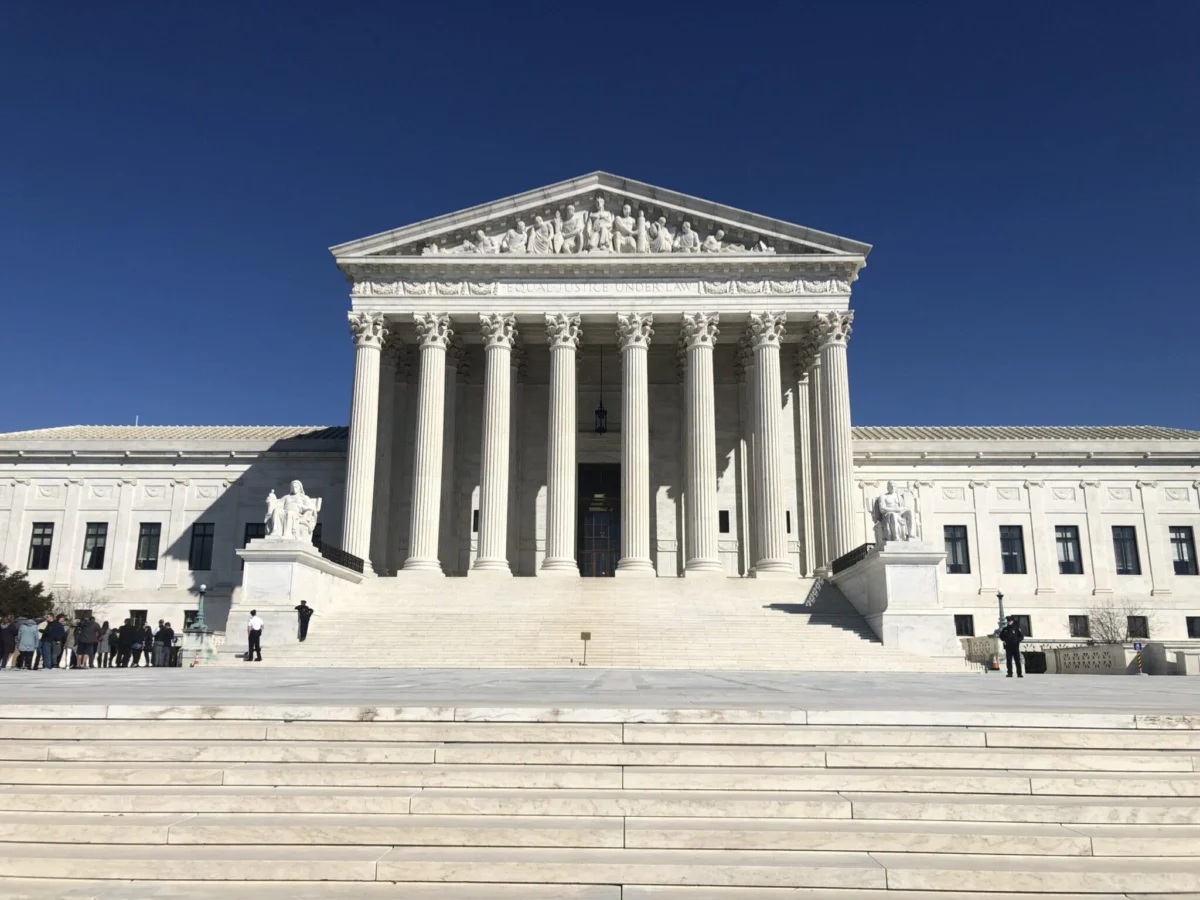
The Supreme Court of the United States has agreed to hear a pivotal immigration case that could fundamentally alter the landscape of detention policy for noncitizens apprehended within the country’s interior. On Thursday, the Court granted certiorari in the case of Department of Homeland Security v. Barbosa da Cunha, a dispute that centers on whether the federal government can subject individuals who entered the U.S. without inspection—but were later arrested far from the border—to mandatory detention without the possibility of a bond hearing.
The decision places the high court at the center of a brewing conflict between the executive branch’s broad interpretation of the Immigration and Nationality Act (INA) and the judiciary’s traditional oversight of due process protections.
Main Facts: The Core Legal Dispute
At the heart of the case is Ricardo Aparecido Barbosa da Cunha, a noncitizen who was arrested by federal authorities in September 2025. Upon his arrest, Barbosa da Cunha was placed into removal proceedings. When he sought a bond hearing to contest his continued detention, the Department of Homeland Security (DHS) summarily denied the request.
DHS officials justified this denial by classifying Barbosa da Cunha not as a standard detainee under removal proceedings, but as an "applicant for admission" under Section 1225 of the INA. This classification is significant because, under Section 1225(b)(2)(A), certain applicants for admission are subject to mandatory detention, effectively stripping them of the right to argue for release on bond before an immigration judge.
The central legal question is whether the statutory framework governing "applicants for admission"—originally designed for individuals encountered at ports of entry or the immediate border—can be retroactively applied to individuals who have been living in the interior of the United States for an extended period, regardless of their initial manner of entry.
Chronology: From Entry to the Supreme Court
The legal battle over detention authority is a byproduct of shifting administrative policies and evolving interpretations of the 1996 Illegal Immigration Reform and Immigrant Responsibility Act (IIRIRA).
- 1996: Congress passes IIRIRA, which replaced the previous legal framework centered on "entry" with the concept of "admission." Admission is statutorily defined as the lawful entry of an alien into the United States after inspection and authorization by an immigration officer.
- 1996–2024: For nearly three decades, the prevailing legal consensus—and the government’s own administrative practice—was to treat noncitizens apprehended in the interior as subject to Section 1226(a). This section grants immigration judges the discretion to release individuals on bond, provided they do not pose a flight risk or a danger to the community.
- September 2025: Ricardo Aparecido Barbosa da Cunha is arrested in the interior of the U.S. and placed in removal proceedings. DHS invokes a new interpretation of the INA, classifying him as an "applicant for admission" under Section 1225, thereby denying him a bond hearing.
- Late 2025: The Second Circuit Court of Appeals reviews the case. In a decisive ruling, the court rejects the government’s interpretation, holding that the "applicant for admission" status does not extend to those arrested in the interior and that detention must be governed by the more flexible Section 1226(a).
- September 2026: The Supreme Court grants certiorari, setting the stage for a landmark ruling on the scope of executive detention power.
Supporting Data: Statutory Distinctions
To understand the stakes, one must look at the technical nuances of the INA. The statute distinguishes between two primary categories of detention:
Section 1225: Applicants for Admission
This section pertains to those who are technically seeking entry at a port or who have just crossed the border. It is designed to be a "fast-track" mechanism. Under the current administration’s interpretation, this section is being repurposed to cover anyone who did not enter through a legal port, even if they have been in the country for years.
Section 1226: General Removal Proceedings
This section governs individuals who have already "entered" the country, even if that entry was unlawful. Historically, this section provided a safeguard: the right to a bond hearing. The Second Circuit’s ruling highlights that applying Section 1225 to the interior essentially creates a "legal fiction" that someone arrested in a city like New York or Chicago is the same as someone standing at the border gate.
Legal scholars note that the government’s recent shift represents a radical departure from the Chevron and post-Chevron understandings of administrative law, where courts previously granted agencies broad deference in interpreting their own enabling statutes.
Official Responses and Administrative Context
The Department of Homeland Security has maintained that its current stance is necessary to maintain border integrity and enforce the rule of law. In filings submitted to the Court, the government argued that if the law defines "admission" as "lawful entry after inspection," then anyone who entered without inspection has, by definition, never been "admitted." Therefore, the government contends, they remain in a perpetual state of "seeking admission" until their removal proceedings are concluded.
Conversely, attorneys for Barbosa da Cunha argue that this interpretation renders the distinction between Sections 1225 and 1226 meaningless. If the government’s view holds, they argue, the mandatory detention provisions of 1225 could be used to detain nearly every undocumented immigrant in the country without any judicial oversight regarding the necessity of that detention.
"If the government is correct," one legal analyst stated, "it effectively creates a parallel legal system where the right to a bond hearing—a staple of American due process—is extinguished for a massive segment of the population based on a technicality of how they first entered the country decades ago."
Broader Implications: The Trump Administration’s Immigration Agenda
This case does not exist in a vacuum. It is part of a broader, aggressive strategy by the current administration to reshape immigration enforcement. The Supreme Court has been inundated with immigration-related petitions in recent months, signaling a period of significant judicial intervention in executive policy.
Third-Country Deportations
On September 29, the Court permitted the administration to resume "third-country deportations," a policy that sends asylum seekers to countries other than their home nations to await processing. While the Court allowed the policy to proceed, it has agreed to hear full arguments in December regarding the legality of the program and, crucially, the extent to which lower courts can block such policies through injunctions.
Voter Citizenship Checks
In another high-profile move, the Court sided with the federal government on the use of Social Security records to verify the citizenship status of registered voters. This decision paused a lower court order that had previously blocked the practice on the grounds that it violated federal privacy laws and created a risk of disenfranchising eligible voters.
The "Interior Enforcement" Shift
The Barbosa da Cunha case is the latest piece of this puzzle. By moving to eliminate bond hearings for interior arrests, the administration is signaling a move toward a "no-release" policy for those in removal proceedings. If the Supreme Court rules in favor of the government, it would grant the executive branch unprecedented power to hold individuals indefinitely without having to justify the detention before an impartial judge.
Conclusion: A Turning Point for Due Process
The Supreme Court’s eventual ruling in DHS v. Barbosa da Cunha will serve as a definitive statement on the limits of administrative power in the immigration sphere. The case pits the government’s mandate to enforce immigration law against the fundamental principle that detention—the deprivation of liberty—should be subject to judicial review.
As the legal community prepares for the upcoming term, this case stands out not just for its impact on noncitizens, but for its potential to redefine the relationship between the Executive and the Judiciary. Whether the Court maintains the long-standing interpretation of Section 1226(a) or allows the government to consolidate its detention powers remains to be seen. However, one thing is certain: the outcome will define the standards of detention for years to come.