Executive Summary: A Conflict Transformed by Global Proxies
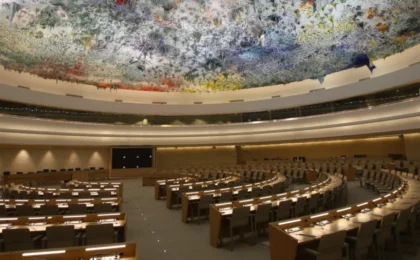
The civil war in Sudan, which has ground the nation into a humanitarian catastrophe, is no longer merely a domestic power struggle between the Sudanese Armed Forces (SAF) and the Rapid Support Forces (RSF). A landmark report released this Thursday by the UN Independent International Fact-Finding Mission on Sudan has laid bare a harrowing reality: the conflict’s escalating lethality is being artificially sustained by an intricate web of international weapon transfers, foreign military personnel, and sophisticated drone technology.
The Mission’s findings confirm that the influx of externally sourced surveillance systems, long-distance munitions, and tactical support has effectively removed any incentive for the warring parties to pursue peace. By transforming the battlefield into a theater for high-tech, precision-guided warfare, these external actors have not only widened the geographical scope of the violence but have fundamentally dismantled the distinction between military objectives and civilian survival.
Chronology of Escalation: From Domestic Rivalry to Proxy War
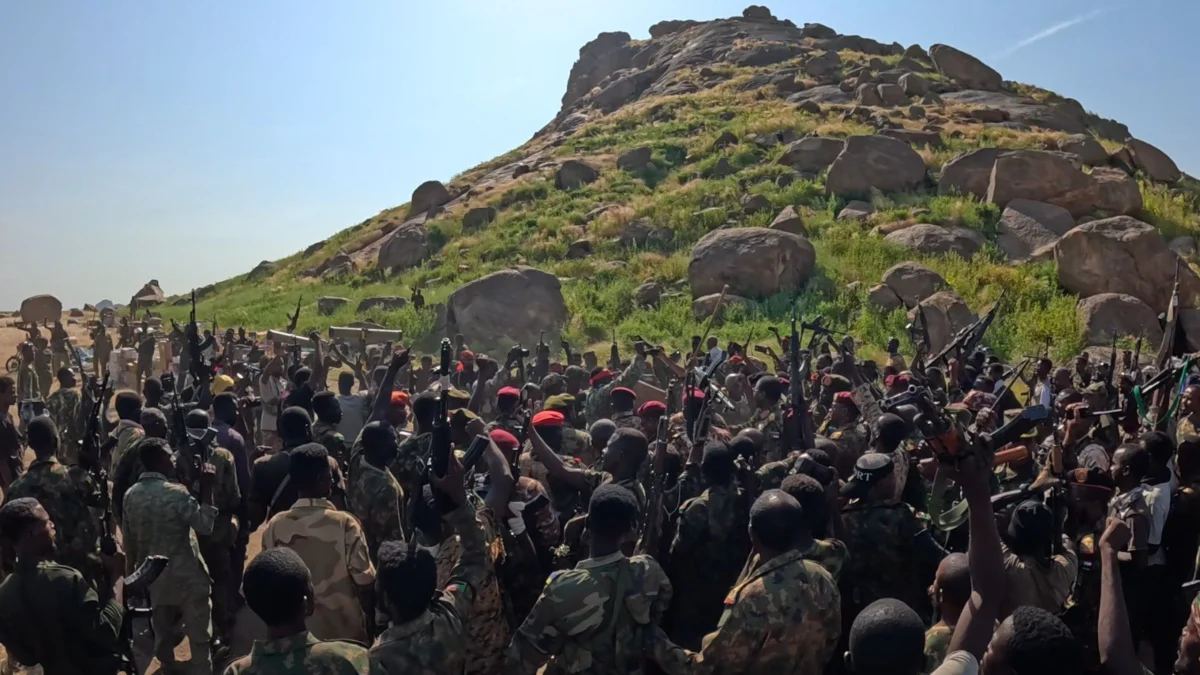
The Sudanese conflict, which erupted in April 2023, began as a clash between General Abdel Fattah al-Burhan’s SAF and General Mohamed Hamdan "Hemedti" Dagalo’s RSF. However, the trajectory of the war changed dramatically as both sides began to seek "force multipliers" beyond Sudan’s borders.
- Early 2023: Initial hostilities were characterized by conventional infantry maneuvers and small-arms skirmishes within Khartoum.
- Late 2023 – Early 2024: Both the SAF and RSF began acquiring sophisticated surveillance and strike drones, shifting the focus of the conflict to aerial bombardment.
- Mid-2024: Reports emerged of international private military contractors—notably from Colombia—being deployed to assist in the operation of advanced weapon systems.
- 2025–2026: The conflict metastasized into a war of attrition, with the systematic destruction of hospitals, schools, and essential infrastructure becoming a standard tactical feature.
- August 2026: The UN Fact-Finding Mission confirms that foreign involvement is the primary driver of the conflict’s "unprecedented lethality," calling for immediate international intervention to sever these illicit supply lines.
Supporting Data: The Anatomy of Civilian Harm
The UN report provides a damning statistical and qualitative assessment of how foreign-sourced technology is being used to target non-combatants. The reliance on drone warfare has proved particularly lethal, as these systems allow the RSF and SAF to strike with clinical precision, yet they are increasingly used to terrorize civilian populations in areas already suffering from extreme isolation.
The Weaponization of Infrastructure
The conflict has evolved into a war against civilian life-support systems. The Mission documented:
- Healthcare Systems: Strikes on hospitals in Ad-Da’ein (SAF) and Kalogoi (RSF) have decimated the capacity for emergency medical care.
- Displacement Sites: Crowded camps, such as the one in Kulba, have become primary targets for drone strikes, violating the most basic tenets of human rights.
- Public Spaces: Markets, places of worship, and schools—once considered safe havens—are now the primary sites of casualty-heavy drone attacks.
The Mission noted that these actions are a direct violation of Customary International Humanitarian Law (IHL). Specifically, the requirement to distinguish between military and civilian targets, and the obligation to take feasible precautions to minimize civilian harm, have been completely abandoned. By striking hospitals, the belligerents are in direct breach of Common Article 3 of the Geneva Conventions, which mandates the protection of the wounded and sick, regardless of their role in the conflict.
The Network of Enablers: Global Actors and Mercenaries
The report identifies a complex supply chain that renders the UN Security Council’s long-standing arms embargo on Sudan largely ineffective.
Artillery, Drones, and Defense Systems
The RSF, in particular, has developed an expansive procurement network. The Mission has traced the sourcing of artillery, air-defense systems, and drone components to entities and individuals operating within the United Arab Emirates, Chad, Libya, and Somalia. These transfers are not merely logistical failures; they are deliberate actions that fuel crimes under international law.
The Role of Foreign Personnel
Perhaps the most alarming finding is the estimate that approximately 2,000 foreign military personnel and contractors are currently active in Sudan. The presence of foreign nationals, particularly those from Colombia, has provided the warring parties with critical intelligence support, tactical training, and the actual operation of complex weapons systems.
This violates both the UN Convention against the Recruitment, Use, Financing, and Training of Mercenaries and the OAU Convention for the Elimination of Mercenarism in Africa. These legal frameworks hold that states must prohibit their nationals from participating in such conflicts. The presence of these contractors has allowed the SAF and RSF to maintain a high operational tempo despite the depletion of their domestic troop reserves.
Official Responses and Diplomatic Friction
The UN Mission’s report has sent shockwaves through the international diplomatic community. While the Mission acknowledged that some nations—specifically Chad, Colombia, and the United Arab Emirates—have begun to cooperate with UN inquiries, the response from other involved parties remains opaque.
The Call for Accountability
The Mission stressed that international law does not stop at the borders of the battlefield. It extends to the capitals of the nations providing the weaponry and the contractors facilitating the violence. By providing operational support, these external actors are not merely bystanders; they are stakeholders in the destruction of Sudan.
"The world has been watching from the sidelines for too long," remarked a spokesperson close to the UN Mission. "The arms embargo is not a suggestion; it is a binding legal obligation. Those who choose to ignore it are effectively underwriting the death of a nation."
Implications: The Long-Term Consequences for Sudan
The findings of this report present a grim prognosis for the future of Sudan. The normalization of drone warfare and the presence of foreign contractors have turned the country into a testing ground for illicit military technology.
1. Entrenchment of the Conflict
The continuous flow of foreign arms ensures that neither side needs to negotiate in good faith. As long as supplies continue to arrive, the incentives for a ceasefire remain non-existent.
2. The Collapse of Civil Society
The systematic destruction of markets, transport systems, and education infrastructure (such as the recent $22 million UN effort to rebuild schools) is being undermined as fast as it is being implemented. The humanitarian crisis is no longer a "side effect" of the war; it is a tool of the war.
3. A Precedent for Impunity
If the international community fails to hold these external suppliers accountable, it establishes a dangerous precedent for future proxy conflicts. It signals that nations can supply weapons and personnel to foreign belligerents without suffering significant diplomatic or economic consequences.
Conclusion: A Turning Point for Global Intervention
The UN Fact-Finding Mission’s report is more than a documentation of atrocities; it is a call to action. It forces a confrontation with the uncomfortable truth that Sudan’s civil war is being fed by an international ecosystem of greed and geopolitical maneuvering.
To reverse the tide of violence, the international community must move beyond formal condemnations. It must implement rigorous monitoring of regional borders, enforce the arms embargo with secondary sanctions against those facilitating transfers, and demand the immediate withdrawal of all foreign military contractors.
As Sudan stands on the precipice of total collapse, the focus must shift from merely providing humanitarian aid to the victims to stopping the flow of the very weapons that are creating the victims in the first place. Without a decisive, coordinated global effort to sever these external support networks, the scale and lethality of the conflict in Sudan will only continue to rise, leaving behind a nation hollowed out by foreign ambitions.