Introduction: A Record-Breaking Tragedy in At-Tur
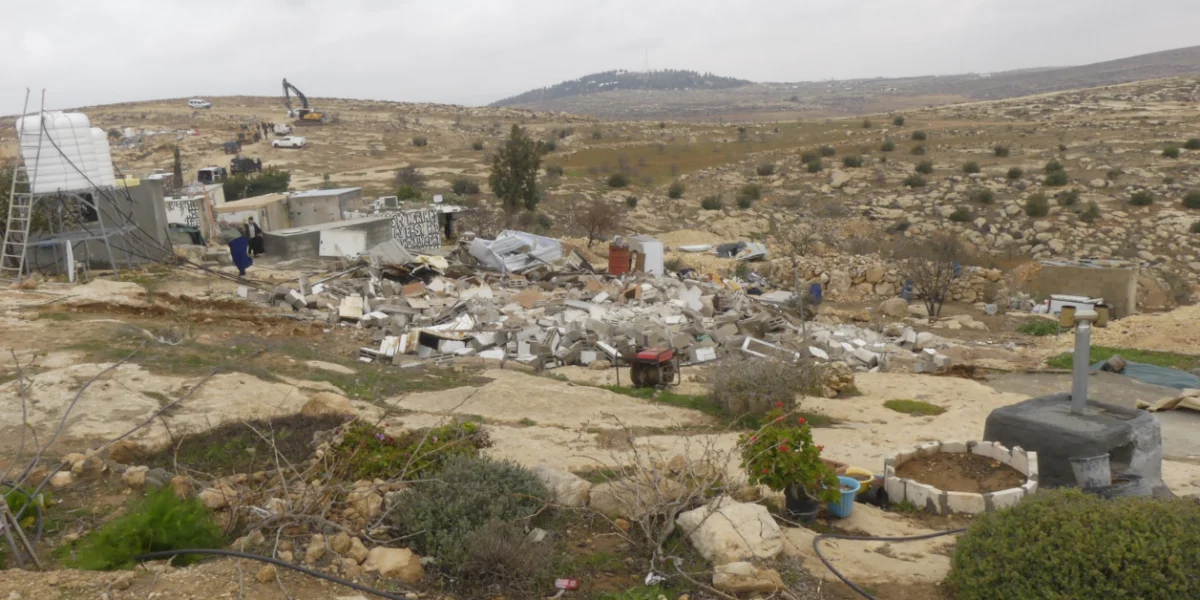
The United Nations Office for the Coordination of Humanitarian Affairs (OCHA) issued a grave condemnation this Tuesday, highlighting a devastating surge in residential demolitions within East Jerusalem. The destruction of a large residential building in the At-Tur neighborhood has resulted in the immediate displacement of 69 Palestinians, more than half of whom are children.
According to OCHA’s records, which have been tracking such events since 2009, this single operation represents the largest mass displacement event of its kind in East Jerusalem in nearly two decades. The aftermath of the demolition was described as particularly harrowing; families were reportedly barred from accessing the site by Israeli authorities, effectively preventing them from recovering personal belongings, documentation, and essential household items from the debris of their former homes.
The Context of Permits and Systemic Displacement
The primary justification cited by Israeli authorities for these demolitions is the lack of valid building permits. However, this legal pretext has long been criticized by human rights organizations and international observers as a structural barrier designed to facilitate the displacement of the Palestinian population.
In East Jerusalem, obtaining an Israeli-issued building permit is a notoriously arduous, expensive, and often impossible process for Palestinian residents. Data indicates that while urban planning policies favor expansion for Israeli settlements, Palestinian communities are subjected to restrictive zoning laws that render organic growth illegal. Consequently, families are often forced to build or expand their homes without official authorization simply to accommodate natural population growth, only to face the subsequent threat of state-sanctioned demolition.
Chronology of Institutionalized Displacement
The displacement in At-Tur is not an isolated incident but rather the latest manifestation of a long-standing policy framework. To understand the scale of the current crisis, one must look at the historical trajectory of property legislation in the region:
- 1948–1950: The introduction of the Absentees’ Property Law allowed the Israeli state to seize assets belonging to Palestinians who fled or were expelled during the 1948 conflict. These properties were placed under the control of the Custodian of Absentee Property.
- 1970: The passage of the Legal and Administrative Matters Law created a distinct legal asymmetry. It allowed Israelis to reclaim properties in East Jerusalem they claimed to own prior to 1948, while simultaneously denying Palestinians the right to reclaim homes lost during the same period.
- 2009–2026: OCHA records indicate that since 2009, over 15,095 Palestinian-owned structures have been demolished across the West Bank, resulting in the displacement of over 23,683 individuals.
- 2024–2026: The intensity of displacement reached new heights in early 2026. The Jerusalem District Court, in a series of controversial rulings, rejected appeals from 66 Palestinians in the Batan Al-Hawa neighborhood of Silwan, effectively paving the way for their eviction in favor of settler organizations such as Ateret Cohanim.
Supporting Data: A Statistical Overview of Crisis
The statistics surrounding the displacement of Palestinians paint a bleak picture of the current humanitarian landscape. According to the Internal Displacement Monitoring Centre (IDMC), 2025 was a catastrophic year, with 2.8 million people displaced across the Palestinian territories. This surge was largely driven by military operations, including the systematic targeting of three major refugee camps.
The legal mechanisms used to justify these displacements remain under heavy scrutiny. While the Israeli Supreme Court has historically upheld the constitutionality of these property laws, internal critiques have surfaced. The BADIL Resource Center has documented instances where the Israeli court itself acknowledged that the interests of Arab citizens were frequently ignored, and that the evidence provided to the Custodian of Absentee Property to certify individuals as "absent" was often groundless or entirely fabricated.
Official Responses and Human Rights Criticism
The international community and human rights advocacy groups have been vocal in their opposition to these practices. Amnesty International has consistently criticized the Legal and Administrative Matters Law, arguing that it codifies a discriminatory standard where property rights are contingent upon one’s national and ethnic identity.
Similarly, the Office of the United Nations High Commissioner for Human Rights (OHCHR) has highlighted the role of settler organizations in the displacement process. Reports suggest that these organizations, often operating with the tacit or explicit support of Israeli courts, have engaged in coordinated efforts to evict Palestinian families from neighborhoods such as Sheikh Jarrah and Silwan. In the first few months of 2026 alone, at least 218 families were forced from their homes under these circumstances.
Adalah, the Legal Center for Arab Minority Rights in Israel, has also played a pivotal role in challenging the state’s practices. Their reports argue that the 1950 Absentees’ Property Law serves as a tool for dispossession, transferring property from legitimate Palestinian owners to state guardianship, thereby altering the demographic character of East Jerusalem.
Legal Implications: Violations of International Law
The systematic demolition of homes and the resulting displacement of populations are in direct violation of fundamental tenets of international humanitarian law.
The Fourth Geneva Convention
Article 49 of the Fourth Geneva Convention strictly prohibits individual or mass forcible transfers, as well as deportations of protected persons from occupied territory to the territory of the Occupying Power or to that of any other country. Legal scholars argue that the forced evacuation of Palestinians from their homes, whether through physical demolition or judicial eviction, constitutes a breach of this prohibition.
The 1907 Hague Regulations
Article 46 of the 1907 Hague Regulations stipulates that private property cannot be confiscated. The widespread practice of destroying homes—often personal, private property—and the subsequent seizure of land for settlement expansion or urban redevelopment projects targeting the Palestinian population is widely considered a violation of this foundational international agreement.
The Human Toll and Future Implications
The displacement of 69 individuals in At-Tur is not merely a statistical update in a UN report; it is the destruction of a community’s social fabric. When homes are reduced to rubble, the impact extends beyond the loss of a roof. It involves the destruction of family history, the interruption of children’s education, and the severance of economic ties to the community.
As the legal landscape in East Jerusalem continues to tilt in favor of settlement expansion, the prospects for a peaceful resolution appear increasingly dim. The reliance on discriminatory laws, such as the 1970 Legal and Administrative Matters Law, creates a cycle of legal attrition where Palestinian families are forced into a permanent state of precariousness.
The international response—ranging from condemnation by UN agencies to advocacy by NGOs—serves as a crucial mechanism for documentation, yet the gap between international law and the reality on the ground continues to widen. Without a significant shift in policy or increased international intervention to uphold the rights of protected persons in occupied territories, the trend of mass displacement is likely to continue.
Conclusion: A Call for Accountability
The events in At-Tur serve as a stark reminder of the humanitarian crisis unfolding in East Jerusalem. With over 15,000 structures destroyed since 2009, the scale of displacement is staggering. As organizations like OCHA, Amnesty International, and Adalah continue to track these developments, the focus remains on the urgent need for adherence to the Geneva Convention and the Hague Regulations.
The struggle for the right to reside in one’s home remains the central pillar of the Palestinian experience in East Jerusalem. As the legal, political, and physical pressures mount, the international community faces the challenge of holding state actors accountable for policies that systematically displace entire families, shatter communities, and threaten the long-term stability of the region. The destruction in At-Tur is not just a building falling; it is a signal of a deepening humanitarian emergency that demands immediate and sustained global attention.