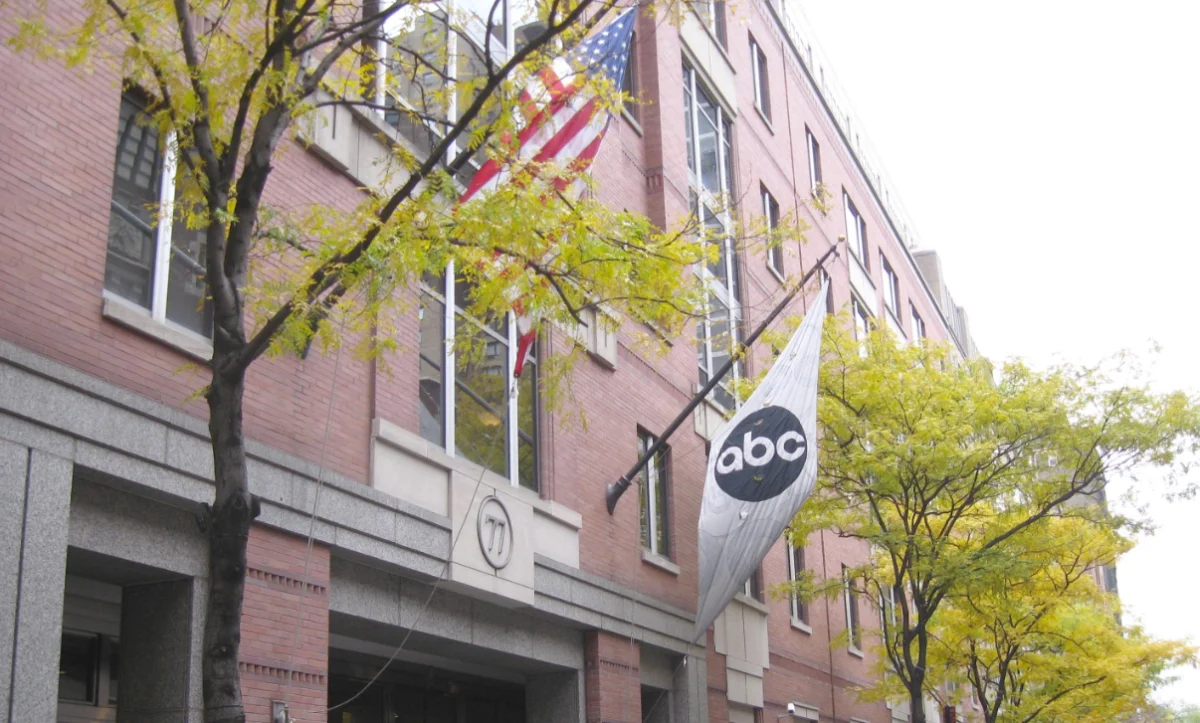
Executive Summary: A Clash Over Licensing and Free Speech
In a high-stakes legal confrontation that could redefine the boundaries of federal regulatory power, a U.S. District Court judge recently presided over oral arguments regarding a landmark challenge brought by the American Broadcasting Companies (ABC). At the heart of the dispute is an aggressive attempt by the Federal Communications Commission (FCC) to force an early review of broadcast licenses held by Disney-owned television stations.
During a tense two-hour hearing in the U.S. District Court for the District of Columbia, Judge Loren AliKhan questioned government attorneys on the legal justifications for the FCC’s unprecedented directive. ABC, a subsidiary of The Walt Disney Company, contends that the FCC is weaponizing the licensing process to punish the network for its editorial choices and corporate diversity, equity, and inclusion (DEI) initiatives. As the industry watches closely, the case serves as a litmus test for how far federal agencies can go in investigating the editorial processes of media organizations under the guise of “public interest” and employment regulation.
Chronology: How the Conflict Escalated
The current legal impasse is the culmination of months of rising tensions between the broadcasting giant and federal regulators.
- March 2025: FCC leadership signaled its intent to scrutinize Disney’s internal employment practices, specifically targeting DEI initiatives as potentially violative of equal employment opportunity (EEO) mandates.
- April 2026: The FCC issued a formal directive demanding that eight ABC-owned stations submit applications for license renewal years ahead of their scheduled expiration.
- August 2026: ABC filed a federal lawsuit in the District of Columbia, alleging that the FCC’s actions constitute unconstitutional retaliation against protected speech and represent a significant overreach of statutory authority.
- October 2026: Judge Loren AliKhan heard arguments on ABC’s request for a temporary restraining order and preliminary injunction to halt the FCC’s accelerated licensing review.
The Legal Arguments: Constitutional and Statutory Friction
The core of ABC’s complaint rests on a dual-pronged argument involving both constitutional precedent and federal statutes.
The Constitutional Challenge: The "Vullo" Standard
ABC’s legal team relies heavily on the 2024 Supreme Court ruling in National Rifle Association of America v. Vullo. In that decision, the Court affirmed that government officials are strictly prohibited from using the threat of regulatory sanctions to suppress disfavored speech. ABC argues that the FCC’s actions are not a "routine inquiry" but a retaliatory strike, pointing to public statements made by President Donald Trump and FCC Chairman Brendan Carr. These statements, the network claims, explicitly threatened the security of the stations’ licenses based on their programming content, creating a chilling effect on editorial independence.
The "Herbert v. Lando" Precedent
Beyond the First Amendment, ABC has challenged the FCC’s demand for internal editorial communications. The network cites Herbert v. Lando (1979) to argue that the government lacks the authority to peer into the "editorial process" to satisfy nebulous notions of the "public interest." While Herbert is frequently cited in defamation law—ironically allowing plaintiffs to question journalists about their state of mind—ABC posits that it provides a shield against administrative "fishing expeditions" aimed at coercing changes in content.
Statutory Overreach: The Communications Act
ABC further invokes the Communications Act of 1934, specifically:
- Section 307(d): Which prohibits the FCC from granting a license renewal more than 30 days before its scheduled expiration. ABC argues that the Commission is forcing an application process that it is legally barred from finalizing, effectively creating a procedural "purgatory" for the stations.
- Section 326: Which expressly forbids the FCC from engaging in censorship.
ABC’s filing states, "The Commission’s true target is not the Stations’ employment practices or their carriage of a single presidential address; it is the content of Plaintiffs’ programming—and thus their speech."
The Government’s Defense: Regulatory Compliance
The FCC, represented by government counsel, maintains that the accelerated review is a standard administrative procedure rooted in its duty to ensure that broadcasters adhere to the law.
The EEO Mandate
The Commission argues that it has an explicit mandate under its EEO rules to ensure that broadcast licensees do not discriminate in hiring based on race, color, religion, national origin, or sex. The FCC contends that Disney’s internal DEI initiatives may, in fact, violate these rules. By initiating a review, the FCC claims it is simply exercising its oversight role to protect the integrity of the broadcast spectrum.
The "Self-Inflicted" Argument
In its motion to dismiss the lawsuit, the FCC asserts that any perceived harm to ABC’s speech rights is "self-inflicted." The government argues that if the stations are in full compliance with federal law, they have nothing to fear from a license review. Furthermore, the FCC argues that the lawsuit is premature, insisting that the matter must proceed through the agency’s internal administrative channels before reaching a federal district court.
Implications: The Future of Media Regulation
The outcome of this case holds profound implications for the relationship between the administrative state and the private media sector.
A Test of Agency Authority
The case highlights a growing trend in administrative law: the attempt by corporations to bypass agency review processes by filing "structural" or "constitutional" claims in district court. By invoking the Supreme Court’s logic in Axon Enterprise v. FTC and Thunder Basin Coal Co. v. Reich, ABC is testing whether it can circumvent the FCC’s internal review by arguing that the agency’s very structure and motive make a fair hearing impossible. If Judge AliKhan allows the case to proceed, it could open the door for other corporations to challenge administrative actions in federal court, significantly curtailing the power of agencies to investigate and regulate businesses through the licensing process.
Editorial Independence at Risk
If the court ultimately sides with the FCC, it could set a dangerous precedent that allows future administrations to use licensing threats as a lever to influence newsroom content. Conversely, if the court rules in favor of ABC, it will solidify a robust protection for media organizations, ensuring that the licensing process remains a technical, non-partisan administrative duty rather than a tool for political or ideological enforcement.
The DEI Debate in Corporate Law
This case also marks a significant intersection of the "anti-DEI" legal movement with federal administrative law. By challenging the FCC’s use of EEO rules to dismantle diversity initiatives, ABC is positioning itself at the center of a national debate regarding corporate autonomy and the extent to which the federal government can intervene in internal human resources policies.
Conclusion: Awaiting the Verdict
As of this writing, Judge AliKhan has not indicated when a decision on the temporary restraining order will be released. The legal community remains divided on whether the court will grant the injunction, which would effectively freeze the FCC’s investigation, or defer to the agency’s broad regulatory authority.
What is clear is that this case is no longer just about television licenses. It has evolved into a foundational debate over the separation of powers and the sanctity of the First Amendment in an era where the government’s regulatory toolkit is increasingly being scrutinized for its potential to suppress dissent. For the broadcasting industry, the ruling will be a defining moment that will likely dictate the terms of engagement between media outlets and the federal government for years to come.