By International Affairs Desk
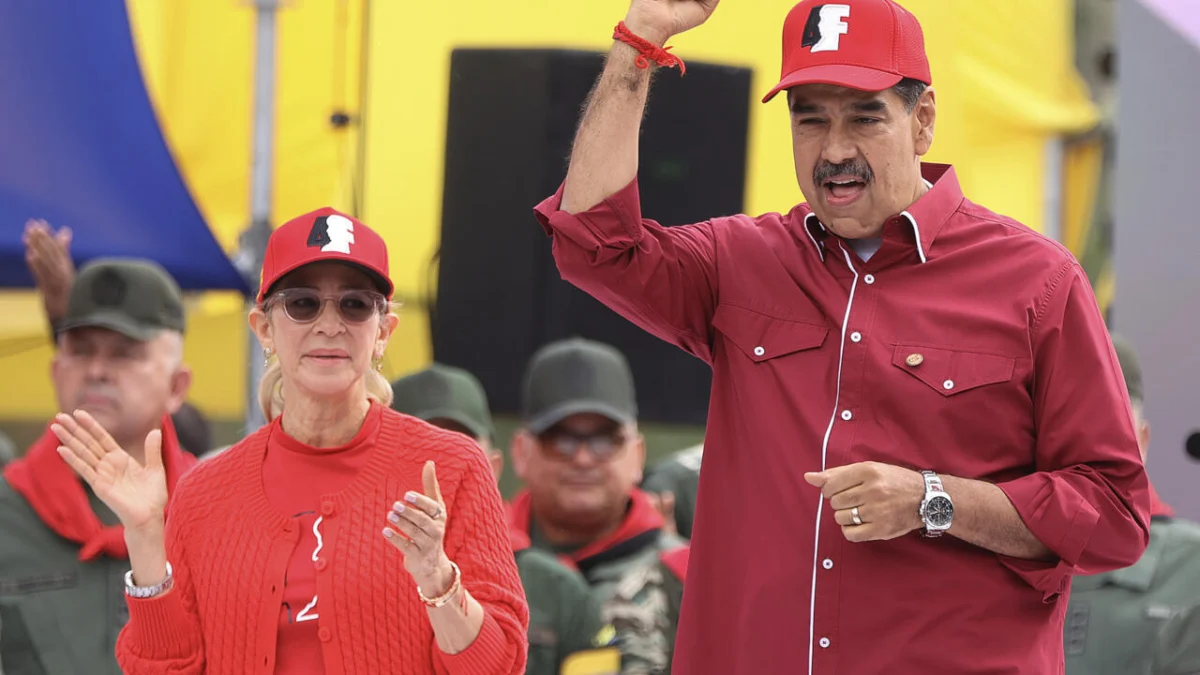
In a significant escalation of the legal proceedings against the former Venezuelan leadership, the United States Department of Justice filed a sweeping new indictment on Thursday against ousted President Nicolás Maduro and his wife, Cilia Flores. The new charges, which include grave allegations of conspiracy to commit torture, significantly broaden the scope of an already high-stakes criminal case that has fundamentally altered the geopolitical landscape of the Western Hemisphere.
The couple, currently held in a high-security facility in Brooklyn, New York, following their extraordinary capture in a U.S. military raid on their Caracas compound this past January, now faces a multi-front battle in federal court. The indictment serves as a stark warning from Washington: the era of impunity for the Maduro regime is officially over, and the U.S. judicial system is determined to hold the pair accountable for systemic human rights abuses that have long plagued the South American nation.
The Scope of the Indictment: From Narco-Trafficking to State-Sponsored Brutality
While the initial charges against Maduro and Flores centered on international drug trafficking and the illegal possession of military-grade firearms, the latest filing introduces a chilling narrative of state-sanctioned violence. Prosecutors allege that the duo utilized the apparatus of the Venezuelan state not merely to facilitate the illicit shipment of cocaine into the United States, but to systematically "intimidate, harass, and neutralize" political dissenters through a campaign of terror.
The court document details a harrowing litany of abuses, including waterboarding, sexual violence, and brutal physical beatings. Perhaps most significantly, the prosecutors have provided specific, grisly details regarding the treatment of American citizens detained within the Venezuelan penal system.
In one cited instance from 2022, an American national—accused by the Maduro administration of participating in a plot to assassinate the president—was subjected to what the filing describes as "medieval" torture techniques. The victim allegedly suffered electric shocks to sensitive areas, including the genitals and limbs, prolonged asphyxiation, severe dehydration, and the forced administration of substances that induced debilitating seizures. This evidence, according to legal analysts, provides a direct link between the highest levels of the Venezuelan government and the day-to-day operations of its infamous detention centers.
Chronology of a Geopolitical Seismic Shift
The trajectory leading to the current legal standoff began long before the January raid, marked by years of deepening authoritarianism and economic collapse in Venezuela.
- 2013–2026 (The Maduro Presidency): Nicolás Maduro assumed power in 2013, following the death of Hugo Chávez. Throughout his tenure, he faced consistent criticism from international human rights organizations for the erosion of democratic institutions and the systematic suppression of the political opposition.
- January 2025: In an operation that shocked global observers, U.S. military forces executed a surgical raid on the Maduro compound in Caracas. The operation resulted in the capture of both Maduro and Flores, who were subsequently transported to the United States to face federal charges.
- Spring 2025: Following the capture, Vice President Delcy Rodríguez assumed the role of interim leader, navigating a government under extreme duress as the U.S. government tightened sanctions and leveraged diplomatic pressure.
- Mid-2025: U.S. energy corporations, including Chevron and Eni, began finalizing multi-billion-dollar agreements with the new Venezuelan administration, effectively placing a significant portion of the country’s vast, untapped oil reserves under American oversight.
- October 2025: The U.S. Department of Justice unveiled the supplemental indictment, adding torture charges to the existing docket of drug trafficking and weapons possession.
- June 2026 (Projected): The trial for the pair is scheduled to commence in a New York federal court, where they will face the cumulative weight of the federal government’s evidence.
The Defense Strategy: Sovereignty and the "Prisoner of War" Narrative
In response to the mounting legal pressure, the defense team for Maduro and Flores has consistently pushed for a dismissal of the charges. Their primary legal argument rests on the principle of sovereign immunity. The defendants assert that as the sitting President and First Lady of a sovereign nation at the time of their arrest, they are shielded from the jurisdiction of U.S. courts.
Maduro has further escalated this defense by characterizing his detention as a kidnapping and himself as a "prisoner of war." By framing the U.S. military intervention as an illegal act of aggression rather than a law enforcement operation, his counsel aims to turn the trial into a political theater centered on American imperialism.
However, U.S. prosecutors have countered these claims by highlighting the nature of the charges—specifically the "narco-terrorism" conspiracy—arguing that such activities fall outside the scope of protected official conduct. Furthermore, the denial of Cilia Flores’s request for home detention in New York, citing her need for treatment regarding a heart condition, suggests that the court intends to maintain strict custody over both defendants as the trial date approaches.
Official Responses and the Quest for Accountability
The Biden administration and federal law enforcement agencies have framed the indictment as a watershed moment for international justice. Attorney General Todd Blanche, in a statement released via social media, emphasized the government’s resolve. "These additional charges reflect the dedication of this Administration to delivering justice for the victims of torture, narcoterrorism, and organized crime," Blanche wrote.
FBI Director Kash Patel echoed these sentiments, noting that the charges represent a "steadfast commitment to the rule of law and the protection of U.S. national security." The rhetoric coming from the Department of Justice underscores a broader strategic goal: to dismantle the financial and logistical networks that allowed the Maduro regime to operate with impunity for over a decade.
For the victims of the regime—many of whom are now coming forward to share their stories—the trial represents a rare opportunity for public validation. Rights groups that have spent years documenting the "disappearances" and extrajudicial killings in Venezuela view the indictment as the first tangible step toward closing a dark chapter in the nation’s history.
Global Implications: Energy, Security, and Regional Stability
The implications of the Maduro trial extend far beyond the courtroom walls in New York. The political vacuum created by his removal has triggered a radical restructuring of Venezuela’s relationship with the global economy.
The Energy Pivot
With the Maduro administration neutralized, the U.S. has moved to secure its energy interests in the region. The recent deals signed with Chevron and Eni signify a major shift in policy. By gaining operational control over Venezuelan oil assets, the U.S. aims to stabilize global energy markets while simultaneously integrating Venezuela into a more western-aligned economic framework. This move has been controversial, drawing criticism from those who argue that the U.S. is prioritizing resource acquisition over the immediate restoration of democratic governance.
Regional Security
The collapse of the Maduro regime has significantly altered the security dynamics in the Caribbean and South America. For years, the U.S. accused the regime of acting as a transit hub for drug cartels moving product into North American and European markets. With the leadership now in U.S. custody, federal agencies are working to dismantle the cartel networks that were allegedly protected by the state. Intelligence officials suggest that the information gleaned from the ongoing investigation could expose the full extent of the "narco-state" apparatus that thrived under the previous leadership.
A New Chapter for Venezuela?
While Vice President Delcy Rodríguez currently manages the daily affairs of the Venezuelan government under heavy U.S. oversight, the path toward a legitimate, democratic transition remains fraught with uncertainty. The country faces the dual challenge of rebuilding its shattered infrastructure and fostering reconciliation in a society deeply divided by years of political polarization.
As the June 2026 trial date nears, the world will be watching to see if the U.S. justice system can successfully navigate the complexities of international law while delivering the accountability that the victims of the Maduro regime have long sought. For the defendants, the stakes could not be higher; for the people of Venezuela, the outcome may finally determine whether the country can emerge from the shadow of its recent past to embrace a future defined by the rule of law rather than the rule of force.