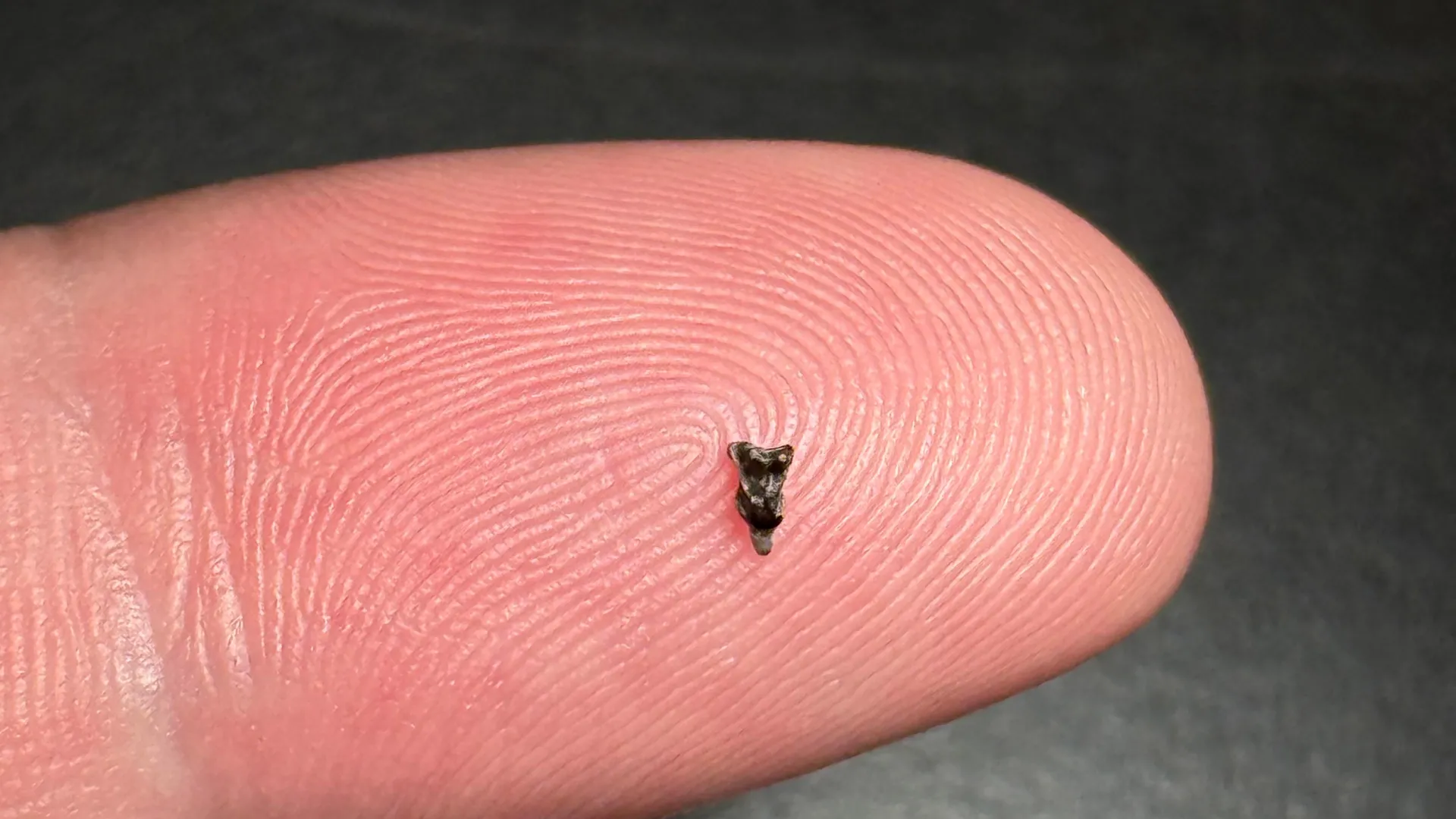
Introduction: A Tiny Link in a Grand Evolutionary Chain
For nearly 150 years, the story of early primate evolution has been told through a northern lens. For decades, paleontologists believed that Purgatorius—a shrew-sized, tree-dwelling mammal and the earliest known relative to all primates, including humans—was restricted to the northern latitudes of what is now Montana and southwestern Canada. This narrative suggested a distinct biological boundary, perhaps dictated by the catastrophic environmental collapse following the asteroid impact that ended the reign of the dinosaurs 66 million years ago.
However, a groundbreaking study published in the Journal of Vertebrate Paleontology has shattered this geographical confinement. By uncovering the southernmost fossils of Purgatorius ever documented, researchers have rewritten the early chapters of primate history. Located in the Corral Bluffs study area of Colorado’s Denver Basin, these tiny, ancient teeth provide the missing link in a narrative that spans millions of years, suggesting that our earliest ancestors were far more resilient—and more widespread—than previously imagined.
The Chronology of a Post-Apocalyptic Rebound
To understand the significance of this discovery, one must look at the timeline of the "single worst day for life on Earth." Approximately 66 million years ago, the Chicxulub asteroid struck the Yucatán Peninsula, triggering a mass extinction event that eliminated three-quarters of all plant and animal species on the planet, most notably the non-avian dinosaurs.
The Immediate Aftermath (66 Million Years Ago)
In the immediate wake of the impact, the world was a desolate, rapidly changing landscape. Forests were decimated, and the food chain collapsed. Yet, within a mere 100,000 to 200,000 years, life began to claw its way back. Purgatorius emerged during this volatile window. Appearing roughly 65.9 million years ago, it represents the dawn of the archaic primates.
The Long-Standing Geographical Mystery
For decades, paleontologists observed a troubling pattern: while Purgatorius fossils were relatively abundant in the northern regions of North America, they were conspicuously absent in the southern Western Interior, despite the presence of rock formations from the same geological era. Further south, in the American Southwest, researchers had found a diverse array of related archaic primates, but these fossils were roughly two million years younger. This "gap"—both in time and geography—led to a persistent debate: were these southern regions truly uninhabitable for early primates, or were scientists simply failing to find what was hidden beneath their feet?
The Shift in Methodology (2017–2024)
The recent breakthrough at Corral Bluffs was not a matter of luck, but of intensive labor. Recognizing that the "absence" of these creatures might be a product of human error rather than biological reality, the team—led by Dr. Stephen Chester of Brooklyn College and the CUNY Graduate Center, in collaboration with the Denver Museum of Nature & Science (DMNS)—deployed high-precision recovery techniques. By shifting from traditional surface collection to an extensive screen-washing process, they finally bridged the gap between the northern fossils and the southern assemblages.
Supporting Data: The Science of the "Small"
The discovery at Corral Bluffs is a testament to the fact that in paleontology, size does not equate to importance. The fossils recovered—several teeth, some no larger than the tip of a baby’s finger—were the result of an exhaustive, multi-year project.
Screen-Washing: The Gold Standard for Micro-Fossils
Traditional paleontological methods often involve walking over exposed rock formations and scanning the surface for bone fragments. While effective for identifying large dinosaur bones, this method is fundamentally flawed for the study of early mammals. The teeth of Purgatorius are minute, often camouflaged by the surrounding sediment.
The team utilized screen-washing, a process that involves collecting large volumes of fossiliferous sediment and passing it through fine-mesh screens using water. This removes the dirt and clay, leaving behind a concentrated residue of "micro-vertebrates." Through this process, the team uncovered an entire ecosystem: teeth from fish, crocodilians, and turtles, all coexisting with the precious, minuscule teeth of Purgatorius.
Biological Resilience
The presence of these teeth in Colorado fundamentally challenges the hypothesis that the asteroid-induced forest collapse prevented early primates from migrating south. Purgatorius possessed ankle bone features indicative of an arboreal lifestyle. Initially, scientists feared that because the forests were obliterated in the south, these creatures could not have survived. The new evidence suggests that the recovery of the plant life—and by extension, the forest canopy—occurred much faster than previously estimated, allowing Purgatorius to traverse the continent with surprising speed.
Official Perspectives: Expert Insights
The project, supported by a nearly $3 million grant from the National Science Foundation, represents a high-water mark for interdisciplinary research.
Dr. Stephen Chester: Redrawing the Map
"The discovery helps fill the gap in understanding the geography and evolution of our earliest primate relatives," says Dr. Stephen Chester. For Chester, the implications are clear: "The presence of these fossils in Colorado suggests that archaic primates originated in the north and then spread southward, diversifying soon after the mass extinction at the end of the Cretaceous Period." He emphasizes that the "absence" of these animals in the historical record was largely an artifact of sampling bias.
Dr. Jordan Crowell: The Potential for a New Species
Adding to the excitement is the morphological uniqueness of the teeth found in Colorado. According to Dr. Jordan Crowell, a postdoctoral fellow at DMNS, the specimens exhibit a unique combination of features that do not perfectly align with previously described species of Purgatorius. "The specimens have a unique combination of features… but we are awaiting the recovery of additional material to assess whether these fossils represent a new species," Dr. Crowell notes. This hints that the diversity of early primates was likely much greater than currently cataloged.
Dr. Tyler Lyson: The Value of Community and Persistence
Dr. Tyler Lyson, whose broader project at the DMNS explores the recovery of life after the mass extinction, highlights the role of collaboration. "Thanks to our long-term partnership with the City of Colorado Springs… as well as countless hours of work by our volunteers and interns, we are building some incredible datasets." For Lyson, this is about more than just one genus; it is about reconstructing the history of how life—including our own distant ancestors—rebounded from the brink of total annihilation.
The Broader Implications for Evolutionary Biology
Challenging Sampling Bias
This study serves as a humbling reminder to the scientific community: a lack of evidence is not evidence of lack. For over a century, the reliance on surface-level collection methods created a skewed view of the Cenozoic era. By proving that Purgatorius was present in the southern regions of North America, researchers have demonstrated that the "missing" southern primates were there all along—hidden in the sediment, waiting for more sophisticated techniques to be applied.
Understanding Our Deep Roots
Purgatorius is the foundational point for the primate lineage. By mapping its dispersal patterns, scientists are gaining a clearer picture of the environmental pressures that shaped the evolution of our earliest ancestors. If these creatures were able to traverse thousands of miles within a few hundred thousand years of the most devastating event in Earth’s history, it speaks to a remarkable evolutionary adaptability.
Future Research Directions
The work at Corral Bluffs is far from finished. The researchers believe that with continued investment in intensive screen-washing, the fossil record of the Paleocene epoch will continue to expand. The potential for identifying new species—and perhaps even older ancestors—is immense.
"Our results demonstrate that small fossils can easily be missed," Dr. Chester concludes. "With more intensive searching, especially using screen-washing techniques, we will undoubtedly discover many more important specimens."
As researchers continue to pick through the dirt of the Denver Basin, they are doing more than just collecting teeth; they are reconstructing the survival story of the mammal that would eventually give rise to the primate order. The journey of Purgatorius from the northern reaches of Montana to the southern basin of Colorado is a narrative of resilience, a testament to the speed of biological recovery, and a vital chapter in the long, complex history of life on Earth.
The next time a researcher looks at a speck of rock from the Paleocene, they may be looking at the very beginning of the human story—proving once again that in the world of evolutionary biology, the smallest discoveries often yield the largest insights.