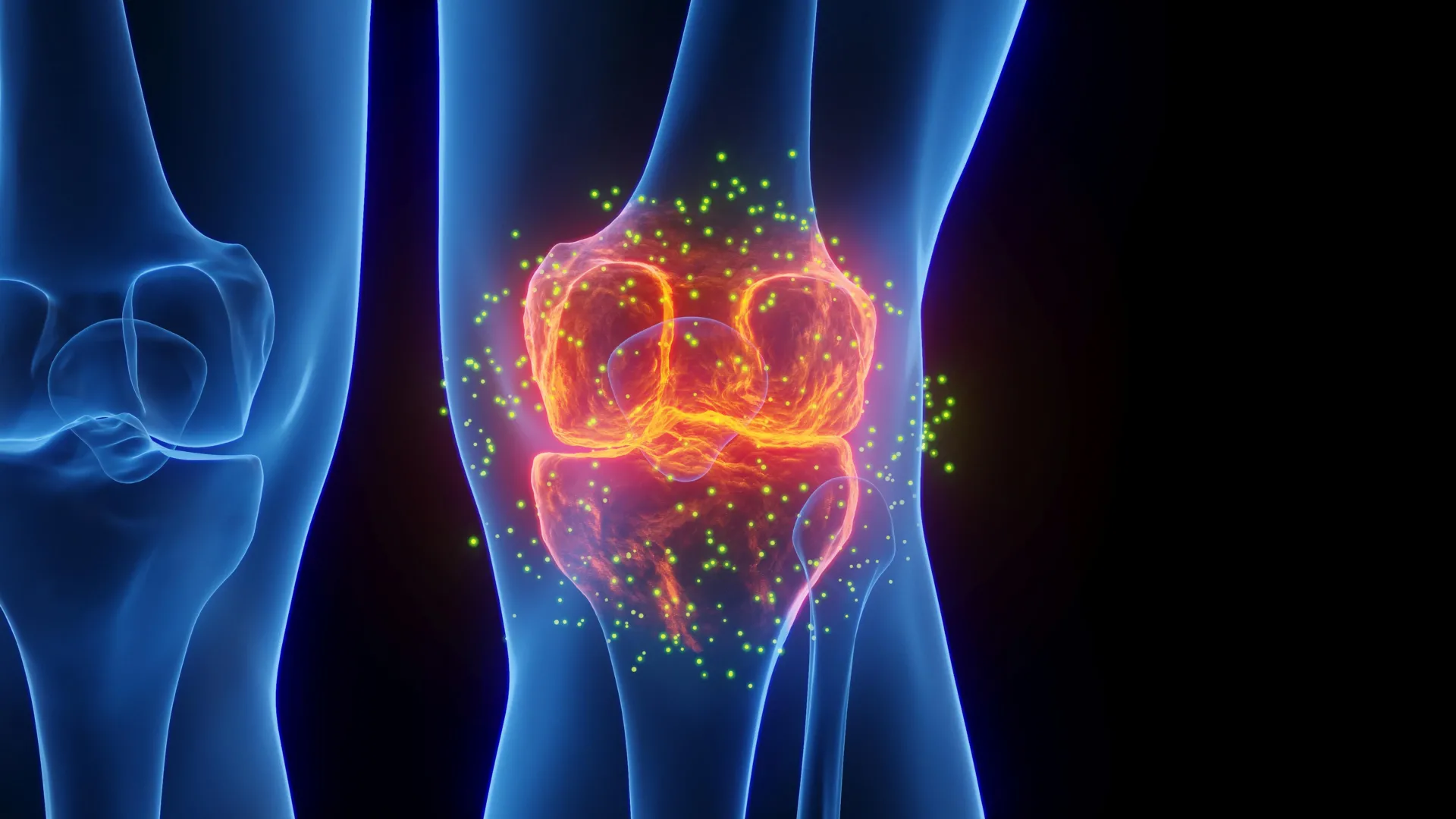
For the millions of individuals living with osteoarthritis (OA), the daily experience is often defined by a quiet, persistent battle against inflammation and structural decay. Characterized by chronic pain, limited mobility, and the progressive breakdown of joint cartilage, the condition is a leading cause of global disability. While current therapeutic standards—ranging from over-the-counter anti-inflammatories to corticosteroid injections—can temporarily dull the ache, they are fundamentally limited. They are palliative, not curative; they mask the sensation of pain while the underlying structural collapse of the joint continues unabated.
However, a breakthrough study from Yale University, published in the journal Bioactive Materials, suggests a paradigm shift in how we treat this degenerative disease. Researchers have identified that lacosamide, an existing medication currently used to treat epilepsy, possesses a unique dual-functionality: it not only mitigates pain signaling but also actively reverses cartilage degradation. By pairing this drug with a specialized, temperature-sensitive hydrogel, the research team has developed a delivery system that could potentially transition osteoarthritis management from "symptom control" to "disease modification."
The Biological Breakdown: Why Joints Fail
To understand the significance of this discovery, one must first look beyond the common misconception that osteoarthritis is merely a product of "wear and tear." While mechanical stress plays a role, the disease is a complex biological failure of the joint’s homeostatic environment.
In a healthy joint, cartilage is maintained by specialized cells known as chondrocytes. These cells operate like a biological maintenance crew, meticulously balancing the synthesis of new extracellular matrix components with the removal of old, damaged material. Osteoarthritis disrupts this equilibrium. As the disease advances, the metabolic activity of chondrocytes shifts; the rate of cartilage degradation outpaces regeneration. Over time, the protective cushioning vanishes, leading to bone-on-bone contact, severe pain, and, for many, the necessity of surgical intervention such as a total knee replacement.
The challenge, according to Chuan-Ju Liu, PhD, the study’s principal investigator and the Charles W. Ohse Professor of Orthopaedics & Rehabilitation at Yale, is that the medical community has lacked a tool capable of intervening in this process. "There is a major unmet need in osteoarthritis," says Liu. "We need therapies that don’t just mask pain but actually change how the disease progresses."
The "Gatekeeper" Protein: Nav1.7
The crux of the Yale team’s discovery lies in a protein called Nav1.7. Traditionally understood as a sodium channel, Nav1.7 acts as a microscopic gate in cell membranes, regulating electrical signaling. For years, its role was believed to be confined to nerve cells, where it facilitates the transmission of pain signals to the brain.
However, the team’s research uncovered a surprising, previously unknown function of Nav1.7 within the joint. They found that this protein is highly active within chondrocytes. In healthy joints, Nav1.7 remains relatively quiet. In osteoarthritic joints, however, its activity surges. This heightened activity triggers a double-edged sword: it amplifies the transmission of pain signals while simultaneously signaling chondrocytes to halt tissue repair and accelerate the breakdown of the cartilage matrix.
"When Nav1.7 becomes dysregulated, it contributes to both joint degeneration and pain," Dr. Liu explains. "Our findings suggest that Nav1.7 is a dual-acting target. By blocking this single protein, we can potentially quiet the pain nerves and tell the cartilage cells to not only stop breaking down but start repairing as well."
Chronology of Discovery: Repurposing for Efficacy
The journey toward this discovery was not one of inventing a new molecule from scratch, but rather one of strategic repurposing. The Yale team screened various sodium channel inhibitors to see which might be most effective at modulating Nav1.7 within the specific context of joint biology.
Lacosamide emerged as the standout candidate. Unlike other drugs in its class, lacosamide demonstrated robust biological efficacy at significantly lower concentrations, yielding a superior safety profile. The researchers discovered that the drug’s effect on cartilage was dose-dependent, revealing a narrow but highly effective therapeutic window.
"This tells us the system is finely tuned," Dr. Liu notes. "There is an optimal range where the drug helps restore balance without overcorrecting."
Upon closer inspection, the team found that lacosamide modulates cellular communication. The drug stimulates the secretion of two critical signaling proteins: HSP70 and midkine. HSP70 functions as a molecular chaperone, helping cells navigate stress and facilitating tissue repair, while midkine serves to suppress inflammation and shield the joint from further degeneration. Together, these proteins foster a microenvironment conducive to long-term cartilage preservation.
Engineering the Solution: The "Leaky Bucket" Challenge
Even with an effective drug, the method of delivery presented a significant engineering hurdle. Oral administration of lacosamide, while effective in preclinical trials, distributes the drug systemically. This not only necessitates higher doses but also risks unwanted side effects in other parts of the body.
The team turned to intra-articular injection—delivering the medication directly into the joint. Yet, they faced a anatomical limitation. "The knee joint, which is also the most common location for osteoarthritis, naturally acts like a leaky bucket," Dr. Liu observes. "The body’s drainage system can clear out liquids injected into the knee within hours."
To solve this, the researchers developed a "smart" hydrogel derived from Collagen II. This biomaterial is temperature-responsive: it maintains a liquid state inside a syringe, allowing for easy, minimally invasive injection. Once it enters the warm environment of the human body, the gel undergoes a phase transition, turning into a firm, jelly-like structure.
This gel acts as a local reservoir. It traps the lacosamide, preventing it from being drained away by the body’s circulation, and releases it in a sustained, controlled manner over several weeks. Preclinical data showed that a single injection of this lacosamide-loaded hydrogel every four weeks was more effective at preventing cartilage loss than daily oral dosing.
Implications for Future Clinical Practice
The potential for this treatment to disrupt the current landscape of rheumatology is significant. Because lacosamide is already an FDA-approved drug for epilepsy, the pathway to clinical trials is significantly shorter and less fraught with the regulatory hurdles that typically accompany the development of entirely novel pharmacological agents.
Furthermore, the research underscores a broader shift in modern medicine: the convergence of pharmacotherapy and advanced biomaterials. By designing systems that control the spatial and temporal delivery of drugs, researchers can maximize efficacy while minimizing the risk of systemic side effects.
A New Standard of Care?
If these findings are validated in human clinical trials, the implications are profound:
- Disease Modification: Shifting the goal from symptom management to actual structural repair of the joint.
- Reduced Surgical Need: By preserving cartilage, patients may be able to delay or entirely avoid the need for total joint replacement surgeries.
- Opioid Sparing: As a non-addictive, locally delivered treatment, this therapy could offer a viable alternative to the reliance on opioids for chronic pain management in aging populations.
Dr. Liu and his team remain cautious but optimistic. "We are not just developing a treatment," he says. "We are developing a system that allows the medicine to work more effectively where it matters most. Our goal is to move beyond symptom control and towards true disease modification. This effort brings us closer to that reality."
As the team moves toward the next stages of research, the medical community will be watching closely. If the success seen in the laboratory can be replicated in the clinic, the "leaky bucket" of the arthritic joint may finally be mended, offering millions of patients a future defined by mobility rather than managed decline.