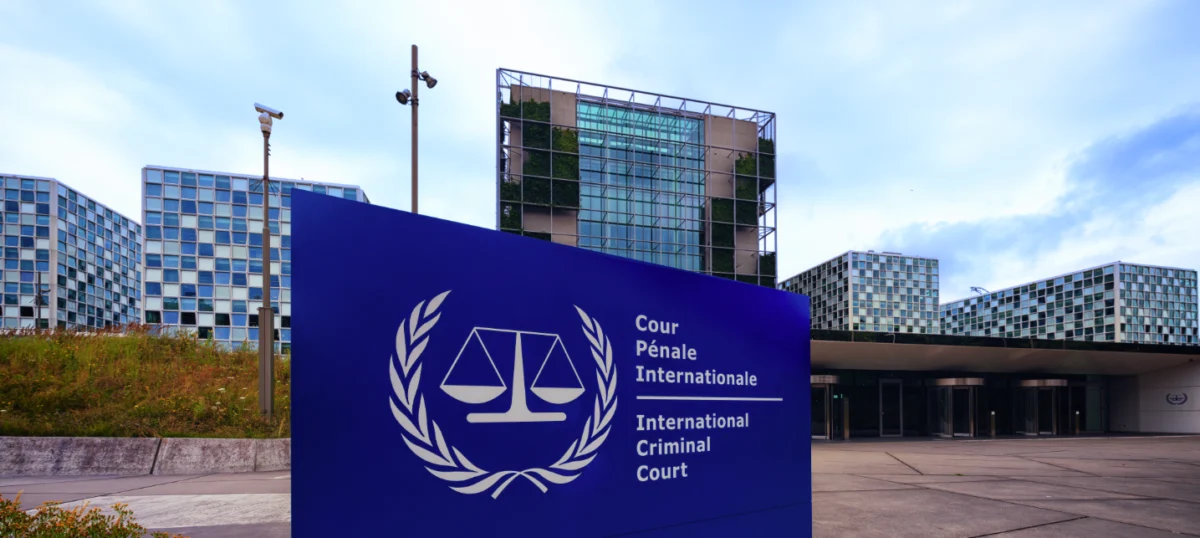
In a landmark legal move that reverberates across the global human rights landscape, the International Criminal Court (ICC) has officially unsealed four arrest warrants for senior figures within the Taliban regime. The warrants, which were issued between July and September 2025, target the architects of a systemic campaign of oppression that has effectively erased the public existence of women and girls in Afghanistan. By classifying the Taliban’s restrictive edicts as “crimes against humanity,” the Court has signaled a decisive shift in how international law addresses gender-based persecution.
The Targeted Figures and the Charges
The ICC Pre-Trial Chamber II has issued warrants for the arrests of Taliban Supreme Leader Haibatullah Akhundzada, Chief Justice Abdul Hakim Haqqani, Minister of Education Habibullah Agha, and Minister of Propagation of Virtue and Prevention of Vice Neda Mohammad Nadim.
The Court asserts that there are reasonable grounds to believe these four men are criminally responsible for ordering, inducing, or soliciting the persecution of the Afghan female population. Under Article 7(1)(h) of the Rome Statute—the treaty that serves as the ICC’s foundational document—persecution is defined as a crime against humanity when it involves the severe deprivation of fundamental rights based on the identity of a group or collectivity.
The judges noted that while the Taliban’s governance has been marked by widespread violence, including murder, arbitrary imprisonment, torture, and enforced disappearances affecting all citizens, women and girls have been disproportionately targeted. This targeting, the Court argues, is not merely a byproduct of conservative rule, but a calculated, institutionalized strategy designed to dismantle the autonomy of half the nation’s population.
Chronology of Institutionalized Erasure
The path to these arrest warrants is paved with years of escalating restrictive measures that have systematically dismantled the progress made in Afghanistan over the previous two decades.
- August 2021: Following the withdrawal of international coalition forces, the Taliban seized control of Kabul. Almost immediately, the regime began issuing informal restrictions on women’s employment and movement.
- 2022-2023: The de facto authorities codified these restrictions, banning girls from secondary schools and later prohibiting women from attending universities. These bans were accompanied by the closure of beauty salons and the mandate that women be accompanied by a mahram (male guardian) when traveling long distances.
- 2024: The introduction of new "Criminal Court Procedural Regulations" further formalized the marginalization of women, effectively stripping them of legal recourse in domestic disputes and creating a environment where violence against women is increasingly normalized under the guise of religious law.
- July – September 2025: The ICC Pre-Trial Chamber II issues the four arrest warrants for the senior leadership, concluding that the regime’s actions meet the high threshold required for international prosecution for crimes against humanity.
- October 2026: The warrants are unsealed and made public, marking a major escalation in the international legal pressure against the de facto authorities in Kabul.
The Legal Argument: Redefining Gender Persecution
A critical aspect of the ICC’s ruling is its modern interpretation of the Rome Statute’s definition of "gender." In its supporting documents, the Court emphasized that gender must be recognized as a socially constructed set of roles, behaviors, and hierarchies. By acknowledging that the Taliban’s persecution is rooted in the forced imposition of these social norms, the ICC has expanded the scope of what constitutes an international crime.
The Court held that "systemic and institutionalized harm"—which includes the mandatory enforcement of discriminatory social codes—is as much a crime as direct physical violence. This interpretation is supported by legal scholars at the Georgetown Institute for Women, Peace and Security, who argue that the Taliban’s regulations violate core tenets of both the Cairo Declaration of Human Rights in Islam (specifically articles regarding equality and the right to education) and the Universal Declaration of Human Rights (UDHR).
By legalizing practices such as child marriage and making it nearly impossible for women to seek separation from abusive spouses, the Taliban has effectively codified domestic violence, a move the ICC judges cited as a clear violation of the safety and dignity requirements mandated under Article 68(1) of the Rome Statute.
Supporting Data: A Nation in Freefall
The scale of the crisis is documented by international observers and UN agencies, which paint a bleak picture of life under the current regime.
- Education: More than two million women and girls remain locked out of secondary and higher education. This represents a lost generation of potential doctors, lawyers, and engineers, creating a long-term developmental vacuum that will hinder Afghanistan’s recovery for decades.
- Humanitarian Deterioration: UN High Commissioner for Human Rights Volker Türk has repeatedly warned that the intersection of extreme poverty and the denial of basic rights has created a humanitarian catastrophe. Millions are currently suffering from food insecurity and a lack of access to basic medical care, which is exacerbated by the restrictions placed on female aid workers.
- Legislative Violence: Recent decrees have empowered local enforcers to use corporal punishment as a means of controlling women’s attire and public behavior. Reports from Amnesty International and other human rights organizations highlight that the new penal code effectively shields perpetrators of domestic violence from prosecution, while criminalizing the victims.
Official Responses and International Pressure
The move by the ICC has elicited a mixed, though largely supportive, response from the international community. UN High Commissioner for Human Rights Volker Türk issued a formal statement urging member states to prioritize the safety of the Afghan population over political expediency.
“Millions of Afghan citizens are living in a state of suspended animation, where their basic rights are deteriorating by the hour,” Türk noted. He implored governments to reconsider their diplomatic engagement with the Taliban, arguing that without significant, coordinated pressure, the de facto authorities will continue to act with total impunity.
However, the enforcement of these warrants remains a significant challenge. As the Taliban is not a recognized state government in the eyes of the United Nations, executing the arrests requires the cooperation of regional powers—many of whom maintain complex diplomatic or security-related ties with the Taliban leadership.
Implications for Global Human Rights
The decision to unseal these warrants is more than a procedural step; it is a profound moral and legal statement.
The Precedent of Gender-Based Justice
By focusing on gender-based persecution, the ICC is setting a precedent that the international community will no longer view the systematic oppression of women as a "domestic" or "cultural" matter. This establishes that when a state, or an entity acting as a state, denies the fundamental rights of a specific gender, it is a matter of international concern that triggers the jurisdiction of global courts.
The Conflict of Sovereignty vs. Human Rights
The situation in Afghanistan highlights the inherent tension between the sovereignty of states and the universal obligation to protect human rights. The Taliban regime maintains that their decrees are sovereign matters of religious governance. The ICC’s counter-argument—rooted in the Rome Statute—is that sovereignty is not a license to commit crimes against humanity.
The Future of Accountability
As the Court emphasizes its role in protecting the safety and dignity of victims under Article 68(1), the challenge now shifts to the international community. The unsealing of the warrants serves as a call to action for the UN Security Council and individual states to deny the Taliban legitimacy until they comply with international norms.
The road to justice is long. While the arrest of the four Taliban leaders may not happen in the immediate future, the legal weight of these warrants significantly narrows the regime’s international mobility and legitimacy. For the millions of Afghan women and girls living under the shadow of these decrees, the ICC’s action serves as a vital acknowledgment of their suffering and a testament to the fact that their erasure is not a policy that the world will accept as the new normal.
In the final analysis, the ICC’s intervention is a critical milestone. Whether it will lead to tangible changes on the ground in Kabul remains to be seen, but it has undeniably placed the Taliban’s leadership in a position of unprecedented legal vulnerability, reminding the world that even the most repressive regimes are not beyond the reach of international law.