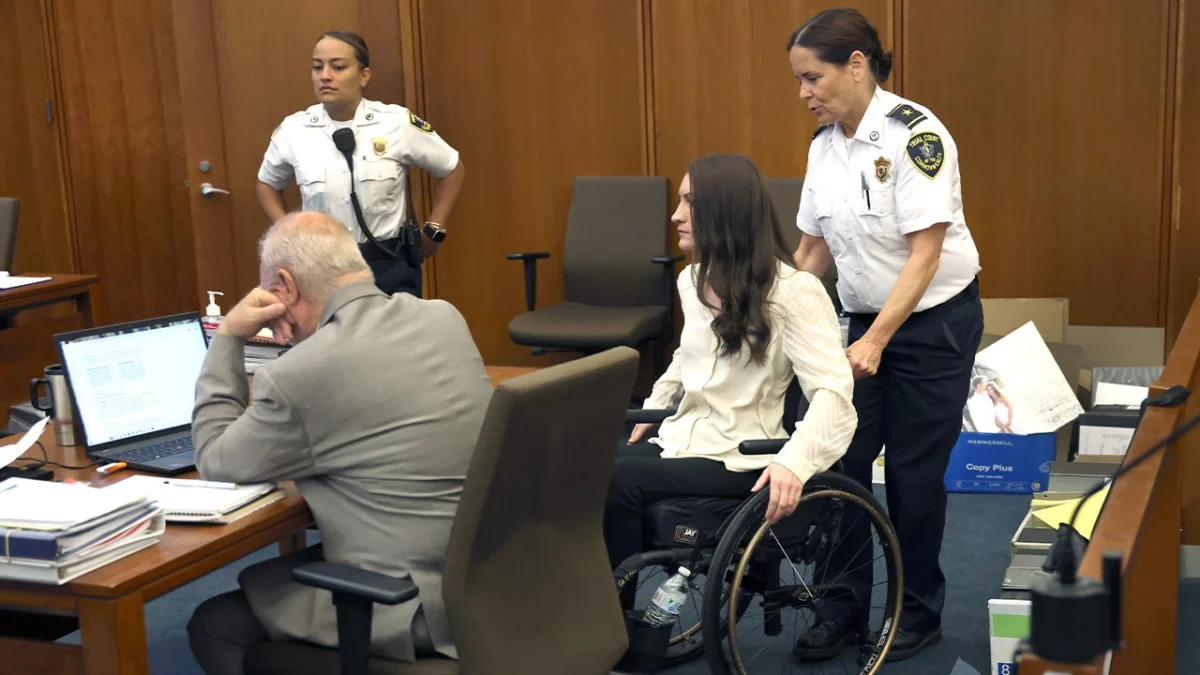
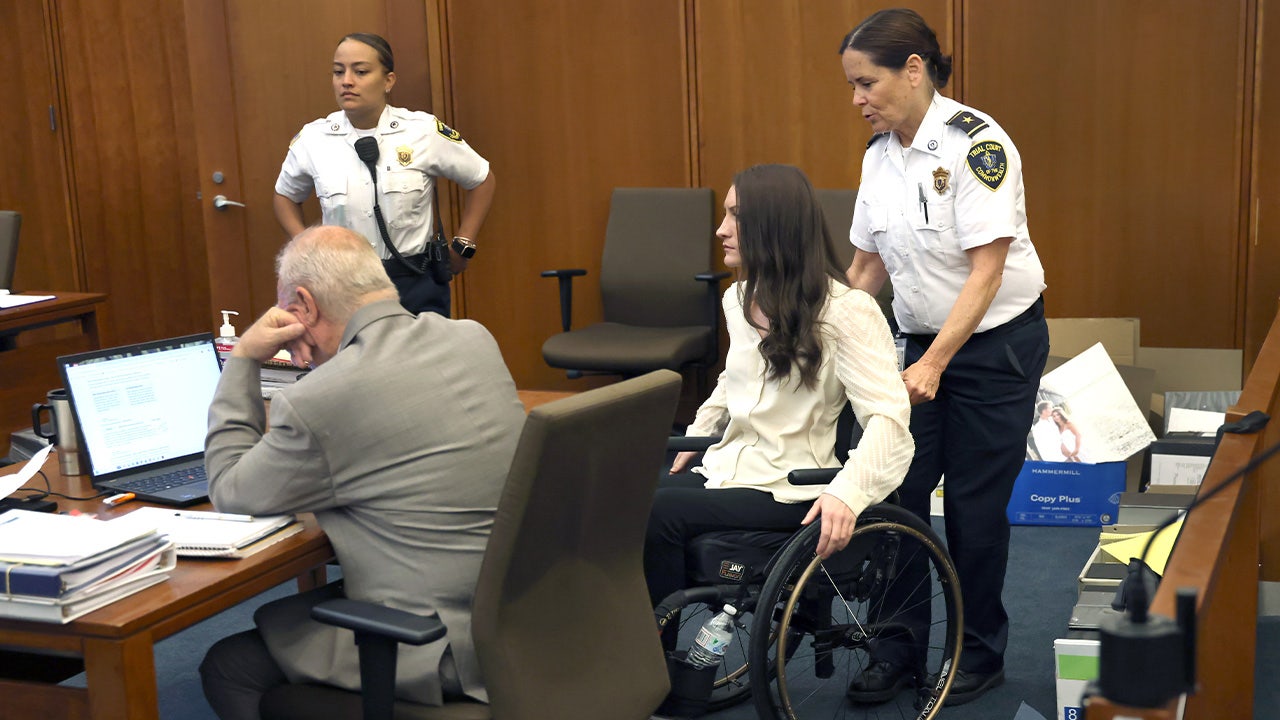
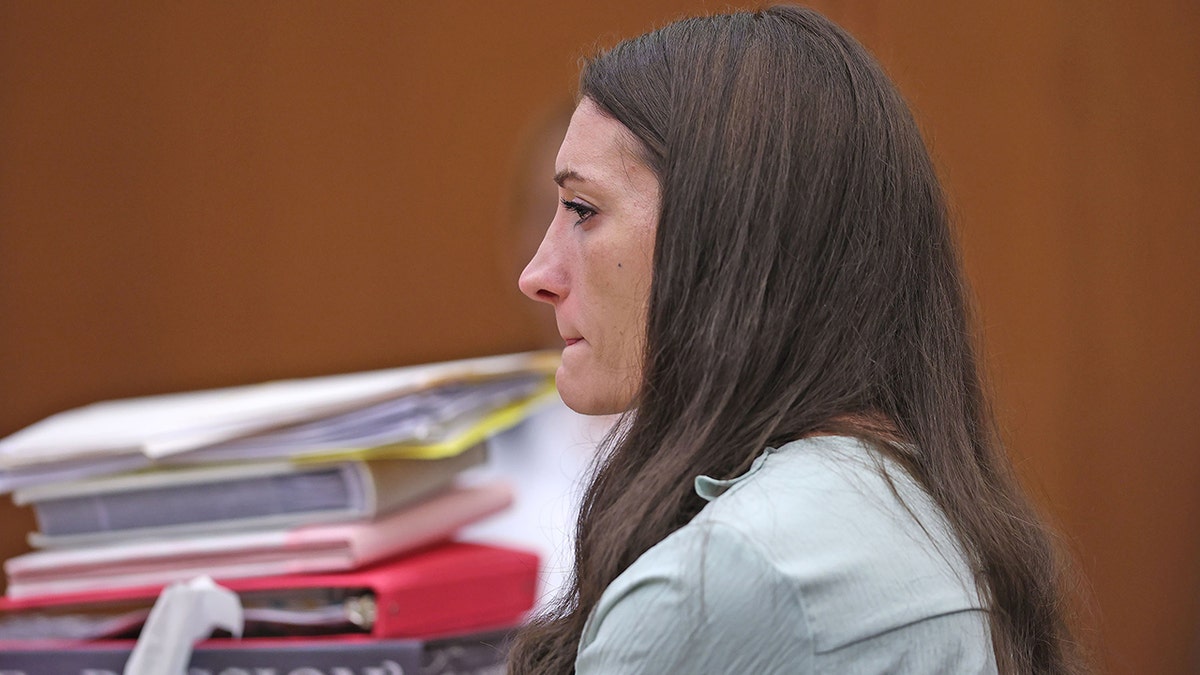
The high-profile murder trial of Lindsay Clancy, the Massachusetts mother accused of strangling her three young children in January 2023, has reached a dramatic impasse. Following the declaration of a mistrial due to an 11-1 jury deadlock, the lone holdout juror has broken his silence. His public remarks have ignited a fierce debate over the dynamics inside the deliberation room and placed Plymouth County prosecutors in a challenging legal position as they decide whether to seek a retrial.
Michael P. Desronvil, the single juror who refused to join the other 11 in finding Clancy not guilty by reason of insanity, has forcefully disputed claims made by his fellow jurors. While other members of the panel suggested that Desronvil had acknowledged reasonable doubt during their tense deliberations, Desronvil maintains that his conviction regarding Clancy’s criminal culpability never wavered.
As the legal community and the public dissect the collapse of the trial, Plymouth County prosecutors are facing a critical decision. They must weigh the formidable challenge of securing a unanimous conviction in a future trial against the profound public interest in seeking justice for three young victims.
Chronology of the Case: From Tragedy to Mistrial
The legal proceedings against Lindsay Clancy are the culmination of a tragedy that shocked the nation and sparked intense debates over maternal mental health and criminal responsibility.
+-----------------------------------------------------------------------+
|                         CHRONOLOGY OF EVENTS                          |
+-----------------------------------------------------------------------+
|                                                                       |
|  [Jan 24, 2023] ----------------------------------------------------> |
|  Tragedy in Duxbury: Cora, Dawson, and Callan Clancy are strangled.   |
|  Lindsay Clancy survives a suicide attempt.                           |
|                                                                       |
|  [Jan 2023 - Aug 2026] ---------------------------------------------> |
|  Pre-trial phase: Psychiatric evaluations, physical rehabilitation,    |
|  and extensive legal maneuvering over her mental state.               |
|                                                                       |
|  [Aug 5, 2026] -----------------------------------------------------> |
|  Trial begins in Plymouth Superior Court under Judge William Sullivan. |
|                                                                       |
|  [Mid-August 2026] -------------------------------------------------> |
|  Jury deliberations begin. Deep divisions quickly emerge.             |
|                                                                       |
|  [Late August 2026] ------------------------------------------------> |
|  Judge Sullivan declares a mistrial after an 11-1 deadlock.           |
|  Juror identities and questionnaires are sealed for safety.           |
|                                                                       |
|  [September 2026] --------------------------------------------------> |
|  Holdout juror Michael P. Desronvil speaks out publicly.              |
|                                                                       |
|  [Sept 29, 2026] ---------------------------------------------------> |
|  Scheduled court date for status updates and retrial decisions.       |
|                                                                       |
+-----------------------------------------------------------------------+
The Events of January 24, 2023
On the evening of January 24, 2023, Lindsay Clancy, a 32-year-old former labor and delivery nurse, was at her home in Duxbury, Massachusetts, with her three children: five-year-old Cora, three-year-old Dawson, and eight-month-old Callan.
According to court records, Clancy sent her husband, Patrick Clancy, out of the house to pick up take-out food and a prescription from a local pharmacy. During the roughly 55 minutes he was away, Clancy used exercise bands to strangle all three children in the basement of their suburban home. She then slit her own wrists and neck before jumping from a second-story window in an apparent suicide attempt.
Patrick Clancy returned to find his wife severely injured in the backyard. Upon entering the home, he discovered the children. Cora and Dawson were pronounced dead shortly after first responders arrived; baby Callan survived on life support for three days before passing away. Lindsay Clancy survived her injuries but was left permanently paralyzed from the waist down.
The Path to Trial and the August 2026 Proceedings
Following years of physical rehabilitation, intensive psychiatric care, and extensive pre-trial litigation, Clancy’s murder trial finally commenced on August 5, 2026, in Plymouth Superior Court before Judge William Sullivan.
Over several weeks of testimony, the courtroom heard contrasting accounts of Clancy’s mental state. The defense, led by prominent attorney Kevin Reddington, presented a narrative of a devoted mother completely dissociated from reality due to postpartum psychosis and severe overmedication. The prosecution, conversely, presented evidence of deliberate planning, arguing that Clancy understood the wrongfulness of her actions and carefully timed the killings to coincide with her husband’s brief absence.
By late August, the case was handed to the jury. After days of emotionally exhausting deliberations, the panel informed Judge Sullivan that they were hopelessly deadlocked. On a final vote of 11-1 in favor of finding Clancy not guilty by reason of insanity, the judge declared a mistrial. In the immediate aftermath, citing the highly charged nature of the case and safety concerns for the participants, Judge Sullivan ordered the identities and questionnaires of the jurors to be indefinitely sealed.
Supporting Data: The Clash of Evidence and Legal Standards
The central question of the trial was not whether Lindsay Clancy killed her children—a fact admitted by both sides—but whether she was legally responsible for their deaths. Under Massachusetts law, the burden of proof in an insanity defense operates under specific guidelines that became the focal point of the jury’s division.
The Massachusetts Legal Standard for Insanity
In Massachusetts, the standard for criminal responsibility is governed by the landmark case Commonwealth v. McHoul (1967). Under this standard, a defendant is not criminally responsible if, at the time of the offense, as a result of a mental disease or defect, they lack "substantial capacity" to either:
Appreciate the criminality [wrongfulness] of their conduct, or
Conform their conduct to the requirements of the law.
Once a defendant raises a viable insanity defense, the burden shifts to the prosecution to prove beyond a reasonable doubt that the defendant was criminally responsible at the time of the crime.
The Prosecution’s Evidence of Premeditation
To meet this high burden, prosecutors pointed to several key pieces of physical and digital evidence:
The Errand Calculation: Prosecutors argued that Clancy used Apple Maps on her phone to calculate the travel and wait times for the restaurant and pharmacy, ensuring she would have an uninterrupted window of time.
The Sequence of Events: The prosecution emphasized that strangling three children sequentially with exercise bands required sustained physical effort and time, arguing this contradicted the defense’s assertion of a sudden, impulsive psychotic break.
Clancy’s Demeanor: Testimony from her husband and voice recordings from the day of the incident were used to argue that Clancy appeared lucid, calm, and deliberate in the hours leading up to the tragedy.
The Defense’s Evidence of Postpartum Psychosis
The defense countered with extensive medical records and expert testimony detailing a severe, rapid decline in Clancy’s mental health:
Psychiatric History: In the months preceding the tragedy, Clancy had been evaluated by multiple medical professionals and prescribed a rotating cocktail of up to 13 different psychiatric medications, including sedatives, antidepressants, and mood stabilizers.
Auditory Hallucinations: Defense experts testified that Clancy was suffering from severe postpartum psychosis and was experiencing "command hallucinations"—voices telling her that she needed to kill her children and herself to save them from a perceived, irrational danger.
Post-Arrest State: Defense counsel highlighted Clancy’s immediate actions, including her near-fatal leap from the window, as evidence of a profound, desperate desire to end her own life alongside those of her children, rather than an attempt to evade justice.
Official Responses and Participant Perspectives
The aftermath of the mistrial has seen unprecedented public disclosures from those directly involved in the closed-door deliberations, revealing deep fractures within the jury room.
The Holdout Juror’s Perspective
Speaking publicly for the first time in a statement to NewsNation, Michael P. Desronvil defended his position as the sole vote for conviction. He pushed back against the narrative put forward by other jurors, who claimed he had admitted to having reasonable doubt but refused to acquit.
"I didn’t have any doubts," Desronvil stated. "As I tried to explain different possible theories during deliberation, I kept getting cut off as if I had doubts based on the evidence present."
Desronvil emphasized that his decision was rooted firmly in the evidence presented by the Commonwealth.
"Based on all the physical evidence, key witnesses, and what the prosecution presents, I thought it was enough proof that she knew exactly what she was doing and planned," he added.
The Foreperson and Majority Jurors
Desronvil’s account directly contradicts statements made by other members of the jury, including the foreperson, who expressed deep frustration with the deadlock. According to some jurors, the deliberation process was marked by emotional exhaustion, with many feeling they had "let Lindsay down" by failing to secure her transfer to a psychiatric facility through an insanity verdict.
Several jurors claimed that Desronvil had seemingly agreed during discussions that the prosecution had not fully disproven the insanity defense, only to revert to a "guilty" stance when formal votes were cast. Desronvil’s public statement appears aimed at correcting this characterization, asserting that his view of her premeditation was consistent and unwavering.
Legal Analysts on the Prosecutorial Dilemma
Legal experts have highlighted the steep uphill climb that now faces Plymouth County District Attorney Timothy Cruz’s office.
Fox News contributor and George Washington University law professor Jonathan Turley noted that the 11-1 split in favor of the defense is an alarming signal for the prosecution.
"The question is whether they could ever get a jury, particularly in Massachusetts, that would unanimously vote against this defendant," Turley remarked. "For prosecutors, they have to weigh that, but they may find the alternative equally unappealing—to simply walk away and say, ‘There are three dead children here, but we just don’t think we could ever win this case.’"
Neama Rahmani, a former federal prosecutor and legal analyst, agreed that while a retrial presents immense difficulties, a plea deal remains highly unlikely.
"With Lindsay Clancy’s defense drawing the support of 11 jurors in her mistrial on insanity grounds, prosecutors face an uphill battle in a potential retrial," Rahmani observed.
However, Rahmani explained that in high-profile cases involving multiple child victims, prosecutors rarely agree to plea deals that do not involve significant prison time—terms that a defense team aiming for psychiatric commitment rather than incarceration would be highly unlikely to accept.
Implications: The Path Forward and Broader Legal Challenges
The case of Lindsay Clancy sits at the intersection of criminal law, public safety, and maternal mental health advocacy. The outcome of the upcoming proceedings will have lasting implications for how the justice system navigates cases involving postpartum mental illness.
+--------------------------------------------------------------------------+
|                     PROSECUTION'S STRATEGIC OPTIONS                      |
+--------------------------------------------------------------------------+
|                                                                          |
|  [OPTION 1: RETRIAL]                                                     |
|  Pros: Seeks full accountability for the deaths of three children;       |
|        satisfies public demand for justice.                              |
|  Cons: High risk of another hung jury or complete acquittal; immense     |
|        financial and emotional toll on the family and community.         |
|                                                                          |
|  [OPTION 2: PLEA AGREEMENT]                                              |
|  Pros: Guarantees a resolution without the uncertainty of a trial;       |
|        can mandate long-term psychiatric confinement.                    |
|  Cons: Extremely difficult to negotiate; public may view any deal        |
|        short of a murder conviction as overly lenient.                   |
|                                                                          |
|  [OPTION 3: CASE DISMISSAL / ALTERNATIVE RESOLUTION]                     |
|  Pros: Avoids further strain on judicial resources.                      |
|  Cons: Politically and ethically unviable given the loss of three lives. |
|                                                                          |
+--------------------------------------------------------------------------+
The Strategic Hurdles of a Retrial
Should the Plymouth County District Attorney elect to retry Clancy, the prosecution must completely re-evaluate its strategy. A second trial would allow the defense to refine its arguments, potentially utilizing the insights gained from the first jury’s near-unanimous support for the insanity defense.
Furthermore, finding an impartial jury in Eastern Massachusetts will be even more challenging given the extensive media coverage surrounding the first trial and the public statements made by Desronvil and other jurors.
Impact on the Discourse Surrounding Postpartum Psychosis
The Clancy case has already had a profound impact on the public understanding of postpartum depression (PPD) and postpartum psychosis (PPP). PPP is a rare but severe medical emergency occurring in approximately 1 to 2 out of every 1,000 deliveries, characterized by delusions, hallucinations, and paranoia.
Advocates for maternal mental health hope that the 11-1 jury split represents a growing societal recognition that severe mental illness can completely bypass rational thought, even in the most tragic of circumstances. Conversely, legal traditionalists argue that allowing an insanity defense in such cases risks setting a precedent that undermines personal accountability and the protection of vulnerable children.
Next Steps in Court
Lindsay Clancy is scheduled to return to Plymouth Superior Court on September 29, 2026. During this status hearing, prosecutors are expected to formally announce whether they intend to proceed with a second trial, continue negotiations for an alternative resolution, or request additional time to review the trial transcripts and consult with the victims’ family. Until then, Clancy remains under medical and legal supervision, her future hanging in the balance of a deeply divided legal system.