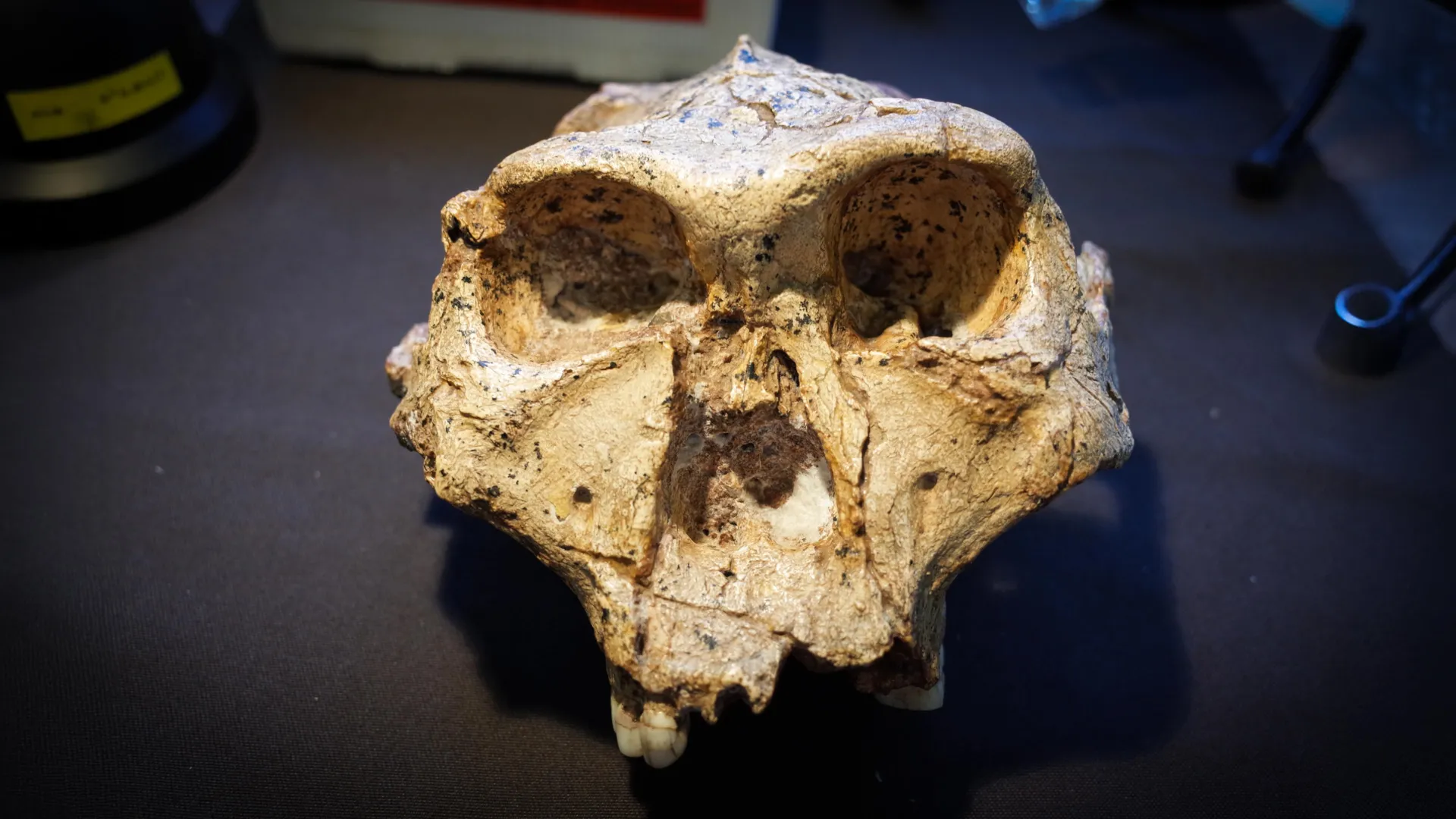
The history of human evolution has long been taught as a linear progression: a neat, climbing staircase leading from hunched, ape-like ancestors to the modern, tool-wielding Homo sapiens. However, groundbreaking research from Monash University is threatening to kick the props out from under this traditional narrative. In a new study published in the American Journal of Biological Anthropology, scientists are arguing that the way we classify our ancestors is fundamentally broken—and that it is time to rename the entire human lineage.
The Case for a Taxonomic Revolution
For decades, the scientific community has relied on a rigid classification system that separates early hominins—specifically Australopithecus and Paranthropus—from the genus Homo. This distinction was built on a foundation of perceived differences: brain size, physical stature, and the development of sophisticated technology.
However, Dr. Ian Towle, a Research Fellow at the Monash Biomedicine Discovery Institute and the lead author of the study, contends that this classification system is increasingly disconnected from the reality of the fossil record. As new archaeological discoveries emerge, the "clear-cut" boundaries between these groups have begun to dissolve. Dr. Towle’s research proposes a bold, controversial solution: collapsing the artificial barriers between these groups and placing all human species and their close fossil relatives from the past 4–5 million years into the single genus Homo.
This proposal is not merely a matter of semantics. It is a fundamental shift in how we interpret the biological identity of our ancestors, suggesting that the "family tree" of humanity is less like a series of distinct, separate branches and more like a tangled, interconnected web.
A Chronology of Confusion: The Shifting Fossil Record
To understand why this change is necessary, one must look at the historical evolution of paleoanthropology. For most of the 20th century, the fossil record was sparse. Scientists were forced to make broad generalizations based on limited skeletal fragments.
- The Early 20th Century: The prevailing view was of a linear, progressive march. The "Missing Link" was the holy grail, and each discovery was slotted into a specific "slot" in time and development.
- The Mid-20th Century: As more fossils were unearthed, the complexity grew. The discovery of Australopithecus species (such as the famous "Lucy") highlighted that bipedalism—walking upright—preceded the development of large brains and complex tool use, shattering the idea that human evolution was a "brain-first" process.
- The Last 50 Years: Advances in genomic sequencing and high-resolution scanning have revolutionized our understanding. We now know that our ancestors did not evolve in a vacuum; they hybridized, overlapped in time, and shared behavioral traits across what we previously thought were distinct species boundaries.
- The Present Day: We are currently in a "Golden Age" of paleoanthropology, yet our taxonomy remains stuck in the past. We are discovering fossils that possess a "mosaic" of traits—some that appear "primitive" alongside others that appear "modern"—making it nearly impossible to decide which genus they belong to under current standards.
The Myth of the "Distinct Species"
The traditional taxonomy relies on the idea that Homo is uniquely defined by traits such as a large cranium, the use of stone tools, and specific anatomical adaptations for long-distance running or complex social structure.
Dr. Towle’s research points to the undeniable reality that these markers are no longer exclusive. "Recent fossil discoveries make the existing classification system less useful and less accurate," Towle explains. "We have found members of Homo with surprisingly small brains, and we have found overwhelming evidence that Australopithecus and Paranthropus were capable of complex behaviors, tool manufacture, and social organization that we once thought were unique to our own genus."
If the behavioral and anatomical markers used to differentiate these groups are no longer reliable, why do we maintain the separation? According to the Monash team, the traditional system is becoming a hindrance. It forces scientists to spend inordinate amounts of time debating whether a newly discovered fossil belongs in one genus or another, often leading to a "taxonomic inflation" where new species names are coined for minor variations that may simply be part of the natural diversity within a single, broader evolutionary group.
Supporting Data: Moving Toward "Clades"
Modern taxonomy has shifted its focus toward "cladistics"—a method of classification that organizes life based on shared ancestry. In a perfect cladistic system, a genus should represent a "clade," a group consisting of a common ancestor and all of its descendants.
The problem, as highlighted by the Monash study, is that human evolution has been slow to adopt this approach. We have clung to the 19th-century habit of categorizing by "grade"—grouping species based on their appearance or perceived level of "advancement"—rather than their true genetic and evolutionary lineage.
By expanding the genus Homo to include Australopithecus and Paranthropus, we align human classification with the broader standards of biology. This approach recognizes that the differences between these groups are often minor variations on a theme, rather than evidence of entirely separate evolutionary paths.
Official Responses and Scientific Skepticism
The proposal has sent ripples through the paleontological community. While some experts welcome the move toward a more accurate and stable taxonomic framework, others are more cautious.
Critics argue that "lumping" these species into Homo might obscure the very real ecological and behavioral diversity that existed over the last five million years. They suggest that while the current system may be imperfect, the labels Australopithecus and Paranthropus serve as useful shorthand for specific types of adaptations—such as the specialized chewing apparatus of Paranthropus—that are distinct from the lineage that eventually led to Homo sapiens.
Dr. Towle acknowledges the complexity but maintains that the current "splitters" approach—continually creating new categories—is unsustainable. "The more we learn, the more we realize how non-linear our family tree is," he notes. "Expanding the Homo genus is a pragmatic step to account for this natural diversity without the constant need for reclassification every time a new fossil is found."
Implications: A New Way of Seeing Ourselves
What does this mean for the future of human biology? If the proposal is adopted, it would be the most significant shift in human taxonomy in over a century.
1. Stability in Research
One of the primary benefits is taxonomic stability. By creating a broader, more inclusive genus, scientists could stop wasting time on the "name game" and focus more on the environmental and evolutionary pressures that shaped our ancestors. It would allow for a more consistent comparative framework across different geographic regions and time periods.
2. Redefining "Human"
The implications for the public perception of humanity are equally profound. If Australopithecus and Paranthropus are brought under the Homo umbrella, it challenges the anthropocentric view that "humans" are something separate from the rest of the hominin tree. It frames us as a diverse, multifaceted, and long-standing lineage that has experimented with many different ways of being over millions of years.
3. A Call for Evolutionary Honesty
Ultimately, the Monash research is a call for intellectual honesty. We have long been tempted to simplify our history to make it feel more "predestined." By accepting the messiness of our past—the overlaps, the failures, the diversions, and the overlapping traits—we gain a clearer picture of our own nature. We are not the final, "perfected" product of a linear climb; we are a surviving branch of a deeply complex, resilient, and diverse family tree.
Conclusion: The Long Road Ahead
The research presented by Dr. Towle and his colleagues at Monash University is a challenge to the status quo. It is an invitation to reconsider the nomenclature of our existence. While the scientific community will likely debate these findings for years to come, the underlying message is clear: our current map of human evolution is no longer capable of containing the terrain we have discovered.
As we continue to unearth the fragments of our past, the need for a more flexible, scientifically robust classification system becomes undeniable. Whether or not the genus Homo is officially expanded, the conversation has shifted. We are learning that our history is not just about the "winners" who survived, but about the entire, intricate web of ancestors who paved the way. By updating our taxonomy, we are not just changing names in a textbook; we are finally beginning to see our evolutionary journey with the clarity and complexity it deserves.