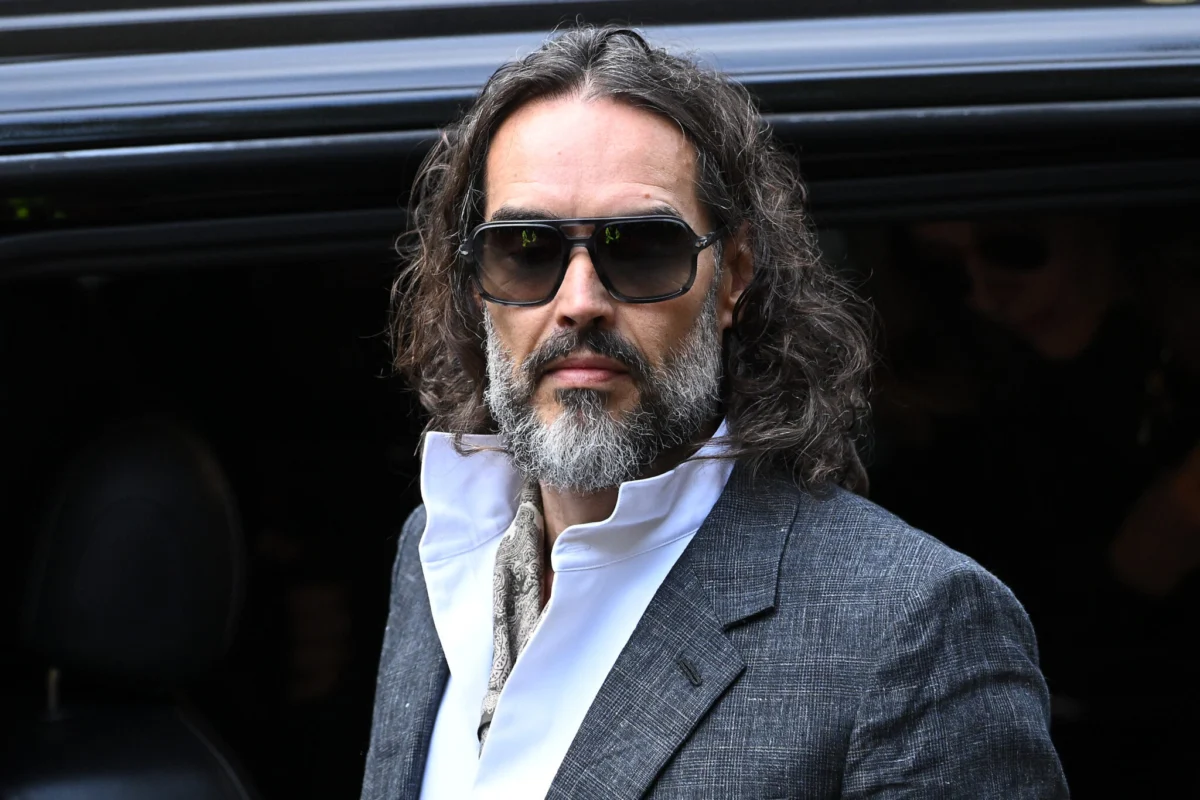
LONDON — The legal scrutiny surrounding Russell Brand, the former actor, comedian, and prominent media personality, has reached a critical juncture. On Monday, Brand arrived at London’s Southwark Crown Court, marking the formal commencement of a high-profile criminal trial that threatens to fundamentally alter his public legacy and personal life. The trial, which is expected to span up to two months, follows a protracted period of investigation by the Metropolitan Police and the Crown Prosecution Service (CPS) into a series of grave allegations spanning over a decade.
Brand, who in the mid-2000s enjoyed immense popularity as a charismatic television presenter and Hollywood actor, has pleaded not guilty to all charges. As he entered the court building wearing a grey suit and sunglasses, accompanied by his wife, Laura Gallacher, he faced a battery of international media scrutiny. The case, which will be decided by a jury of 12 peers, is set to be one of the most closely watched trials in the United Kingdom in recent years.
The Charges: A Legal Breakdown
The charges brought against Brand are severe, encompassing a total of seven counts. The Crown Prosecution Service, which operates as the primary public agency for conducting criminal prosecutions in England and Wales, has leveled the following accusations against the defendant:
- Three counts of rape
- Three counts of sexual assault
- One count of indecent assault
These charges were not filed simultaneously but were brought in two distinct waves of legal action in April and December of last year. The prosecution’s case alleges that the offenses involve a total of six women. The incidents, according to the indictment, are said to have occurred between 1999 and 2005, with additional allegations concerning incidents in 2009.
Brand, who has remained on bail throughout the pre-trial proceedings, maintains his innocence. The initial phase of the trial is focused on the selection of the jury, a process critical to ensuring an impartial verdict. Opening statements from both the prosecution and the defense are tentatively scheduled to begin on Wednesday, setting the stage for what is expected to be a grueling and emotionally charged courtroom drama.
Chronology: From Stardom to Scandal
To understand the weight of the current proceedings, it is necessary to examine the trajectory of Brand’s public life and the catalysts that led to this trial.
The Rise to Prominence
In the mid-2000s, Brand was a fixture in the British and American entertainment industries. His quick wit and unconventional persona made him a darling of the tabloid press and television networks. He gained widespread recognition as the host of “Big Brother’s Big Mouth” and solidified his status as a leading man in successful Hollywood films, including “Forgetting Sarah Marshall” and “Get Him to the Greek.” During this era, Brand’s reputation was characterized by a chaotic, hedonistic lifestyle, which he often spoke about openly in his comedy routines and memoirs.
The Turning Point: The 2023 Investigation
The shift in Brand’s public standing occurred in September 2023, when a joint investigation by The Sunday Times of London and the Channel 4 documentary series “Dispatches” brought forward serious allegations of sexual misconduct. The report, which included testimonies from several women, accused Brand of rape, sexual assault, and systemic emotional abuse.
At the time of the publication, Brand vehemently denied the allegations. He characterized the relationships in question as “always consensual” and argued that the media interest was part of a coordinated effort to discredit him due to his shift toward alternative media and political commentary. Despite his denials, the impact of the investigation was immediate. Major talent agencies cut ties with him, and his burgeoning career as an online influencer faced significant backlash.
Police Intervention and Formal Charges
Following the public outcry sparked by the documentary, the Metropolitan Police launched a formal investigation. The process was thorough, involving the collection of witness statements and forensic analysis of historical events. In April 2024, the CPS announced the first set of charges, confirming that the evidence gathered met the threshold for prosecution. A second set of charges followed in December 2024, expanding the scope of the case to include further complainants.
Supporting Data and Legal Framework
The prosecution’s case rests on the testimony of the six complainants and, presumably, corroborating evidence gathered by the Metropolitan Police. Under U.K. law, the burden of proof lies squarely with the prosecution, which must prove beyond a reasonable doubt that the defendant committed the acts as charged.
The trial is taking place in the Southwark Crown Court, a venue known for handling serious criminal matters. The proceedings will be overseen by a presiding judge who will ensure that the trial adheres to the strict rules of evidence. The defense team, led by experienced legal counsel, is expected to challenge the credibility of the complainants’ accounts, a standard strategy in cases involving historical allegations.
The legal complexity of this case is compounded by the passage of time. Because the alleged incidents occurred between 1999 and 2009, the defense may raise questions regarding the reliability of memory and the preservation of physical evidence. However, the CPS has spent considerable time vetting the strength of these claims, suggesting that they are prepared to present a robust case despite the historical nature of the allegations.
Official Responses and Public Statements
The Crown Prosecution Service has maintained a position of impartiality throughout the investigation. When the first charges were announced, Jaswant Narwal, the chief crown prosecutor, emphasized the rigorous nature of the review process.
“We carefully reviewed the evidence after a police investigation into allegations made following the broadcast of a Channel 4, Sunday Times and Times investigation in September 2023,” Narwal stated. “We have concluded that Russell Brand should be charged with offences including rape, sexual assault and indecent assault.”
Crucially, the CPS has repeatedly reminded the public and the media that the defendant is entitled to the presumption of innocence. “The Crown Prosecution Service reminds everyone that criminal proceedings are active, and the defendant has the right to a fair trial,” a spokesperson reiterated as the trial began.
Brand’s legal team has largely remained silent outside of the courtroom, focusing their efforts on the trial proceedings. Brand himself, once a constant presence on social media, has significantly curtailed his output, seemingly prioritizing his legal defense over his online presence.
Implications: The Cultural and Legal Fallout
The trial of Russell Brand is more than a legal battle; it is a cultural touchstone that reflects the ongoing legacy of the #MeToo movement in the United Kingdom.
The Legal Precedent
Regardless of the outcome, the trial will serve as a significant test for the British legal system’s handling of historical sexual assault cases. It highlights the difficulties inherent in prosecuting crimes that occurred long before they were reported, particularly in the high-pressure environment of the entertainment industry.
The Shift in Public Perception
For Brand, the trial represents an existential threat to his career and reputation. Having pivoted to podcasting and independent media, Brand had cultivated a loyal following that often rejected mainstream narratives. The criminal trial brings these followers face-to-face with the institutional realities of the law, creating a stark divide between those who view him as a victim of a “witch hunt” and those who believe the judicial process is finally holding a powerful figure accountable.
The Impact on Victims
The trial also brings the experiences of the complainants to the forefront of the national conversation. For the women involved, this is the culmination of years of seeking justice. The courage required to stand before a court and testify against a high-profile public figure cannot be overstated. The outcome of this trial will inevitably be seen by many as either a validation of their accounts or a failure of the justice system to protect vulnerable individuals.
As the jury prepares to hear evidence, the nation watches. The trial of Russell Brand is poised to become a definitive chapter in the story of modern British celebrity, law, and accountability. Whether it results in conviction or acquittal, the process itself has irrevocably changed the trajectory of his life and the public discourse surrounding power, consent, and the law.