Introduction
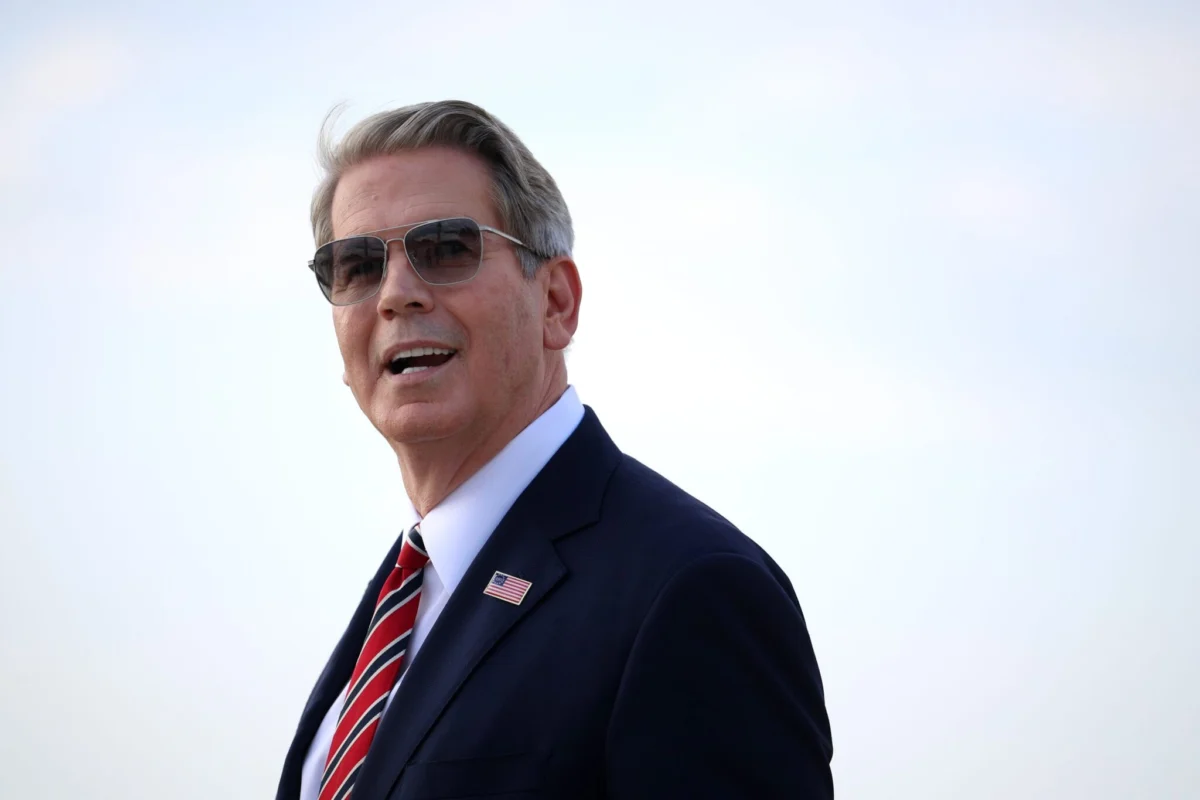
In a move that signals a dramatic escalation in the ongoing conflict between Washington and Tehran, U.S. Treasury Secretary Scott Bessent has announced the launch of what the administration calls the "Economic Fury" campaign. This initiative aims to exert "unprecedented economic pressure" on the Islamic Republic of Iran, seeking to collapse the financial foundations of the regime and its military apparatus.
The announcement comes at a precarious moment. With Iran already reeling from a comprehensive naval blockade and thousands of existing sanctions, critics and market analysts are questioning how much "room to squeeze" actually remains. As the Trump administration prepares to tighten the noose, the global community is watching closely, wary of the potential for significant blowback on the U.S. economy, global oil prices, and the fragile state of U.S.-China relations.
1. Main Facts: The Scope of the "Economic Fury" Strategy
The core of Secretary Bessent’s strategy lies in identifying and neutralizing the remaining "pressure points" that have allowed the Iranian economy to survive despite years of isolation. While the U.S. has maintained a "maximum pressure" posture for years, the current campaign seeks to move beyond traditional sanctions into the realm of total financial interdiction.
The strategy targets four primary pillars:
- The China-Iran Oil Nexus: Targeting the financial institutions and "teapot" refineries that facilitate the purchase of over 90% of Iran’s oil exports.
- Global Exchange Houses: Disrupting the informal and formal networks in the UAE and elsewhere that allow Tehran to repatriate and convert foreign currency.
- Secondary Sanctions and Tariffs: Forcing third-party nations and private corporations to choose between the Iranian market and the U.S. financial system through the threat of 25% tariffs.
- The Shadow Fleet: A more aggressive, comprehensive crackdown on the "dark fleet" of tankers that use deceptive shipping practices to bypass the U.S. naval blockade.
The Treasury Department’s plan is not without significant risk. As Chris Kennedy, a senior analyst at Bloomberg Economics, noted: “Unless the president decides to prioritize addressing the Iran threat over all other issues—namely China—it’s unlikely any action they take is going to materially change Iran’s calculus.”
2. Chronology: The Road to "Economic Fury" (2026)
The current crisis is the result of a rapid escalation that began in early 2026. To understand the "Economic Fury" campaign, one must look at the timeline of events leading up to August 2026.
- February 2026: Following a series of regional provocations and a breakdown in back-channel diplomacy, the United States officially enters a state of kinetic conflict with Iran. A naval blockade is established in the Persian Gulf to prevent the export of crude oil.
- April 2026: The U.S. Treasury issues stern warnings to Chinese "teapot" refineries—independent operations that have become the primary buyers of Iranian oil. The U.S. signals that the era of "looking the other way" regarding Chinese oil purchases is over.
- May 2026: Beijing responds defiantly. The Chinese government issues a formal directive ordering domestic companies to ignore U.S. sanctions. This creates a standoff for China’s "Big Four" banks, which find themselves caught between Beijing’s orders and the risk of being severed from the U.S. dollar clearing system.
- July 2026: President Trump floats the idea of a universal 25% tariff on any country that continues to facilitate Iranian trade. The global markets react with volatility, fearing a trade war that could eclipse the 2018-2019 tensions.
- August 7, 2026: The Treasury Department sanctions several digital exchange houses and traditional intermediaries in the Middle East, accusing them of laundering billions of dollars for the Iranian Revolutionary Guard Corps (IRGC).
- August 12, 2026: Secretary Scott Bessent officially announces the "Economic Fury" campaign, promising to use every tool in the U.S. arsenal to bring Iran’s oil exports to "true zero."
3. Supporting Data: The Pillars of Iranian Resilience
To understand why the Treasury Department is focusing on these specific areas, one must examine the data behind Iran’s economic survival.
The China Factor
China remains the lifeblood of the Iranian economy. Current data suggests that China imports between 1.2 million and 1.5 million barrels of Iranian crude per day. These transactions are often settled in Chinese Yuan (RMB) or through barter arrangements, bypassing the SWIFT banking system.
- The "Teapot" Refineries: Located primarily in Shandong province, these independent refiners are difficult to sanction because they have little to no exposure to the U.S. financial system.
- The Financial Risk: Hitting major Chinese state banks (like ICBC or Bank of China) would be the "nuclear option." These banks hold trillions in U.S. assets; decoupling them would likely trigger a global recession.
The Shadow Fleet
Despite the naval blockade, Iran has utilized a "shadow fleet" of approximately 300 to 400 aging tankers. These vessels often:
- Engage in "ship-to-ship" (STS) transfers in international waters.
- Turn off their Automatic Identification Systems (AIS) to "go dark."
- Utilize "flags of convenience" from countries with lax maritime oversight.
The Treasury Department estimates that even with the blockade, Iran has managed to move nearly 40% of its intended exports through these clandestine channels.
Exchange Houses and the "Hawala" System
Because Iran is cut off from the global banking system, it relies on a sophisticated network of exchange houses, particularly in Dubai and Istanbul. These entities act as clearinghouses, converting oil revenue held in foreign accounts into usable currency or gold. In 2025 alone, it is estimated that over $20 billion was moved through these informal channels to fund Iranian state operations.
4. Official Responses: A Divided Global Front
The "Economic Fury" campaign has elicited a wide range of responses from global leaders and domestic critics.
The Trump Administration:
Secretary Scott Bessent defended the strategy as a necessary measure to prevent a prolonged conflict. "We are no longer interested in containment," Bessent stated. "We are interested in the total depletion of the regime’s ability to fund terror. If you trade with Iran, you do not trade with the United States. The choice is that simple."
The Chinese Ministry of Foreign Affairs:
Beijing has condemned the move as "economic bullying" and "long-arm jurisdiction." A spokesperson for the Ministry stated, "China’s cooperation with Iran is legitimate and lawful under international law. We will take all necessary measures to protect the legal rights and interests of Chinese enterprises."
The European Union:
While the EU remains allied with the U.S. in its opposition to Iranian regional aggression, Brussels has expressed "deep concern" regarding the potential for secondary sanctions to hit European firms. Diplomatic sources suggest that the EU is considering reviving its "Blocking Statute" to protect European companies from U.S. extraterritorial reach.
Market Skeptics:
Chris Kennedy of Bloomberg Economics remains the most vocal skeptic. He argues that the administration is "playing a dangerous game of chicken" with Beijing. "The U.S. is betting that China will blink first to save its access to the American consumer market. But if Xi Jinping decides that energy security and regional prestige are more important, the U.S. could find itself in a trade war it cannot win while oil prices skyrocket."
5. Implications: The High Stakes of Total Economic War
The implementation of the "Economic Fury" campaign carries profound implications for the global order, the U.S. economy, and the future of international finance.
Oil Price Volatility and Domestic Inflation
The most immediate risk is the impact on the global energy market. Removing 1.5 million barrels of Iranian oil—even discounted oil—creates a supply vacuum. If the U.S. successfully shutters the shadow fleet, Brent crude could easily surge past $120 per barrel. For the Trump administration, this presents a political paradox: a campaign to "squeeze Iran" could lead to higher gasoline prices for American voters, potentially undermining domestic support for the war effort.
The Weaponization of the Dollar
By threatening secondary sanctions and tariffs on major trading partners like Turkey and India, the U.S. is pushing the "weaponization of the dollar" to its logical limit. This strategy accelerates the global trend toward "de-dollarization." Countries wary of U.S. leverage are increasingly looking toward alternative payment systems (such as China’s CIPS) and digital assets. In the long run, "Economic Fury" might succeed in crippling Iran but at the cost of the U.S. dollar’s status as the undisputed global reserve currency.
Geopolitical Realignment
The campaign risks pushing Iran, Russia, and China into a tighter "triple alliance" of sanctioned states. As these nations develop their own internal trade loops and financial clearinghouses, the effectiveness of U.S. sanctions naturally diminishes. If the U.S. cannot secure the cooperation of partners like Turkey or the UAE, the "Economic Fury" campaign may simply result in the migration of Iranian trade to even more opaque and unreachable channels.
The Legal and Diplomatic Challenge of Asset Seizure
Bessent’s proposal to move from "freezing" to "confiscating" Iranian assets marks a departure from international legal norms. Unlike the 2003 Iraq scenario, where the U.S. had a broad coalition and a UN mandate, a unilateral seizure of Iranian assets could be seen as a violation of sovereign immunity. This could lead to retaliatory seizures of U.S. assets abroad and tie the administration up in international courts for decades.
Conclusion
Secretary Scott Bessent’s "Economic Fury" campaign represents the final evolution of the "Maximum Pressure" doctrine. It is an all-or-nothing bet that the U.S. financial system’s gravity is still strong enough to force the rest of the world to abandon Tehran. However, with China standing firm and the global economy sensitive to energy shocks, the line between "squeezing the enemy" and "strangling the global recovery" has never been thinner. The coming months will determine whether this campaign is the masterstroke that ends the conflict or the catalyst for a much larger global economic fracture.