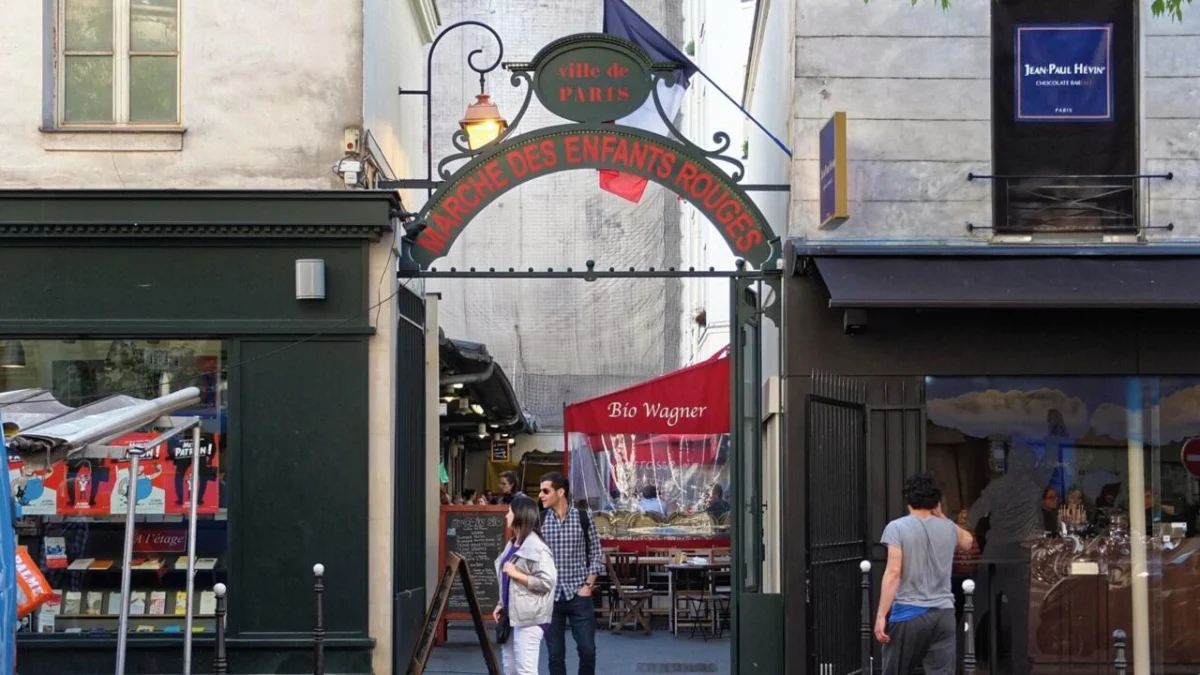
In a devastating blow to the culinary and historical fabric of Paris, the city’s oldest covered food market, the iconic Marché des Enfants Rouges, was reduced to ashes in a catastrophic blaze overnight between Sunday and Monday. The site, a cherished pillar of the Marais district since the early 17th century, has long served as a vibrant intersection of Parisian culture, history, and gastronomy.
Authorities confirmed that the market, which had recently gained international acclaim as one of the world’s premier street food destinations, was completely destroyed. While firefighters managed to prevent the inferno from spreading to the surrounding historic residential blocks of the 3rd arrondissement, the loss of the market itself marks the end of an era for locals and tourists alike.
The Main Facts: A Historical Landmark Lost
The Marché des Enfants Rouges was far more than a simple food hall; it was a living artifact. Established in 1615 during the reign of King Louis XIII, the market stood as a testament to the longevity of Parisian commerce. Its unusual and evocative name—the "Market of the Red Children"—is rooted in a somber history. It was named after the red-clad uniforms worn by orphans residing at a nearby hospice, the Hospice des Enfants-Rouges, which operated until 1772.
In recent years, the market had transcended its origins as a local neighborhood grocery hub to become a global culinary landmark. Renowned for its eclectic mix of stalls—offering everything from traditional French charcuterie to Moroccan tagines and Japanese bento boxes—it was recently ranked the fifth-best street food venue in the world by Food & Wine magazine, placing it in an elite tier alongside renowned culinary hotspots in London, Bangkok, Lyon, and Mexico City.
The structural damage is absolute. Lieutenant Colonel Pierre de Bouvier, who led the firefighting efforts, provided a grim assessment in the early hours of Monday morning. "The market was completely destroyed," he stated. "Nothing remains of the covered market. The metal structure has partially collapsed, and the interior is entirely incinerated."
Chronology of the Disaster
The tragedy unfolded in the quiet hours of Monday morning, catching the neighborhood off guard.
- Sunday Evening: The market closed as usual following a bustling weekend of trade. Merchants locked their stalls, and the area returned to the typical quiet of the Marais at night.
- Late Sunday/Early Monday: Reports of smoke began to emerge in the early hours. By the time emergency services were alerted, the fire had already taken a firm hold on the aging, timber-and-metal infrastructure of the market.
- 03:00 AM: Multiple fire crews arrived on the scene to find the structure fully engulfed. The scale of the fire necessitated a massive deployment of personnel and equipment to contain the flames and prevent them from jumping to the tightly packed, historic residential buildings that border the site.
- 05:00 AM: The fire was brought under control. Firefighters remained on-site to extinguish smoldering embers and prevent reignition.
- 08:00 AM: Local officials, including Mayor Ariel Weil, arrived to survey the scene. The site was declared a total loss, and a perimeter was established to ensure public safety while investigators began the difficult task of determining the cause of the blaze.
Supporting Data and Cultural Significance
The significance of the Marché des Enfants Rouges cannot be overstated. Spanning over four centuries, it survived the French Revolution, the modernization of Paris under Haussmann, and the two World Wars, only to be felled by fire in the 21st century.
A Culinary Hub
The market hosted dozens of independent vendors, providing a rare platform for small-scale culinary artisans. Its success was built on a unique model: a mix of fresh produce stalls selling organic vegetables and local cheeses, alongside "eat-in" stalls that turned the market into a crowded, boisterous canteen during lunch hours. It was a site where the gentrification of the Marais met the traditional Parisian market culture, creating a rare space where high-end gastronomy and rustic street food coexisted.
Architectural Legacy
The market’s architecture—a fusion of historic stonework and later additions of wrought iron and industrial metal roofing—was a quintessential example of Parisian urban development. The loss of the structure is not just a loss of business space, but the erasure of a physical link to the 17th century. The interior, characterized by its labyrinthine layout, was a beloved maze for residents and visitors.
Official Responses and Emergency Management
The response to the fire was swift, though the outcome was unavoidable. The Paris Fire Brigade (Brigade de sapeurs-pompiers de Paris) was praised for its containment efforts. Despite the intensity of the blaze, which produced high-heat conditions capable of buckling iron beams, the brigade prevented a wider urban disaster.
A Narrow Escape for the District
Ariel Weil, the mayor of the 3rd arrondissement, expressed profound relief that the damage was contained to the market footprint. "The worst has been avoided," Weil told reporters. "No neighboring buildings have been affected. We are fortunate that the fire did not spread to the residences, which could have been catastrophic given the age and construction of the surrounding buildings."
Weil acknowledged the emotional weight of the loss, noting that the market was the "heartbeat" of the district. "We are in shock. This is a historic monument for our neighborhood. We will need to take time to mourn this loss and then determine how to proceed."
The Human Cost
While the market is a total loss, the human toll was mercifully low. One firefighter sustained light injuries during the operation, a testament to the hazardous conditions they faced while entering a collapsing, burning structure. There were no reports of civilian casualties, as the market was empty at the time the fire broke out.
The Broader Implications: What Comes Next?
The destruction of the Marché des Enfants Rouges raises difficult questions about the vulnerability of Paris’s historic landmarks and the future of its traditional market culture.
The Vulnerability of Historic Sites
The fire serves as a stark reminder of the risks faced by centuries-old wooden and metal structures in a modern city. With aging electrical wiring and densely packed stalls, the market was always a high-risk environment. This incident will likely spark a broader debate in the Paris City Council regarding fire safety inspections for historical food venues and the potential need for modern, non-intrusive fire suppression systems in heritage sites.
A Blow to the Local Economy
For the dozens of small business owners who operated within the market, the fire is an existential threat. These vendors, many of whom have operated in the space for decades, are now facing the total loss of their livelihoods, equipment, and stock. The Paris municipal government is expected to announce emergency support packages, but for many, the loss is irreplaceable. The social fabric of the neighborhood, which revolved around the daily ritual of shopping and dining at the market, has been fundamentally altered.
Reconstruction vs. Commemoration
As the city begins to clear the debris, the question of "what comes next" will dominate local discourse. Should the city attempt a faithful reconstruction of the market? Or does the loss of the original structure necessitate a modern redesign that pays homage to the past?
Historical preservationists will likely push for a restoration that respects the 1615 site, while urban planners may advocate for a structure that meets contemporary safety standards. Regardless of the path chosen, the "Enfants Rouges" name will forever be associated with a lost era.
Conclusion
The disappearance of the Marché des Enfants Rouges is more than a news headline; it is a profound cultural bereavement for Paris. In a city that prides itself on the preservation of its heritage, the loss of its oldest covered market leaves a void that no modern construction can immediately fill.
As investigations into the cause of the fire proceed, the city will look to the charred remains of the market not just as a crime scene or a disaster site, but as a space where history was burned away. For now, the Marais district remains silent, mourning a site that was, for over four hundred years, the very definition of Parisian life. The red-clad orphans of the 17th century have long since faded from memory, but until today, their namesake lived on as a bustling center of human connection. Its silence is a stark, painful reminder of the fragility of even our most enduring institutions.