Main Facts
A proposal by Defense Secretary Pete Hegseth to broadcast live the upcoming execution of former Army Maj. Nidal Malik Hasan has ignited fierce pushback from lawmakers across both major political parties. Hasan was convicted in 2013 and sentenced to death for carrying out the 2009 mass shooting at Fort Hood, Texas, an attack that resulted in the deaths of 13 people and left 32 others injured.
The controversial initiative came to light following a Pentagon announcement detailing that President Donald Trump had formally approved Hasan’s execution by firing squad. The capital punishment is currently scheduled to take place on Dec. 3, though legal challenges regarding the specific method of execution remain a possibility through the appeals process.
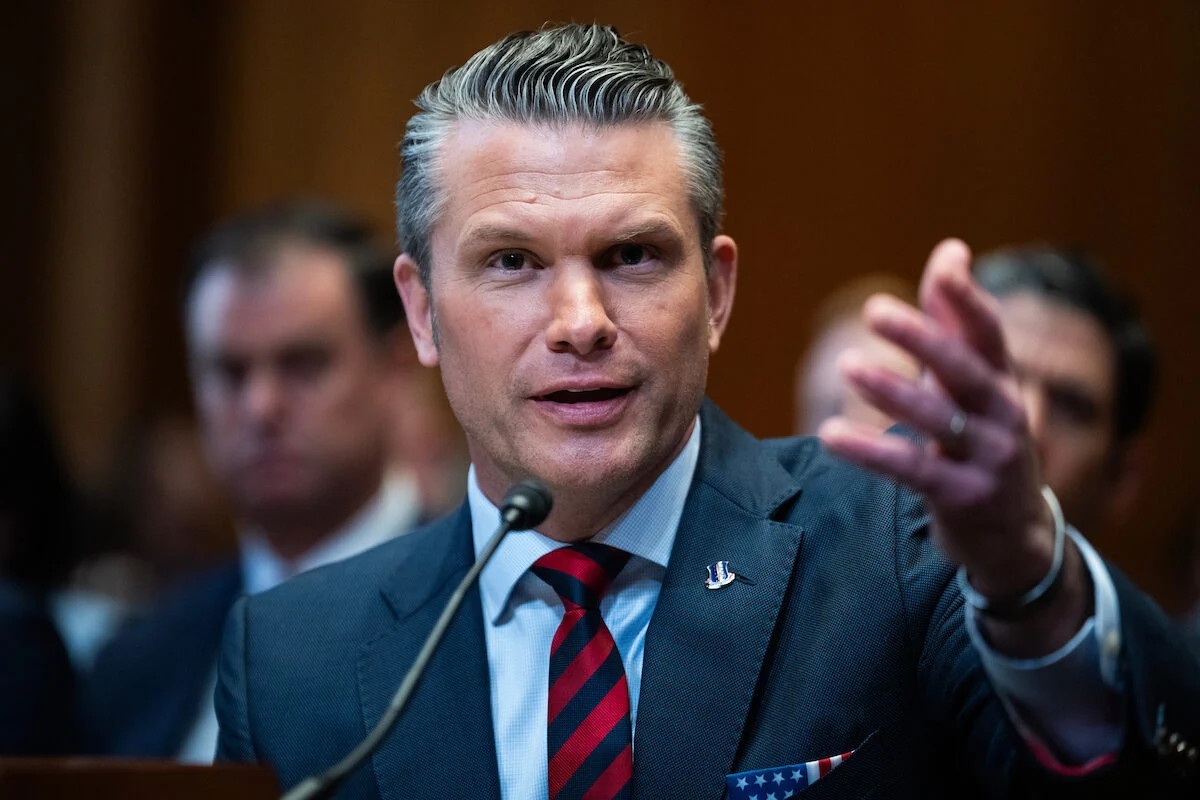
During an interview with the conservative media outlet Real America’s Voice on Thursday, Defense Secretary Hegseth revealed that the execution would be opened to public view. The Department of Defense later clarified the scope of this decision, confirming that the proceedings would be broadcast to a global audience via an online livestream. Defending the rationale behind the public broadcast, Hegseth stated, “People need to understand that there’s serious consequences for these types of things.”
The plan to broadcast the lethal proceedings electronically has generated swift and severe condemnation from both Democratic and Republican members of Congress. Critics argue that public executions undermine democratic values, lower American judicial standards to match those of extremist groups, and potentially serve as a promotional tool for violent anti-American propaganda. Conversely, a subset of administration allies has voiced firm support for the public spectacle, maintaining that extreme measures are appropriate given the severity of the terrorist act. Meanwhile, executive branch leadership, including Vice President JD Vance, has expressed hesitation and skepticism regarding whether the livestreamed broadcast will ultimately materialize.
Chronology of Events
The legal and political trajectory surrounding Nidal Malik Hasan spans over a decade, culminating in the recent public broadcast directive issued by the Department of Defense.
The 2009 Fort Hood Attack and Subsequent Conviction
In 2009, then-Army Maj. Nidal Malik Hasan opened fire at the Fort Hood military base in Texas. The mass shooting resulted in 13 fatalities and left 32 individuals wounded, making it one of the deadliest military base attacks in United States history. Following extensive legal proceedings, Hasan was court-martialed, convicted of capital murder, and sentenced to death by a military panel in 2013.
Executive Approval and Scheduling
Earlier this week, the Pentagon officially announced that President Donald Trump had authorized the execution order, approving the method of execution by firing squad. The date of execution was formally established for Dec. 3, subject to pending judicial appeals regarding the lethal protocol.
Announcement of Public Livestream
On Thursday, Defense Secretary Pete Hegseth appeared on Real America’s Voice to publicly outline the Defense Department’s approach to the execution. Hegseth asserted that the event would be public, an assertion that the Pentagon subsequently expanded by announcing that the execution would be broadcast live over the internet.
Capitol Hill Reaction and Executive Branch Responses
By Friday morning, lawmakers began issuing public statements opposing or supporting the move. High-ranking members of the House Armed Services Committee and Senate Armed Services Committee released official statements and social media posts reacting to the news. On Friday afternoon, Vice President JD Vance addressed reporters during an event in Ohio, offering a skeptical assessment of the broadcast’s likelihood while firmly distancing himself from watching the event should it take place.
Supporting Data and Historical Context
The decision to hold a public execution via digital broadcast represents a significant departure from modern American military and civilian penal history, breaking with decades of established policy and practice.
Historical Milestones in American Jurisprudence
If the planned execution proceeds according to the Defense Department’s current directive, it will mark several historical milestones:
- First Military Execution in 65 Years: The U.S. military has not carried out an execution of any kind in six and a half decades.
- First Military Firing Squad in Over 80 Years: The use of a firing squad by the United States armed forces has not been executed in more than eight decades.
- First Public Execution in 90 Years: The United States has not conducted a public execution in 90 years, making the proposed broadcast an unprecedented event in modern American history.
Regulatory Framework and Administrative Waivers
Under standard operating procedures, Army regulations strictly prohibit the public viewing of capital executions. However, military administrative policy provides a specific exemption mechanism: the Army’s provost marshal general holds the institutional authority to waive standard regulatory restrictions, thereby allowing an execution to be viewed publicly if approved.
International Precedents and Comparative Statistics
The proposal to execute a prisoner publicly aligns the United States with a very small group of nations that permit such displays. According to data released by Amnesty International, at least 17 public executions were documented globally throughout the year 2025. These events were confined exclusively to two countries:
- Afghanistan: Recorded 6 public executions in 2025.
- Iran: Recorded 11 public executions in 2025.
Lawmakers opposing the Pentagon’s plan have cited these international metrics to argue that public executions are characteristic of authoritarian regimes rather than constitutional democracies.
Official Responses and Political Debate
The public broadcast plan has produced widespread political division, drawing intense scrutiny from members of both congressional chambers and highlighting key philosophical splits within the administration itself.
Congressional Criticism: Bipartisan Opposition
Strong condemnation came from both sides of the aisle, with lawmakers focusing on the degradation of democratic norms and the strategic error of providing a platform to a convicted murderer.
Rep. Austin Scott, R-Ga., a member of the House Armed Services Committee, voiced strong opposition via social media on Friday morning, drawing a direct contrast between American values and terrorist methods. “I absolutely support the sentence of death, but live-streaming executions is what jihadists do. America is better than that,” Scott posted.
Similarly, Rep. Adam Smith, D-Wash., ranking member of the House Armed Services Committee, condemned the initiative in an official statement, emphasizing the integrity of the judicial process. Smith stated that the planned livestream is “disturbing and makes a mockery of our legal system.” He added, “We are a democratic country and should take the rule of law seriously, not turn it into a spectacle.”
Sen. Thom Tillis, R-N.C., who is retiring from the Senate and recently stated that voting to confirm Hegseth was his biggest regret as a senator, expressed disgust at the proposal. “Hasan should face the death penalty, but making his execution public and streaming it? Beyond disgusting,” Tillis posted on social media. He added, “Public executions are what oppressive dictatorships like Iran and Afghanistan do. It should not be happening in America.”
Other key senators voiced similar outrage regarding the broadcast concept:
- Sen. Ruben Gallego, D-Ariz., a Marine Corps veteran, characterized the planned livestream on social media as “a snuff film.”
- Sen. Patty Murray, D-Wash., denounced the proposal via social media, describing it as “grotesque.”
- Sen. Jack Reed, D-R.I., ranking member of the Senate Armed Services Committee, cautioned against granting Hasan his long-standing desire for publicity and martyrdom. “The Trump administration should reconsider this abhorrent move, which only gives the shooter what he wants: more attention and more control,” Reed said in an official statement. “Instead of forcing the shooter to face justice, the Trump administration is literally handing him more power and offering him a global platform to amplify his hateful, anti-American message. This is a gift to anti-American terrorist recruiters.”
Congressional Support
Despite the widespread pushback, staunch defenders of the administration praised the Defense Department’s decision. Rep. Andy Ogles, R-Tenn., expressed firm approval on social media, posting: “Excellent. Public execution is what this terrorist deserves. We will be watching.”
White House Leadership Perspective
Within the executive branch, Vice President JD Vance adopted a measured stance during comments to reporters in Ohio on Friday. Speaking to the press pool, Vance expressed doubt about whether the broadcast would ultimately take place while emphasizing the gravity of Hasan’s crimes.
“First of all, I see these announcements, I don’t know that that’s actually going to happen,” Vance stated, according to the pool report. “Whatever the controversy is about the method of the execution, I hope that people don’t forget that this is a guy who brutally murdered a lot of innocent people. Now that said, I mean, look, if it’s through livestream, I’m not going to be watching it.”
Implications
The plan to broadcast the execution of Nidal Malik Hasan carries broad legal, institutional, and security implications for the United States military and the federal government.
Legal and Procedural Challenges
Although President Trump has authorized the execution date for Dec. 3 and approved the firing squad protocol, the method remains subject to potential legal appeals. Defense attorneys and legal scholars may leverage the public broadcast directive and the specific choice of a firing squad to challenge the execution in federal court, potentially delaying the timeline. Furthermore, invoking a waiver from the Army provost marshal general to bypass standard military regulations against public viewing sets a legal precedent for military justice administration.
Counter-Terrorism and Propaganda Risks
Security analysts and lawmakers, such as Sen. Jack Reed, have highlighted the significant counter-terrorism risks associated with televising the capital punishment of a convicted extremist. Hasan’s reported desire to achieve martyrdom presents a unique hazard; broadcasting his final moments on a digital platform accessible worldwide could transform the execution into propaganda material. Rather than acting as a deterrent, critics argue the spectacle risks being repurposed by foreign extremist groups to recruit followers and amplify anti-American sentiment.
Democratic Norms and Judicial Integrity
The debate strikes at the core of how democratic societies execute justice. By placing the United States alongside nations like Iran and Afghanistan—the only states to conduct public executions in 2025—the initiative raises fundamental questions regarding America’s adherence to international legal norms. Opponents argue that converting capital punishment into a media broadcast degrades the rule of law into a public spectacle, while proponents argue that maximum visibility serves as an absolute statement of retributive justice and deterrence.
As the scheduled Dec. 3 date approaches, the administration faces mounting pressure from both allies and opponents in Congress to clarify whether the Army provost marshal general will issue the necessary waiver and whether the Defense Department will proceed with the unprecedented livestream.