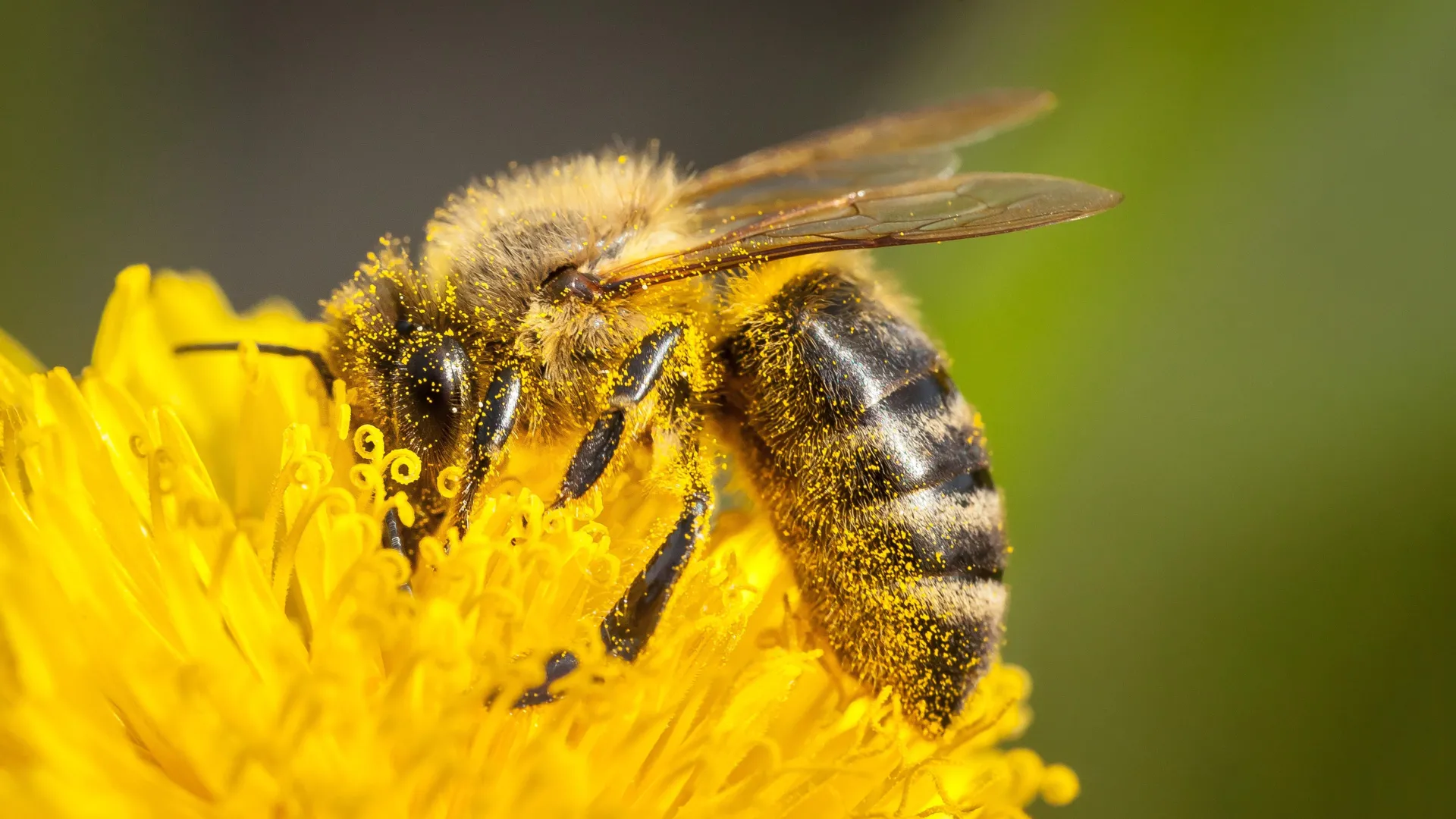
In a discovery that challenges the long-standing assumption that pollen is a nutritionally perfect resource for bees, a multi-institutional research team led by the University of Oxford has unveiled a sophisticated, previously unknown regulatory mechanism in bee feeding behavior. The findings, published in the journal Current Biology, suggest that bees are not mere passive consumers of floral resources; instead, they act as nutritional chemists, actively modulating their intake to avoid toxic imbalances of essential amino acids.
This revelation has profound implications for global conservation efforts, suggesting that current "pollinator-friendly" planting initiatives may be missing a critical component: the nutritional diversity of pollen. As climate change and habitat loss continue to threaten pollinator populations, understanding the complex dietary needs of bees has become an urgent priority for scientists, farmers, and conservationists alike.
The Evolutionary Conflict: Pollen as a Biological Compromise
For decades, ecological literature has largely categorized pollen as the quintessential "superfood" of the insect world—a protein-rich bounty provided by plants to sustain pollinators. However, the University of Oxford research team, which included scientists from the University of Southampton, Lancaster University, Newcastle University, and The Hebrew University of Jerusalem, suggests this perspective is fundamentally flawed.
Professor Geraldine Wright, lead author and a specialist in the Department of Biology at Oxford, points to a clear "conflict of interest" between flora and fauna. "Although pollen is often assumed to be a near-perfect food for bees, it is the male gamete of plants," Wright explains. "Unlike nectar, which plants produce specifically as an enticing reward for pollinators, pollen is biological reproductive material. Its primary evolutionary purpose is to fertilize, not to nourish."
Because pollen evolved for reproduction rather than as a nutritional supplement, its chemical profile is often mismatched with the biological requirements of the bees that consume it. This creates a "nutritional mismatch," where the essential amino acids—the building blocks of protein that animals cannot synthesize on their own—are present in proportions that do not align with the metabolic needs of the bee.
Chronology of the Discovery: From Lab to Field
The study’s methodology was extensive, spanning comparative analysis and controlled experimental trials:
- Baseline Profiling: Researchers began by profiling the essential amino acid composition of honeybee tissues, establishing a "nutritional gold standard" against which all other food sources would be measured.
- Botanical Survey: The team collected pollen from 99 different species of UK flowering plants, spanning 26 distinct plant families. This provided a broad representation of the floral landscape bees navigate daily.
- Controlled Feeding Experiments: Using artificial diets that mimicked both the composition of specific pollens and the composition of honeybee tissues, researchers monitored newly emerged worker honeybees.
- The Histidine Variable: In a secondary phase, researchers isolated specific amino acids to test how bees respond to dietary imbalances, particularly focusing on histidine—an essential amino acid required by bees in only modest amounts.
The results were striking. Bees provided with diets mirroring their own tissue composition consistently out-performed those fed on pollen-mimicking diets. They displayed higher food intake, increased body mass, and a stronger preference for high-protein sustenance.
The Histidine Mechanism: A Biological "Brake"
One of the most significant aspects of the study is the identification of how bees control their appetite. When the research team manipulated the levels of histidine relative to other growth-critical branched-chain amino acids (such as leucine and isoleucine), they observed a distinct behavioral shift.
When histidine concentrations were elevated, bees drastically reduced their overall food consumption, cutting back on both protein and carbohydrates. This suggests a post-digestive feedback mechanism—a biological "stop signal"—designed to prevent the ingestion of potentially toxic levels of specific amino acids.
"This is not a matter of bees being picky," says one of the researchers involved in the project. "It is a protective mechanism. If an animal consumes an imbalance of amino acids, it can lead to metabolic stress. By reducing their intake, the bees are effectively protecting themselves from nutrient toxicity."
This mechanism shares remarkable similarities with other animal species. In rats, for instance, excess histidine is metabolized into histamine, which acts on brain receptors to suppress appetite. The fact that bees possess a similar, sophisticated regulatory system highlights the evolutionary pressure they have faced to navigate suboptimal floral landscapes.
Culinary Innovation in the Hive: The Role of ‘Bee Bread’
If pollen is often nutritionally flawed, how do honeybee colonies thrive? The research highlights a brilliant evolutionary workaround: the creation of "bee bread."
Honeybee workers act as both collectors and processors. By gathering pollen from a vast array of plant species, they create a heterogeneous mix that is stored within the hive. The process of fermentation and the addition of glandular secretions by nurse bees transform raw, potentially unbalanced pollen into a more refined nutritional product.
The study found that bee bread contains a far more balanced profile of essential amino acids than any single pollen source. Furthermore, the nurse bees—who consume this mixture—produce royal jelly, a glandular secretion that serves as the gold standard for larval nutrition. This processing chain allows the colony to "smooth out" the nutritional deficiencies of individual flower species, ensuring that developing larvae receive the exact ratios of amino acids required for rapid growth.
The Vulnerability of Wild Pollinators
While honeybees have developed these complex communal strategies to mitigate nutritional deficiencies, the researchers warn that wild bees—including bumblebees and many species of solitary bees—lack this safety net.
Unlike honeybees, which maintain large, sophisticated colonies and store food, many wild bee species provide raw pollen directly to their offspring. In habitats with low floral diversity, these species are trapped by the nutritional constraints of their local environment. If the available flora provides an unbalanced amino acid profile, these bees have no mechanism to "process" the food into a healthier state.
This creates a hidden crisis for biodiversity. As agricultural intensification creates "monoculture deserts," the lack of floral diversity does more than just starve bees of total energy; it forces them to subsist on nutrient-deficient diets that may stunt growth, weaken immune systems, and lead to population declines.
Implications for Future Conservation
The findings from the University of Oxford provide a clear roadmap for future environmental policy and land management. The "pollinator-friendly" movement must evolve beyond simple metrics like "number of flowers" or "blooming duration."
1. Prioritizing Diversity over Quantity
Planting schemes must emphasize a diverse array of plant families. Because different plants offer different amino acid profiles, a polyculture of floral resources allows bees to forage in a way that naturally balances their nutritional intake.
2. Tailoring Landscapes for Local Species
Conservationists must consider the nutritional requirements of the specific pollinators native to their region. If a habitat is dominated by a single plant species, even if that species is a high-volume nectar producer, it may be nutritionally inadequate for the local bee population.
3. Precision Restoration
Farmers and gardeners can play a pivotal role by strategically selecting plants that are known to provide complementary amino acid profiles. By understanding the "nutritional footprint" of local flora, we can build landscapes that function not just as refueling stations, but as complete, balanced pantries.
"Our results suggest that planting for pollinators should not only focus on providing flowers throughout the season, but also on ensuring a diversity of pollen sources," concludes Professor Wright. "A varied diet is not a luxury; it is an absolute necessity for bees to obtain the right balance of nutrients to survive and reproduce."
As we move toward a more sustainable future, the lesson from this research is clear: the health of our pollinators is inextricably linked to the nutritional complexity of the ecosystems we cultivate. By moving beyond the myth of the "perfect" flower and embracing the necessity of botanical diversity, we can ensure that bees receive the balanced diet they require to sustain the global ecosystems that depend on them.