In an era defined by rapid technological change, economic uncertainty, and a pervasive sense of global instability, many individuals find themselves grappling with a profound existential question: Is this the life I was meant to live? For many, the answer remains elusive, buried beneath the mundane stressors of daily existence. However, a growing movement—fueled by both pop culture phenomenon and academic rigor—suggests that we are not passive observers of our own biographies. We are the architects of them.
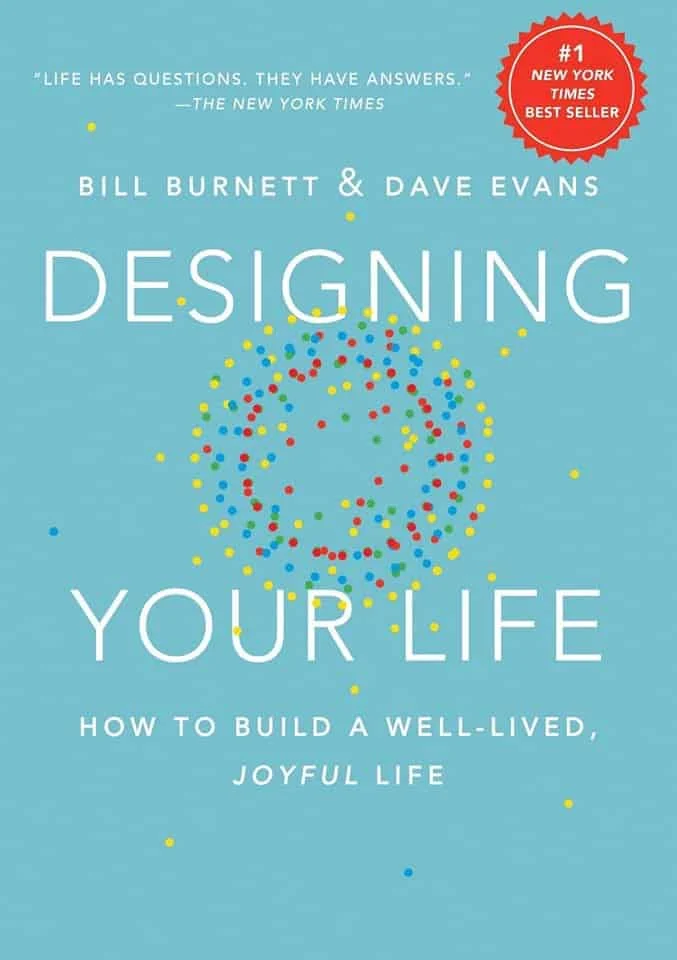
This intersection of philosophy and practical action has found its unlikely champion in the A24 film Everything Everywhere All at Once and the structured methodologies of Designing Your Life by Stanford professors Bill Burnett and Dave Evans. Together, these works offer a roadmap for moving from the paralyzing anxiety of "what if" to the empowered reality of "what now."
The Multiverse as a Metaphor for Existential Agency
Everything Everywhere All at Once is far more than a frenetic sci-fi spectacle; it is a cinematic meditation on the modern human condition. The plot centers on Evelyn Wang, an overwhelmed laundromat owner whose life is fracturing under the weight of an IRS audit, a crumbling marriage, and a strained relationship with her daughter, Joy. When Evelyn is thrust into a multiverse—a vast expanse of alternate realities where every choice she never made becomes a tangible existence—she is forced to confront the crushing weight of infinite possibility.
For the audience, the film’s "bizarre blend" of martial arts, absurdism, and tax paperwork serves as a mirror. As the protagonist encounters versions of herself who became celebrities, chefs, or even beings with hot dogs for fingers, the core conflict emerges: the villain, Jobu Tupaki, represents the ultimate nihilism—the belief that if everything exists, nothing matters.
Yet, the film arrives at a counter-intuitive conclusion: if nothing matters in the grand, cosmic sense, then we are liberated to create our own meaning. This shift from existential dread to radical responsibility is the bridge between the film’s frantic pace and the quiet, deliberate practice of life design.
Chronology of a Shift: From Nihilism to Intentionality
The psychological journey toward self-actualization often begins with a "nadir"—a moment of profound clarity often triggered by loss or exhaustion. Throughout 2022, many observers noted a collective exhaustion, mirroring the film’s themes.
- The Confrontation: The initial stage involves recognizing the "multiverse" of our own potential. Whether through literature like Matt Haig’s The Midnight Library or the cinematic exploration in Everything Everywhere All at Once, the message is consistent: we are not trapped by our current timeline.
- The Diagnosis: This is the phase of "designing your life." It requires an audit of one’s current state. For the authors of Designing Your Life, this means identifying whether your "Workview" (your philosophy on what work is for) and your "Lifeview" (your philosophy on what makes life worth living) are in alignment.
- The Prototyping: Once the misalignment is identified, the individual moves to the Odyssey Plan—a five-year roadmap that forces us to visualize three distinct, viable versions of our future.
- The Integration: The final stage is the implementation of these concepts into a daily routine, transforming abstract desires into tangible, coherent actions.
Designing the Future: The Odyssey Plan
The core of the methodology proposed by Bill Burnett and Dave Evans lies in the "Odyssey Plan." This is not merely goal setting; it is an exercise in creative imagination designed to break the "limited mindset" trap.
The Three-Path Framework
To build a coherent life, Burnett and Evans encourage readers to map out three distinct futures:
- Path A: The Current Trajectory. This is what your life looks like if you continue on your present path. It forces you to look at your current commitments—your career, your finances, and your relationships—and ask if they truly represent your potential.
- Path B: The "What If" Scenario. This path explores what you would do if your current career or primary focus suddenly disappeared. It challenges you to look at your transferable skills and dormant passions.
- Path C: The Wildcard. This is the "no-consequences" path. If money were no object and the judgment of others didn’t matter, what would you do? This is the domain of pure passion, often where the most significant personal growth is found.
By drafting these three plans, the individual moves from the binary trap of "should I quit or should I stay" to the expansive reality of "what are the possibilities?"
Supporting Data: Why "Coherence" Matters
In the context of career development and life satisfaction, research consistently points toward the concept of "coherence"—a state where who you are, what you believe, and what you do all align.
According to the Stanford Life Design Lab, individuals who practice these design principles report:
- Higher Resilience: When a "timeline" fails, those with alternative plans are less likely to experience a total collapse of self-worth.
- Increased Decision-Making Speed: By identifying core values through the Workview/Lifeview exercises, individuals can discard options that do not fit their "coherence model," saving precious time and emotional energy.
- Reduced Anxiety: A significant portion of modern anxiety is "choice paralysis." By mapping out three potential futures, the overwhelming nature of the future is segmented into manageable, concrete plans.
The Human Element: Implications for the Modern Professional
The implications of this synthesis between film and design are clear: we are living in a time that demands a new approach to personal management. The traditional model of a linear career path—do A to get to B—is increasingly obsolete.
A Personal Mission Statement in Action
Many professionals attempt to write "personal mission statements," but these often fail because they lack an engine. The Odyssey Plan provides that engine. It transforms a static statement into a dynamic roadmap.
For example, a writer who feels trapped by their current output might use the Odyssey Plan to explore:
- Refinement: Transforming their current blog into a series of "online textbooks" to provide more value with less noise.
- Service: Pivoting to a career in oral history or hospice care, utilizing their skills to preserve the stories of the dying.
- Creativity: Investing in education to bridge the gap between their professional expertise and their creative passions, such as developing a webcomic that illustrates complex financial concepts.
These are not mutually exclusive; they are facets of the same human experience. By acknowledging the "multiverse" of their own potential, the individual is no longer a slave to one reality.
Critical Perspectives and Limitations
While the "design thinking" approach to life is powerful, it is not without its critics. Some argue that applying corporate design methodology—usually reserved for product development—to the messy, unpredictable nature of human life can feel reductionist or overly clinical.
Furthermore, the lack of an index in seminal works like Designing Your Life has been cited as a significant barrier for those attempting to use the book as a long-term reference. For a philosophy centered on "design," the failure to provide a functional navigation tool for the reader is a noted irony. Critics also suggest that these exercises require a level of privilege—time, energy, and mental space—that may not be available to everyone, particularly those in precarious economic circumstances.
Conclusion: Living with Intention
Whether one is a fan of the chaotic, heartwarming multiverse of Everything Everywhere All at Once or a reader of the structured academic exercises in Designing Your Life, the underlying lesson remains the same: life is not a fixed script.
We are all, in a sense, living in a multiverse of our own making. Every choice we make creates a reality, and every reality is subject to change. By embracing the principles of design—prototyping, iterating, and maintaining coherence—we can move away from the nihilism of "nothing matters" and toward the empowering realization that because nothing is preordained, everything is possible. The choice is ours to make, one timeline at a time.