
Introduction: A Master’s Perspective at the Singapore International Film Festival
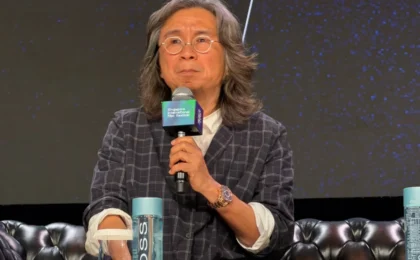
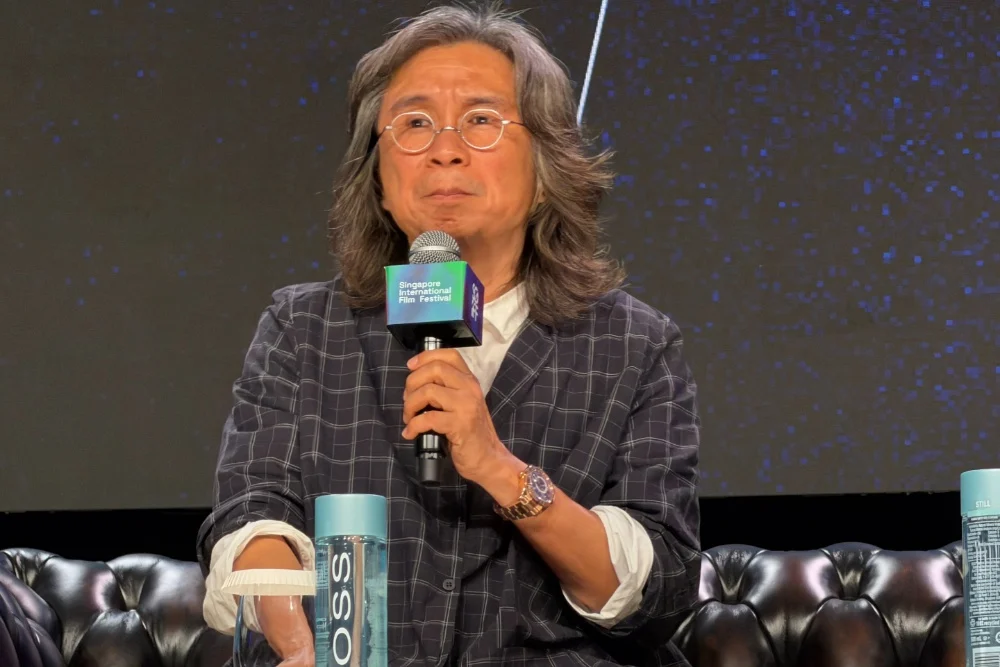
In an era defined by the rapid erosion of attention spans and the encroaching shadow of algorithmic content creation, one of Asia’s most celebrated filmmakers remains steadfast in his defense of the two-hour feature film. Peter Chan Ho-sun, the visionary director behind seminal works such as Comrades: Almost a Love Story and the sweeping epic The Warlords, recently took to the stage at the Singapore International Film Festival (SGIFF). During an “In Conversation” session at the Marina Bay Sands Grand Ballroom, Chan offered a masterclass in resilience, creative evolution, and his unwavering belief in the human soul as the final frontier of storytelling.
As the industry grapples with an existential crisis—driven by the rise of short-form vertical video and the looming presence of Artificial Intelligence—Chan’s message was one of cautious optimism. While he acknowledged that the film industry is enduring its “toughest time,” he dismissed the notion that the cinematic medium is on the verge of obsolescence. Instead, he painted a portrait of a medium that is not dying, but merely entering a period of recalibration.
The AI Paradox: A Tool, Not a Creator
Central to the current discourse in Hollywood and beyond is the role of AI. Chan’s stance is nuanced: he embraces technology as a utility while strictly demarcating its creative boundaries. “I will probably use AI as a technique,” Chan told the audience, drawing a direct parallel between modern AI and the special effects and CGI workflows that have become industry staples over the last three decades.
“CGI has relied on AI for years without us calling it that,” he noted. “Anything that helps me make movies, I welcome.” However, he drew a firm line at what he calls “AIGC” (AI-generated content). For Chan, the distinction is fundamental: AI can process data, render textures, and calculate physics, but it lacks the internal architecture of human experience. “They won’t know art,” he asserted. “Movies are still made by people.”
His skepticism toward generative AI stems from a belief that the essence of film is the distillation of a human director’s unique perspective on life. To outsource that to a machine is to hollow out the medium. For Chan, the craft of filmmaking is inherently tied to the director’s personal journey, an intimate process that no algorithm can replicate.
Chronology of a Career: From Genre-Hopping to Reflective Storytelling
To understand Chan’s current philosophy, one must look at his trajectory. Born in Hong Kong and raised in a Thai-Chinese household, Chan has always viewed himself as an outsider, a position that has allowed him to observe and critique the cultures he inhabits with a unique detachment.
The 1990s: Redefining Hong Kong Cinema
The 1990s are often romanticized as the Golden Age of Hong Kong cinema, but Chan holds a more critical view. He sees that decade as the beginning of the industry’s decline. During this period, he co-founded the United Filmmakers Organization (UFO), producing romantic comedies that stood in stark contrast to the dominant gangster and wuxia (martial arts) films of the time.
It was during this period that he created his masterpiece, Comrades: Almost a Love Story. Released in 1996, the film served as a bittersweet chronicle of the decade between 1985 and 1995. Now, on its 30th anniversary, Chan reflects on the film with a mix of gratitude and frustration. “That movie gave me a lease of movie life for the next 30 years,” he said. Yet, he admits that being defined by a single success for three decades feels like a “spell” he is constantly trying to break.
The Hollywood Experiment
Chan’s attempt to break into the U.S. studio system with the DreamWorks film The Love Letter serves as a cautionary tale. It was a difficult experience that taught him about the rigidity of corporate structures and the dangers of relying on test screenings—which he views as the precursor to today’s algorithmic decision-making. Reflecting on that time, he admits to being “too young and too naive.” Had he possessed his current understanding of marketing and corporate negotiation, he believes his path in Hollywood might have been significantly different.
The Pan-Asian and Mainland Pivot
Following his return from the West, Chan pivoted toward pan-Asian collaborations through his company, Applause Pictures. This era produced the influential The Eye horror franchise and collaborative efforts with titans like Park Chan-wook and Miike Takashi. Eventually, however, he realized that a commitment to pan-Asian genre film would pigeonhole him. He moved into the mainland Chinese market with the 2005 musical Perhaps Love, signaling a shift toward more ambitious, large-scale projects, culminating in his “biggest film,” the historical epic The Warlords.
Supporting Data: The Dichotomy of Attention
Chan’s confidence in the future of the feature film is rooted in his observation of current audience behavior. He acknowledges the rise of short-form, vertical-scrolling entertainment that caters to shrinking attention spans. However, he points to a simultaneous trend: the explosion of long-form, multi-hour podcast consumption.
He cited Christopher Nolan’s Oppenheimer as a prime example of the “purist” approach thriving in a digital age. By refusing to compromise on runtime or format, Nolan proved that audiences still crave the immersive, sustained experience of a traditional movie. “There are two completely opposite ends of the spectrum that are surviving and thriving simultaneously,” Chan noted. This duality convinces him that the two-hour narrative will remain a vital part of the cultural landscape for the foreseeable future.
Implications: The Road Not Taken
Chan’s latest work, The Road Not Taken, exemplifies his thematic evolution. The film, which premiered in Toronto, deals with early-onset Alzheimer’s, but as Chan explains, “it’s really not just about Alzheimer’s. It’s about a broken family that has all sorts of problems a family could have.”
By centering the narrative on a couple in the midst of divorce who are forced to confront their history through the lens of memory loss, Chan continues his lifelong exploration of human connection. The film, which features a Gen Z daughter navigating the complexities of her parents’ relationship, mirrors the experiences of Chan’s own family.
The title, inspired by Robert Frost’s poem, serves as his life motto. “There’s really no right path,” he says. “Whether it’s right or wrong, it’s all about how you walk it. You make it right.”
Official Reflections: The Director’s Discipline
Perhaps the most telling insight into Chan’s methodology is his relationship with his collaborators. Known for being an exacting taskmaster, he famously employs a massive writing staff, once joking that his writers wouldn’t fit in a minibus. He admits that the writer’s community may not always favor his approach, but he remains unapologetic. “I milk the writer to death, and then I milk another writer,” he said. “Making movies is not about being well-liked.”
This rigor is driven by a singular purpose: the need to answer the life questions that plague him at any given stage. Whether it is the love triangles in his debut or the complex familial dynamics in his latest feature, Chan insists that he has been “making the same movie in my mind for the last 36 years.”
Conclusion: The Path Forward
For aspiring filmmakers feeling discouraged by the current industry climate, Peter Chan Ho-sun offers a sobering but empowering reality check. He acknowledges that the hurdles—censorship, budget constraints, and the shifting tastes of a digital-first audience—are formidable. Yet, he maintains that these very limitations are what push creators to be more imaginative.
As he looks toward the future, Chan is neither a luddite nor a sycophant to modern technology. He is a craftsman who views his career through the lens of the eight-word Mandarin phrase he discovered at an Alzheimer’s institution in Chengdu: “Go with the flow, and know when to stop.” In a world that is obsessed with the “new,” Chan’s success lies in his ability to recognize that while the tools of the trade may change, the fundamental questions of the human condition—love, loss, memory, and identity—remain the only things worth putting on screen.