STOCKHOLM — The political landscape of Sweden has undergone a tectonic shift. Following an agonizingly slow count of overseas ballots and late-arriving early votes, the Swedish Election Authority confirmed on Thursday that the nation’s left-leaning opposition has secured a razor-thin majority in the Riksdag. The result, which concludes a period of intense national uncertainty, marks a significant reversal of fortunes for the incumbent conservative coalition and sets the stage for a complex period of government formation.
According to the final tally, the four-party left-leaning bloc has claimed 176 seats in the 349-seat parliament, narrowly edging out the outgoing conservative-led government, which secured 173 seats.
Main Facts: The Numbers Behind the Shift
The confirmation of the results brings to an end a week of political suspense that gripped the Nordic nation. With a margin of only three seats, the opposition’s victory is mathematically decisive but politically precarious.
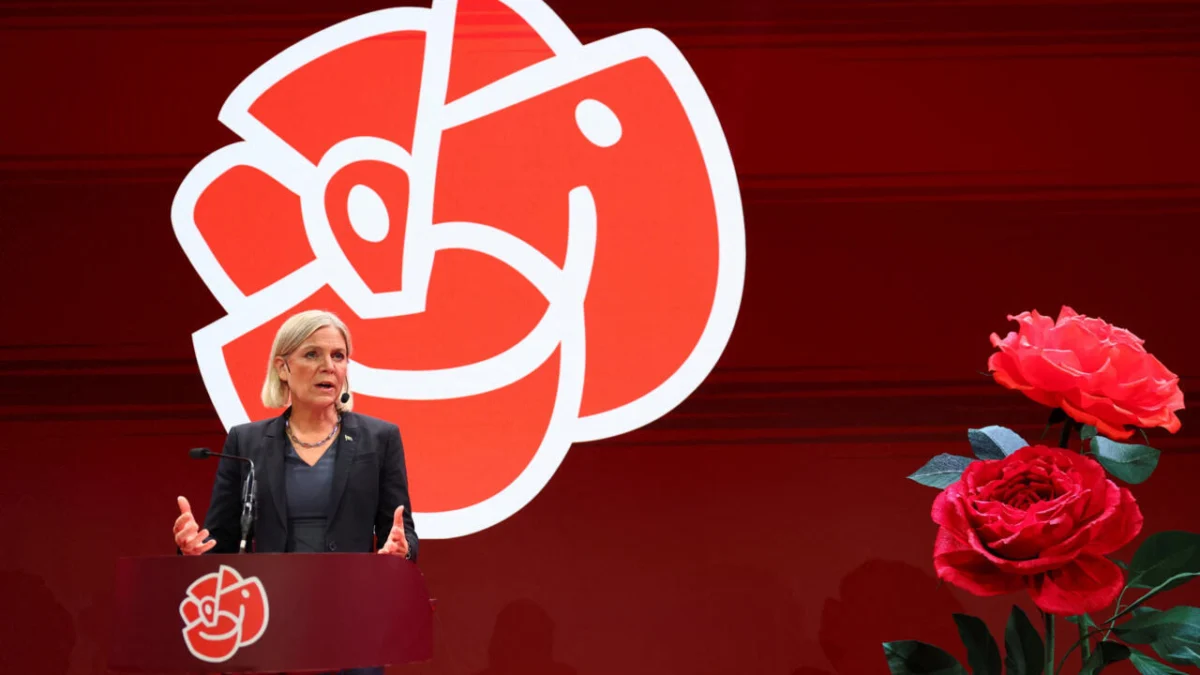
The Social Democrats, led by former Prime Minister Magdalena Andersson, have solidified their position as the largest single party in the Riksdag. Despite a slight erosion of their overall voter base compared to previous cycles, the Social Democrats remain the anchor of the left-leaning bloc. Their ability to reclaim the mandate of governance now rests on their capacity to maintain cohesion among a diverse group of allies, including the Left Party, the Green Party, and the Centre Party—an alliance that often finds itself divided on fiscal policy and industrial regulation.
Conversely, the outgoing administration, spearheaded by Prime Minister Ulf Kristersson, now faces the reality of transition. Kristersson’s government had pinned its electoral hopes on a platform of law-and-order reforms, stricter immigration policies, and tax reductions. While the conservative bloc maintained a strong showing, the final tally indicates a subtle but critical migration of voters away from the coalition’s fringe partners.
Chronology: A Week of Political Uncertainty
The journey to this result began on Sunday, when initial exit polls suggested a virtual dead heat. As the night progressed, the lead swung back and forth, reflecting the deep polarization of the Swedish electorate.
- Election Day (Sunday): Early projections provided by national broadcasters were too close to call. As regional districts began reporting, it became clear that the outcome would be decided by a few thousand votes.
- The "Slow" Count (Monday–Wednesday): In accordance with Swedish electoral tradition, the Election Authority proceeded with the meticulous counting of advance ballots and those cast from abroad. These votes are historically more unpredictable and served as the final arbiter of the result.
- The Confirmation (Thursday): The Swedish Election Authority formally announced that the 176-seat threshold for the opposition had been met. The announcement effectively brought an end to the administrative phase of the election, pivoting the nation immediately into the phase of coalition building and parliamentary negotiation.
Supporting Data: Demographic and Geographic Trends
The electoral map of Sweden highlights a country increasingly divided by geography and socio-economic status. Analysis of the ballot data reveals a sharp contrast between urban centers and rural municipalities.
Stockholm, Gothenburg, and Malmö—the nation’s three largest metropolitan areas—largely tilted toward the left-leaning bloc, favoring parties that emphasize social welfare and climate transition. In contrast, the rural heartlands and smaller industrial towns in the south and central regions showed strong support for the conservative coalition and the anti-immigration Sweden Democrats.
Furthermore, the "Sweden Democrat Factor" remains the most significant variable in Swedish politics. While the party has worked tirelessly to shed its historical far-right roots and move toward the political mainstream, its influence on the conservative coalition has been polarizing. The data shows that while the Sweden Democrats command a loyal base, their presence acts as a "ceiling" for the broader conservative bloc, deterring moderate voters who might otherwise support a center-right government.
Official Responses: The View from Both Sides
The atmosphere in Stockholm is one of cautious optimism for some and profound disappointment for others.
Magdalena Andersson’s Stance
Former Prime Minister Magdalena Andersson, speaking shortly after the confirmation, emphasized the need for unity. "The Swedish people have expressed a desire for a different direction," she stated. "My task now is to ensure that we form a stable government that can address the challenges of inflation, energy security, and social cohesion. It will not be easy, but the mandate is clear."
The Response from the Outgoing Government
Prime Minister Ulf Kristersson, in an address to his supporters, acknowledged the narrow defeat while maintaining a critical perspective on the incoming coalition’s viability. "We have worked to make Sweden safer and more prosperous," Kristersson noted. "While the numbers are against us, the structural problems facing our country remain. We will be a robust and vigilant opposition, holding the new government accountable for every promise made during this campaign."
Implications: A Complicated Path to Governance
The narrow margin of 176 to 173 seats carries profound implications for the stability of the upcoming term. In a 349-seat parliament, a three-seat majority is exceptionally fragile. Every vote in the Riksdag will effectively become a test of the government’s longevity.
The Challenge of Consensus
The left-leaning bloc is far from a monolith. Bringing together parties with competing visions on economic policy—particularly the tension between the labor-focused Social Democrats and the more market-oriented Centre Party—will be the defining challenge of the coming months. If the coalition cannot agree on a national budget or critical legislative reforms, Sweden could face a period of legislative gridlock.
The Role of the Sweden Democrats
For the defeated right-wing, the immediate future involves a period of internal reflection. The Sweden Democrats, who saw their influence peak during the campaign—with Kristersson even dangling the prospect of cabinet seats—must now decide whether to double down on their populist rhetoric or continue their long-term project of "mainstreaming." Their role as the primary opposition force will be to exploit the inevitable friction within the left-leaning coalition.
Economic and Foreign Policy Outlook
Sweden currently faces a volatile economic environment characterized by rising energy costs and inflationary pressure. Furthermore, as a nation that has recently moved toward greater integration with Western security frameworks, including its historic NATO application, the continuity of foreign policy will be a priority for international observers.
Diplomatic sources indicate that despite the change in domestic leadership, Sweden’s core foreign policy objectives are expected to remain largely unchanged. The transition will likely be viewed through the lens of domestic stability; international markets and European partners will be looking for signs that the new government can maintain a firm hand on fiscal policy despite the pressures of a fractured parliament.
Conclusion: A Nation at a Crossroads
As the dust settles in Stockholm, the reality of the Swedish election is that the country remains deeply divided. The victory of the left-leaning opposition is a testament to the power of the Swedish electorate’s desire for change, yet the slim margin serves as a warning.
The next few weeks will be defined by backroom negotiations, the allocation of ministerial portfolios, and the drafting of a government declaration that satisfies the disparate interests of the winning bloc. For Magdalena Andersson, the task is to move from being the leader of the largest party to becoming the architect of a functional majority. For the Swedish public, the election marks the beginning of a new, potentially tumultuous, chapter in the nation’s political history.
Whether this narrow majority will lead to a period of effective governance or further political instability remains to be seen. What is certain, however, is that the eyes of the Nordic region are fixed on Stockholm, watching to see how this delicate parliamentary balance will hold in the face of mounting national and international challenges.