Executive Summary: A Breach of International Norms
In a significant development concerning the ongoing hostilities between Hezbollah and Israel, Human Rights Watch (HRW) issued a formal report on Wednesday, September 9, 2026, documenting the alleged unlawful deployment of cluster munitions by Hezbollah. The findings center on two specific incidents in the northern Israeli town of Metula, occurring on March 4 and March 15, 2026.
While these attacks fortunately resulted in no immediate civilian casualties, the HRW report characterizes the use of such weaponry as a "flagrant violation of international law." The organization is now calling for an urgent, independent investigation into these incidents, emphasizing that the deployment of cluster munitions—which scatter wide-ranging submunitions—poses an indiscriminate threat to non-combatants long after the initial blast. This report arrives amidst a broader global discourse on the humanitarian toll of explosive remnants of war, as highlighted by the recently released Cluster Munition Monitor 2026.
Chronology of the Incidents: Investigating the Metula Strikes
The March 4 Attack
On March 4, 2026, residents of the northern Israeli border town of Metula reported a rocket barrage that impacted a residential street. Following the event, HRW researchers conducted a field investigation in May, during which they identified at least seven distinct impact craters. These craters are reportedly consistent with the specialized dispersion patterns of cluster submunitions. Local testimonies corroborated the scale of the strike; one resident indicated that military personnel had accounted for approximately 50 separate submunitions in the immediate area.
The March 15 Attack
Less than two weeks later, on March 15, a second incident occurred near the entrance to Metula. Video evidence analyzed by international observers documented roughly 30 small, simultaneous explosions. The nature of these detonations—scattered over a specific zone rather than localized at a single point—strongly suggests the use of cluster munitions. The immediate aftermath necessitated a strict safety perimeter; witnesses reported that residents were placed under a 24-hour lockdown while Israeli military engineering units worked to neutralize unexploded ordnance (UXO) that littered the site.
The Humanitarian and Legal Implications
Why Cluster Munitions are Categorically Prohibited
The danger of cluster munitions lies in their design: a single container releases dozens or even hundreds of smaller "bomblets" over a broad area. The inherent problem is the high "dud rate." A significant percentage of these submunitions fail to detonate upon impact, effectively becoming landmines.
Patrick Thompson, a researcher with HRW, noted that the use of these weapons in populated areas is a clear violation of international humanitarian law. "Cluster munitions open in the air and scatter smaller explosive devices across a broad area," Thompson explained. "With some failing to detonate, they leave behind lethal hazards that can kill or injure civilians years, or even decades, after the hostilities have ceased."
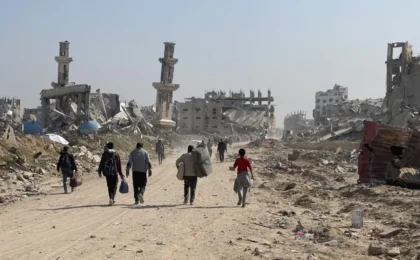
The International Committee of the Red Cross (ICRC) has long maintained that these remnants are particularly insidious because they inhibit post-conflict recovery. They endanger civilians attempting to return to their homes, farmers tending to their land, and construction crews clearing rubble, turning post-war landscapes into deathtraps.
International Humanitarian Law (IHL) Requirements
Beyond specific treaties, the prohibition against indiscriminate attacks is a cornerstone of customary international humanitarian law. All belligerents are required to:
- Distinguish: Parties must distinguish between military objectives and civilian property at all times.
- Proportionate Response: Any military action must not cause excessive civilian harm in relation to the expected military advantage.
- Precautions: Parties must take all feasible precautions to minimize civilian harm.
By deploying wide-area weapons in residential zones, Hezbollah faces accusations that it has failed these core obligations, regardless of whether its primary target was military in nature.
Supporting Data: A Global Context of Violence
The Cluster Munition Monitor 2026
The release of the HRW report coincided with the publication of the Cluster Munition Monitor 2026, which provides a grim snapshot of the global state of these weapons. The data revealed that in 2025 alone, at least 1,063 people were killed or injured by cluster munitions worldwide.
The data highlights a devastating trend: among casualties where the status of the victim could be determined, 87 percent were civilians. This statistic reinforces the argument that cluster munitions are inherently indiscriminate, disproportionately affecting those who have no role in the conflict.
The UN Perspective
In a broader assessment delivered on April 24, 2026, the United Nations Office of the High Commissioner for Human Rights provided a chilling overview of the conflict’s toll. The UN documented that Hezbollah has repeatedly utilized unguided rockets against Israeli residential areas, a practice that mirrors the indiscriminate nature of the cluster munitions mentioned in the HRW report. Conversely, the UN also condemned Israeli strikes within Lebanon that have decimated residential infrastructure, caused the deaths of entire families, and struck medical personnel, underscoring a regional trend of eroding adherence to the laws of war.
Official Responses and Treaty Obligations
Lebanon and the Convention on Cluster Munitions
A critical element of this controversy is the legal standing of the parties involved. Lebanon ratified the 2008 Convention on Cluster Munitions on November 5, 2010. Article 1 of this treaty explicitly prohibits States Parties from using, producing, acquiring, or stockpiling these weapons. Furthermore, Article 9 mandates that states adopt domestic measures, including criminal penalties, to prevent and suppress such prohibited conduct.
While Hezbollah is a non-state actor, the fact that these weapons were deployed from territory over which the Lebanese government holds nominal sovereignty raises questions regarding state responsibility and the ability of the Lebanese government to enforce its international obligations.
Israel’s Stance
Israel remains a non-party to the Convention on Cluster Munitions. Despite this, the country is still bound by the general rules of international humanitarian law. Critics argue that Israel’s lack of treaty participation does not exempt it from the customary law that forbids indiscriminate attacks. The Israeli government has consistently maintained that its own military actions are defensive, though they face frequent scrutiny from international bodies regarding the proportionality of their strikes in Lebanese territory.
Hezbollah’s Denial
In response to the accusations, Hezbollah has acknowledged conducting rocket attacks on March 4 and March 15 but has categorically denied both the possession and the use of cluster munitions. The group maintains that the evidence cited by HRW is either misattributed or part of a broader campaign of international pressure.
Conclusion: The Path Forward
The allegations against Hezbollah represent a critical flashpoint in the regional conflict. As HRW and other human rights organizations continue to push for independent, transparent investigations, the international community faces the challenge of holding non-state actors accountable to the same standards as sovereign nations.
The presence of unexploded submunitions in Metula is a stark reminder of the long-term cost of modern warfare. As long as these weapons remain in the arsenals of regional forces, the prospect of a "post-conflict" civilian environment remains dangerously elusive. The demand for an investigation is not merely about assigning blame for the events of March 2026; it is about reinforcing the global norm that the lives of civilians must be prioritized over the tactical utility of indiscriminate weaponry. Whether this call leads to a cessation of such practices remains to be seen, but the documentation provided by HRW ensures that these violations are no longer happening in the shadows.